Featured Buck Converters Optimized for Thai OEM & Distribution Markets
From heavy-duty commercial logistics fleets along the Eastern Economic Corridor (EEC) to solar pumping across the Khorat Plateau, our IP68-rated potted buck modules deliver up to 96% conversion efficiency.

24V to 12V 85A/100A Heavy-Duty Commercial Vehicle Buck Converter
- Nominal Input: 24V DC (18–35V Window)
- Regulated Output: 12V DC ±1% | 85A–100A
- Peak Power: 1200 Watts Continuous
- Protection Grade: IP68 Full Epoxy Resin Potting
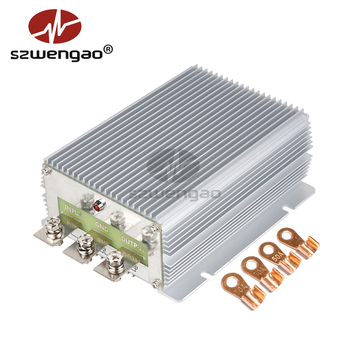
48V to 24V 40A 1000W Industrial Synchronous Buck Regulator
- Nominal Input: 48V DC (36–60V Window)
- Regulated Output: 24V DC | 40A Maximum
- Conversion Rate: >96% at 50% rated load
- Housing: Extruded 6063-T5 Heatsink
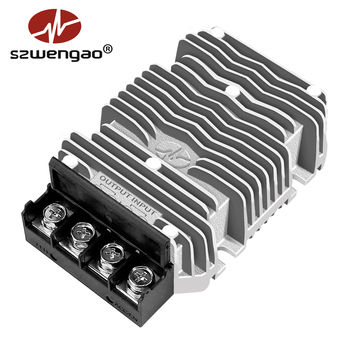
30–60V Wide-Input to 12V 50A/60A Fleet Power Step-Down Module
- Input Voltage: 30–60V DC (Standard 48V bus)
- Output Voltage: 12V DC (Surge-free 60A)
- Rated Capacity: 600W – 720W Max
- Compliance: CE, RoHS, ISO 9001:2015
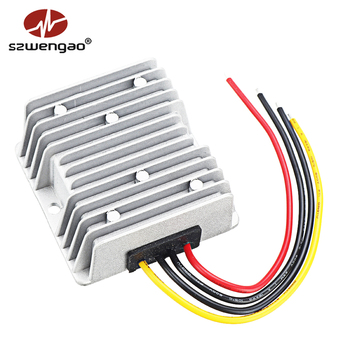
30–90V Traction-Pack to 24V 10A/20A EV Tuk-Tuk Buck Converter
- Traction Pack: 36V / 48V / 60V / 72V Lithium
- Auxiliary Line: 24V DC (10A / 20A Option)
- Thermal Range: -40°C to +85°C Operating
- Vibration Test: 10–500Hz 5G 10min/cycle
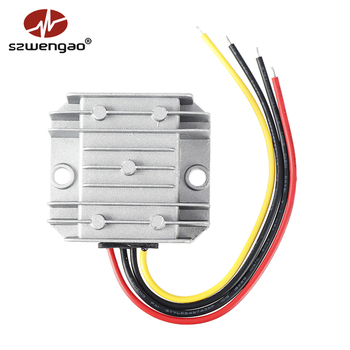
18–90V to 12V 5A/10A Universal Sub-Auxiliary Buck Module
- Extreme Range: 18V to 90V Continuous DC
- Output Line: 12V DC (Ripple <50mVp-p)
- No-Load Current: <10mA High Efficiency
- Application: GPS, Dashcams, IoT Trackers
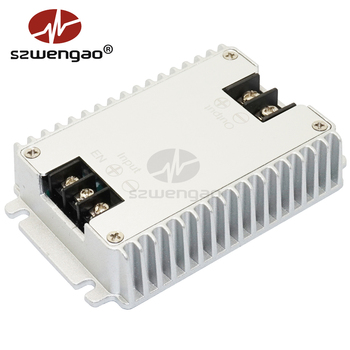
36–75V to 24V 5A 120W Galvanically Isolated Industrial Buck Module
- Isolation Hi-Pot: 1500V DC Primary to Secondary
- Input Window: 36–75V DC (48V Telecom Standard)
- Noise Filter: Integrated Class B LC Pi-Filter
- Ideal For: PLC Controls, Industrial Sensors
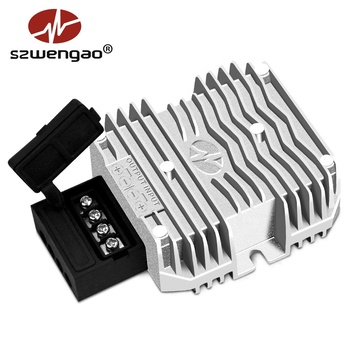
Isolated 18–90V to 12V 10A Waterproof Ground-Loop Eliminator
- Protection Mode: Complete Ground Loop Severing
- Output: 12V DC ±1.5% | 10A (120W)
- Salt-Spray Resist: ASTM B117 96h Certified
- Deployment: Andaman Sea Boats & 5G Masts

Smart 36V LiFePO4 DC-DC Charger 12V to 43.8V 13A for EV Rickshaws
- Primary Source: 12V DC Alternator / Service Pack
- Lithium Curve: 3-Stage CC/CV up to 43.8V Peak
- Charging Current: 13A Pure DC Output
- Waterproofing: IP67 Fully Sealed Die-Cast Body
The Strategic Convergence: China's Advanced Power Electronics and Thailand's Industrial Transformation
The bilateral trade corridor between Shenzhen, China's Silicon Valley of Hardware, and Thailand's industrial core has evolved rapidly from commercial commodity transactions into high-precision engineering partnerships. Thailand's aggressive national transformation framework—spearheaded by the National Electric Vehicle Policy Committee's "30@30" roadmap, the expansion of the Eastern Economic Corridor (EEC) across Chonburi, Rayong, and Chachoengsao, and ambitious rural agricultural microgrid initiatives—has triggered an unprecedented surge in demand for high-reliability, heavy-duty DC-DC buck converters.
However, importing standard power supplies into Thailand presents severe physical failure vectors if systems are not adapted to local environmental realities. Industrial operators across Bangkok, Samut Prakan, and Ayutthaya routinely report premature capacitor dry-out, thermal runaway, and trace corrosion when using generic converters. The Thai operating envelope combines ambient temperatures frequently exceeding 42°C, relative humidity sustained above 90% during the monsoon season, severe salt-mist deposition in maritime provinces like Chonburi and Phuket, and profound electrical grid ripple caused by lightning strikes and inductive load switching.
Synchronous Rectification vs. Traditional Schottky Buck Conversion in Tropical Environments
Standard buck converters utilize free-wheeling Schottky diodes to circulate inductor current during the switch-off cycle. While adequate for temperate European or North American climates, the inherent forward voltage drop ($V_f$) of 0.4V to 0.7V creates massive localized thermal dissipation in high-amperage applications common to Thai industrial logistics (such as 24V-to-12V 80A heavy vehicle retrofits). At an 80A draw, a Schottky diode radiates between 32W and 56W of continuous heat directly into the converter chassis, pushing interior junction temperatures past 125°C under 40°C Thai ambient conditions.
Eltrum engineers our Thai-export buck converter series with active synchronous rectification, swapping dissipative Schottky diodes with automotive-grade, low-resistance $R_{DS(on)}$ N-channel MOSFETs (down to 1.8 milliohms). This slashes thermal dissipation across the secondary switch to under 6.5W at identical 80A loads, raising total conversion efficiency up to 96.4%. The resulting thermal relief eliminates noisy cooling fans that clog with tropical road dust and eliminates the primary catalyst of electrolytic capacitor venting.
Thermal Management and Environmental Hardening Matrix for Thailand
To deliver an operating lifespan surpassing 50,000 hours in Southeast Asia, our Shenzhen manufacturing facility enforces a multi-tier protective topology:
| Subsystem Element | Generic Chinese Exporter Standard | Eltrum Thailand Export Specification | Thai Operational Field Advantage |
|---|---|---|---|
| Internal Encapsulation | Partial air cavity / Cheap polyurethane | Full vacuum-degassed epoxy / silicone thermal gel | 100% moisture barrier against Bangkok rainy season flooding |
| Primary Switching Silicon | Standard planar silicon MOSFETs | Trench-gate low $R_{DS(on)}$ / SiC options | Minimal thermal dissipation under 45°C ambient engine bays |
| Capacitor Grade | 85°C rated general-purpose aluminum | 105°C–125°C solid electrolyte & high-frequency MLCC | Immune to electrolyte dry-out over 5-year heavy cycling |
| Enclosure Architecture | Stamped steel / thin 1.0mm aluminum | 6063-T5 heavy-gauge fluted extruded alloy | Resists mechanical shock over broken rural road conditions |
| Input Transient Defense | Single basic TVS diode or none | Multi-stage varistor + TVS + LC common-mode choke | Suppresses inductive load dumping from Thai diesel alternators |
Localized Application Scenarios Across Thailand's Industrial Landscape
Engineered specifically to solve voltage step-down and noise suppression challenges in the distinct environments of Thailand's key economic hubs.
1. Electric Tuk-Tuk & E-Songthaew Modernization
Bangkok's iconic three-wheeled tuk-tuks and Chiang Mai's songthaew public passenger trucks are transitioning rapidly from LPG/petrol engines to 60V and 72V LiFePO4 traction packs. Our 30–90V to 12V 20A–30A buck converters seamlessly step down the primary battery bank to run 12V LED headlights, turn signals, high-decibel horns, digital taximeters, passenger USB charging ports, and IoT fleet telemetry without causing individual cell balance drift.
2. Floating Solar Farms & Agricultural Irrigation
Thailand's large-scale hydro-floating solar hybrids—such as the Sirindhorn Dam installation in Ubon Ratchathani—and agricultural solar pumping systems throughout the Isan region rely on 48V DC bus architectures. Eltrum's 48V to 24V 40A buck converters step down erratic string power to feed stable 24V electricity into remote solenoid valves, soil sensors, industrial PLCs, and 4G communication routers under punishing sun exposure.
3. Marine Fishing Vessels & Speedboat Fleets
Commercial fishing trawlers and tourist speedboats operating out of Phuket, Surat Thani, and Pattaya feature dual-battery 24V charging alternator systems. Our isolated 18–90V to 12V buck modules eliminate destructive marine ground loops that induce severe galvanic hull corrosion, while simultaneously providing ultra-clean, ripple-free 12V DC to sensitive high-frequency fish finders, GPS chartplotters, and VHF radio transceivers.
4. Automated Guided Vehicles (AGV) in EEC Factories
Tier 1 automotive and consumer electronic assembly plants across Rayong and Chonburi deploy fleets of 48V automated guided vehicles (AGVs). Our 48V to 24V 1000W buck regulators handle sudden motor inrush currents and continuous dynamic braking voltage spikes, delivering clean 24V DC to onboard safety LiDARs, vision guidance systems, and industrial fieldbus automation networks.
5. 5G Telecom Base Stations & Monsoon Defense
Cellular towers operated by telecom providers such as AIS and True Corporation must maintain 99.999% uptime across severe tropical thunderstorms. Our telecom-grade 36–75V to 12V/24V isolated buck converters fit standard outdoor telecom cabinets, offering 1500V DC surge isolation that shields sensitive millimeter-wave transceivers from lighting-induced inductive spikes on the primary -48V DC battery backup bus.
6. Heavy Commercial Long-Haul Trucking
Long-haul container transport operating between Bangkok Port (Klong Toey), Laem Chabang Deep Sea Port, and border crossings in Nong Khai runs on 24V dual lead-acid electrical architectures. Installing 12V dashcams, Thai government-mandated DLT GPS tracking units, and interior cabin refrigeration units requires our 24V to 12V 85A/100A buck step-down units, ensuring zero voltage sag during heavy diesel engine cranking.
Key Electrification Trends Shaping Thailand's DC Power Converter Procurement
Procurement directors and engineering teams in Thailand are navigating a fundamental transition in electrical architectures. Understanding these macro trends is vital for distributors and OEMs formulating multi-year supply chain strategies:
1. The Accelerated "30@30" National EV Ecosystem
The Thai Board of Investment (BOI) and the National New Generation Vehicle Committee have instituted binding targets requiring 30% of all vehicles produced in Thailand to be Zero-Emission Vehicles (ZEVs) by 2030. This policy has transformed Thailand into ASEAN's preeminent electric vehicle manufacturing hub. While multinational joint ventures assemble battery packs in Chonburi, domestic Thai Tier 2 and Tier 3 suppliers dominate the retrofitting market for utility utility vehicles, commercial buses, golf carts, and electric boats. This rapid conversion creates huge demand for high-reliability step-down buck regulators that translate high-voltage pack power (48V, 72V, 96V) into stabilized low-voltage 12V and 24V control buses.
2. Rural Microgrids and Decentralized Cold-Chain Storage
Under Thailand's updated Power Development Plan (PDP), state utilities PEA (Provincial Electricity Authority) and MEA (Metropolitan Electricity Authority) are expanding smart microgrids. Concurrently, agricultural exporters of durian, mango, and seafood are investing heavily in decentralized DC-coupled solar cold storage. Buck converters deployed in these installations must feature wide-input windows (such as 18–90V) to accommodate both battery discharge knees and peak open-circuit solar string voltages without shutdown.
3. Transition from Non-Isolated to Galvanically Isolated Architectures
Historically, Thai equipment fabricators favored non-isolated buck converters due to minimal unit cost. However, rising field failure statistics associated with common-ground loops, electromagnetic interference on CAN bus communications, and worker safety mandates under Thai Industrial Standards (TIS) have triggered an industry-wide pivot toward transformer-isolated DC-DC buck topologies, particularly in systems operating above 60V DC.
Shenzhen Eltrum Electronic Co., Ltd. — Your Trusted Manufacturing Anchor
Founded in 2015, we operate over 3,000 m² of specialized power electronics manufacturing in Shenzhen, serving industrial clients in over 130 countries worldwide.
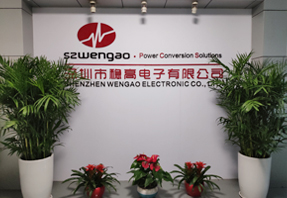
ISO 9001 Certified Shenzhen Facility
Onsite-verified manufacturing footprint equipped with high-speed automated Surface Mount Technology (SMT) lines, nitrogen wave soldering, and automated optical inspection (AOI) guaranteeing precision trace tolerances.
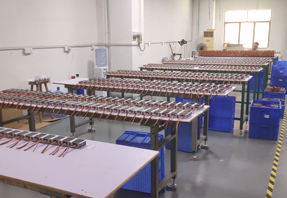
Automated Vacuum Potting Chambers
Every IP68 converter undergoes multi-stage vacuum resin degasification and continuous curing ovens, ensuring 100% elimination of micro-air voids that cause dielectric breakdown in high-humidity Thai environments.
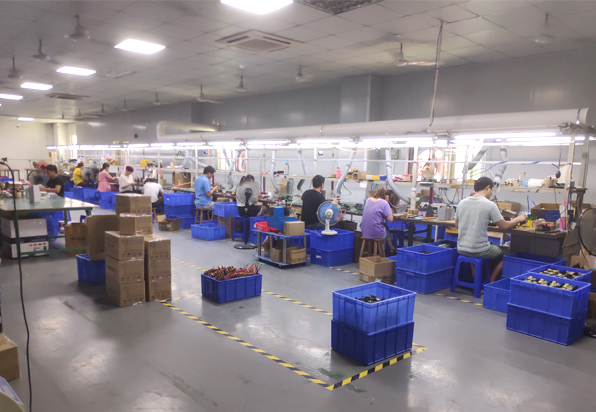
100% Full-Load Burn-In Chamber Testing
We do not rely on sample batch auditing. Every individual buck converter shipped to Laem Chabang or Bangkok Port undergoes a mandatory 4-hour, 100% dynamic load thermal burn-in cycle at elevated ambient temperatures.
Full OEM / ODM Customization Workflow for Thai Importers
We recognize that standard off-the-shelf catalog models may not meet the exact physical envelope or control interface needs of your project. Eltrum's in-house R&D engineering division provides rapid customization services tailored to Thai industrial buyers:
- Custom Voltage & Current Trim: Specialized step-down setpoints (such as 13.8V radio float voltage, 27.6V telecom float, or 5.2V high-amp USB charging rails).
- Smart Digital Telemetry: Optional isolated RS485 / CAN bus communication running Modbus RTU protocols for remote voltage/current telemetry on Thai fleet management dashboards.
- Heavy Connector Termination: Pre-wired Anderson power connectors, waterproof Deutsch DT connectors, or marine-grade tinned copper ring lugs sized to prevent terminal oxidation.
- Low-Barrier Engineering Validation: Sample evaluation minimum order quantities starting from just 5 units, enabling Thai engineering teams to validate bench performance before committing capital.
Frequently Asked Questions by Thai Engineers & Purchasing Agents
Clear answers regarding customs clearance, certifications, transit timelines, and technical selection.
Under the China-ASEAN Free Trade Agreement (ACFTA), Shenzhen Eltrum Electronic Co., Ltd. issues official Form E Certificates of Origin with every commercial consignment. Under Harmonized System (HS) Code 8504.40 (Static Converters), the standard Thai Most-Favoured-Nation (MFN) import tariff is reduced from 10% directly down to 0% import duty, requiring Thai importers to pay only the standard domestic Value Added Tax (VAT) of 7% at customs.
Ocean freight originating from Shenzhen ports (Shekou or Yantian) directly reaches Bangkok Port (Klong Toey) or Laem Chabang Port in just 4 to 7 sailing days, representing one of the fastest maritime trade routes in Asia. For urgent OEM sample validation or air cargo replenishment, door-to-door air freight via DHL/FedEx to Suvarnabhumi Airport (BKK) delivers in 2 to 4 business days.
Yes. Our factory operates under audited ISO 9001:2015 quality management frameworks. All converter series hold full CE (EN 55032 Class B / EN 61000) electromagnetic compatibility and safety compliance, as well as RoHS 2.0 hazardous substance restriction certifications. When imported as internal sub-components for vehicle assembly or machinery, our test reports support smooth local compliance verification with the Thai Industrial Standards Institute (TISI / มอก.).
A standard (non-isolated) buck converter shares a common ground between input and output. You must specify an isolated buck converter when: (1) Supplying power to sensitive marine navigation electronics where shared ground creates electrolytic hull decay; (2) In telecom racks with positive-grounded battery banks; (3) In industrial robotic systems where ground loop noise corrupts CAN or analog sensor telemetry; or (4) When input voltages exceed 60V DC safety touch limits.
To support prototyping and system engineering verification, our baseline MOQ for standard catalog buck converters is only 5 units. High-power units (over 1000W) are accessible starting from 1–2 units. Standard sample consignments dispatch within 24 to 48 hours from our Shenzhen warehouse. Custom OEM production batches (tailored voltage, cables, or private label laser marking) typically require 12 to 18 business days.
We support international commercial transactions via Telegraphic Transfer (T/T), PayPal, and secure Escrow in either USD or CNY. Flexible Incoterms include FOB Shenzhen, EXW, or direct CIF Bangkok / CIF Laem Chabang. Established volume distributors in Thailand may qualify for structured revolving commercial credit terms following initial trading history approval.
Accelerate Your Thai Project With Factory-Direct Engineering Support
Whether you require 100-amp continuous step-down power for commercial logistics fleets or IP68 sealed modules for coastal aquaculture, our Shenzhen engineering team is ready to review your schematic and provide a custom proposal within 12 hours.