Recommended Marine DC-DC Converters & LiFePO4 Chargers
Tested for freshwater corrosion resistance, thermal stability, low electromagnetic interference (EMI), and wide DC input variations on modern marine auxiliary networks.

Smart 36V Marine Lithium Charger DC 12V to 43.8V 13A
- Input Range: 10V–16V DC
- Output Voltage: 43.8V CC/CV (36V LiFePO4)
- Efficiency: >94%
- Protection: IP67 Waterproof Sealed

1500W High-Power Marine Buck-Boost Converter (RS485)
- Input Range: 10V–60V DC Wide
- Output: 12V / 24V / 28V / 48V Adj.
- Telemetry: RS485 Bus Monitoring
- Design: Heavy Anodized Heatsink
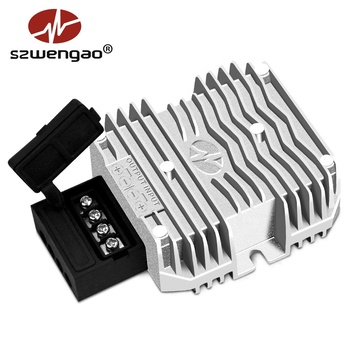
Isolated DC-DC 18V–90V to 12V 10A Nav-Radio Module
- Isolation: 1500V Galvanic Barrier
- Input: 18V–90V (Traction Bus Safe)
- Output: 12.2V Ultra-Low Ripple
- Standard: EN 60945 Marine Compliant
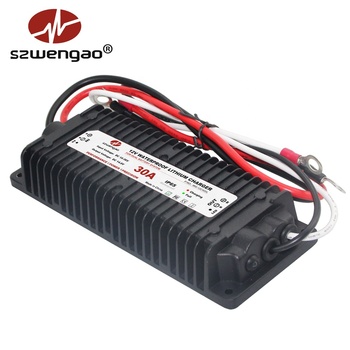
400W IP68 DC-DC Boat-to-House Dual Battery Charger
- Input: 10V–36V Alternator/Pack
- Output: 14.6V / 29.2V Selection
- Charging Curve: 3-Stage Adaptive CC/CV
- Ingress: Hermetic Solid Epoxy Potted

24V to 12V 100A High-Amperage Auxiliary Buck Regulator
- Continuous: 100A (1200W Rating)
- Efficiency: 96% Synchronous Rect.
- Safety: OVP, OCP, OTP Protection
- Housing: Extruded Alloy Anti-Vibration
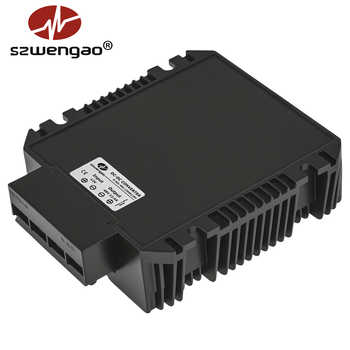
12V to 48V 20A Marine Boost Unit for Bow Thrusters
- Input: 10V–15V Low House Bank
- Output: 48V Regulated (960W)
- Surge: 130% Capacity for 10s Motor Start
- Sealing: IP65 Water-Repellent
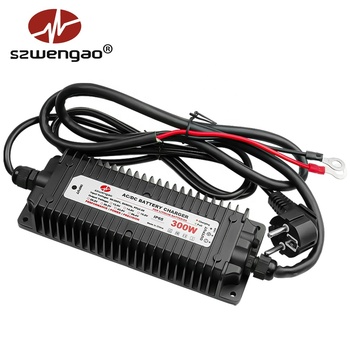
300W Marine AC-DC LiFePO4 Shore-to-Ship Charger
- AC Input: 90V–264V (EU Marine Shore)
- Profiles: 14.6V, 29.2V, 43.8V, 58.4V
- Cooling: Fanless Convection Cooled
- Compliance: CE LVD, EMC, RoHS
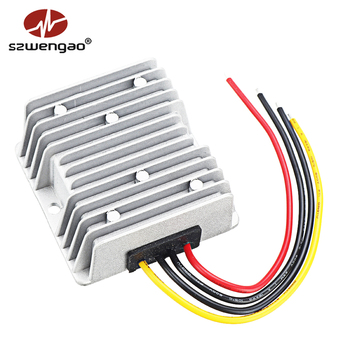
30V–90V to 24V 20A Traction-to-Auxiliary Marine Step-Down
- Battery Input: 48V / 72V / 80V Traction Packs
- Output: 24V Steady 20A (480W)
- Isolation: Full Circuit Ground Separation
- Chassis: Corrosion-Resistant Cast Al
Technical Whitepaper: Integrating Isolated DC-DC Conversion in Hungarian Electric Vessel Topologies
The modernization of commercial freight, passenger ferries, and recreational boating across the Hungarian Danube River basin and Lake Balaton has spurred unprecedented demand for highly resilient DC power distribution equipment. Marine architects and systems integrators face stringent operational conditions: long operating cycles, damp and seasonally cold environments, inductive load spikes caused by electric propulsion motors, and strict European environmental directives governing freshwater ecosystems.
Galvanic Isolation: Mitigating Hull Electrolysis & Common Mode Ground Loops
In metal-hull (steel/aluminum) inland barges operating along the Danube as well as composite hull luxury catamarans anchored on Lake Balaton, continuous electrical leakage is the leading precursor to aggressive galvanic corrosion. Non-isolated DC-DC converters create a common return path between the high-voltage energy storage system (typically 48V, 72V, or 96V LiFePO4 banks) and the sensitive 12V/24V navigation rail. Any small potential differential across the negative bus introduces stray DC currents through sea-cocks, rudder shafts, and thru-hull transducers.
By specifying CE-certified isolated DC-DC converters featuring 1.5kV DC transformer isolation barriers, system engineers eliminate ground loop paths. High-frequency optocouplers and magnetic isolation cores ensure complete physical segregation between traction battery noise and mission-critical navigational arrays (NMEA 2000 backbones, AIS transponders, forward-looking sonars, and VHF radiotelephony), preventing system lockouts and false alarms during high-throttle maneuvering.
Mitigating Inrush Currents & Battery Sag in 48V–12V Marine Microgrids
Central European inland vessels often experience heavy DC voltage fluctuation. Under heavy acceleration, a 48V nominal traction battery can momentarily collapse to 38V due to internal resistance and cable impedance, while regenerating braking currents or fast solar charging inputs can peak at 58.4V. Standard linear or poorly designed buck regulators fail to maintain continuous output regulation during such dynamic excursions.
Eltrum’s buck-boost marine topologies employ synchronous rectification with high-frequency multiphase switching (200kHz–350kHz). The automated seamless transition between step-up and step-down modes guarantees that downstream 12.0V or 24.0V DC auxiliary buses remain regulated within ±1% precision, fully protecting emergency bilge pumps, marine radar magnetrons, LED signaling clusters, and thermal cameras from brownouts and over-voltage trips.
Localized Marine Application Scenarios Across Hungary
From strictly protected environmental nature reserves to busy pan-European commercial logistics waterways, maritime DC-DC converter deployments across Hungary require nuanced hardware configurations.
Lake Balaton Zero-Emission Electric Fleets
Hungarian law strictly limits internal combustion engines on Lake Balaton, transforming the region into Europe's testbed for commercial and luxury electric sailing craft. Our high-voltage buck converters (48V/72V/96V down to 12V) step down high-capacity lithium propulsion storage to power cabin air handling, entertainment electronics, navigation nodes, and domestic water pumps without wasting precious amp-hours.
Danube River Commercial Barges & Ferries
Commercial transport vessels navigating Corridor VII (Rhine-Danube) operate in rugged conditions with substantial mechanical vibration and temperature swings from -20°C in winter to +40°C in summer. Fully potted, IP68 CE-certified DC-DC converters withstand salt, oil vapor, and mechanical pounding while supplying regulated 24V power to river radar systems, helm hydraulics, and AIS safety modules.
Lake Tisza Eco-Tourism & Fishing Vessels
The protected wetland sanctuaries of Lake Tisza demand silent, spark-free, non-polluting propulsion. 12V-to-36V and 12V-to-48V marine boost converters enable anglers and wildlife guides to run high-thrust trolling motors from standard 12V domestic starter batteries, eliminating the need to haul oversized, heavy individual battery groups on light aluminum hulls.
Emerging Marine Power Trends in the Hungarian & CEE Market
Procurement directors and maritime engineering contractors in Budapest, Siófok, Balatonfüred, and Komárom are navigating massive industry shifts driven by clean shipping mandates and technology evolutions:
| Technological Vector | Legacy Inland Standard | Emerging Hungarian Standard | Impact on DC-DC Converter Architecture |
|---|---|---|---|
| Battery Chemistry Transition | Flooded / Gel Lead-Acid (12V/24V) | Lithium Iron Phosphate (LiFePO4 / LFP) | Requires precise CC/CV charge curves (e.g., 14.6V, 29.2V) to avoid premature BMS trip-outs. |
| Traction Architecture | Diesel Inboard / Outboard | 48V to 96V Permanent Magnet Motors | High step-down ratios (72V/96V to 12V/24V) with high continuous current capacity up to 100A. |
| Diagnostic Telemetry | Isolated Analog Gauges | Integrated NMEA 2000 & RS485 Modbus | Converters must feature onboard digital communication lines for live voltage/current telemetry. |
| Environmental Hermetics | Vented Aluminum Enclosures | Hermetic Vacuum Silicone Potting (IP68) | Resists freshwater condensates, high-humidity bilges, and micro-vibrations across rough inland water. |
Furthermore, European Union directives such as Directive 2013/53/EU on recreational craft and strict local regulations enforced by the Hungarian National Transport Authority (NKH) mandate total compliance with CE EMC guidelines (EN 61000-6-1, EN 61000-6-3). Marine DC-DC suppliers must guarantee that power conversion units generate zero interference across emergency wireless maritime frequency bands (156–162 MHz VHF).
Why Hungarian Marine Integrators Partner with Eltrum
Shenzhen Eltrum Electronic Co., Ltd. has established itself as an authoritative global manufacturer of high-reliability switch-mode power supplies, buck/boost stabilizers, isolated DC-DC modules, and intelligent LiFePO4 chargers since 2015. Our engineering backbone solves custom power conversion obstacles across 130+ nations.
In-House SMT Assembly, Potting & Strict Burn-In Quality
Every marine DC-DC converter delivered to European shipyards originates from our audited ISO 9001 certified manufacturing facility. We implement full-process quality gates: automated surface-mount placement, high-density magnetic core winding, automated thermally conductive silicone potting, and a 100% full-load thermal burn-in chamber run for 4 hours to eliminate infant mortality.
Our OEM/ODM engineering division works directly with naval designers to deliver custom-tailored charging algorithms, unique input envelopes (e.g., wide 18V–90V continuous inputs), customized IP68 marine harness connectors, and private-label silk-screen branding with rapid sample turnaround from 5 units.
LVD & EMC
Compliant
Management
Production

Frequently Asked Questions by Hungarian Marine B2B Buyers
How do Eltrum marine DC-DC converters comply with CE standards for EU import into Hungary?
What is the recommended MOQ for custom output voltage or RS485 communication protocols?
Can these converters safely handle the charging of a 12V LiFePO4 house bank from a 48V electric drive system?
What thermal considerations must be addressed when mounting converters in enclosed boat engine compartments?
What are typical customs logistics, payment terms, and delivery timelines for shipments to Budapest?
Ready to Electrify Your Marine Fleet with CE-Certified Power?
Contact our marine electrical engineering team today. Send us your system voltages, continuous amperage requirements, and environmental specifications for a detailed quote and technical datasheet within 24 hours.