
Smart 36V LiFePO4 Boost Charger (12V to 43.8V 13A)
- TopologySynchronous Boost CC/CV
- Input / Output10-15V DC → 43.8V 13A
- EnclosureIP67 Die-Cast Aluminum
- ComplianceCE, RoHS Certified
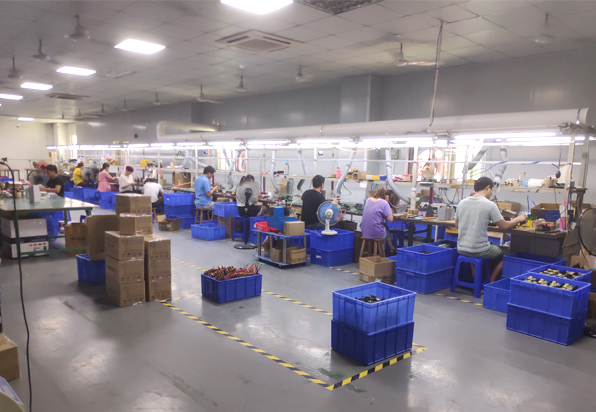
Engineered in our ISO 9001 certified manufacturing plant to meet CE EMC/LVD mandates and strict California energy density requirements.
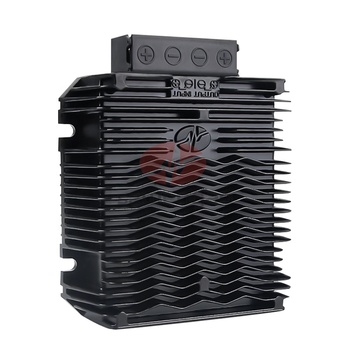
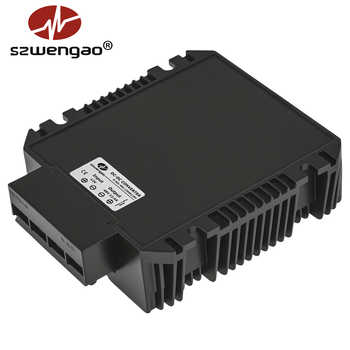
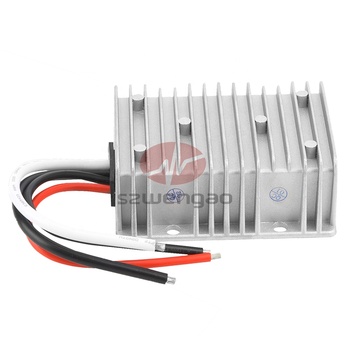

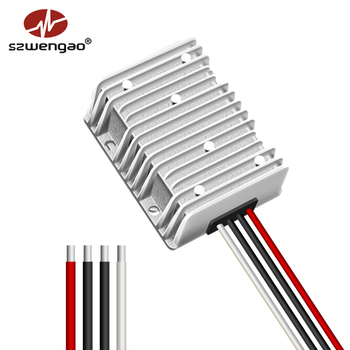
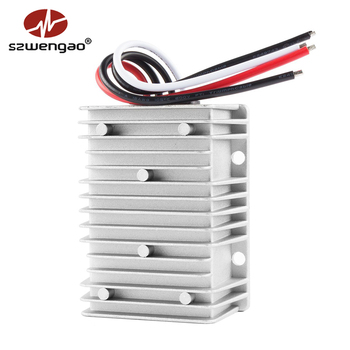
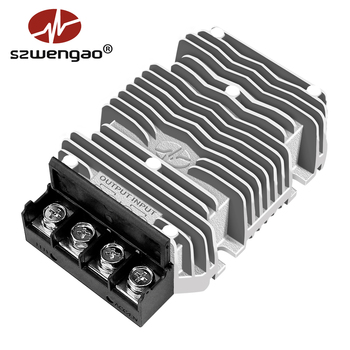
As the hardware ecosystem across San Jose, Santa Clara, Sunnyvale, and the greater Silicon Valley area accelerates development in autonomous robotics, AI edge compute racks, localized battery energy storage systems (BESS), and electrification platforms, power conversion demands have evolved far beyond generic commodity modules. Modern field-deployed systems experience severe transient fluctuations, ground-potential shifts, harmonic distortion, and unforgiving thermal dissipation constraints. Finding a reliable, direct CE certified DC boost converter factory that can seamlessly bridge rapid engineering validation with high-volume, defect-free production has become a primary bottleneck for Silicon Valley hardware directors and procurement managers.
Shenzhen Eltrum Electronic Co., Ltd., leveraging over a decade of dedicated power electronics R&D since our founding in 2015, designs and manufactures high-density non-isolated and isolated step-up DC-DC architectures engineered specifically for severe electrical environments. Our proprietary multi-phase synchronous boost topologies deliver efficiency curves peaking up to 96.8%, significantly mitigating internal thermal runaways and eliminating bulky external heat exchangers within space-restricted automated guided vehicles (AGVs), marine navigation bridges, and outdoor solar-tied telemetry hubs.
Traditional non-synchronous boost converters rely on Schottky freewheeling diodes. While inexpensive to implement, the inherent forward voltage drop ($V_f \approx 0.45\text{V} - 0.75\text{V}$) becomes catastrophic under the continuous high-amperage draws typical in San Jose's industrial robotics and EV drive lines. At a 30A continuous output rail, a standard diode bridge burns 15W to 22W of pure thermal waste inside an enclosed housing.
Eltrum overcomes this thermal barrier by deploying low $R_{DS(on)}$ Trench-MOSFET and Gallium Nitride (GaN) synchronous switches driven by high-speed PWM micro-controllers. By driving conduction resistance down to milliohm levels, internal dissipated heat is reduced by more than 65%. Every unit is encapsulated in our proprietary vacuum-degassed, high-thermal-conductivity organic silicone potting, achieving complete IP68 ingress defense while conducting heat directly into the ribbed extruded aluminum 6063 casing. This ensures that hardware startups and tier-one defense or cleantech firms in Silicon Valley can run sustained 100% duty cycles without thermal derating across standard California summer ambient peaks.
Many Silicon Valley technology firms design in San Jose but deploy their turnkey systems globally—from Western Europe to Japan and Latin America. Deploying sub-assemblies lacking rigorous electromagnetic compatibility (EMC) testing introduces substantial recall liabilities and customs impound risks. Eltrum's DC step-up boost converter factory operates under strict ISO 9001 certified quality control processes, submitting each model family to independent laboratory scrutiny:
| Compliance Vector | Harmonized Testing Standard | Eltrum Engineering Performance Margin | Silicon Valley Deployment Benefit |
|---|---|---|---|
| Radiated & Conducted EMI | EN 55032 / FCC Part 15 Class B | -6 dB to -10 dB below maximum allowable envelope | Zero noise interference with LiDAR, radar, GPS, and CAN-bus telemetry. |
| Electrostatic Immunity | EN 61000-4-2 (Air ±8kV, Contact ±4kV) | Enhanced TVS arrays rated for ±15kV discharge | Eliminates field latch-ups caused by human handling or robotic static discharge. |
| Harmonics & Voltage Surge | EN 61000-4-5 / ISO 7637-2 (Pulse 2a/3a/5b) | Withstands automotive 87V alternator load-dump spikes | Directly compatible with Class 4-8 commercial vehicle and AGV auxiliary lines. |
| Materials & Eco-Toxicity | RoHS Directive 2011/65/EU & (EU) 2015/863 | 100% lead-free, non-halogenated potting chemistry | Streamlined compliance audits for California Proposition 65 & EU cross-border transit. |
Unlike generic trading brokers who supply falsified CE test reports, our factory directly supplies fully traceable documentation, bill-of-materials (BOM) transparency, and certificate numbers verified by accredited notified testing bodies.
Tailored electrical characteristics for high-growth sectors across the South Bay corridor.
Silicon Valley warehouse automation companies rely on 12V or 24V starter and traction packs. Our compact boost modules step voltage up to 48V to drive brushless servomotors, LiDAR arrays, high-speed pneumatic actuators, and stereo-vision perception clusters without requiring multiple segregated batteries.
Under strict California Title 24 energy mandates, off-grid telemetry, EV charging control kiosks, and distributed energy storage installations across Northern California integrate our wide-input buck-boost and boost regulators to maintain invariant DC bus rails from fluctuating photovoltaic string outputs.
Autonomous testing fleets operating along the I-280 and Highway 101 corridors draw significant power for server-grade GPUs and edge analytics nodes. Eltrum's boost units provide isolated, noise-immune 19V, 24V, or 48V power lines directly from standard vehicle alternator buses, isolating sensitive compute units from motor spikes.
Procurement patterns among San Jose and Milpitas hardware firms have shifted dramatically over the past 24 months. As venture funding and commercial procurement demand tighter capital efficiency, hardware design teams have replaced costly domestic custom-fabricated power assemblies with verified, factory-direct OEM/ODM modules from certified manufacturers. The dominant regional trends shaping local specification demands include:
The Rapid Shift to 48V Architecture: With high-compute AI processors and heavy servo-actuators pulling kilowatt-level power budgets, traditional 12V distributions suffer intolerable $I^2R$ copper losses and thick, unmanageable cabling bundles. San Jose engineers are rapidly standardizing on 48V intermediate distribution buses. DC boost converters act as the critical enabling bridge, elevating existing 12V or 24V lead-acid and lithium battery inputs up to stabilized 48V rails without forcing entire sub-system redesigns.
Smart Communication Protocols: Blind DC-DC converters without status monitoring are no longer accepted in enterprise industrial IoT architectures. Hardware architects increasingly demand digital feedback via RS485 Modbus RTU or CAN bus interfaces. Real-time logging of operating temperatures, input/output amperages, and fault codes allows San Jose cloud fleets to perform predictive maintenance before hardware suffers catastrophic downtime.
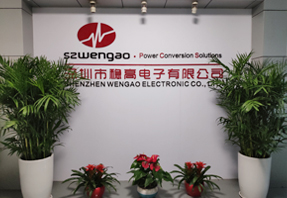
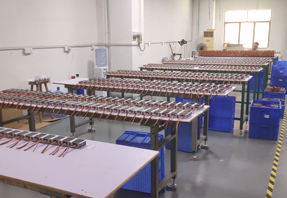
Operating out of our verified, state-of-the-art facility in Shenzhen, Shenzhen Eltrum Electronic Co., Ltd. provides San Jose tech leaders the exact balance of rigorous high-volume manufacturing economies and low-friction, engineer-to-engineer customization.
From sample validation runs (starting at just 5 pieces) to full turnkey OEM contract manufacturing with custom laser-engraved buyer branding and proprietary wire harnesses, Eltrum provides San Jose buyers direct access to factory pricing with zero intermediary friction.
Straightforward technical and commercial answers for Bay Area electrical engineers, NPI managers, and supply chain directors.
Send our senior engineering team your input range, target output voltage, amperage, and mechanical constraints. Receive a comprehensive quotation and technical datasheet within 12 hours.