Precision CE-Certified Buck-Boost Converters & Battery Chargers
Engineered to mitigate dynamic voltage drop, fluctuating alternator currents, and industrial DC brown-outs across rigorous commercial environments.

Smart 36V LiFePO4 DC-DC Charger 13A
- Topology: Buck-Boost / Multi-Stage
- Input: 12V DC Alternator
- Output: 43.8V DC @ 13A
- Enclosure: IP67 Waterproof Potted

1500W High-Power Buck-Boost with RS485
- Input Range: 10V – 60V Continuous
- Regulated Rails: 12V, 24V, 28V, 48V
- Efficiency: Up to 96% Conversion
- Interface: Digital RS485 Telemetry
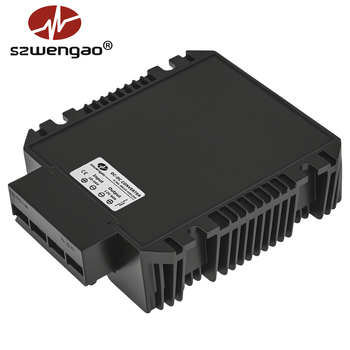
10–44V to 12V 60A DC Stabilizer
- Input Envelope: 10V – 44V DC
- Output Power: 12V Constant @ 60A (720W)
- Protection: Thermal, Short, Overload
- Form Factor: Extruded Aluminium Ribbed
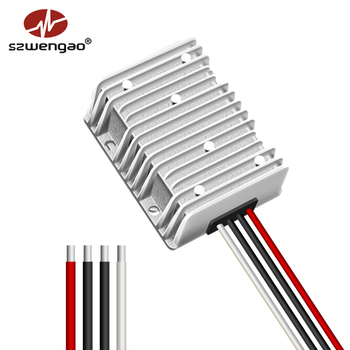
8–40V to 13.8V Marine Bus Stabilizer
- Nominal Output: 13.8V DC (Float Standard)
- Current Output: 30A Continuous Output
- Surge Endurance: 414W Dynamic Handling
- Testing: 100% Full Burn-in Cleared
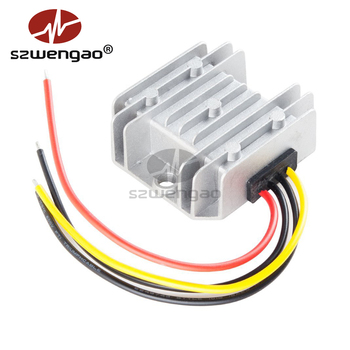
Automotive 8–40V to 12V Regulators
- Voltage Trim: Ultra-Stable 12.0V Rail
- Current Range: 1A, 3A, 6A Variants
- Transient Filter: ISO 7637-2 Spike Suppression
- Certification: CE Certified / RoHS Direct
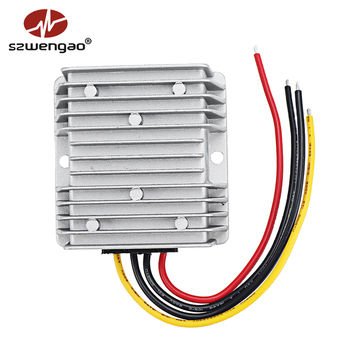
9–40V to 24V 10A Buck-Boost Module
- Dynamic Swing: Accepts 12V & 24V Discharges
- Output: 24V Solid Bus @ 240W Max
- Ripple & Noise: < 50mVp-p Clean Rail
- Sealing: Epoxy Vacuum Enclosure
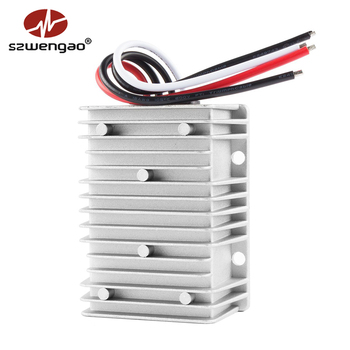
9–40V to 19V Industrial PC Power Hub
- Output Calibration: 19.0V IPC Voltage Standard
- Rated Load: 15A Max (285W Sustained)
- Topology: Four-Switch Synchronous
- Cooling: Free-Air Natural Convection
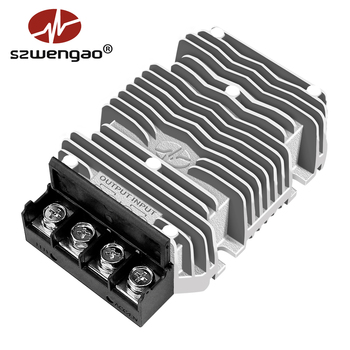
9–40V to 28V Heavy Vehicle Stabilizer
- Target Voltage: 28V Heavy Avionics/Marine
- Current Output: Up to 20A (560W Deliverable)
- Isolation Class: Common Ground Non-Isolated
- Standards: EN 61000-6-2, EN 61000-6-4
Technical Architecture: Synchronous Buck-Boost Topology vs. Cascaded Systems
For UK electrical engineering teams across Greater Bristol and South Gloucestershire, voltage fluctuations pose persistent challenges in automotive, marine, and renewable infrastructure. A typical lead-acid starter battery experiences cold-crank voltages dipping to under 8.5V DC, while alternator load dumps can push spikes north of 35V. Concurrently, modern lithium iron phosphate (LiFePO4) installations demonstrate strict voltage acceptance windows that traditional linear or buck-only circuits cannot regulate.
Shenzhen Eltrum Electronic’s CE Certified Buck-Boost Converters utilize a non-inverting, four-switch synchronous buck-boost topology managed by advanced PWM switching controllers. Unlike legacy single-switch SEPIC or non-synchronous boost configurations that suffer from severe thermal dissipation and elevated conduction losses (I²R), synchronous buck-boost architectures replace the freewheeling diode with high-frequency, low-RDS(on) power MOSFETs. This yields an operational efficiency regularly exceeding 94% to 96%, allowing full-load operation in ambient environments up to +50°C without requiring forced fan maintenance.
| Converter Topology | Dynamic Vin vs. Vout Compatibility | Typical Peak Efficiency | Common Bristol Local Applications |
|---|---|---|---|
| Non-Inverting Synchronous Buck-Boost | Vin can float dynamically above, equal to, or below Vout (8V–40V to fixed 12V/24V) | 94% – 96.5% | Avonmouth dockside telemetry, electric campervan conversions, smart grid monitoring |
| Galvanically Isolated Flyback/Forward | Broad input range with completely isolated input/output grounds | 88% – 91% | Aerospace instrumentation around Filton, subsea oceanographic sensors, telecom nodes |
| Standard Synchronous Buck (Step-Down) | Requires Vin > Vout + headroom (minimum 2V-3V differential) | 95% – 98% | Electric bus passenger USB hubs, 48V mild hybrid stepped to 12V auxiliary chassis loads |
| Standard Asynchronous Boost (Step-Up) | Requires Vin < Vout; no output cutoff without inline contactor | 90% – 93% | Battery-assisted solar off-grid pumps, 12V battery up to 48V power over ethernet arrays |
To adhere directly to the CE Low Voltage Directive (LVD 2014/35/EU) and the Electromagnetic Compatibility Directive (EMC 2014/30/EU), every Eltrum buck-boost assembly integrates continuous input filter chokes, high-attenuation common-mode inductors, and specialized multilayer ceramic capacitors (MLCCs). This structure dampens high-frequency ripple below 50mVp-p, fully protecting sensitive navigational receivers, CAN-bus control units, and PLC controllers from radiated and conducted interference across critical South West manufacturing sites.
Key Deployment Scenarios Across Bristol and the South West
Providing high-reliability DC power conversion hardware tailored to the regional industrial fabric—from marine freight to clean tech clusters.
Avonmouth & Portbury Marine Systems
Docks, commercial cargo handlers, and luxury marine cruisers operating along the Bristol Channel require IP67 waterproof and salt-mist corrosion-resistant buck-boost converters. Our potted modules ensure clean 12V/24V power stabilization for marine navigation arrays, AIS transmitters, and bilge pump controllers despite extreme engine alternator voltage dips.
Campervan & Fleet Conversions
Bristol and Somerset host a dense community of bespoke overland builders and municipal vehicle modifiers. When tying Euro 6 smart alternators with variable charging algorithms to secondary house LiFePO4 banks, our buck-boost DC-DC chargers maintain an accurate CC/CV curve without tripping alternator shutoffs.
Clean-Tech & Off-Grid Solar Storage
South West England's rural distributed energy setups often experience shifting voltage curves under variable irradiance. Our wide-input 8V-40V to 13.8V/28V stabilizers deliver steady power to edge compute stations, CCTV infrastructure, and off-grid telecoms across Exmoor and the Mendip perimeter.
Bristol Green Transition & High-Voltage Electrification Trends
How current regulatory frameworks and technological pivots are shaping DC power converter sourcing in the UK market.
Bristol Clean Air Zone (CAZ) Fleet Transitions
With aggressive emissions policies active across Central Bristol, commercial fleets are rapidly repowering to full electric or hybrid powertrains. Moving to 48V, 72V, and 96V traction packs demands industrial buck-boost converters that can smoothly bridge legacy 12V communication peripherals, hydraulic tail lifts, and emergency beacon lighting directly from the traction system.
Filton Engineering Corridor Automation
Home to world-class aerospace and advanced engineering clusters, the Filton corridor is increasingly rolling out Autonomous Mobile Robots (AMRs) and automated factory transport. These platforms rely on non-inverting buck-boost converters to prevent brownouts during rapid motor acceleration cycles while maintaining isolated communications with central PLCs.
Demand for Digital Control & RS485
Traditional static regulators are giving way to digitally monitored systems. British system integrators now consistently require buck-boost units offering RS485/CAN interfaces for real-time telemetry of internal temperatures, actual current draw, and dynamic output adjustments via host microprocessor command sets.
Shenzhen Eltrum Electronic Co., Ltd.
Founded in 2015, Shenzhen Eltrum Electronic Co., Ltd. specializes in precision DC-DC conversion, waterproof LiFePO4 battery charging modules, AC-DC industrial power supplies, and high-voltage power components. Operating from an onsite-verified 3,000m² manufacturing facility in Shenzhen's Hangcheng technology hub, our operations balance engineering agility with strict quality governance.
By managing the complete lifecycle—from high-frequency magnetic winding and automated SMT placement to high-vacuum thermal potting and automated full-load burn-in testing—we provide UK importers and Bristol equipment manufacturers with direct factory pricing, traceable batches, and complete conformity documentation.
Frequently Asked Questions by UK Engineers & Importers
Direct answers addressing technical selection, regulatory compliance, logistics to Bristol ports, and customization minimums.
Q: How do Eltrum CE certified buck-boost converters satisfy UKCA compliance?
Our power converters are manufactured to stringent CE harmonized standards (EN 62368-1, EN 55032 Class B, EN 55035). Following UK regulatory transitions, these test reports directly support UKCA self-declaration processes, facilitating seamless entry for distributors importing into Bristol port authorities, Southampton, or via London air hubs.
Q: When must I choose a buck-boost topology over a conventional buck regulator?
A buck regulator will lose regulation whenever input voltage drops below the output setpoint plus the controller's required dropout headroom. In a vehicle environment where a 12V battery dips to 9V under starter engagement or an off-grid 24V solar array fluctuates between 18V and 32V, a buck-boost converter is non-negotiable to maintain an uninterrupted, constant rail.
Q: What is the standard delivery timeframe for engineering samples to Bristol?
Standard production converter samples are dispatched within 3 to 5 business days from our Shenzhen factory. Utilizing priority air express (DHL/FedEx/UPS), consignments reach Bristol and the South West within 4 to 6 business days. Sea freight container runs for volume orders typically land at Southampton or Felixstowe within 26–32 days.
Q: Can Eltrum tailor internal charging profiles or custom input/output voltages?
Yes. As an original design manufacturer (ODM), our engineering team frequently customizes non-standard voltage parameters (such as 19.5V, 28.5V, or 54.6V float thresholds), installs proprietary connector assemblies (Anderson Powerpole, Deutsch DT, M12), and programs unique current limit profiles starting from an MOQ of just 50 to 100 units.
Q: How do you address high moisture and vibration in marine/automotive settings?
Eltrum converters utilize heavy-gauge die-cast aluminium enclosures vacuum-potted with thermally conductive, flame-retardant silicone or epoxy resin (UL94-V0 rated). This construction completely shields internal magnetics and active components from vibration fatigue, engine bay oil mists, condensation, and marine saltwater exposure.
Q: What payment mechanisms and international trade terms are supported?
We work flexibly under standard Incoterms 2020 including FOB Shenzhen, EXW, and CIF/DAP UK destinations. Settlement is accepted via international telegraphic transfer (T/T), PayPal for sample evaluations, and verified commercial Escrow in USD, EUR, or GBP currencies.
Streamline Your DC Power Conversion Architecture Today
Whether you are designing a low-emission municipal vehicle fleet, retrofitting marine electric cruisers along the Bristol Channel, or producing ruggedized off-grid electronics, our direct-factory engineering department is ready to support your technical evaluation.