
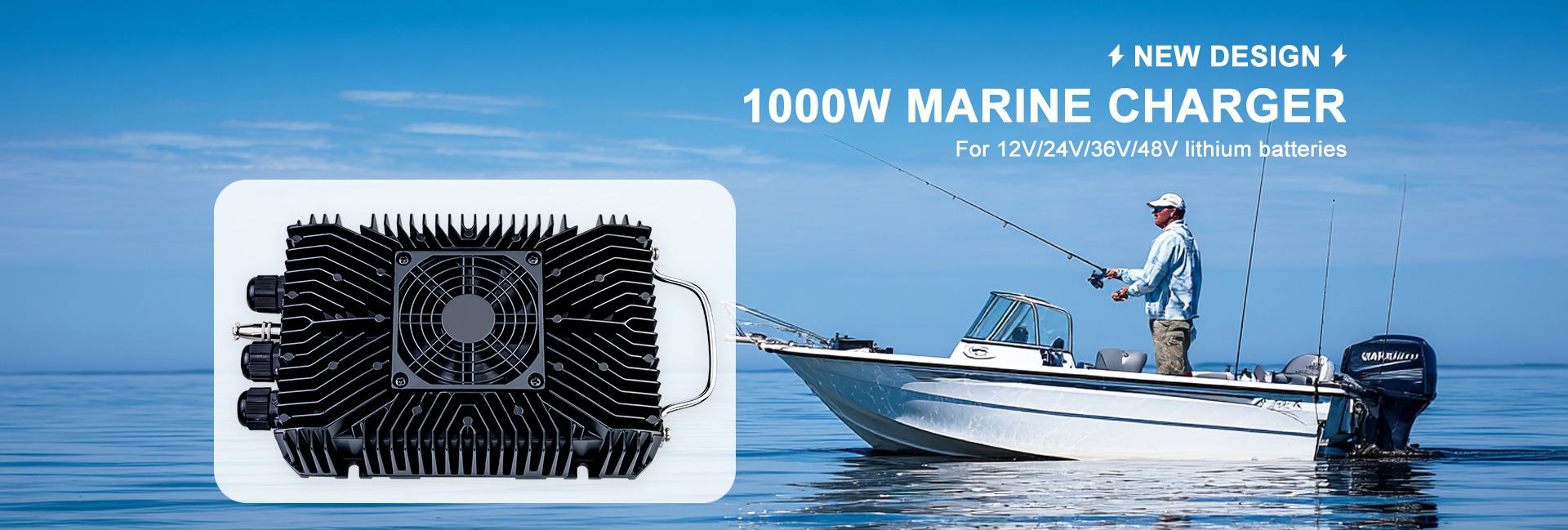
Smart 36V 13A Waterproof LiFePO4 Charger (12V to 43.8V)
- Input Voltage12V DC Nominal (9–16V)
- Charge Cutoff43.8V CC/CV Profile
- Continuous Amps13A True Output
- ProtectionIP67 Fully Sealed Die-Cast
Engineered to comply with stringent European low-voltage and EMC directives. Select from smart buck-boost regulators, galvanic-isolated converters, and high-wattage IP65 waterproof lithium chargers proven across rigorous German automotive benchmarks.
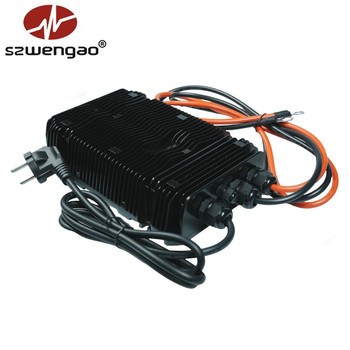
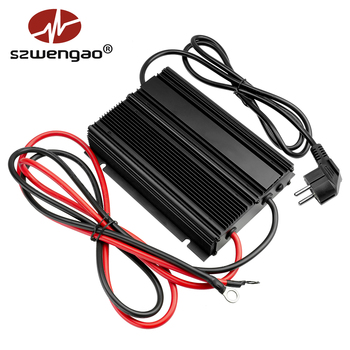
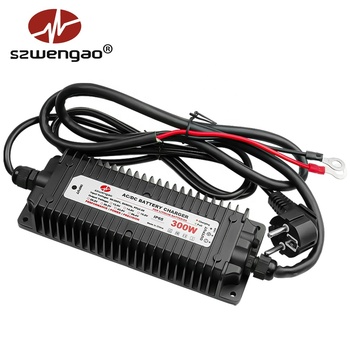
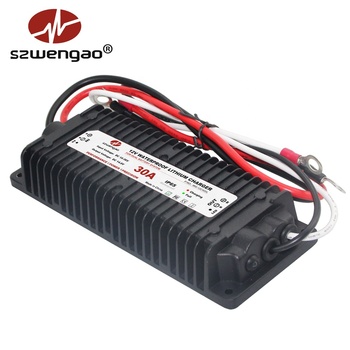


Munich serves as the epicenter of European automotive engineering. Designing, manufacturing, and supplying charging systems into the Bavarian technology corridor demands rigorous adherence to electromagnetic compatibility, thermal shock limits, and dynamic Euro 6 alternator profiles.
Modern vehicles engineered across Bavarian automotive hubs employ intelligent battery sensors (IBS) and brake energy recuperation alternators. When the primary starter battery achieves minimal threshold SOC, modern alternator voltages frequently drop to 12.2V or surge past 15.2V within milliseconds.
Traditional diode isolators or simple non-regulated relays fail completely under these fluctuating conditions, leading to severely undercharged lithium secondary banks or abrupt shutdown errors. Our DC-DC buck-boost charging topologies actively condition erratic input voltages (8V to 36V), continuously delivering a laser-stable Constant Current / Constant Voltage (CC/CV) curve configured down to 0.1V precision, ensuring zero BMS trigger disruptions.
Munich experiences severe Continental European winters, with commercial fleets and recreational conversions frequently navigating sub-zero Alpine conditions (-15°C to -25°C in the Bavarian Oberland). Charging lithium iron phosphate (LiFePO4) chemistries below freezing without thermal intelligence causes irreversible metallic lithium plating, capacity loss, and dangerous internal short circuits.
Our automotive battery chargers feature integrated negative temperature coefficient (NTC) sensor monitoring and optional CAN-bus telemetry. When ambient cell temperatures cross the freezing boundary, the charger reduces current delivery to conditioning thresholds or triggers pre-heating thermal blanket circuits, ensuring complete compliance with VDE and DIN EN safety guidelines.
From research facilities in Garching to heavy-duty fleet depots in Feldkirchen, our power modules fulfill specialized regional demands.
Automotive research clusters require versatile, lab-grade DC-DC modules for high-voltage and low-voltage bench prototyping. With RS485 / CAN communication protocols, engineers dynamically dial in target absorption voltages and cutoff ramp rates.
Municipal emission standards in Munich’s Low-Emission Zone (LEZ) accelerate parcel van conversions. Our 24V-to-12V and 48V auxiliary step-down chargers reliably power tail lifts, on-board telematics, refrigeration units, and cargo-bay sorting electronics.
Upper Bavaria is Germany's primary market for motorhome touring and off-road overlanding. Compact IP67 waterproof DC-DC dual-battery chargers isolate chassis electronics while rapidly pumping up to 40A of regulated charge into domestic LiFePO4 house packs.
Automated Guided Vehicles (AGVs) in logistics warehouses require high-rate opportunity charging. Our IP65 sealed 600W–1000W AC-DC and high-input DC-DC modules provide shock-tested, continuous operation resistant to fine brake dust and water spray.
Match your electrical architecture against verified conversion performance metrics.
| Topology | Input Voltage Window | Primary Output Range | Conversion Efficiency | Target Local Application |
|---|---|---|---|---|
| Buck-Boost Charger | 10V–44V / 10V–60V DC | 14.6V, 29.2V, 43.8V LiFePO4 | ≥ 94.5% Synchronous | Euro 6 alternators, Dual-battery RVs, Alpine expedition vehicles |
| Step-Down (Buck) Charger | 24V, 48V, 72V, 80V DC | 12V, 13.8V, 24V Regulated | Up to 96% Peak | Electric forklifts, Airport GSE, MAN bus auxiliary conversions |
| AC-DC Industrial Charger | 90V–265V AC Universal | 12V to 72V Custom Profiles | ≥ 93% LLC Resonant | Overnight depot charging, Workshop maintenance stations, Marine docks |
| Galvanic Isolated Series | 18V–36V / 36V–75V / 18–90V | 5V, 12V, 24V Pure Ground | ≥ 90% Isolated | Automotive test benches, CAN telemetry, Safety-critical instrumentation |
Procurement directors and systems engineers across Bavaria are adapting to regulatory mandates, clean-grid integration, and digital fleet telemetry.
The state capital of Bavaria has committed to achieving full climate neutrality by 2035. This accelerated timetable places immense pressure on municipal utility services, intra-city transit vehicles, and construction contractors to replace legacy combustion setups with hybridized or fully electrified battery systems.
Supplying chargers into this sector requires sustained reliability under high duty cycles. Our sealed high-power chargers are designed with high-grade components that guarantee an MTBF exceeding 50,000 hours, cutting lifecycle service calls in half.
Static, unmonitored power supplies are rapidly becoming obsolete in German fleet engineering. Automotive buyers in Munich demand bidirectional communication capability between the onboard battery management system (BMS) and the charger module.
Eltrum's advanced programmable units support Modbus RS485 and standardized CAN-bus networks, enabling precise real-time reporting of thermal dissipation, voltage sag, delivered milliampere-hours, and active fault isolation—essential data streams for modern European cloud telematics suites.
Combining specialized power electronics engineering with rigorous quality control, our Shenzhen manufacturing facility bridges flexible prototyping and high-volume consistency.
We are a verified original equipment manufacturer, not a trading broker. Operating over 3,000m² of production infrastructure in Shenzhen with automated SMT, precision magnetic winding, and complete conformal vacuum-potting lines, we maintain total ownership of the production value chain.
German engineering validation begins on the test bench. Unlike rigid suppliers demanding thousands of units upfront, we support Munich R&D teams with an accessible MOQ starting from just 5 units on standard configurations, with expedited air shipping directly to Munich International Airport (MUC).
Our operational management complies strictly with ISO 9001 protocols. Each converter and charger batch is subjected to 100% full-load electrical burn-in testing, high-potential dielectric breakdown validation, and ripple waveform analysis prior to export dispatch.
Key technical and commercial inquiries regarding customs clearance, standards compliance, and localized operational integration.
Whether you require standard samples for immediate testing in Munich or need to configure a custom multi-stage charging profile for high-volume commercial vehicle production, our engineers respond with full datasheets and pricing within 24 hours.