Featured Buck-Boost & Conversion Models for Maltese Applications
Eight field-tested topologies engineered for volatile input supplies, operating with up to 96% conversion efficiency, IP68 aluminum-potted protection, and rigorous thermal headroom.

1500W High Power Buck-Boost Converter (10–60V Input)
- Input Range: 10–60V DC Wide
- Output Rails: 12V, 24V, 28V, 48V
- Control Bus: RS485 Modbus RTU
- Enclosure: IP67 Aluminum Alloy
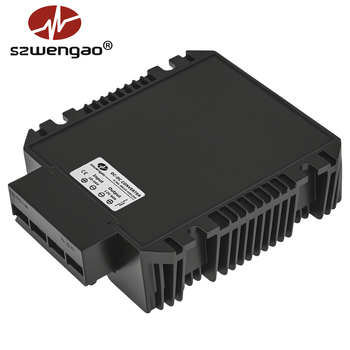
10–44V to 12V 50A/60A High-Current Voltage Stabilizer
- Input Range: 10–44V Continuous
- Output Current: 50A / 60A Constant
- Efficiency: >95.4% Peak
- Ideal For: Yacht DC Bus & Winches
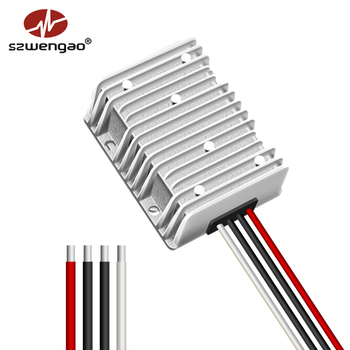
8–40V to 13.8V 25A/30A Marine Communications Supply
- Input Range: 8–40V DC (Cranking Safe)
- Output: 13.8V Nominal (Radio Bus)
- Max Output: 414W Continuous
- Protection: Over-temp, Short, Reverse
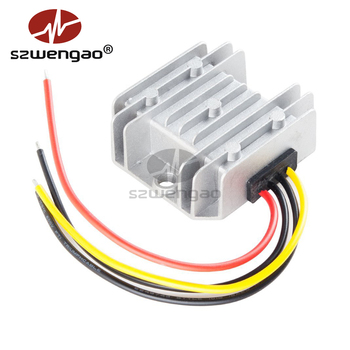
8–40V to 12V 1A–6A Compact Automotive Voltage Stabilizer
- Input Range: 8–40V Ultra-Wide
- Output: 12V Precision ±1%
- Housing: Potted Resin Compact
- Standby Current: < 15mA Low Drain
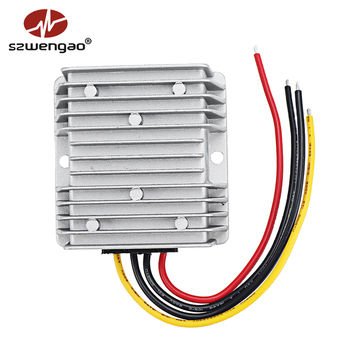
9–40V to 24V 6A/10A Automatic Buck-Boost Module
- Input Dynamic: 9–40V (12V/24V Auto)
- Output: 24V DC Fixed • 240W
- Ripple Noise: < 60mVp-p Low EMI
- Standard: EN 61000-6-2 / 6-4
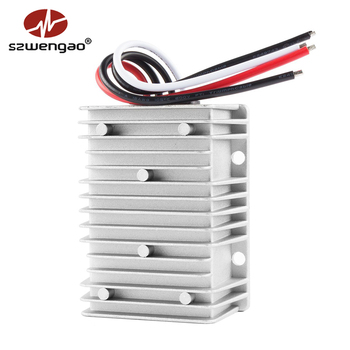
9–40V to 19V 15A Marine Workstation Power Supply
- Input Range: 9–40V (Dual Battery)
- Output: 19V DC • 15A (285W)
- Design: Synchronous Rectification
- Application: ECDIS & Naval Navigation PC
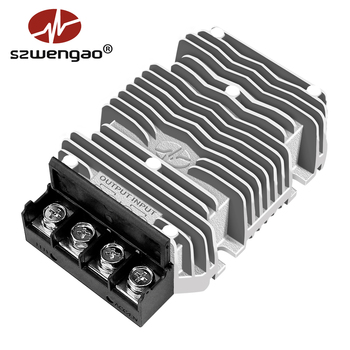
9–40V to 28V 15A/20A Heavy-Duty DC Voltage Regulator
- Input Range: 9–40V Wide Swing
- Output: 28V Precision • Up to 560W
- Cooling: Integrated Fin Extrusion
- Thermal Range: -40°C to +85°C

Smart 36V Lithium Battery Charger DC 12V to 43.8V 13A Waterproof
- Topology: DC-DC Step-Up CC/CV
- Input / Output: 12V DC → 43.8V 13A
- Ingress Grade: IP67 Fully Waterproof
- Application: EV Carts, E-Bikes, Marine RV
Architectural Principles of Non-Inverting Synchronous Buck-Boost Converters in Island Grid Dynamics
In autonomous electrical networks, variable-voltage renewable microgrids, and maritime electrical systems, preserving rail integrity across dynamic swings is an inescapable operational mandate. Unlike simplified linear regulators or unidirectional step-down switchers, the modern non-inverting synchronous four-switch buck-boost converter operates across continuous boundary transitions where the input DC bus alternates between levels substantially above, equal to, or depressed below the regulated output setpoint. In coastal island infrastructures such as the Maltese archipelago, where battery storage state-of-charge (SoC) cycles oscillate under solar irradiance spikes and heavy alternator transients, standard step-down conversion modules induce brownouts or outright system resets.
Shenzhen Eltrum Electronic Co., Ltd. builds its industrial and marine-grade buck-boost conversion platforms upon advanced multi-mode digital pulse-width modulation (PWM) controllers combined with ultra-low on-resistance metal-oxide-semiconductor field-effect transistors (MOSFETs). When the input voltage exceeds the output setpoint by more than the programmed control hysteresis, the bridge topology transitions seamlessly into pure synchronous buck mode, driving the high-side control switch while locking the boost-stage freewheeling FET into static conduction. Conversely, when deep engine cranking or heavy inductive loading drops the primary bus, the switching core executes high-frequency boost regulation, stepping up the available potential with minimal conversion ripple.
Technical Insight: By eliminating diode conduction losses through synchronous active FET rectification and applying closed-loop cycle-by-cycle average current mode control, Eltrum buck-boost architectures maintain thermal junction temperatures below critical limits even when ambient Mediterranean coastal temperatures exceed 40°C in enclosed engine compartments and sealed rooftop combiner enclosures.
A critical engineering differentiator of our hardware lies in the electromagnetic interference (EMI) suppression stages. Switching harmonics native to four-switch topologies can interfere with high-frequency marine navigation instrumentation, VHF maritime radios, and LoRa-based telemetry sensors. Our converters integrate multi-stage Pi-filters (C-L-C), shielded powder-core toroidal inductors, and specialized soft-switching commutation algorithms that limit both differential and common-mode conducted emissions, fully conforming to European EMC Directives EN 55032 Class B and EN 61000-6-3 without requiring auxiliary external filtering chokes.
Localized Application Scenarios across Malta and Gozo
From superyacht moorings in the Grand Harbour to autonomous solar installations in Xewkija, our power converters solve extreme environmental and electrical stability challenges.
Superyacht & Commercial Marine Vessel DC Auxiliary Systems
Maltese shipyards and marinas—including the Grand Harbour Marina, Manoel Island Yacht Yard, and Mgarr Harbour in Gozo—operate under stringent marine safety codes. Large alternators and twin-engine starter banks produce notorious voltage sags during starter engagement (plunging below 9V on nominal 12V systems, or below 18V on 24V banks), followed by high-voltage inductive flyback spikes. Eltrum buck-boost stabilizers (e.g., our 8–40V to 13.8V and 10–44V to 12V modules) absorb these surges, guaranteeing constant, flicker-free power to vital navigation radars, GPS chartplotters, AIS transponders, auto-pilots, and NMEA 2000 marine backbones.
- Grand Harbour Retrofits
- NMEA 2000 Clean Power
- ISO 9227 Salt Fog Potting
Decentralized Solar PV, Battery Buffers & Island Microgrids
Malta receives over 3,000 hours of solar sunshine annually. With the aggressive decarbonization mandates of the Maltese National Energy and Climate Plan (NECP 2030), residential and commercial rooftop solar installations paired with LiFePO4 batteries are scaling rapidly across Bulebel, Hal Far, and Mriehel industrial parks. As battery voltage shifts widely from absorption (14.6V / 29.2V / 58.4V) down to lower discharge cut-offs (10.5V / 21.0V / 42.0V), our wide-input 1500W RS485-monitored buck-boost modules hold industrial telecommunications, PLC controllers, and environmental telemetry stations at an exact 24V or 48V rail.
- NECP 2030 Renewable Goals
- LiFePO4 Voltage Clamping
- Gozo Eco-Island Projects
Urban E-Mobility, Sightseeing Shuttles & Last-Mile Electric Vans
Valletta's pedestrianized historic core and Victoria's narrow street corridors in Gozo rely heavily on compact electric transit, commercial golf carts, electric luggage carriers, and lightweight commercial vans. Operating on high-voltage 48V, 60V, or 72V traction battery banks, these platforms experience massive internal voltage depression during uphill ascents on Malta's steep limestone gradients. Eltrum high-efficiency step-down buck and wide-range buck-boost modules provide steady 12V and 24V power for pneumatic braking actuators, hydraulic lifts, headlamps, and ticketing telematics.
- Valletta Eco-Transit
- High Gradient Load Stability
- 48V/72V Traction Step-Down
Seawater Desalination, Reverse Osmosis & Coastal Pumping Stations
Potable water security in Malta depends directly on the Water Services Corporation (WSC) running massive Reverse Osmosis (RO) plants at Pembroke, Cirkewwa, Ghar Lapsi, and Hondoq ir-Rummien. These facilities possess expansive distributed sensor fields measuring salinity, pressure, and membrane flux. Given the intensely humid, corrosive, and salt-laden ambient air, power supplies face rapid galvanic degradation. Our IP68 vacuum-epoxy potted isolated converters provide galvanic barrier protection (>1500V DC breakdown voltage), isolating sensitive monitoring loops from earth-loop drift and pump inverter electromagnetic interference.
- WSC Plant Telemetry
- 1500V DC Ground Isolation
- Anti-Corrosion Sealing
Coastal Telecom Base Stations & Offshore Navigational Lighthouses
Malta's telecom infrastructure providers (supporting GO, Epic, and Melita) operate coastal transmission repeaters and offshore navigational aids around Comino, Delimara, and cliffs near Dingli. Powered primarily by remote battery-solar systems, telecom DC distribution bars fluctuate between charging voltage and nighttime battery drawdown. Eltrum isolated 36–75V to 12V and 24V modules provide ultra-stable, ripple-free power to cellular repeaters, coastal microwave backhauls, and navigational telemetry beacons.
- Comino & Offshore Beacons
- 48V Telecom Standards
- Galvanic Ground Decoupling
Limestone Quarrying & Port Container Handling Equipment
The Malta Freeport at Marsaxlokk represents one of the Mediterranean's busiest container transshipment hubs, utilizing heavy rubber-tired gantry (RTG) cranes, reach stackers, and automated container tractors alongside inland globigerina limestone quarry extraction machinery. Heavy mechanical vibration, diesel alternator voltage dips, and airborne mineral dust quickly destroy fragile off-the-shelf power modules. Eltrum's heavy-gauge extruded aluminum casings, coupled with vibration-resistant solid silicone encapsulation, provide an exceptionally rugged MTBF exceeding 100,000 operational hours.
- Marsaxlokk Port Cranes
- Heavy Mechanical Shock
- Thermal Heatpipe Dissipation
Technological and Regulatory Trends Driving Malta's Power Electronics Demand
The Maltese power electronics market is undergoing a structural paradigm shift driven by European Union environmental directives and local geographic mandates. Three distinct regulatory and technological forces govern how local system integrators, marine electrical engineers, and industrial procurement managers specify DC-DC power conversion hardware:
1. Shore-to-Ship Maritime Decarbonization and Electrification: Through Transport Malta and Infrastructure Malta's Grand Harbour Clean Air Project, major cruise and commercial berths in Valletta and Senglea are rapidly commissioning high-capacity shore-to-ship cold ironing connections. As vessels transition from auxiliary diesel generators to shore power, internal DC distribution systems undergo complex switching sequences. Vessels equipped with lithium-based auxiliary banks require intelligent DC-DC battery chargers and bidirectional buck-boost regulators to balance load dynamics between utility mains inputs, onboard battery storage, and 24V marine service lines.
2. Rapid Phase-Out of Lead-Acid in Favor of LiFePO4 Chemistry: Across Maltese yacht refit yards, telecom sites, and commercial transport fleets, conventional deep-cycle flooded and AGM lead-acid batteries are being rapidly retired in favor of Lithium Iron Phosphate (LiFePO4). While LiFePO4 delivers superior energy density and lifecycle longevity, its flat discharge profile and strict low/high-voltage cutoff characteristics necessitate dedicated DC-DC conversion. Directly paralleling an alternator or fluctuating bus to a lithium bank risks catastrophic alternator burnout or BMS tripping. Eltrum's microprocessor-controlled CC/CV DC-DC battery chargers ensure alternators operate within safe thermal curves while delivering precise, multi-stage charge profiles.
3. Severe Coastal Mediterranean Saline and Thermal Stress: Malta experiences a microclimate characterized by high relative humidity (frequently exceeding 80%), intense ambient summer heat up to 42°C, and perpetual airborne marine salts. In conventional perforated or fan-cooled power supplies, salt crystallization triggers rapid tracking shorts, electrolytic cap failure, and galvanic corrosion between disparate trace metals. As an authoritative exporter to Malta, Shenzhen Eltrum Electronic manufactures modules utilizing high-purity aluminum enclosures back-filled with thermally conductive epoxy resin under vacuum potting processes. This seals out moisture, eliminating oxidation and delivering genuine IP67/IP68 ingress ratings that survive the harshest Mediterranean conditions.
Technical Specification Matrix: Buck-Boost vs. Standard Topologies
Selecting the optimal power conversion topology for Maltese maritime and industrial systems requires analyzing input swing flexibility, thermal limits, and isolation parameters:
| Series Architecture | Typical Input Window | Output Capability | Efficiency Range | Galvanic Isolation | Target Maltese Application |
|---|---|---|---|---|---|
| Wide Buck-Boost (4-Switch) | 10V – 60V DC Dynamic | 12V, 24V, 28V, 48V (Up to 1500W) | 94% – 96.5% | Non-Isolated (Common Ground) | Yacht Navigation, Solar Battery Buffers, RS485 Systems |
| Compact Car Stabilizer | 8V – 40V DC | 12V • 1A to 6A Continuous | 92% – 94% | Non-Isolated (Potted Resin) | Automotive Telematics, Security Cameras, Sensors |
| High-Current Buck (Step-Down) | 20V – 36V / 30V – 90V | 12V / 24V (Up to 100A / 1200W) | 95% – 97% | Non-Isolated | Truck Fleets, Electric Forklifts, Traction Drop |
| High-Current Boost (Step-Up) | 10V – 16V / 20V – 30V | 24V, 36V, 48V (Up to 50A) | 93% – 95.5% | Non-Isolated | Marine Bow Thrusters, 48V LED Mast Floodlights |
| Isolated Industrial Modules | 18V – 36V / 36V – 75V / 18V – 90V | 5V, 12V, 24V (Up to 120W) | 88% – 91% | Yes (>1500V DC Dielectric) | Telecom Base Stations, Reverse Osmosis Instrumentation |
| Smart DC-DC CC/CV Charger | 10V – 36V / 18V – 90V | 14.6V, 29.2V, 43.8V, 58.4V LiFePO4 | 93% – 95% | Configurable Options | Dual-Battery Campers, E-Mobility Fleet Charging |
Why Maltese Engineers & Procurement Teams Partner with Eltrum
Founded in 2015 and headquartered in Shenzhen's high-tech manufacturing hub, Shenzhen Eltrum Electronic Co., Ltd. has grown to become a benchmark manufacturer of advanced DC-DC conversion hardware, intelligent battery charging systems, and industrial power modules. Operating under a comprehensive ISO 9001 quality management framework, our facility integrates high-precision Surface Mount Technology (SMT) lines, computerized magnetic winding apparatus, high-vacuum potting chambers, and automated automated optical inspection (AOI) stations.
Our corporate ethos centers on engineering rigor, structural reliability, and responsive client collaboration. While many mass-market suppliers offer generic off-the-shelf assemblies with inflated paper ratings, Eltrum rates all continuous current, voltage regulation tolerances, and operating temperatures based on rigorous empirical test bench verifications. Every single unit leaving our facility undergoes 100% full-load thermal burn-in stress testing in dedicated environmental chambers, ensuring zero-defect arrivals across European shipping destinations.
For Maltese importers, distributors, and original equipment manufacturers (OEMs), Eltrum eliminates traditional supply chain friction. We accommodate low Minimum Order Quantities (starting from 5 units for sample engineering evaluations) and provide comprehensive OEM/ODM customization services. Whether you require custom input voltage windows to interface with specialized marine generators, customized charging firmware curves for third-party LiFePO4 battery management systems, IP68 immersion-grade marine potting, or buyer-labeled laser engraving, our engineering staff collaborates directly with your technical personnel.
1. Rigorous Engineering Review
Each Maltese procurement inquiry is evaluated by power electronics application engineers to calculate exact thermal derating, cable cross-section requirements, and inrush multipliers.
2. Precision SMT & Potting
Automated Yamaha surface-mount placement, high-reliability magnetics, and two-component polyurethane or silicone potting guarantee complete immunity against salt fog and vibration.
3. Thermal Burn-In & EU Dispatch
100% full-load burn-in screening, electrical isolation breakdown testing, CE/RoHS verification, and fast DDP/DAP maritime air freight directly to Malta International Airport or Malta Freeport.
Frequently Asked Questions for Importers in Malta
Clear answers regarding European compliance, customs tariffs, logistics, technical selection, and warranty terms for Maltese marine and industrial engineers.
Do Eltrum Buck-Boost converters comply fully with European Union CE and RoHS directives for importation into Malta?
What is the standard lead time and preferred freight route for consignments shipped from Shenzhen to Malta?
How do Eltrum converters prevent failure in hot Maltese vessel engine compartments where ambient air reaches 50°C?
Can I use an Eltrum DC-DC Buck-Boost converter as a battery charger for a LiFePO4 house bank on a boat?
What payment mechanisms and VAT treatment apply for commercial purchases from Malta?
What minimum order quantity (MOQ) is required for custom OEM voltage or connector adaptations?
Accelerate Your Maltese Power Engineering Project
Whether you are designing a hybrid marine vessel for the Grand Harbour, setting up solar storage on Gozo, or sourcing rugged DC voltage stabilizers for commercial fleets, our application engineering team in Shenzhen is ready to review your schematics and deliver customized, factory-direct solutions.