
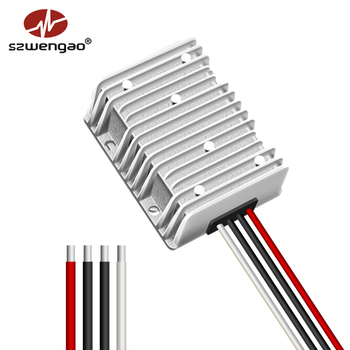
Smart 36V 13A Waterproof Lithium LiFePO4 Battery Charger (12V to 43.8V)
- Topology: Step-Up Boost Charging
- Efficiency: ≥ 95.5%
- Ingress: IP67 Fully Potted
Engineered to eliminate voltage drops, handle high regenerative braking spikes, and provide stable 12V, 24V, and 48V rails across rigorous maritime, logistics, and micro-mobility operations.

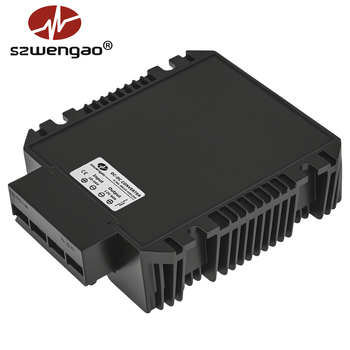
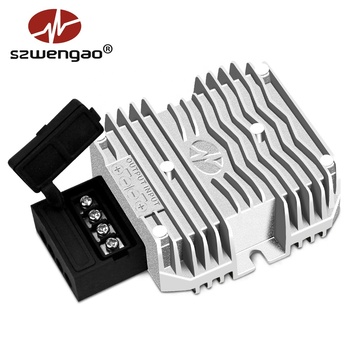
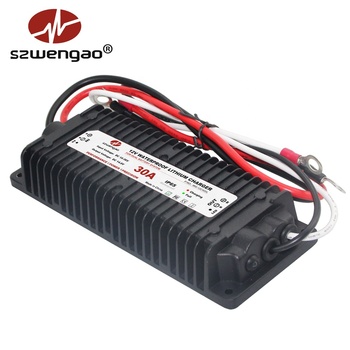

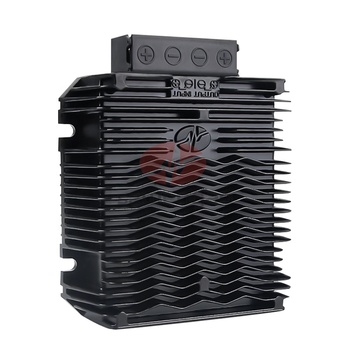
Navigating aggressive municipal zero-emission mandates across Dutch inland waterways, automated intra-logistics corridors, and distributed maritime architectures.
Under the strict Amsterdam Uitstootvrije Zone (Zero Emission Inland Waterways Policy), tourist tour boats, canal taxis, and work barges operate high-capacity 48V, 72V, or 96V LiFePO4 propulsion arrays. Our waterproof IP67 buck-boost converters precisely step down fluctuating propulsion battery rails to an absolute stable 12V or 24V for NMEA 2000 navigational electronics, hydraulic steering, radar, and VHF communications, completely immune to the massive transient spikes generated during rapid motor reversing.
The ring canals of Amsterdam prohibit diesel delivery trucks, migrating parcel logistics to heavy-payload electric cargo bikes (LEVs) and lightweight delivery vans. These fleets demand high-density 36V/48V/72V to 12V step-down buck conversion to supply electronic shifting, telematics GPS track-and-trace, refrigeration cool-boxes, and high-lumen lighting arrays without triggering thermal shutdowns during frequent stop-and-go routing through cobblestone streets.
Across automated sorting centers in Westpoort and regional hyper-scale data corridors, Automated Guided Vehicles (AGVs) and autonomous mobile robots (AMRs) operate continuous DC loops. Our galvanic isolated DC-DC modules (1500V DC breakdown rating) break circulating ground loops between dynamic motor drives and sensitive LiDAR/industrial PC navigation suites, safeguarding mission-critical automation from common-mode electrical noise.
As the Amsterdam municipal authority drives toward 100% emission-free commercial activity, system integrators are replacing traditional split lead-acid electrical architectures with integrated, high-energy-density Lithium Iron Phosphate (LiFePO4) storage. This engineering shift introduces deep architectural challenges that standard non-stabilized converters cannot resolve:
| Grid / System Metric | Legacy Dutch Fleet Setup | Modern LiFePO4 Transition | Eltrum Engineering Solution |
|---|---|---|---|
| Alternator Interaction | Direct connection with simple VSR relay | Euro 6 smart alternators dip to 11.8V; over-heating risk | DC-DC multi-stage CC/CV charging isolates alternator from battery EMF |
| Cranking & Load Voltage | Severe brown-out drops below 9.0V DC | BMS instant drop-off protections at cutoff thresholds | Dynamic Buck-Boost holds 12.0V or 24.0V stable across 8–40V swings |
| Ground Loop Protection | Shared negative chassis return | Sensor corruption in CAN bus / LiDAR telemetry | Transformer-based galvanic isolation (18–90V ultra-wide input models) |
| Thermal Resilience | Vented, non-sealed enclosures | Moisture condensation in North Sea marine climate | Vacuum potting with thermal silicone; IP65/IP67 ingress ratings |
1. Wide Dynamic Operating Ranges: In solar-integrated canal boats and off-grid mobile workshops, photovoltaic terminal voltage swings wildly based on cloud cover across the IJmeer. A specialized 4-switch synchronous buck-boost converter topology maintains regulation across fluctuating inputs (10V to 60V) with sub-1% output drift, preserving onboard diagnostic computers and communication relays.
2. Smart Telematics & Modbus Integration: Leading Dutch equipment manufacturers now mandate RS485 communication interfaces directly on high-capacity auxiliary converters. Eltrum's 1500W platforms feed live power data, casing thermals, and current load profiles back to centralized telemetry displays, supporting remote fleet predictive maintenance protocols across Schiphol logistics parks.
Clear technical criteria addressing CE/RoHS compliance, import logistics via Rotterdam/Schiphol, and specific voltage topologies.
Yes. Every buck, boost, and buck-boost power converter manufactured by Eltrum is produced under strict ISO 9001 quality management procedures and fully complies with CE directives (EN 55032 Class B emission standards for low electromagnetic interference) and EU RoHS regulations. Test reports and Declaration of Conformity documents are provided directly for local technical audits.
During diesel engine cranking or heavy electric thruster initial startup, DC bus voltage commonly drops below 9V. A buck converter would cut out, while a boost converter fails once the engine alternator ramps to 14.4V. Eltrum buck-boost stabilizers dynamically transition between step-up and step-down states without interrupt, maintaining an unwavering 12.0V/13.8V rail that prevents electronic reset loops.
Absolutely. Direct connection allows lithium batteries to pull excessive amperage, frequently damaging factory alternators. Our battery-to-battery (DC-DC) chargers regulate the fluctuating starter circuit voltage (10–36V) and deliver a controlled CC/CV profile (such as 14.6V for 12V packs or 29.2V for 24V packs) while restricting maximum input draw to design limits.
We support technical sample evaluations with standard minimum order quantities starting from just 5 units. For bulk OEM delivery into North Holland via Port of Rotterdam sea freight or Amsterdam Airport Schiphol air cargo, typical manufacturing schedules range from 12 to 18 business days, complemented by FOB Shenzhen or direct DDP shipping terms.
Our waterproof series utilize specialized thermally-conductive epoxy and silicone vacuum potting. This delivers complete IP65 to IP67 environmental sealing against canal humidity, saline air, vibration, and thermal cycling, eliminating the oxidation and dendrite growth that typically compromise unsealed circuit boards in Dutch maritime environments.
Yes. Shenzhen Eltrum Electronic offers complete OEM and ODM customization services. We tailor internal voltage dividers, custom charge cut-offs, Deutsch/Anderson wiring harnesses, customized aluminum extrusion casings, and custom RS485 telemetry firmware to match your engineering schematics.
Established in 2015, Eltrum operates a dedicated manufacturing facility in Shenzhen, China, specializing in high-reliability power modules. Built initially on the demanding disciplines of transformer-based isolated DC-DC conversion, our capabilities now encompass over 500 cataloged power platforms deployed in more than 130 countries worldwide.
From component placement across precision surface-mount lines to vacuum-chamber resin potting and full-load thermal burn-in, our onsite-verified quality processes guarantee that every power supply delivered to Amsterdam original equipment manufacturers exceeds rugged commercial specifications.
Share your target input voltage window, desired output amperage, and operational environment. Our engineering team responds with complete datasheets, compliance records, and sample quotations within 24 hours.