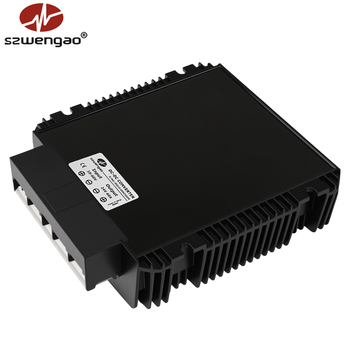
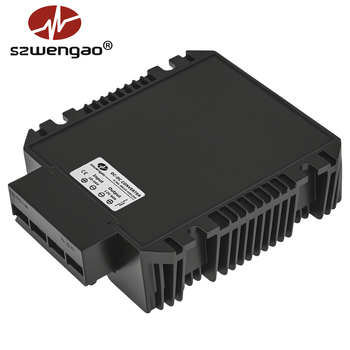
1500W High-Power Buck-Boost Converter (10–60V)
- Input Voltage Range:10V–60V DC
- Regulated Output:12V / 24V / 28V / 48V
- Max Output Power:1500W Continuous
- Digital Telemetry:RS485 Modbus RTU
In environments affected by unstable local generation, deep battery swings, and humidity, Eltrum supplies fully potted, wide-input DC-DC voltage regulators and smart LiFePO4 chargers designed to guarantee unwavering output voltage for industrial, maritime, and municipal loads.
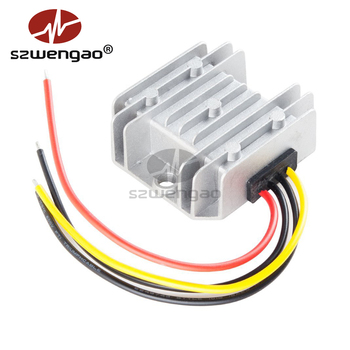
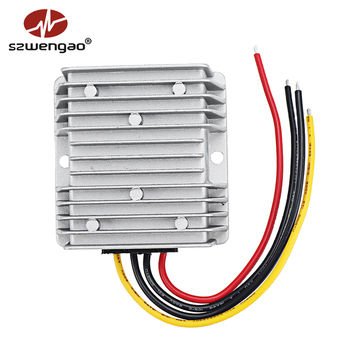
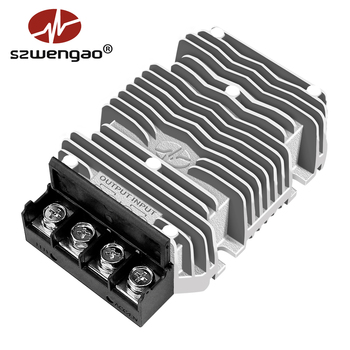
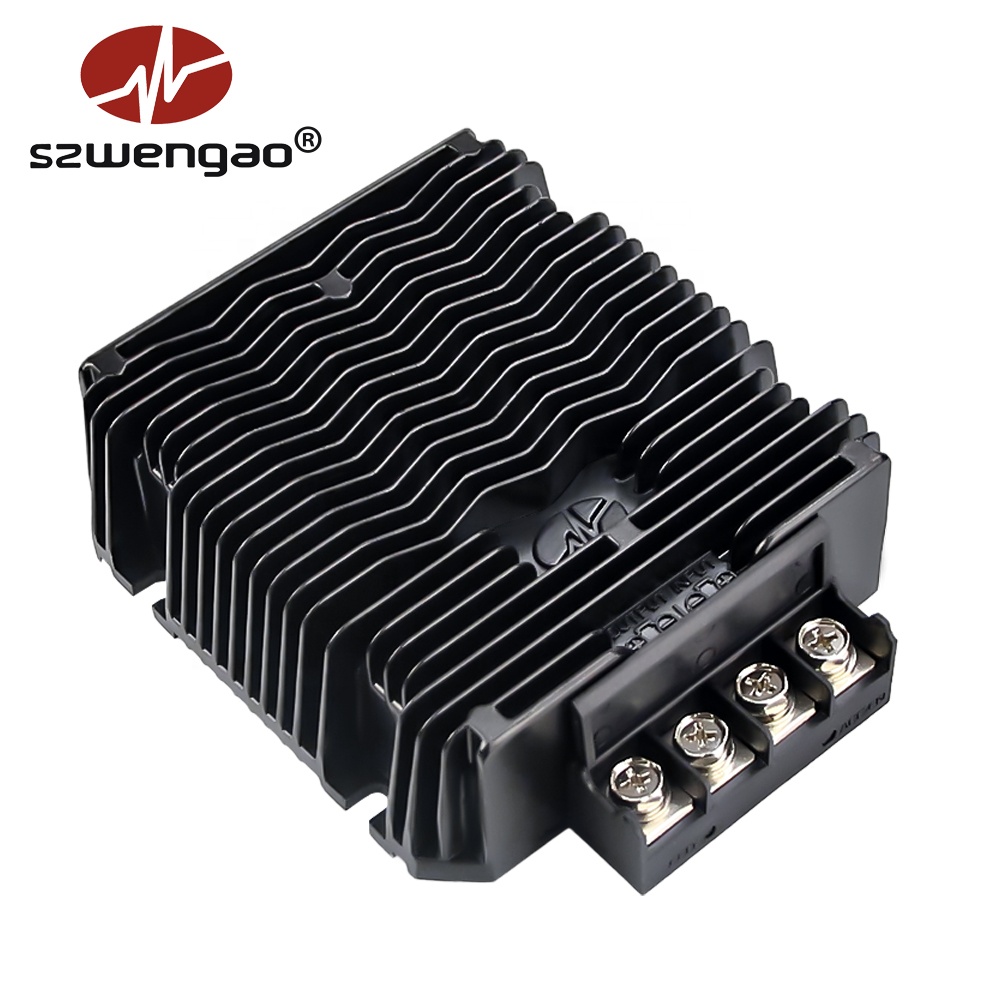
Les Cayes faces distinctive infrastructural constraints: high maritime salinity along the Caribbean coast, extreme seasonal tropical downpours, severe public grid instability, and the widespread adoption of heterogeneous hybrid microgrids. Engineering DC systems here requires non-standard thermal and electrical safeguards.
Local microgrids in Les Cayes run on depleted deep-cycle lead-acid banks transitioning to mixed solar arrays. When large refrigeration compressors or agricultural milling equipment start up, line voltages collapse below 10V before rebounding past 15V upon solar peak. Eltrum 4-switch synchronous buck-boost converters dynamically correct line voltages within microseconds, preserving telecom repeaters, medical cold storage, and processing nodes without tripping brown-out protections.
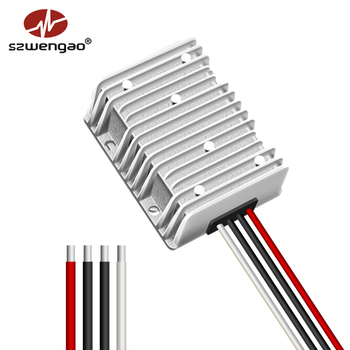
Operating near Port de Les Cayes and Île-à-Vache subjects electronics to dense salt mist, moisture condensation, and corrosive sea air. Non-encapsulated converters experience catastrophic trace corrosion within months. Eltrum buck-boost units and battery-to-battery chargers feature aircraft-grade aluminum alloy enclosures with vacuum silicone potting, ensuring full IP68 water immersion resilience and complete isolation against galvanic marine corrosion.
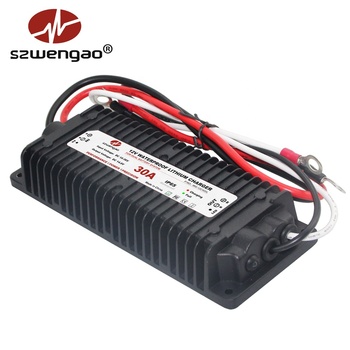
NGOs, private hospitals, and logistical stations across southern Haiti are retrofitting legacy generator sets with solar photovoltaic arrays and LiFePO4 chemistry. Direct generator-alternator connection ruins lithium packs due to unregulated surface charging. Our DC-DC buck-boost battery chargers provide programmable CC/CV profiles, balancing differing input potentials (such as 24V solar bus to 12V battery banks or 12V alternators to 48V banks) while preventing alternator burnout.
System integrators, telecommunication maintenance contractors, and commercial developers in Les Cayes are adjusting their procurement criteria toward high-efficiency conversion hardware.
Historical reliance on low-cost series regulators or crude step-down modules caused severe energy dissipation in ambient temperatures exceeding 35°C, accelerating thermal runaway. Industrial operators in Les Cayes now prioritize synchronous buck-boost architectures. By deploying four synchronized MOSFET switches that automatically transition between buck, boost, and buck-boost states depending on real-time potential, overall operating efficiency is maintained above 95%, cutting waste heat and extending component longevity in unconditioned control cabinets.
With ongoing infrastructure upgrades across Route Nationale 2 (RN2) and regional relay sites on the Macaya ridges, southern Haiti relies extensively on remote base transceiver stations (BTS) and satellite communications. Starlink terminals and telecom base stations require uncompromised 48V or 24V DC rails. Because these sites run on irregular solar-battery arrays that experience heavy cyclic swings, wide-input buck-boost converters have become mandatory infrastructure components to prevent terminal reboots during transient drops.
From vetiver oil distillation plants around Les Cayes to agricultural cargo tricycles and refrigerated logistics, DC motors and sensitive monitoring instruments share the same battery buses. The severe back-EMF and electrical noise generated by traction motors routinely damage unshielded monitoring circuits. Procurement trends demonstrate rapid migration toward high-power buck-boost converters with built-in EMI filtering (complying with EN55032 Class B standards) and isolated grounds to prevent inductive spikes from compromising electronics.
Operating our dedicated manufacturing facility in Shenzhen since 2015, Eltrum combines deep engineering authority in high-density power modules with audited export reliability for Caribbean and global logistics.
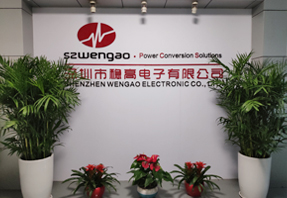
Shenzhen Eltrum Electronic Co., Ltd. operates a specialized production complex spanning up to 3,000 m² with advanced automated SMT pick-and-place lines, continuous wave soldering, automated epoxy potting machinery, and comprehensive environmental burn-in test chambers.
With an engineering team that pioneered isolated conversion topologies, we manufacture over 500 catalog power models. We maintain an onsite-verified facility audited by third-party inspection firms, ensuring complete conformity to ISO 9001 quality management alongside international CE and RoHS directives.
Standard buck-boost modules available from 5 units, allowing field testing in Les Cayes prior to container commitments.
Customization of voltage windows, current clamping thresholds, terminal blocks, conformal coatings, and RS485 curves.
Proven trade capacity serving commercial clients in over 130 countries across the Americas, the Caribbean, Europe, and Asia.
100% of outgoing converters undergo high-temperature, full-load burn-in validation to eliminate early-life field defects.
Practical technical guidance for system integrators, electrical contractors, and distribution buyers in Haiti.
In local off-grid solar systems, battery voltages fluctuate dramatically. A standard 12V battery array can drop to 9.5V during heavy load cranking and reach 14.6V during solar bulk absorption. A buck-only converter cannot maintain 12V once the input dips below 12V, while a boost converter fails when input rises above 12V. An Eltrum buck-boost converter stabilizes output at 12V across the entire 8V–40V spectrum.
Our converters are housed in thermally conductive die-cast aluminum alloys and encapsulated with industrial thermal silicone potting. This eliminates exposure to ambient air, blocking salt mist, airborne debris, tropical condensation, and insects, while dissipating internal heat directly to the exterior heatsink fins.
Yes. Our buck-boost platforms incorporate oversized input/output electrolytic capacitors alongside fast-recovery transient voltage suppression (TVS) diodes. When selecting a unit, we recommend sizing the nominal current 25–30% above continuous running draw to absorb peak motor inrush demands smoothly.
We provide FOB Shenzhen, EXW, and CIF arrangements. For shipments destined for Les Cayes, goods are dispatched via air cargo (typically arriving via Toussaint Louverture International Airport in Port-au-Prince before regional transit) or consolidated maritime ocean freight (LCL/FCL) via Port Lafito or Caribbean hub transshipment.
While standard catalog units start at an MOQ of 5 units for testing, custom-tailored input/output configurations, specific charging profiles, or customized wiring harnesses can be prototyped from small validation batches before scaling to full production runs.
Yes. Advanced high-power models such as our WG-12C800M and 1500W platforms offer optional RS485 communication ports operating on standard Modbus protocols, allowing real-time tracking of input voltage, output load current, chassis temperature, and system fault alerts.