High-Efficiency DC-DC Stabilisation & Lithium Charging Range
Factory-direct conversion units compliant with British Standards (BS EN 61000, UKCA, CE). Engineered with wide-input dynamic handling for severe voltage transients and rugged industrial duty cycles.

Smart 36V Lithium Battery Charger DC 12V to 43.8V 13A
- TopologyBoost / Buck-Boost
- Input Voltage10V – 36V DC
- Charge ProfileCC / CV 43.8V 13A
- EnclosureIP68 Potted Aluminum

1500W High-Power Buck-Boost Converter 10-60V RS485
- Topology4-Switch Buck-Boost
- Input Range10V – 60V DC
- Regulated Output12V / 24V / 48V (Up to 1500W)
- Control BusRS485 Telemetry
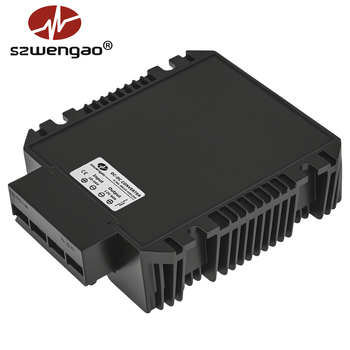
10–44V to 12V 50A/60A Automatic Voltage Stabilizer
- TopologySynchronous Buck-Boost
- Max Current60A Continuous
- Power Output720W Max
- ProtectionOVP, OCP, OTP, Reverse
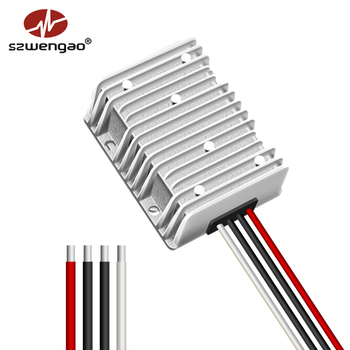
8–40V to 13.8V 25A/30A Marine Power Conditioner
- TopologyWide Buck-Boost
- Nominal Output13.8V Lead/Lithium Float
- Rated Power414W Continuous
- ProtectionIP67 Waterproof Potted
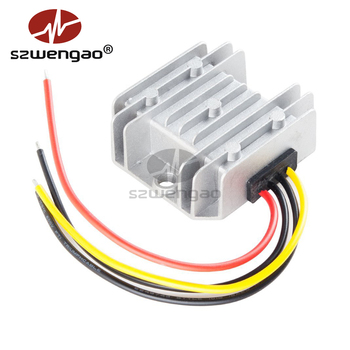
8–40V to 12V Compact Vehicle Brown-Out Stabilizer
- TopologyMicro Buck-Boost
- Output Current1A – 6A Options
- Ripple & Noise< 50mVp-p
- EfficiencyUp to 95%
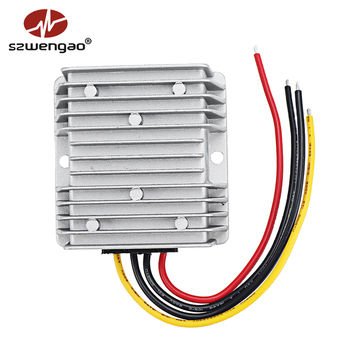
9–40V to 24V 6A/10A Industrial Step-Up/Down Converter
- TopologyBuck-Boost Stabilizer
- Output Rails24V DC Fixed
- Power Range144W – 240W
- Operating Temp-40°C to +85°C

Isolated 18–90V to 12V 10A High-Voltage Barrier Module
- TopologyIsolated Forward/Flyback
- Isolation Rating1500V DC Galvanic
- Input Compatibility24V, 36V, 48V, 72V Arrays
- CertificationCE / RoHS / ISO 9001
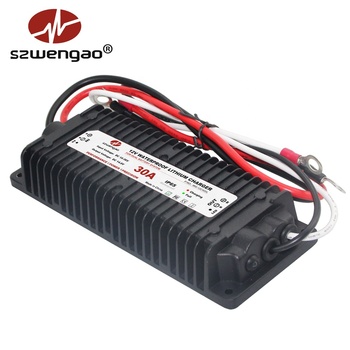
400W Waterproof DC-DC B2B Charger for Euro 6 Fleets
- TopologyRegulated Buck-Boost Charger
- Input Voltage10V – 36V (Smart Alternator)
- Target ChemistriesLiFePO4, AGM, GEL
- UK ApplicationCommercial Vans, Marine Yachts
Standard Power Architectures
Global Export Destinations
Certified Quality Management
Low MOQ for Prototype Testing
Overcoming Voltage Instability in the UK Electrification Transition
As the United Kingdom accelerates toward strict Net-Zero targets by 2050, commercial transport operators, maritime builders, and off-grid renewable developers face severe DC bus voltage fluctuations. From Scotland's maritime canal systems to commercial delivery fleets navigating London's Ultra Low Emission Zone (ULEZ), maintaining a stable, regulated DC potential has become a formidable technical challenge. A standard step-down (buck) or step-up (boost) converter fails whenever the dynamic line voltage swings across the nominal load setpoint. Modern systems require intelligent, bidirectional, and non-inverting synchronous buck-boost converters capable of operating across unpredictable power rails.
UK Smart Alternators & Euro 6 S/S Fleets
Modern British utility and delivery vans equipped with Euro 6 / Euro 6d internal combustion or mild-hybrid engines utilize variable-voltage smart alternators. Under regenerative braking, the charging rail peaks above 15.2V, yet collapses down to 11.4V or cuts out entirely during idle stop-start maneuvers. Our buck-boost converter modules neutralize these severe swings, delivering a consistent, regulated 12.0V, 13.8V, or 24.0V rail to critical onboard computing, telemetry, and secondary LiFePO4 house batteries without brownouts or over-voltage latchups.
British Inland Waterways & Coastal Marine
Navigating the UK's extensive canal network (over 2,000 miles managed by the Canal & River Trust) and coastal waters requires compliance with British Standards and the Boat Safety Scheme (BSS). Narrowboats, leisure cruisers, and offshore workboats routinely operate 24V starter banks alongside 12V navigation electronics, VHF comms, and modern 48V auxiliary battery banks. Our waterproof, epoxy-potted buck-boost and galvanic isolated converters offer IP68 protection, complete immunity to saline condensation, and high thermal dissipation in enclosed marine compartments.
Off-Grid Microgrids & Agri-Tech Robotics
Remote telecommunication repeaters in the Scottish Highlands, trackside signaling along Network Rail infrastructure, and autonomous agricultural robots operating across East Anglia rely heavily on fluctuating renewable sources. Small-scale wind turbines and diffuse solar irradiation cause battery bus voltages to drift widely between 9V and 32V. Shenzhen Eltrum’s high-power buck-boost units stabilize these erratic inputs, ensuring industrial PLCs, radio nodes, and electric actuators receive smooth power with ultra-low EMI noise profile.
Emerging UK Trends Driving DC-DC Converter Technology
Decoupling 48V Light EV Traction from 12V Logic
With UK municipal policies penalizing tailpipe emissions, last-mile couriers and urban logistics operators are transitioning rapidly to e-cargo bikes and 48V/72V low-speed electric vehicles. Design engineers face space-constrained chassis where large transformers are unfeasible. The demand is surging for ultra-compact, high-amperage buck-boost converters that can drop erratic 36V–72V battery arrays down to stable 12V/24V outputs to drive GPS modules, digital scales, lights, and automated locking actuators without secondary battery baggage.
Strict Regulatory Compliance: Post-Brexit UKCA Markings
Following the UK's departure from the European single market, industrial OEMs must navigate both CE directives and UKCA (UK Conformity Assessed) regimes. Electromagnetic Compatibility Regulations (SI 2016/1091) require converters to exhibit robust emission suppression (EN 55032 Class B) to eliminate interference with sensitive communications. Eltrum's fully shielded aluminum housings and integrated multi-stage LC filters meet both CE and UKCA testing benchmarks, facilitating seamless border clearance into ports like Felixstowe and Southampton.
Digital Monitoring via Modbus & RS485 Protocol
UK industrial systems and energy storage integrators are phasing out blind power supplies in favor of intelligent, connected conversion bricks. Eltrum’s next-generation 1500W platforms integrate serial communication protocols (RS485 Modbus-RTU) allowing real-time polling of input voltage, conversion current, internal heatsink thermal levels, and fault registers. This visibility enables predictive fleet maintenance and optimizes battery cycle health across multi-megawatt commercial deployments.
Precision Manufacturing Tailored for Global Exporters
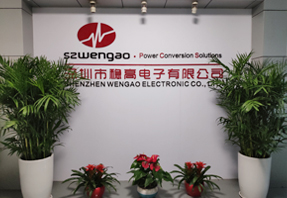
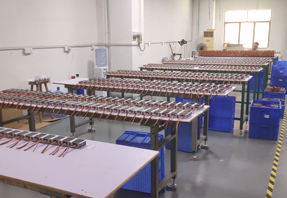
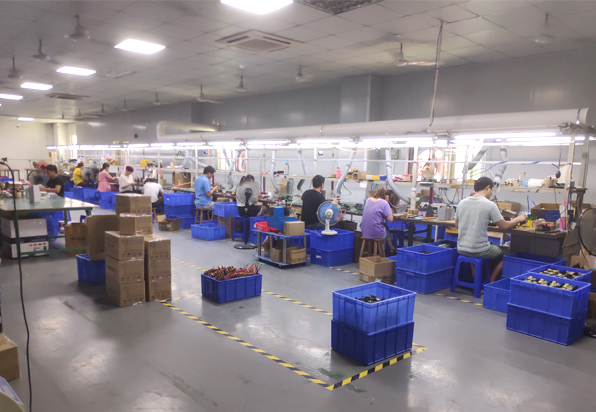
Established in 2015, Shenzhen Eltrum Electronic Co., Ltd. has grown to operate modern SMT placement lines, high-precision vacuum potting stations, and fully automated burn-in evaluation chambers across our dedicated Shenzhen facility. Our engineering pedigree is rooted in complex isolated DC-DC topologies, which gives our non-isolated buck, boost, and buck-boost modules an industry-leading standard of reliability and thermal endurance.
Operating strictly under an ISO 9001 certified quality management system, every unit undergoes 100% full-load aging and severe dynamic cycle tests before boxing. Our factory holds onsite verification verified by independent global inspectors, giving British buyers absolute procurement transparency, flexible OEM/ODM modifications, and low minimum order quantities (from 5 units for qualification).
Frequently Asked Questions by UK Engineers & Buyers
Technical considerations, logistical lead times, and regulatory compliance queries commonly addressed for our partners across England, Scotland, Wales, and Northern Ireland.
How quickly can sample orders be dispatched to the United Kingdom?
Are your buck-boost converters compatible with Euro 6 / Euro 6d Smart Alternators?
Do your products meet UKCA and CE Electromagnetic Compatibility (EMC) regulations?
When should our engineering team select an isolated converter instead of a standard buck-boost?
Can Eltrum customize charging algorithms, output voltages, or cable looms for UK OEMs?
What international trade and payment terms do you support for UK commercial accounts?
Accelerate Your UK Power Engineering Project Today
Whether you require standard samples for bench evaluation or customized OEM buck-boost platforms for commercial deployment, our experienced application engineers are ready to assist with full specifications and volume pricing.
Inquire Now