High-Reliability Buck-Boost & DC-DC Power Platforms
Tested under rigorous ISO 9001 quality workflows for extreme thermal stability, wide input fluctuations, and harsh electromagnetic environments in France.

Smart 36V LiFePO4 DC-DC Charger (12V to 43.8V 13A)
- TopologySynchronous Boost-Buck
- Input / Output10-16V DC / 43.8V 13A
- ProtectionIP68 Sealed Die-Cast
- EfficiencyUp to 94.5%

1500W Buck-Boost Converter with RS485 Bus
- Input Voltage10V – 60V DC Wide
- Output Rail12V / 24V / 28V / 48V
- TelemetryRS485 Modbus RTU
- CoolingHeavy Heatsink Base
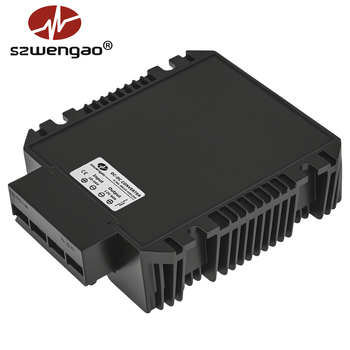
10–44V to 12V 50A/60A Voltage Stabilizer
- Input Range10V – 44V DC
- Regulated Out12.0V DC (±1.5%)
- Max Power720W Output
- FeaturesTransient Clamp Circuit
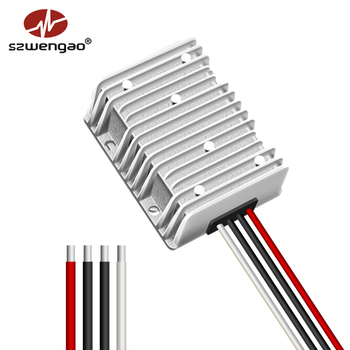
8–40V to 13.8V 30A Automotive Stabilizer
- Input Swing8V – 40V DC (Cold Crank)
- Nominal Float13.8V DC Precision
- Current Limit30A Continuous
- EnclosureIP67 Fully Potted
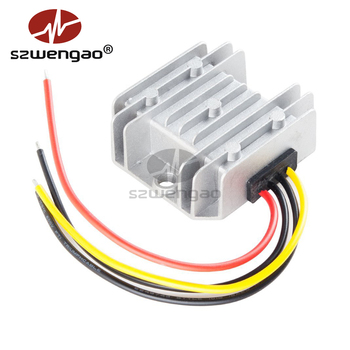
8–40V to 12V 1-6A Micro Buck-Boost Module
- Form FactorUltra-Compact Potted
- Input Window8V – 40V DC
- ProtectionOVP, OCP, OTP, Reverse
- ComplianceCE, RoHS Certified
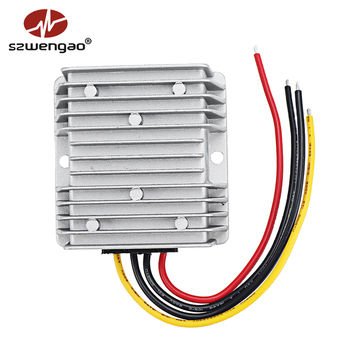
9–40V to 24V 10A Industrial Step-Up/Down
- Input Bus9V – 40V DC Nominal
- Regulated Bus24.0V DC (240W)
- MTBF>100,000 Hours (MIL-HDBK)
- EMC standardCISPR 25 Class 3
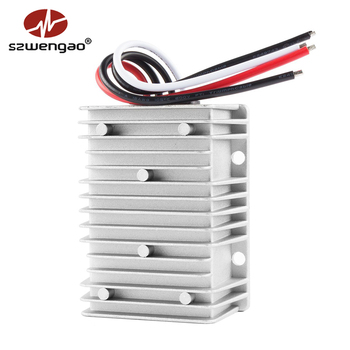
9–40V to 19V 15A Rugged IPC Power Unit
- IPC SupportIndustrial PCs & Routers
- Output Capacity19V @ 15A (285W)
- Ripple & Noise<50mVp-p Low Noise
- Vibration Res.5G RMS (10-500Hz)
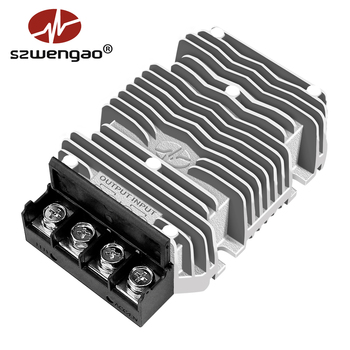
9–40V to 28V 20A Heavy Equipment Stabilizer
- Wide Input9V – 40V Dynamic
- Output Rail28V Heavy Actuator Rail
- Output Power560W Continuous
- CasingAnodized Aluminum IP68
Topology Architecture: Non-Inverting Synchronous 4-Switch Buck-Boost Conversion
Modern electrical distribution architectures within European industrial machinery, transit fleets, and decentralized battery networks face unprecedented input voltage instability. In systems where nominal bus levels swing dramatically due to state-of-charge decay, heavy dynamic inductive load switching, or cold-cranking cycles, conventional buck-only or boost-only topologies fail to maintain continuous regulation. For original equipment manufacturers (OEMs) and systems integrators in the Lyon metropolitan area and across the Auvergne-Rhône-Alpes basin, selecting an engineered synchronous buck-boost converter provides the linchpin for system availability and component protection.
Unlike historical inverting buck-boost circuits or high-loss single-ended primary-inductor converter (SEPIC) configurations, Shenzhen Eltrum Electronic Co., Ltd. incorporates synchronous four-switch H-bridge buck-boost architectures. By orchestrating four power MOSFETs through advanced pulse-width modulation (PWM) control regimes, the converter dynamically transitions across three distinct operational modes based on instantaneous input-to-output voltage ratios:
Pure Buck Region (Vin > Vout)
When supply potential exceeds target regulation voltage—such as a 28.8V alternator float supplying a 12V auxiliary line—the boost-stage switch stays continuously energized while the buck-stage switches operate under synchronous rectification, minimizing switching stress and achieving peak conversion efficiencies above 96%.
Buck-Boost Transition Region
When input potential approaches the output target within a ±10% margin, proprietary dual-edge phase-shifted modulation activates all four switches seamlessly. This eliminates output ripple discontinuities, hysteresis instability, and acoustic magnetic resonances typical of primitive topologies.
Pure Boost Region (Vin < Vout)
Under heavy cranking drops, deep battery discharge (e.g., 9V from a 12V AGM/LiFePO4 block), the input-side buck switch remains continuously saturated while the output-side synchronous stage executes precise step-up regulation, preventing logic resets, brownouts, and actuator starvation.
Thermal Dissipation Dynamics and Ingress Protection in Demanding Environments
Thermal management is the premier factor governing field life expectancy (Mean Time Between Failures, MTBF) of power supplies deployed in outdoor, onboard, or industrial switchgear enclosures. In Lyon’s chemical and rolling stock corridors, airborne particulate, moisture, petrochemical vapors, and intense vibration dictate that converters must not rely on failure-prone internal cooling fans. Eltrum achieves vacuum-encapsulated potting using thermally conductive, flame-retardant (UL94 V-0) silicone resin. This construction yields triple dividends: it shunts heat directly from internal power MOSFETs and magnetic chokes to the exterior ribbed fin aluminum housing; it guarantees absolute IP67 or IP68 hermetic ingress protection against pressure-washing; and it insulates surface-mount devices from vibrational fatigue conforming to IEC 60068-2-6 standards.
Targeted Applications in the Greater Lyon Industrial Ecosystem
Aligning advanced DC-DC conversion hardware with the unique engineering initiatives across Métropole de Lyon, Villeurbanne, Saint-Priest, Vénissieux, and the Rhône Valley corridor.
Commercial EV Fleets & Hydrogen Mobility (CARA Cluster)
Lyon hosts the CARA European Cluster for Mobility Solutions. Heavy utility trucks, municipal municipal refuse vehicles, and fuel cell electric vehicles (FCEVs) require robust auxiliary stabilization. Our 10–60V wide-input buck-boost converters isolate and regulate the variable fuel cell stack or 24V auxiliary lines, sustaining sensitive telematics, safety ADAS radars, and hydraulic valve drivers during regenerative braking voltage surges up to 58V.
Rhône Inland Waterway & Marine Electrification
From the Port Édouard Herriot along the Rhône corridor to recreational electric vessels on Lake Bourget and Lake Geneva, maritime electrification is surging under French environmental directives. Our waterproof IP68 buck-boost converters and LiFePO4 battery-to-battery charging systems regulate fluctuating 12V/24V dual alternator feeds, ensuring that 36V or 48V auxiliary propulsion and navigational sounders receive ripple-free power without ground loops.
Autonomous Guided Vehicles (AGVs) & Chemical Corridor Automation
Across the Vallée de la Chimie (Lyon Chemistry Valley) and high-throughput distribution hubs in Saint-Quentin-Fallavier, robotic AGVs and automated forklifts switch between 24V, 36V, and 48V lithium traction batteries. Our buck-boost regulators provide an unyielding 24V or 12V bus for onboard LiDAR safety sensors, programmable logic controllers (PLCs), and pneumatic grippers, impervious to motor start-up spikes.
Decentralized Alpine Solar & Telecom Microgrids
In telecommunication repeaters and environmental monitoring stations situated in regional pre-Alpine terrains surrounding Lyon, solar PV array outputs fluctuate significantly due to seasonal weather patterns and snow shading. Eltrum wide-range buck-boost modules (5–36V and 10–60V) stabilize intermittent solar voltages to provide rock-solid 12V or 24V float charging to remote lithium battery installations.
Selecting the Ideal Power Topology for Lyon OEM Deployments
A reference engineering guide comparing synchronous buck-boost against standard step-down and isolated alternatives.
| Topology Scheme | Input Voltage Profile | Efficiency Benchmark | Grounding Architecture | Best Suited Application in Lyon |
|---|---|---|---|---|
| Non-Inverting 4-Switch Buck-Boost | 8V – 40V / 10V – 60V (Crosses Vout) | 94% – 96.5% | Common Ground (Non-Isolated) | Dual-battery automotive, commercial EV fleets, solar storage, AGVs |
| Synchronous Step-Down (Buck) | Vin > Vout + 3V min headroom | 95% – 97.5% | Common Ground (Non-Isolated) | 24V truck-to-12V cab accessories, 48V/72V e-mobility step-down |
| Synchronous Step-Up (Boost) | Vin < Vout strictly | 93% – 95% | Common Ground (Non-Isolated) | 12V battery stepping up to 24V/48V actuators, high-output LED arrays |
| Galvanically Isolated Flyback/Forward | 18V – 36V / 36V – 75V / 18V – 90V | 88% – 92% | Full Galvanic Isolation (>1500V DC) | Rail traction (EN 50155), petrochemical sensor safety, positive-ground telecom |
Macro Trends Accelerating DC-DC Modernization in Auvergne-Rhône-Alpes
As the European Union accelerates the green energy transition through directives such as Fit for 55 and the European Green Deal, the Auvergne-Rhône-Alpes region—France’s primary industrial powerhouse behind Île-de-France—is witnessing profound transformations in how electrical power is converted, managed, and recycled. Several structural shifts dictate hardware procurement strategies for Lyon-based engineering firms:
1. Aggressive Electrification of Urban Logistics within the Lyon ZFE (Low Emission Zone)
The Métropole de Lyon has established stringent rules restricting older internal combustion commercial vehicles inside its Zone à Faibles Émissions (ZFE). Consequently, transport companies and chassis upfitters based in Venissieux, Corbas, and Saint-Priest are retrofitting light commercial vehicles and delivery vans with custom electric powertrains. Because modern electric chassis operate secondary auxiliary rails from separate 12V or 24V battery systems that sag during tail-lift operations or winter heating loads, buck-boost stabilizers are indispensable to prevent auxiliary computer shutdowns.
2. Proliferation of 48V Mild-Hybrid & Distributed Automation Buses
Industrial machinery builders across the Rhône Valley are transitioning legacy 24V architectures to higher-voltage 48V distribution buses to slash I²R copper cable losses and reduce wiring harness weight. However, standard automation components—sensors, machine vision cameras, industrial edge IoT gateways—remain pegged to 12V or 24V inputs. This divergence has triggered massive regional demand for bi-directional and wide-input buck-boost converters capable of reconciling legacy 12V/24V islands with modern 48V DC backbones.
3. Battery Circularity & Second-Life Energy Storage Deployment
With battery gigafactories expanding across France, Lyon has emerged as an R&D center for circular battery repurposing. Spent traction packs (NMC and LiFePO4) transitioned into stationary storage experience substantial voltage degradation over time as internal cell impedances rise. Standard chargers and converters drop offline when pack voltage degrades outside nominal limits. Eltrum’s ultra-wide input buck-boost modules (such as our 10–60V and 18–90V series) enable energy integrators to extract maximum residual kilowatt-hours from aging packs, maintaining stable utility bus outputs regardless of cell level decay.
Enterprise Advantages: Shenzhen Eltrum Electronic Co., Ltd.
Partnering directly with an established high-precision power supply manufacturer delivers fundamental engineering and budgetary advantages over intermediate trading agents. Founded in 2015, Shenzhen Eltrum Electronic Co., Ltd. operates a modern manufacturing facility staffed by 51–100 skilled engineers and assembly technicians, delivering over 500 catalog power models to original equipment manufacturers across Europe, North America, and worldwide.
Full OEM/ODM Customization
We tailor input voltage envelopes, continuous current thresholds, potting compounds, mounting flanges, cable lengths, and automotive Deutsch/Amphenol connectors to your exact chassis mechanical specifications.
Custom Telemetry & Charging Curves
Need custom 3-stage CC/CV lithium charging profiles or RS485 / CAN-compatible telemetry output? Our in-house firmware development team programs microcontrollers directly to integrate into your CAN bus architecture.
Strict ISO 9001, CE & RoHS Quality
Every single power unit undergoes 100% full-load dynamic burn-in testing, high-potential breakdown screening, and automated AOI optical inspection. Full compliance certificates are supplied with commercial validation documentation.
Frequently Asked Questions for Lyon & French Buyers
Direct technical answers addressing regulatory compliance, delivery timelines to Rhône-Alpes, electrical protection, and ordering logistics.
What are the typical shipping lead times from Shenzhen to Lyon, France?
For urgent engineering prototypes and pre-series evaluation lots (5–50 units), we ship via air express (DHL / FedEx / UPS) delivering directly to Lyon-Saint Exupéry Airport within 4 to 7 business days. For volume container procurement, maritime shipping arriving via Fos-sur-Mer or Le Havre connected by direct rail freight to Lyon dry ports takes approximately 28 to 35 calendar days with full DDP/FOB documentation.
Do your buck-boost converters satisfy European CE, RoHS, and REACH standards?
Yes. All Eltrum buck, boost, buck-boost, and charger modules are manufactured under an ISO 9001 certified quality management system and strictly comply with EU Electromagnetic Compatibility (EMC) Directive 2014/30/EU, Low Voltage Directive (LVD) 2014/35/EU, and EU RoHS 2.0 (Directive 2011/65/EU and amendment 2015/863). Formal Declarations of Conformity and independent laboratory test reports are available upon request.
When should a Lyon OEM specify an isolated converter instead of a standard buck-boost?
A non-isolated buck-boost converter shares a common ground between input and output, which provides maximum conversion efficiency (95%+), compact dimensions, and reduced bill-of-materials cost. You must specify an isolated converter when common mode noise isolation is legally required (such as railway standard EN 50155), in telecom systems requiring positive-ground separation, or in medical carts where user leakage currents must be physically decoupled.
How do your converters cope with extreme sub-zero Alpine winters and hot summer engine bays?
Our industrial models feature wide operating ambient temperature spans from -40°C to +85°C. For extreme cold deployments in the Alpine valleys of Savoie/Isère, we select low-ESR solid electrolytic capacitors and specialized MOSFETs rated for cold-start reliability. For high-temperature environments, internal over-temperature protection (OTP) initiates controlled thermal throttling at +100°C junction temperature, avoiding sudden catastrophic load drops.
What is the minimum order quantity (MOQ) for custom voltage calibrations?
Standard catalog converter platforms start from a low sample MOQ of just 5 units, allowing French systems engineers to perform bench validation, EMC pre-compliance scanning, and field endurance tests. For custom hardware modifications—such as custom non-standard output voltages (e.g. 15V, 22V, 52V), specialized wire harnesses, or private labeling—our typical minimum production batch is 50 to 100 units.
Can the buck-boost converter operate as a true CC/CV LiFePO4 battery charger?
Standard buck-boost regulators provide constant voltage (CV) regulation, meaning they clamp output voltage precisely but will trip on overcurrent if loaded into a deeply discharged battery. For battery charging applications, you should select our dedicated DC-DC Battery Charger series (e.g. WG-12C800M or our 400W/600W series), which implement true constant-current / constant-voltage (CC/CV) profiles engineered explicitly for LiFePO4 / lithium-ion chemistry.
Ready to Integrate High-Efficiency Power Conversion in Your Next Design?
Consult directly with Shenzhen Eltrum Electronic’s power application engineering team. Whether you need standard sample units dispatched to Lyon this week or a bespoke OEM buck-boost design tailored for your industrial vehicle chassis, we provide instant technical assistance.
Inquire Now