High-Efficiency DC-DC Stabilizers & Chargers for Dutch OEMs
Pre-engineered buck-boost power supplies built to withstand severe input drops, engine cranking surges, and wide temperature swings across European industrial environments.

Smart 36V LiFePO4 Charger DC 12V to 43.8V 13A
- Input Window: 10–36V DC
- Output Voltage: 43.8V CC/CV (13A)
- Protection Rating: IP67 Waterproof
- Target Sector: EV, RV & AGV Fleet

1500W RS485 Controlled Buck-Boost Converter
- Input Window: 10–60V Ultra-Wide
- Output Config: 12V / 24V / 48V (Adj)
- Telemetry: RS485 Modbus RTU
- Efficiency: Up to 96.5%
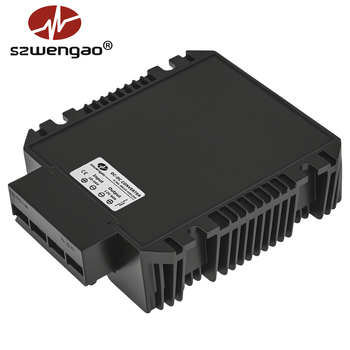
10–44V to 12V 50A/60A DC Voltage Stabilizer
- Input Dynamic: 10–44V DC
- Output Output: 12V Stable (60A Max)
- Thermal Sink: Extruded Aluminum
- Automotive Compliance: ISO 7637-2
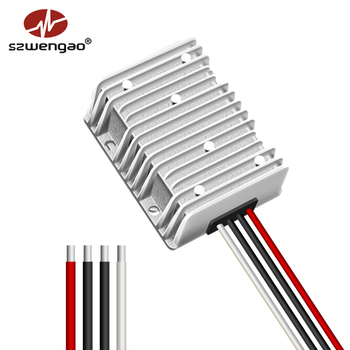
8–40V to 13.8V 25A/30A Marine Stabilizer
- Input Range: 8–40V DC
- Nominal Output: 13.8V Marine Bus
- Continuous Power: Up to 414 Watts
- Encapsulation: Vacuum Epoxy IP68
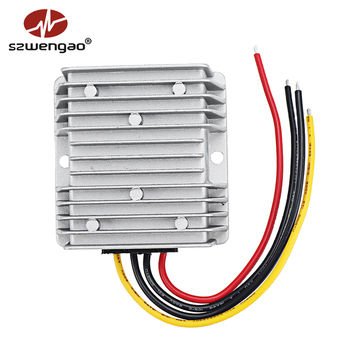
9–40V to 24V 6A/10A Buck-Boost Converter
- Input Range: 9–40V DC
- Output Voltage: 24V Industrial Rail
- No-load Current: < 15 mA Standby
- Standards: CE, RoHS LVD/EMC
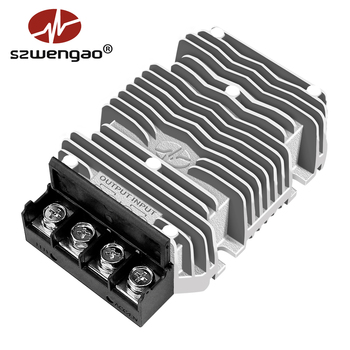
9–40V to 28V 15A/20A DC Voltage Regulator
- Input Range: 9–40V DC
- Output Voltage: 28V Constant Rail
- Peak Power: 560 Watts
- Vibration Proof: IEC 60068-2-6 Certified
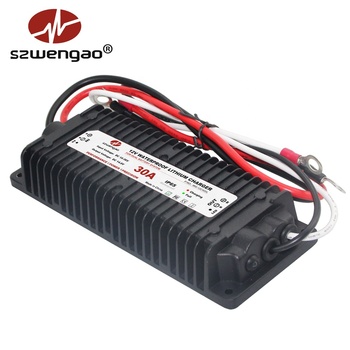
400W IP68 DC-DC Dual Battery Charger
- Input Window: 10–36V Alternator/Pack
- Multi-Chemistry: 14.6V / 29.2V LiFePO4
- Smart Euro 6: Ignition Sense / D+ Port
- Efficiency: > 94% Synch Rectification
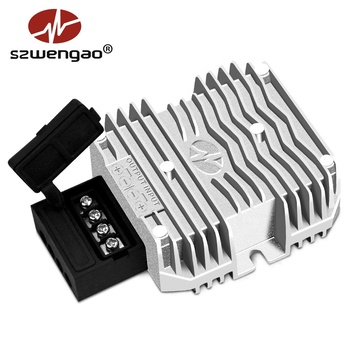
18–90V to 12V 10A Isolated DC Module
- Input Window: 18–90V Wide Window
- Output Power: 12V (120W Total)
- Galvanic Barrier: 1500V DC Isolation
- Protection: Short, OVP, OCP, OTP
The Physics of DC Voltage Stabilization: Non-Inverting 4-Switch Topologies
Overcoming battery voltage degradation, dynamic load step transients, and ISO 7637-2 alternator load-dumps in high-reliability European applications.
Why Conventional Step-Down (Buck) Regulators Fail in Modern Battery Systems
In traditional mobile and industrial electrification architectures, engineers historically relied on dedicated buck or boost converters under the assumption that the primary power source maintained a strictly delimited potential. However, the rapid European market transition toward Lithium Iron Phosphate (LiFePO4) chemistry and dynamic alternator outputs (Euro 6/6d smart regenerative alternators) has fundamentally compromised this assumption.
A nominal 12V LiFePO4 bank operates between 14.6V under bulk charge down to 10.0V at terminal discharge, sagging as low as 8.5V under instantaneous motor cranking or hydraulic inverter surge. If downstream electronics (navigation systems, PLCs, marine sensors, automotive ECUs) require an uncompromising 12.0V or 13.8V rail, a pure buck converter enters 100% duty cycle dropout, causing catastrophic brownouts and micro-controller restarts.
Furthermore, reverse-recovery diode losses inherent in legacy asynchronous buck-boost architectures are eradicated via synchronous rectification. This yields typical conversion efficiencies between 94% and 97.2%, vastly decreasing localized thermal dissipation within hermetically sealed enclosures.
Engineering Topologies Compared
1. Conventional Asynchronous Inverting Buck-Boost: Output polarity is inverted (-Vout); severe common-mode noise; high diode conduction losses; unsuitable for sensitive industrial CAN bus nets.
2. Single-Ended Primary-Inductor (SEPIC): Non-inverting, but demands coupled magnetic inductors and series capacitors subject to high AC ripple currents, reducing MTBF to less than 30,000 operational hours.
3. Eltrum Synchronous 4-Switch Topology (FSBB): Seamless positive polarity preservation; dual synchronous half-bridges; dynamic gate-drive phase interleaving; MTBF exceeding 100,000 operational hours at 40°C continuous ambient loading.
Power Conversion Topology Matrix for Dutch System Integrators
| Topology Architecture | Input Range Dynamic | Typical Efficiency | Ground Reference | Inrush & Surge Handling | Ideal Procurement Application |
|---|---|---|---|---|---|
| Non-Isolated Synchronous Buck | Vin must exceed Vout + 2.5V | 95% – 98% | Common Negative Ground | Moderate; sensitive to deep voltage sags | 24V Commercial Vehicle down to 12V Auxiliary |
| Non-Isolated Synchronous Boost | Vin must be lower than Vout | 94% – 97% | Common Negative Ground | High input current surge at low battery state | 12V Battery step-up to 24V/48V Marine Thrusters |
| Synchronous 4-Switch Buck-Boost | Vin can swing above, below, or equal | 94% – 96.5% | Common Negative Ground | Integrated active soft-start & surge clippers | Solar buffer rails, AGVs, Lithium B2B chargers |
| Galvanically Isolated Flyback/Forward | Wide 2:1 or 4:1 (e.g. 18–90V DC) | 88% – 92% | Fully Floating (1500V+ Isolation) | High isolation prevents ground loops & EMF | Telecom racks, polder pump sensors, maritime PLCs |
Engineered for Demanding Dutch Maritime, Agritech & Infrastructure Deployments
The Netherlands leads Europe in inland waterway decarbonization, greenhouse robotics, and electrified intermodal port logistics. Here is how our power converters deliver uncompromised field stability.
Inland Shipping & Maritime Fleets (Binnenvaart)
Navigating the Rhine-Waal and Rotterdam-Antwerp corridors, electrified inland vessels utilize modular 48V to 600V DC energy storage. Eltrum buck-boost units stabilize vital 12V/24V nautical navigation, sonar depth sounders, and bridge telemetry during high-amp thruster accelerations and shore-power transfers.
High-Tech Horticulture & Greenhouse Robotics
In the Westland and Venlo agricultural corridors, automated picking robots, rail-guided harvest carts, and horticultural LED climate sensors operate on distributed DC microgrids. Our buck-boost stabilizers resolve long cable DC line-drop issues, supplying continuous 24VDC regardless of distance from central battery hubs.
Polder Water Management & Remote Telemetry
Dutch Water Boards (Waterschappen) maintain thousands of remote polder pumping stations, sluice gates, and water quality telemetry nodes powered by local solar-PV and small wind turbines. Our wide-input 9–40V and 18–90V isolated converters ensure SCADA transmitters operate smoothly through sub-zero winter spells.
Port of Rotterdam AGVs & Heavy Logistics
Container terminal Automated Guided Vehicles (AGVs) experience brutal kinetic shock, constant vibration, and severe electrical regenerative braking spikes. Eltrum’s fully potted, heavy-duty aluminum regulators clamp back-EMF transients and maintain ultra-clean power to onboard LIDAR sensors and autonomous vehicle controllers.
Dutch Clean-Energy Mandates Driving DC-DC Power Architectures
Strategic alignment with the Netherlands National Climate Agreement (Klimaatakkoord) and stringent European Union electromagnetic standards.
Grid Congestion (Netcongestie) and Localized DC Microgrids
The Netherlands faces severe electrical grid congestion (netcongestie), impacting both industrial manufacturers and commercial developments across North Holland, Gelderland, and North Brabant. As regional utilities refuse new high-capacity grid tie-ins, Dutch enterprises are rapidly transitioning to behind-the-meter battery energy storage systems (BESS) coupled with direct rooftop solar generation.
This structural change eliminates unnecessary AC-to-DC rectification cycles, adopting high-efficiency native DC bus distributions. Here, buck-boost converters serve as fundamental bidirectional stabilizers, balancing energy interchange between 48V stationary lithium battery banks, 24V factory automated machinery, and fluctuating 12V telemetry networks with minimal thermal overhead.
Zero-Emission Marine Vessels: The 2030 Decarbonization Roadmap
Dutch governmental regulations require commercial urban watercraft in Amsterdam, Utrecht, and Rotterdam to achieve zero-emission propulsion. Hybrid and full-electric shipbuilders utilize secondary 24V house batteries separate from 96V to 400V traction packs. Our DC-DC battery chargers and wide-input buck-boost converters provide galvanic isolation and strict current limiting to prevent thermal runaways during high-rate battery replenishment.
Mandatory Compliance Checklist for Dutch Importers
-
✔
EMC Directive 2014/30/EU: Compliant with EN 55032 (Conducted & Radiated Emissions) and EN 55035 (Immunity), ensuring zero interference with high-frequency radio and maritime VHF systems.
-
✔
RoHS 3 (EU 2015/863) & REACH (EC 1907/2006): Zero presence of lead, cadmium, or restricted phthalates in SMT solder pastes, potting silicons, or aluminum enclosures.
-
✔
Low Voltage Directive (LVD 2014/35/EU): Rigorous creepage and clearance distances verified for industrial systems handling DC inputs above 75VDC.
-
✔
CE Marking Technical Dossier: Complete laboratory test declarations, schematics, and component certifications available on demand for quick Customs clearance at Port of Rotterdam and Schiphol.
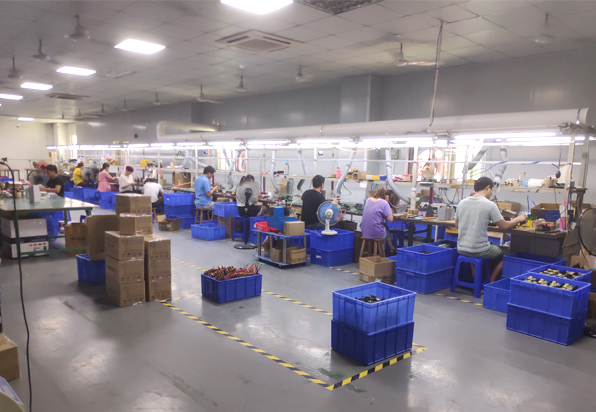
Precision Manufacturing, Stringent Testing & OEM Customization
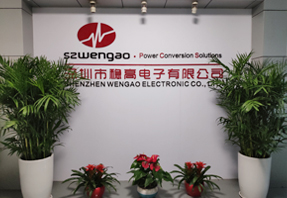
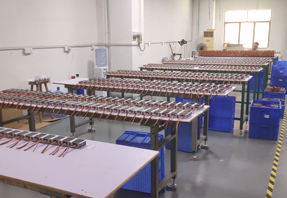
Founded in 2015, Shenzhen Eltrum Electronic Co., Ltd. operates an onsite-verified ISO 9001 quality-managed manufacturing facility spanning up to 3,000m² of modern cleanroom workshops. We specialize in resolving extreme power conversion challenges for international distributors, marine shipyards, and equipment OEMs.
Our integrated production infrastructure encompasses high-speed automated Surface Mount Technology (SMT) lines, custom toroidal magnetic transformer winding, automated optical inspection (AOI), and dual-component thermally conductive vacuum potting. Every buck-boost converter and charger undergoes 100% full-load electrical burn-in testing under elevated temperatures to guarantee zero-defect delivery.
Frequently Asked Questions by Dutch Technical Buyers
Detailed engineering answers regarding CE declarations, lead times, thermal derating, and maritime compatibility.
How do buck-boost converters handle rapid voltage drops caused by cold-temperature battery sag in the Netherlands?
What is the difference between non-isolated and galvanically isolated buck-boost converters?
Are Eltrum products fully certified for importation and deployment across the Netherlands and EU?
Can your DC-DC battery chargers integrate with smart Euro 6/6d vehicle alternators?
What thermal management provisions are implemented for sealed or high-ambient installations?
What are the standard Minimum Order Quantities (MOQ) and lead times for Dutch buyers?
Can Eltrum customize input voltage thresholds and charging profiles for specialized Dutch clean-tech projects?
What commercial payment and international delivery terms (Incoterms) do you support?
Accelerate Your Power Conversion Architecture
Whether you require standard 12V/24V buck-boost modules for fleet conversions or custom 1500W RS485 voltage stabilizers for green infrastructure, our engineering desk is ready to provide datasheets, CAD models, and evaluation samples.