High-Performance DC-DC Step-Up & Charging Converters
Manufactured under ISO 9001 quality frameworks with CE and RoHS compliance. Field-tested for galvanic stability, low thermal dissipation, and wide ambient resilience down to -40°C.
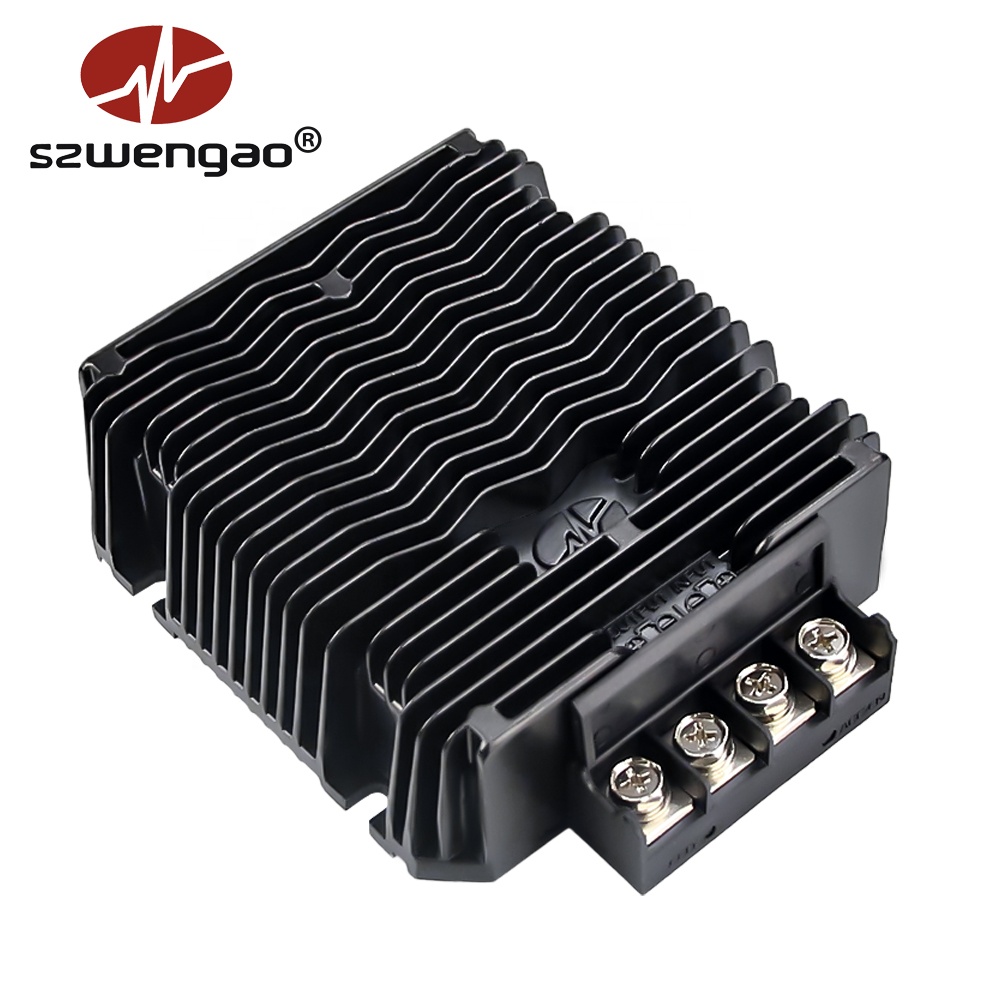
Smart 36V LiFePO4 Step-Up Battery Charger (12V to 43.8V 13A)
- Topology: Isolated Synchronous Boost
- Input Nominal: 12V DC (9–16V Range)
- Output: 43.8V DC @ 13A (CC/CV)
- Enclosure: IP67 Die-Cast Aluminum
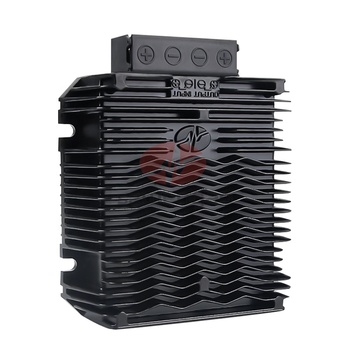
Industrial 12V to 24V 50A High-Current Boost Converter
- Efficiency: 96.5% Peak Synchronous
- Continuous Power: 1200 Watts
- Ripple & Noise: < 50mVp-p Low EMI
- Protection: OVP, OCP, OTP, Short Circuit
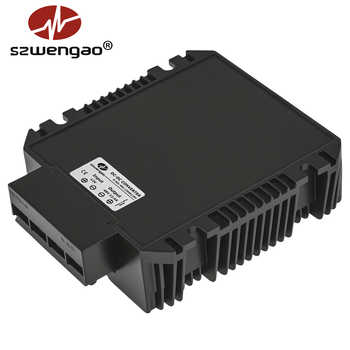
Sub-Zero 12V to 48V 20A Waterproof Boost Power Unit
- Input Range: 10V – 18V Dynamic
- Output Rail: 48V DC Precision (960W)
- Operating Temp: -40°C to +85°C Industrial
- Potting: Thermal Silicon Thermally Cured
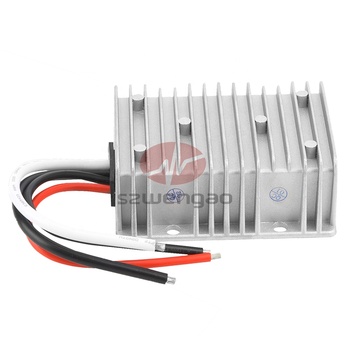
24V to 48V 15A DC-DC Step-Up Voltage Multiplier
- Input Bus: 24V Nominal (18–32V DC)
- Regulated Out: 48V DC ± 1% Stability
- Cooling: Integrated Fin Convection
- Compliance: CE EN 61000-6-3, RoHS
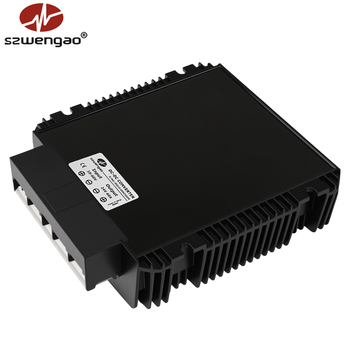
1500W Bidirectional Buck-Boost with RS485 Interface
- Ultra-Wide In: 10V – 60V Wide Tracking
- Configurable Out: 12V / 24V / 28V / 48V Rails
- Telemetry: MODBUS RTU / RS485 Bus
- Max Output: 1500W High Density
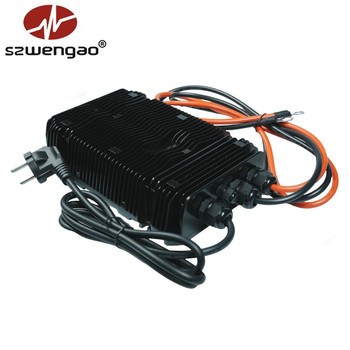
600W IP65 Waterproof AC-DC LiFePO4 Station Charger
- AC Supply: 90–264V AC 50/60Hz Universal
- Pack Output: 14.6V to 58.4V Calibrated
- Protection: IP65 Washdown Sealed
- Efficiency: > 94% Active PFC Correction
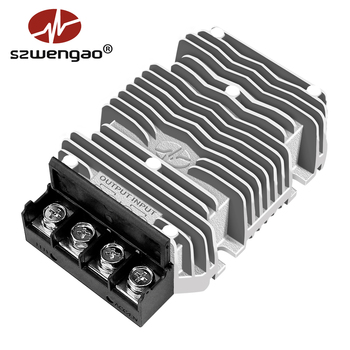
9–40V to 28V 20A Heavy Equipment Voltage Regulator
- Dynamic Shift: Automatic Boost-Buck Logic
- Output Bus: 28V Constant @ 20A (560W)
- Vibration: MIL-STD-810G Vibration Spec
- Grounding: Common Negative / Isolated Opt.
Modular 800W Marine DC-DC Step-Up Power Module
- Architecture: Planar Magnetic High Density
- Input Flexibility: 12V / 24V Dual Auto-Detect
- Galvanic Isolation: 1500V DC Dielectric Barrier
- Control Bus: Analog Remote Enable / Inhibit
Engineering High-Efficiency Direct Current Step-Up Solutions in Northern Denmark
A comprehensive examination of synchronous boost conversion architectures, thermal management in high-latitude environments, and galvanic mitigation across Aalborg’s maritime, green hydrogen, and industrial automation infrastructures.
The industrial landscape of Aalborg—stretching from the bustling renewable maritime docks at the Port of Aalborg (Aalborg Havn) along the Limfjorden to the pioneering research laboratories at Aalborg University (AAU Energy)—demands rigorous, high-reliability direct-current power architectures. In modern industrial operations, stepping up DC potential is no longer a simple matter of legacy diode-clamped boost circuits. It is a nuanced discipline requiring high-frequency synchronous rectification, zero-voltage switching (ZVS) resonant topologies, robust electromagnetic interference (EMI) containment, and uncompromising ingress protection.
1. Critical Topologies: Overcoming Power Conversion Deficits in Cold Climates
Standard non-synchronous boost converters utilize a power MOSFET combined with a fast-recovery freewheeling Schottky diode. While economical, the forward voltage drop ($V_f$) across the diode (typically 0.45V to 0.75V) causes severe conduction losses ($P_{loss} = I_{out} \times V_f$). When operating high-current marine or commercial transportation loads—such as driving a 48V 20A (960W) auxiliary bus from a 12V alternator source—conduction losses within a conventional diode can exceed 15 watts in heat dissipation alone. In enclosed engine housings or sealed IP67 battery compartments common in Danish fishing vessels and harbor workboats, this localized thermal concentration accelerates component degradation and triggers premature thermal throttling.
Shenzhen Eltrum Electronic Co., Ltd. addresses this design hurdle by deploying high-side synchronous MOSFET switches with exceptionally low drain-to-source on-resistance ($R_{DS(on)}$ down to 2.2 mΩ). By substituting the passive diode with an actively triggered low-loss silicon or gallium nitride (GaN) field-effect transistor synchronized via a high-speed DSP microcontroller, conduction losses are slashed by up to 82%. This architectural shift elevates real-world system efficiency to an outstanding 96.8%, slashing internal heat generation, optimizing space utilization, and enabling true passive convective dissipation via finned aluminum housings without noisy, failure-prone mechanical cooling fans.
Maritime & Hybrid Vessels
Navigating the brackish, corrosive waters of the Limfjorden and the harsh Kattegat requires robust IP68 hermetically sealed step-up converters. Our units efficiently step up 12V primary engine alternator output to 24V and 48V banks, powering sophisticated sonar, bow thrusters, radar equipment, and dual-battery LiFePO4 banks without triggering galvanic corrosion or ground faults.
Offshore Wind Turbine Auxiliaries
Aalborg serves as an internationally renowned hub for wind turbine blade manufacturing and offshore support. Our wide-input step-up converters supply precision 24V and 48V control rails for blade pitch actuators, aviation warning lights, safety telemetry, and offshore nacelle sensors directly from fluctuating 12V backup battery buffers during grid disconnection events.
Power-to-X (PtX) & Hydrogen R&D
As green hydrogen testbeds and electrolysis pilot installations scale across North Jutland, low-voltage DC auxiliary instrumentation must operate reliably in hazardous, volatile environments. Eltrum isolated boost topologies deliver strictly regulated DC rails, breaking potential earth loops between high-capacity DC electrolyzer stacks and sensitive monitoring controllers.
Cold-Chain & Commercial Fleets
Northern Danish transport logistics operators running routes between Aalborg, Aarhus, and Hirtshals require constant, reliable power. Our 12V to 24V/48V step-up modules maintain uninterrupted power for specialized onboard telematics, tail-lift auxiliary hydraulics, and electric refrigeration units even under deep starter-battery voltage sag during winter morning cold cranks.
Electrified Agricultural Machinery
The extensive agricultural operations surrounding Himmerland and Vendsyssel increasingly deploy electric autonomous field sprayers and automated seeders. Eltrum boost converters step up mobile 12V tractor battery lines to 24V, 36V, and 48V actuator buses, delivering rock-solid output despite the extreme dust, mud, and vibration of field work.
Cement & Heavy Processing Plant Automation
Heavy production environments, such as Aalborg Portland’s energy transition facilities, present severe dust, ambient heat, and intense electromagnetic interference. Our potted, metal-cased step-up regulators ensure high MTBF, stable 24V PLC power delivery, and complete immunity to high-voltage industrial transients.
2. Comparative Technical Specification: Boost Conversion Matrices
Selecting the optimal power conversion module requires balancing input current capacity, peak transient surges, galvanic isolation requirements, and thermal boundaries. The following matrix details the standard parameters deployed across our core product families exported to Danish industrial procurement partners:
| Converter Class | Nominal Input Range | Output Voltage & Current | Full-Load Efficiency | Galvanic Isolation | Ingress / Housing | Aalborg Application Focus |
|---|---|---|---|---|---|---|
| Compact Sync Boost | 9V – 16V DC (12V Nom.) | 24V DC @ 10A / 20A / 30A | 96.5% | Non-Isolated (Common Neg.) | IP68 Potted Aluminum | Fleet Electrification & Telematics |
| High-Current Marine Boost | 10V – 20V DC (12V Nom.) | 24V DC @ 50A (1200W) | 95.8% | Non-Isolated | IP67 Heavy Extrusion | Workboat Bow Thrusters & Winches |
| Multi-Stage LiFePO4 Step-Up | 11V – 15V DC (12V Nom.) | 43.8V DC (36V Nom.) @ 13A | 94.2% | 1500V DC Isolation Opt. | IP67 Die-Cast Polyurethane | E-Mobility & Service Boat Battery Banks |
| Industrial Wide-Rail Boost | 18V – 32V DC (24V Nom.) | 48V DC @ 15A / 20A / 25A | 97.0% | 1500V DC Transformer Iso. | IP68 Hard-Anodized | Offshore Wind Pitch Control & SCADA |
| Universal Bidirectional Boost | 10V – 60V Continuous | 12V / 24V / 28V / 48V (Up to 1500W) | 96.2% | Opto-Isolated Signals | IP66 Finned Heatsink + RS485 | PtX Electrolyzer DC Microgrids & AAU Labs |
3. Emerging Trends in Aalborg’s Power Conversion Sector (2025–2035)
As Denmark aggressively pursues its legally binding mandate under the Danish Climate Act to slash greenhouse gas emissions by 70% by 2030 (relative to 1990 levels) and realize comprehensive net-zero climate neutrality by 2045, Aalborg has emerged as one of Northern Europe’s primary testbeds for heavy-duty industrial decarbonization. This macro-environmental shift is triggering fundamental transformations across localized low-voltage DC power architectures:
A. Microgrid DC Distribution & Port Electrification
At the Port of Aalborg, shore-to-ship cold ironing initiatives and electrified harbor support logistics are driving the adoption of localized DC microgrids. Rather than converting alternating current through multiple loss-inducing rectification stages, high-efficiency DC-DC boost and buck-boost power converters are increasingly deployed to route power directly between local solar arrays, megawatt-scale battery energy storage systems (BESS), and moored vessels. Precision boost converters stepping up 24V or 48V battery lines to intermediate bus voltages eliminate multiple conversion losses, conserving valuable energy within closed-loop harbor infrastructures.
B. Scaling Green Hydrogen and PtX Test Facilities
The aggressive expansion of Power-to-X (PtX) infrastructure in North Jutland, closely supported by Aalborg University’s world-renowned Department of Energy Technology, is setting new benchmarks for auxiliary converter design. Green hydrogen electrolyzers operate natively on direct current. However, auxiliary metering sensors, mass flow controllers, hydrogen gas detectors, and automated valve actuators require extraordinarily clean, isolated DC rails. Our industrial isolated step-up converters prevent hazardous ground loop currents from circulating between massive electrolyzer DC power buses and delicate digital control systems, preventing instrumentation drift and preserving system calibration.
C. The Decarbonization of Commercial Fishing Fleets
Vessels docking along the Limfjorden and the broader North Sea coast are systematically retiring legacy auxiliary diesel engines in favor of centralized hybrid lithium battery systems. Because shipboard battery architectures frequently run multi-chemistry banks (e.g., standard AGM or lead-acid starter banks paired with modern LiFePO4 house storage), battery-to-battery boost converters have become mission-critical. Our smart step-up chargers take variable, fluctuating alternator voltages and apply a dedicated three-stage Constant Current / Constant Voltage (CC/CV) profile tailored to 24V, 36V, or 48V lithium systems, ensuring rapid charging without exceeding alternator thermal tolerances.
4. Shenzhen Eltrum Electronic Co., Ltd.: Manufacturing Power Behind Aalborg’s Supply Chain
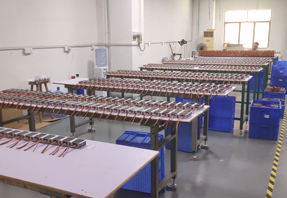
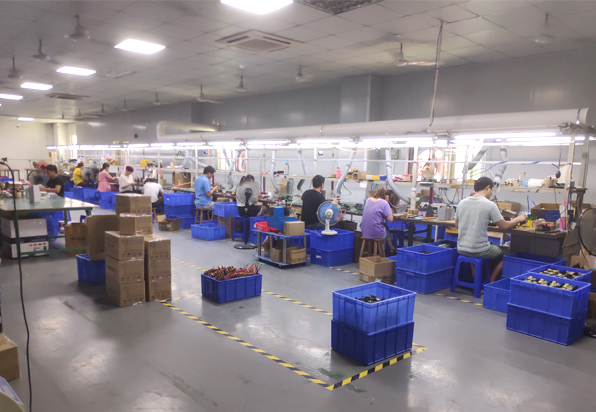
Founded in 2015, Shenzhen Eltrum Electronic Co., Ltd. has established itself as an engineering-driven manufacturer specializing in ruggedized DC-DC converters, isolated power modules, and specialized battery charging systems. Operating from our fully certified ISO 9001 facility in Shenzhen, China, we export advanced power conversion hardware to systems integrators, electrical contractors, and OEM equipment manufacturers in over 130 countries worldwide.
Engineering Integrity, Direct OEM Agility
We believe that standard off-the-shelf power converters rarely solve complex industrial integration challenges perfectly. While our standard catalog includes more than 500 field-proven topologies, our core strength lies in our rapid OEM and ODM design agility. Whether your installation demands non-standard input-to-output conversion voltages, integrated RS485 / CAN communication protocols, specialized automotive connector pigtails, or conformal marine polyurethane encapsulation, our engineering team delivers precision-matched prototypes rapidly.
Our manufacturing philosophy combines rigorous component selection with comprehensive automation. We source high-temperature Japanese capacitors, premium low-core-loss planar transformers, and automotive-grade MOSFETs. Every single unit leaving our facility undergoes automated optical inspection (AOI), high-voltage dielectric isolation testing, and a mandatory 100% full-load burn-in soak under elevated temperatures to eliminate infant mortality.
5. Deep-Dive Procurement FAQ for Aalborg & Danish System Integrators
Procuring power conversion hardware internationally requires absolute certainty regarding technical compliance, cold-environment survival, and logistics transparency. Below are detailed answers to the most frequent inquiries submitted by Danish engineering and purchasing departments:
How do Eltrum step-up converters perform during harsh Danish winter cold snaps (-20°C to -40°C)?
Standard consumer-grade electronics suffer from severe electrolytic capacitor freezing and semiconductor gate-driver delays below 0°C. Eltrum industrial boost converters utilize specialized low-ESR solid polymer capacitors alongside industrial-grade gate drivers and microcontrollers rated down to -40°C continuous operation. Our internal potting compound remains flexible across wide temperature ranges without cracking or lifting away from critical traces, preventing moisture intrusion during rapid freeze-thaw cycles common in coastal North Jutland.
Are these units certified to meet European Union and Danish maritime EMC standards?
Yes. All exported converters comply strictly with European Electromagnetic Compatibility (EMC) Directive 2014/30/EU and Low Voltage Directive (LVD) 2014/35/EU, adhering specifically to EN 61000-6-3 (Emissions for residential, commercial, and light-industrial environments) and EN 61000-6-2 (Industrial immunity). For sensitive maritime bridge or navigation installations along the Limfjorden, our heavy-shielded, isolated converters keep radiated emissions well below the strict thresholds required to prevent radio, radar, and GPS telemetry interference.
When must an Aalborg engineering team choose an isolated boost converter over a common-ground model?
Non-isolated converters are highly cost-effective and achieve peak efficiency (up to 97%), making them ideal when the 12V input and 24V/48V output share a common negative chassis return, such as in standard automotive and simple commercial fleet setups. However, galvanic isolation is strictly required in marine vessels with aluminum or steel hulls to prevent catastrophic galvanic hull corrosion, in telecommunications arrays where positive-ground buses are standard, and in sensitive industrial automation networks where ground potential loops can cause sensor telemetry errors or damage connected equipment.
What is the typical prototype sampling lead time and volume logistics route to Northern Denmark?
Standard catalog samples (minimum order of just 5 units) typically dispatch from our Shenzhen facility within 3 to 5 business days via express courier (DHL, FedEx, or UPS air priority), arriving at Aalborg locations within 4 to 7 working days. For bulk production orders (100 to 5,000+ units), typical factory production lead time is 2 to 3 weeks, shipped via consolidated air freight to Aalborg Airport (AAL) or sea freight via the Port of Aarhus / Port of Aalborg under standard Incoterms (FOB, CIF, or DAP).
Can Eltrum modify firmware or hardware parameters for specialized battery charging profiles?
Yes. Our DC-DC smart charger lines feature fully customizable charging microcode. We can calibrate specific Constant Current (CC), Constant Voltage (CV), and Float voltage thresholds to match proprietary LiFePO4, Lithium Titanate (LTO), NMC, or sealed AGM battery pack specifications supplied by your battery vendor. We also support custom thermal cutoffs, low-voltage alternator protection cut-ins, and RS485 / CAN communication protocols for remote energy dashboard monitoring.
Connect Directly with Eltrum Power Engineering Specialists
Accelerate your next project in the Aalborg and Nordic markets. Request comprehensive technical datasheets, full 3D CAD step files, CE declaration certificates, and competitive volume OEM price quotes today.