Boost CC/CV

Smart 36V Lithium Charger DC 12V to 43.8V 13A
| Input Window | 10–15V DC |
| Regulated Output | 43.8V DC @ 13A |
| Thermal Package | IP67 Enclosure |
Industrial Converter Topologies
Peak Synchronous Efficiency
Certified Process Control
Low MOQ for Prototype Testing
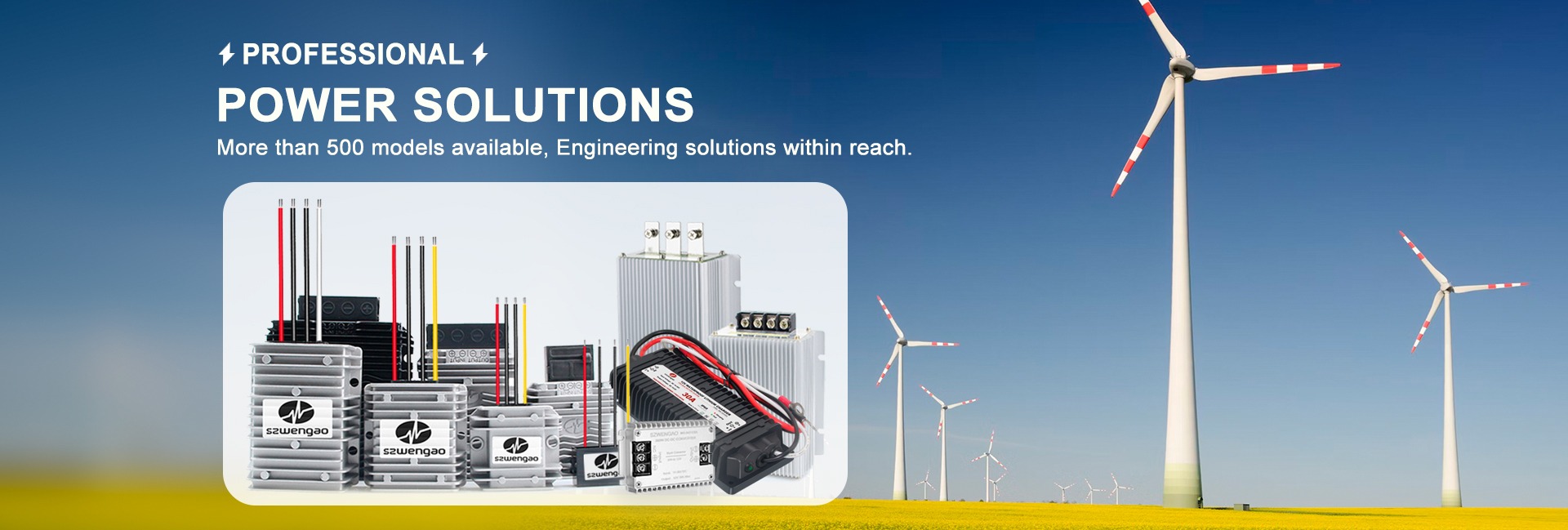
Carefully selected conversion topologies serving regional OEMs in automotive prototyping, off-grid telemetry, and specialized robotics throughout Liberec and the Lusatian Neisse corridor.
| Input Window | 10–15V DC |
| Regulated Output | 43.8V DC @ 13A |
| Thermal Package | IP67 Enclosure |
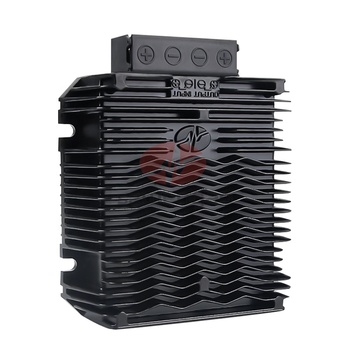
| Topology | Synchronous Step-Up |
| Current Rating | Up to 50A Output |
| Protection | OCP, OVP, OTP |
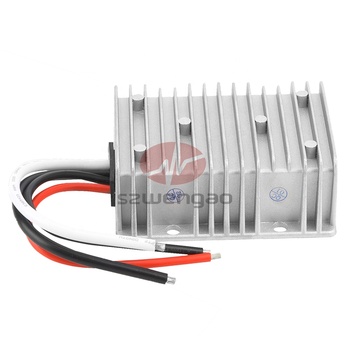
| Input Operating | 18–32V DC |
| Output Delivery | 48V (Up to 720W) |
| Efficiency Peak | 95.5% Synchronous |
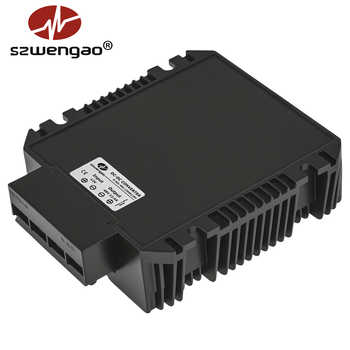
| Input Range | 9–20V Wide DC |
| Rated Power | 960W Heavy Output |
| Construction | Cast Aluminum Potted |

| Dynamic Span | 10–60V DC In |
| Multi-Voltage | 12V, 24V, 28V, 48V |
| Bus Control | RS485 Modbus RTU |

| Isolation Barrier | 1500V DC Min. |
| Input Span | 18–90V Traction Rail |
| Application | Forklifts & Mechatronics |
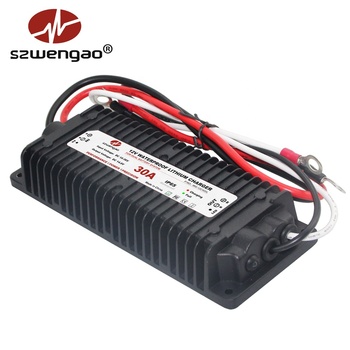
| Alternator Match | 10–36V DC Smart |
| Profiles | 14.6V / 29.2V / 43.8V |
| Environment | IP65 Sealed Engine Bay |
| Input Adaptation | Custom Step-Up Profiles |
| Communications | CAN bus / RS485 / Analog |
| Lead Time | 10–14 Days Prototyping |
Addressing thermal saturation, switching losses, and electromagnetic emission challenges when deploying step-up DC-DC converters in Central European industrial installations.
In distributed DC bus systems and electrified automotive sub-assemblies, boosting lower DC sources—such as 12V auxiliary lead-acid or 24V commercial alternator buses—up to regulated 28V avionics rails, 36V e-mobility banks, or 48V high-torque motor drives represents a foundational power electronics challenge. A traditional boost topology operating with diode rectification suffers from extreme conduction losses across the forward-biased P-N junction when duty cycles exceed 60%. As output currents climb in industrial environments, the forward dissipation ($P_d = I_F \times V_F$) severely degrades overall conversion efficiency, compounding internal heatsink demands inside sealed IP-rated enclosures.
Shenzhen Eltrum Electronic mitigates this through synchronous boost rectification utilizing ultra-low $R_{DS(on)}$ automotive-grade MOSFETs driven by high-speed programmable gate drivers. By replacing continuous forward-recovery diodes with actively switched channels exhibiting drain-source resistance below 4.2 mΩ, conduction losses drop significantly. This topological leap empowers our modules to sustain continuous 95% to 97% conversion efficiencies even under aggressive step ratios, substantially lowering ambient enclosure operating temperatures and eliminating thermal derating pitfalls common in continuous-duty manufacturing installations across Liberec.
For engineering teams designing around wide input variations (such as a 12V rail that sags to 9.2V during heavy cranking or starter loads), calculating the maximum inductor ripple current is vital. At Eltrum, our heavy-duty boost platforms incorporate planar magnetic cores with magnetic flux saturation margins rated at 150% of nominal full-load current ($I_{sat} > 1.5 \times I_{peak}$), completely avoiding core saturation conditions that otherwise trigger thermal cascade failures.
Multi-layer PCB windings replace bulky wire-wound chokes, dramatically reducing parasitic leakage inductance and skin effect resistance under 200–500 kHz high-frequency switching.
Engineered symmetrical differential-mode filtering coupled with potted Faraday shielding ensures low conducted and radiated emissions compliant with EN 55032 and automotive guidelines.
High-energy TVS arrays and active solid-state clamping circuits protect power stages against ISO 7637-2 alternator load dump transients up to 100V with sub-microsecond clamp responses.
Connecting high-durability power electronics with the demanding manufacturing, research, and geographical environments of Liberecký kraj.
The Liberec region, strategically positioned within the Lusatian Neisse triangle adjacent to the German and Polish borders, represents one of Central Europe's most concentrated centers for tier-1/tier-2 automotive manufacturing, technical textile production, and specialized mechatronics. Driven by the technological outputs of the Technical University of Liberec (TUL) and local industrial zones like the Jih Industrial Zone (Průmyslová zóna Liberec-Jih), local engineering requirements demand DC conversion modules that combine absolute mechanical durability with electrical compliance.
Liberec's tier-1 automotive suppliers utilize our high-output boost converters to power 24V and 48V active suspension sensors, cabin heaters, and electronic steering simulators directly from baseline 12V test benches without reconstructing full harness infrastructure.
Automated manufacturing facilities in Vratislavice nad Nisou and Hrádek nad Nisou implement our compact step-up regulators on 24V AGV warehouse fleets to run 48V optical LiDAR, precision servos, and telemetry gateways with zero brownouts.
Mounting equipment across the Jizera Mountains (Jizerské hory) and Ještěd ridge exposes electronics to sub-zero temperatures. Fully potted Eltrum IP67/IP68 converters guarantee reliable cold starts down to -40°C for mountain rescue telemetry, ski infrastructure, and weather sensors.
Strategic transformations guiding European equipment designers toward modular conversion architectures.
Three primary technological and economic forces are currently shaping hardware specification decisions among system integrators in the Czech Republic and wider Central Europe:
1. The Accelerated Shift to 48V Architectures: Modern robotic platforms, automated intralogistics, and hybrid mild-vehicle conversions are standardizing around 48V DC buses to minimize conductor copper weight and copper $I^2R$ distribution losses. However, the vast majority of onboard logic, legacy actuators, and human-machine interfaces remain anchored at 12V or 24V. High-reliability bidirectional buck-boost and dedicated high-current boost modules bridge this divide seamlessly, avoiding complete subsystem re-engineering.
2. Tightening Electromagnetic Compatibility (EMC) Mandates: European industrial directives enforce strict compliance with EN 61000-6-2 (industrial immunity) and EN 61000-6-4 (industrial emissions). Equipment shipped within the EU internal market cannot risk spurious EMI resetting sensitive PLC hardware or degrading fieldbus communications (Profinet, CANopen). The demand for boost modules with integrated common-mode chokes, metal shielding, and soft-switching topologies has outpaced low-cost unshielded open-frame alternatives.
3. Resilience via Multi-Voltage Flexibility: Hardware procurement teams increasingly favor broad-window DC-DC modules (such as 10–60V input spans) capable of serving multiple platform configurations. Rather than holding inventory for disparate 12V-to-24V and 24V-to-48V SKUs, standardized multi-topology modules lower total cost of ownership (TCO) and stabilize supply chains.
Founded in 2015, Eltrum operates a dedicated manufacturing facility in Shenzhen, China, engineered to meet the precision and quality expectations of international industrial clients. Supplying system designers in over 130 countries, our engineering core originated in complex galvanic isolation and high-efficiency synchronous DC-DC conversion.
Every batch of boost converters and battery charging systems undergoes stringent multi-stage QC: from automated surface-mount placement (SMT) and magnetic winding integrity checks to vacuum potting, thermal shock testing, and 100% full-load burn-in validation. We support agile prototyping with sample MOQs starting from just 5 units, backed by bespoke firmware, connector terminations, and mechanical customization.
Direct answers addressing technical qualification, supply logistics, and regulatory compliance for engineers and procurement directors in Liberec.
All Eltrum boost converters and battery charging modules are designed and certified to CE low-voltage (LVD) and electromagnetic compatibility (EMC) directives, along with RoHS compliance. Full test reports, CE Declarations of Conformity (DoC), and material declarations are supplied with shipments to ensure seamless clearance through Czech customs hubs (e.g., Prague Ruzyně / regional clearance centers).
Standard catalog evaluation units ship via air express (DHL / FedEx / UPS) within 3 to 5 business days, reaching Liberec facilities typically within 4 to 7 transit days. Production volumes for customized or buyer-labeled units carry standard lead times of 15 to 25 business days, with flexible FOB, EXW, or DDP delivery terms depending on your logistics preferences.
Non-isolated synchronous boost converters deliver higher efficiency (96%+) and compact power densities at an attractive price point. However, galvanic isolation (transformative separation) is mandatory whenever input and output circuits cannot share a common chassis ground—such as in traction battery systems (forklifts, industrial haulers), telecommunication installations with positive grounds, or setups requiring isolation from severe inductive ground loops.
Yes. Shenzhen Eltrum Electronic Co., Ltd. provides full OEM/ODM engineering capabilities. We routinely modify fixed output voltages (e.g., custom 28.8V or 54.4V CC/CV targets), integrate customized wire harness pigtails (Deutsch, Anderson, M12 industrial connectors), apply custom potting materials for aggressive chemical/vibration conditions, or incorporate RS485 communication protocols.
For standard modules, our evaluation MOQ starts at just 5 units, allowing local R&D centers, universities (such as TUL), and engineering startups to test and certify physical units on test benches before committing to volume manufacturing runs.
Discuss your operational voltage windows, thermal constraints, and compliance requirements directly with our technical engineering group. We provide sample units, custom schematics, and volume manufacturing support for projects serving Liberec and European industry.