High-Performance Boost & Step-Up Converters
Engineered to deliver rock-solid DC rail stability under severe automotive load dumps, cold start transients, and continuous industrial duty cycles. Certified to CE, RoHS, and ISO 9001 standards.

Smart 36V Lithium Battery Charger DC 12V to 43.8V 13A
- TopologySynchronous Boost
- Input Voltage10V – 36V DC
- Output Profile43.8V CC/CV 13A
- Efficiency≥ 94.5%
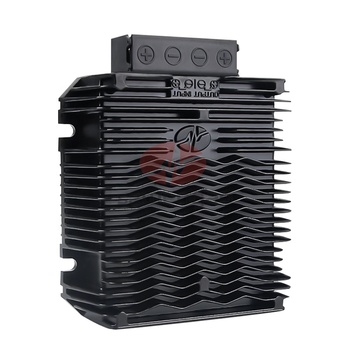
12V to 24V/48V Heavy-Duty Boost Regulator
- Input Nominal12V DC (9–20V Range)
- Max Output24V 50A / 48V 20A
- Thermal MgmtExtruded Aluminum Fin
- ProtectionOCP, OVP, OTP, Short
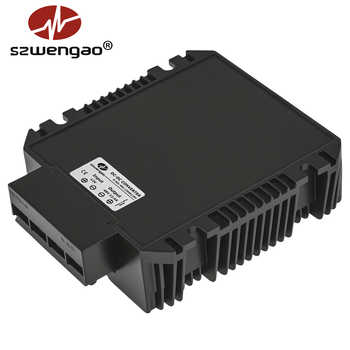
12V to 48V Waterproof Step-Up Converter 20A
- Input Voltage10V – 30V DC
- Output PowerUp to 960W Max
- EnclosureIP68 Epoxy Encapsulation
- Vibration RateISO 16750-3 Category 2
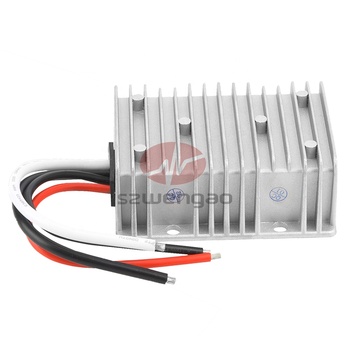
24V to 48V 10A/15A Commercial Boost Module
- Input Range18V – 35V DC
- Output Bus48V ±1.0% Dynamic
- Rated Current10A / 15A Continuous
- Ripple Noise< 50mVp-p Standard

1500W Intelligent Programmable Buck-Boost
- Wide Window10V – 60V Continuous
- Programmable12V, 24V, 28V, 48V Bus
- TelemetryRS485 Modbus RTU
- Max Wattage1500W Peak Dynamic
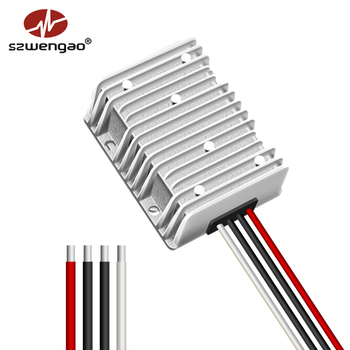
8–40V to 13.8V 30A Marine / Vehicle Stabilizer
- Input Range8V – 40V Ultra-Wide
- Regulated Output13.8V Float Precision
- Continuous Amps25A – 30A Full Load
- HousingCorrosion-Proof Alloy
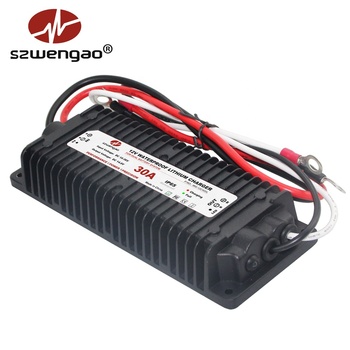
400W Waterproof DC-DC Dual Battery Charger
- Input Flexibility10V – 36V Euro 6 Safe
- Lithium Curve14.6V / 29.2V / 43.8V
- Alternator InrushSoft-Start & Isolation
- Sealing GradeIP67 Fully Sealed
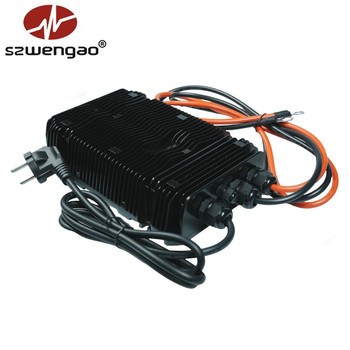
600W Waterproof Heavy-Duty Fleet Charger
- Grid Universal90V – 265V AC Mains
- DC Terminal14.6V to 58.4V LiFePO4
- Thermal Shock-40°C to +85°C Range
- EU ComplianceCE, LVD, EMC Class B
Engineering High-Current DC-DC Step-Up Architectures for Northern Italy's Advanced Manufacturing Belt
In modern industrial engineering, power conversion is no longer treated as a passive peripheral. It represents the foundational link governing electrical efficiency, system reliability, electromagnetic compatibility (EMC), and thermal longevity. Across the Veneto region—with Verona standing as the undisputed epicenter of intermodal freight, cold-chain transport, agricultural machinery, and precision automated manufacturing—the demand for robust, ruggedized DC-DC boost converters has experienced explosive growth. As industrial original equipment manufacturers (OEMs) and system integrators shift away from legacy internal combustion architectures toward 24V, 48V, and multi-rail lithium (LiFePO4) powertrains, conventional non-synchronous converters can no longer satisfy strict operational envelopes.
Shenzhen Eltrum Electronic Co., Ltd., backed by deep design credentials dating back to 2015 and an onsite-verified ISO 9001 quality infrastructure, operates as an engineering-driven manufacturer and exporter delivering direct factory-level power solutions into Verona’s industrial ecosystem. This document delivers deep technical clarity on synchronous boost topologies, critical mitigation protocols for common-mode electromagnetic noise, localized applications throughout the Verona district, and actionable sourcing methodologies for European procurement teams.
Technical Topology Breakdown: Synchronous vs. Asynchronous Boost Mechanics
The standard boost topology steps up a lower direct current input voltage (Vin) to a regulated higher direct current output (Vout) through continuous energy storage and release across an inductor. However, the semiconductor choices within the free-wheeling stage define the entire efficiency boundary. In traditional asynchronous configurations, a Schottky diode conducts during the switch off-time. At low power ratings, the diode forward voltage drop (Vf ≈ 0.45V to 0.7V) yields acceptable losses. However, within heavy-duty material handling equipment and commercial vehicle platforms drawing 20A to 50A, conduction loss across the diode scales linearly: Ploss = Iout × Vf. At 40A, a standard diode generates upwards of 28W of pure waste heat, severely stressing thermal management and leading to thermal derating.
Eltrum’s high-power boost converters utilize full Synchronous Rectification (SR). The passive free-wheeling diode is replaced by an ultra-low RDS(on) N-channel Power MOSFET actively modulated by a dedicated high-side gate driver. Because the conduction path through an active MOSFET exhibits purely resistive behavior (Ploss = Irms2 × RDS(on)), conduction losses drop dramatically. Utilizing low-resistance MOSFET arrays (RDS(on) < 2.5mΩ), synchronous conduction losses are clamped under 4W even at full continuous output. This technological leap enables Eltrum modules to deliver continuous conversion efficiencies between 94% and 96.5%, drastically cutting internal heat dissipation and allowing high power density within compact, completely sealed aluminum housings.
| Parameter Metric | Standard Asynchronous Boost | Eltrum Synchronous SR Boost | OEM Operational Gain in Veneto |
|---|---|---|---|
| Rectification Switch | Passive Schottky Diode (Vf 0.55V) | Low RDS(on) MOSFET (≤ 2.5mΩ) | 90% reduction in secondary thermal loss |
| Peak Thermal Loss @ 30A | 16.5 Watts continuous dissipation | 2.25 Watts continuous dissipation | Allows fanless, hermetic IP68 potting |
| Transient Line Recovery | > 450 microseconds response | < 65 microseconds response | Prevents CAN-bus resets during engine crank |
| Electromagnetic Profile | High reverse-recovery spike noise | Soft-switching slew-rate controlled | CE EN 61000-6-3 & ECE R10 Automotive Class |
| Continuous Efficiency | 86% – 89% under load | 94% – 96.5% sustained | Extends LiFePO4 battery run-times by 12-18% |
Localized Application Blueprints in Verona & the Veneto Industrial Basin
Verona occupies an extraordinary geopolitical and logistical position in Northern Italy. It serves as the primary distribution nexus connecting Italian industrial production with Central and Northern European markets via the trans-Alpine Brenner corridor. Below are the precise technical environments where Eltrum's boost converter factory products provide decisive competitive advantages:
Quadrante Europa Intermodal AGVs
Verona's Interporto handles massive freight volume. Automated Guided Vehicles (AGVs) and autonomous tow tractors operating across logistics yards utilize 24V or 36V central traction banks. Eltrum synchronous boost units step up voltage to ultra-stable 48V rails, powering LIDAR navigation, hydraulic lifts, and servo-steer drives without signal dropouts.
Cold-Chain & Alpine Transport Fleets
Fleets traversing the Verona-to-Munich Brenner corridor require fail-safe auxiliary power. When alternators experience variable speeds or multi-battery setups droop under zero-degree alpine starts, Eltrum boost and buck-boost modules hold 24V or 28V outputs rigid, driving telematics, active sensors, and auxiliary refrigeration valves.
Wine & Agritech Automation (Valpolicella)
From automated grape harvesting machines to bottling plants in San Bonifacio and Villafranca, equipment operates under severe humidity and daily washdowns. Eltrum's IP68 thermally potted boost converters supply 48V DC motor drives directly from 12V or 24V battery systems with complete ingress immunity.
Emerging Macro Trends Shaping Verona's DC Power Procurement
1. Accelerated Adoption of 48V Architecture Across Industrial Subsystems: In compliance with the EU's "Fit for 55" decarbonization benchmarks and the updated EU Machinery Regulation (2023/1230), Italian machine builders are actively transitioning auxiliary drives, pneumatic replacements, and electro-hydraulic actuators from 12V/24V to 48V. Operating at 48V reduces wiring harness weight by up to 60% and slashes I2R copper resistive losses by a factor of sixteen. Eltrum's 12V-to-48V and 24V-to-48V boost converters serve as drop-in bridging solutions, allowing legacy platforms to adopt modern 48V actuators without redesigning the primary power core.
2. Universal Replacement of Flooded Lead-Acid with LiFePO4 Chemistry: Across Veneto's industrial warehousing and commercial transport fleets, standard lead-acid packs are rapidly being superseded by Lithium Iron Phosphate (LiFePO4) storage. LiFePO4 cells exhibit steep charge-voltage profiles and strict over-current cutoff thresholds. Connecting alternators directly to lithium banks risks alternator burnout due to low internal cell resistance. Eltrum's Smart DC-DC Boost Chargers integrate customized multi-stage CC/CV charging algorithms, ensuring precision charge termination (e.g., 43.8V for 36V packs or 58.4V for 48V systems) with integrated reverse current blocking.
3. Resilience Against Supply Chain Vulnerabilities Through Factory-Direct Procurement: European OEMs have increasingly suffered through broker markups, unpredictable component allocations, and prolonged lead times. By partnering directly with Eltrum’s manufacturing facility in Shenzhen, Verona enterprises secure dedicated engineering access, private labeling (buyer labels), custom harness integration, and consistent ISO 9001 lot traceability, bypassing multi-tiered domestic distribution premiums.
| Procurement Dimension | Traditional Local Distributor Reseller | Eltrum Factory Direct Partnership |
|---|---|---|
| Custom Input / Output Voltages | Restricted strictly to standard catalog items | Custom voltage presets (e.g., 15V, 28V, 36V, 54V) from 5-unit MOQ |
| Harness & Connector Tailoring | Customer must crimp and adapt wiring post-delivery | Factory-terminated Deutsch, Anderson, or Amphenol connectors |
| Component Quality Transparency | Opaque Bill-of-Materials (BOM) multi-sourced | 100% Japanese Nippon Chemi-Con capacitors & genuine high-grade MOSFETs |
| Direct Engineering Consultation | Filtered through non-technical sales agents | Direct interaction with senior DC-DC hardware architects |
| Commercial Cost Advantage | High markup with warehouse overhead added | Direct FOB/DDP manufacturer pricing for volume OEM margins |
Technical Reliability Standards: Engineering Ingress, Vibration & EMC Integrity
The manufacturing process behind every Eltrum boost converter is engineered around high industrial survivability. Enclosures are precision pressure-cast from ADC12 aluminum alloy, featuring integrated heatsink fin geometries designed through computational fluid dynamics (CFD) to maximize natural convective heat transfer. Internal circuit boards are fully potted with high-grade, thermally conductive polyurethane elastomer (≥ 1.5 W/m·K). This complete encapsulation produces three non-negotiable performance traits:
1. Complete IP68 Environmental Barrier: Moisture, saline atmosphere (critical for nautical applications across Lake Garda), airborne industrial dust, oil mists, and cleaning chemicals are physically barred from contacting surface-mount electronics. Units withstand continuous submersion up to 1.5 meters for 72 hours.
2. Structural Vibration Immunity: In agritech vehicles and heavy transport chassis, continuous harmonic vibrations shatter conventional through-hole solder joints. Complete epoxy potting bonds large magnetics (toroidal inductors and planar transformers) directly to the aluminum chassis, conforming to ISO 16750-3 Category 2 random vibration endurance.
3. Advanced Conducted & Radiated EMC Suppression: Step-up converters are notorious for high di/dt switching noise that interferes with sensitive vehicle telematics, RFID readers, and industrial CAN-bus networks. Eltrum integrates multi-stage pi-filters (Π-filter) on both input and output ports, coupled with common-mode chokes and copper Faraday shielding, comfortably meeting European EN 55032 Class B emission standards without requiring secondary external filter boxes.
Shenzhen Eltrum Electronic Co., Ltd.
Established in 2015, Eltrum operates an onsite-verified production facility spanning advanced surface-mount technology (SMT) lines, automated magnetics winding, vacuum silicone potting stations, and 100% full-load thermal burn-in chambers.
Our specialized focus encompasses non-isolated and isolated DC-DC converters, smart LiFePO4 battery chargers, and high-wattage buck-boost stabilizers exported to more than 130 countries worldwide. We maintain complete legal and technical compliance, verifying every manufacturing lot under strict ISO 9001 protocols.
Verona Engineering & Sourcing FAQ
Key technical, regulatory, and logistics answers for engineering teams and purchasing directors in Northern Italy.
What is the minimum order quantity (MOQ) for custom boost converter prototypes shipped to Verona?
Can Eltrum customize the boost converter output voltage and charging curves for specialized LiFePO4 packs?
How do Eltrum step-up converters suppress electrical noise on CAN-bus systems in automated machinery?
What are the standard international logistics options and transit times from the factory to Verona?
When should a system designer select a Buck-Boost converter rather than a pure Boost converter?
What commercial payment terms and quality warranty coverage are extended to Italian OEMs?
Connect Directly with Our Power Engineering Team
Discuss custom input voltage ranges, custom current ratings, terminal cabling requirements, or request an official quotation for delivery to Verona and the wider Veneto region.