
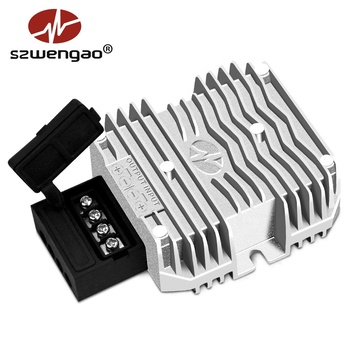
Smart 36V Lithium Battery Charger DC 12V to 43.8V 13A
- Topology: DC-DC Step-Up Boost
- Input Voltage: 10V - 18V DC
- Output Profile: 43.8V 13A CC/CV
- Protection: IP67 Fully Potted
Engineered to handle harsh salinity, severe voltage sags, and deep freeze temperatures with IP65+ ingress encapsulation, multi-stage CC/CV profiling, and active thermal protection.
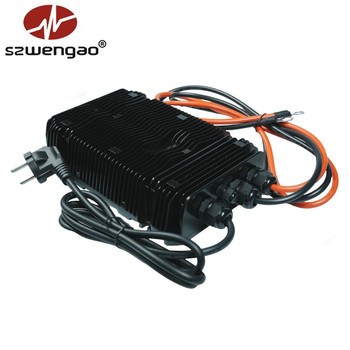
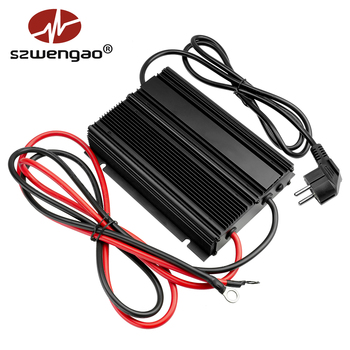
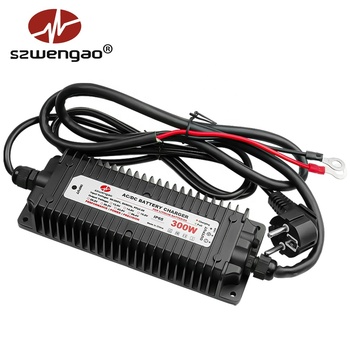
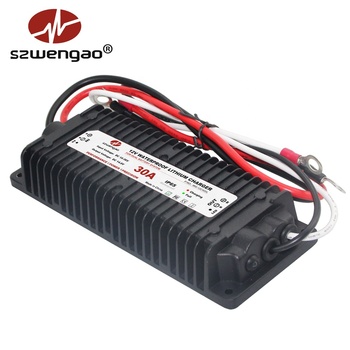


Maritime navigation across regional waters—including coastal commercial operations spanning the West Sea (Yellow Sea) and East Sea (Sea of Japan)—imposes rigorous operational hurdles on vessel power conversion hardware. Sub-zero winters, persistent fog, abrasive sea spray, and volatile engine alternator RPM require power architectures built for survival. As an experienced manufacturer, Eltrum supplies specialized boat battery charging systems configured specifically to withstand high-vibration engine compartments and volatile marine line noise.
Trawlers navigating the Korea Bay and offshore fishing grounds rely on heavy-duty diesel engines where main alternators fluctuate between 11.2V at idle and 15.6V under load. Our DC-DC battery chargers stabilize irregular alternator currents, delivering a tightly regulated CC/CV multi-stage profile directly to auxiliary electronics, sonar packs, and communication house batteries.
Navigating shallow-draft cargo vessels across major riverways like the Taedong River demands uninterrupted battery bank stability for engine starter batteries and nocturnal searchlights. Our IP67 potted buck-boost stabilizers and chargers prevent electrical brownouts caused by sudden bilge pump and winch activations.
Regional maritime operations often encounter severe freezing weather where ambient engine compartment temperatures drop below -25°C. Conventional consumer battery chargers fail to strike high internal resistance cells. Eltrum chargers feature integrated low-temperature cutoff thresholds and thermal-compensated voltage curves to protect LiFePO4 cathode lattices from lithium-plating dendrite failures.
Historically, heavy maritime operators in the regional East Asian waters relied extensively on flooded lead-acid and heavy AGM battery banks. While lead-acid tolerates basic charging methodologies, it suffers from severe sulfation, high weight-to-energy ratios, and abbreviated lifespan under deep discharge cycles common during prolonged port loading or offshore anchoring without shore power.
Today, maritime retrofit initiatives and modern fleet modernization programs are driving substantial shifts toward Lithium Iron Phosphate (LiFePO4) and advanced ternary battery topologies. This transition creates specific technical imperatives:
LiFePO4 banks exhibit near-zero internal resistance, pulling massive amperage directly from standard marine alternators. Without intermediate DC-to-DC regulation, alternators overheat and burn their stator windings at low trolling speeds. Eltrum chargers enforce precise current limits, safeguarding the vessel's primary power generation gear.
Commercial hulls operating in saline sea water suffer rapid galvanic corrosion if battery return currents leak into the hull plating. Our isolated DC-DC chargers decouple input and output negative returns via high-frequency planar transformers, completely isolating critical communication instruments from the starter battery ground.
Salt fog and high engine vibrations destroy air-cooled chargers with exposed cooling fans within months. Eltrum's marine chargers utilize thermally conductive polyurethane resin encapsulation, achieving true hermetic sealing that resists humidity, salt deposition, hydraulic fuel spray, and continuous mechanical shock.
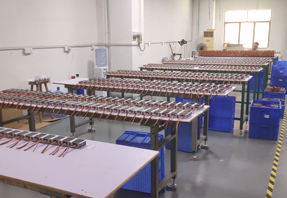
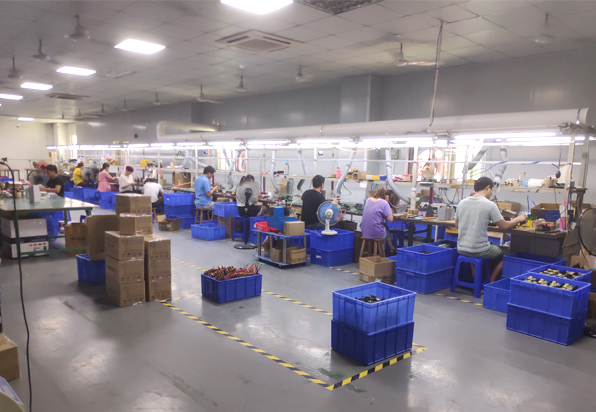
Founded in 2015, Shenzhen Eltrum Electronic Co., Ltd. is a dedicated designer and high-volume manufacturer of DC-DC converters, isolated power modules, buck-boost voltage regulators, and high-efficiency LiFePO4 battery charging platforms. Our manufacturing hub spans up to 3,000 m² equipped with automated SMT assembly lines, computerized wave soldering, dynamic burn-in testing chambers, and precision polyurethane potting machinery.
Every single power unit undergoes rigorous 100% full-load burn-in screening, high-potential dielectric breakdown tests, and temperature-cycle stress validation before packaging. Our team delivers comprehensive OEM and ODM engineering support, adapting charging curves, communication protocols (RS485 / CANbus), custom connectors, and structural heat-dissipating casings to fulfill precise commercial vessel specifications.
With an onsite-verified production facility certified under ISO 9001 and international conformity across CE and RoHS benchmarks, Eltrum supplies reliable power modules across more than 130 countries worldwide, offering engineering-first guidance from prototype validation to volume delivery.

Speak directly with our power engineering team regarding custom input ranges, marine certifications, and volume batch delivery.