
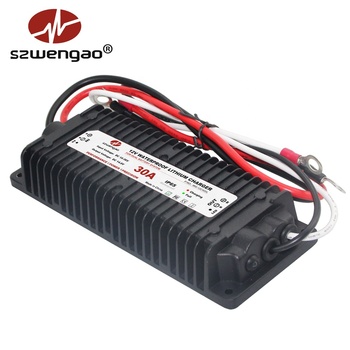
Smart 36V Lithium Battery Charger DC 12V to DC 43.8V Waterproof 13A
- Topology: DC-DC Step-Up Boost
- Nominal In: 12V DC (10–18V)
- Regulated Out: 43.8V DC (LiFePO4)
- Protection: IP67 Fully Potted
Engineered in our Shenzhen manufacturing complex and deployed across Klang Valley industrial parks, data centers, and EV fleet depots. Explore our 8 benchmark bidirectional, buck-boost, and LiFePO4 power architectures.



A comprehensive engineering dossier on symmetric bidirectional DC-DC conversion, grid-interactive V2G, galvanic isolation protocols, and thermal resilience under the humid tropical climatic constraints of Peninsular Malaysia.
The transition toward decentralized energy storage in Southeast Asia has made bidirectional power electronics a mission-critical technology. In metropolitan urban centers like Kuala Lumpur, Selangor, and the wider Klang Valley, industrial facilities and commercial infrastructure are moving beyond unidirectional charging systems. Legacy unidirectional topologies restrict energy flows: AC mains power is rectified to charge battery banks, but that stored energy remains trapped when the facility experiences peak-demand tariff penalties, power line voltage sags, or localized blackout events.
A true bidirectional battery charger solves this operational limitation by utilizing symmetrical dual-active bridge (DAB) or bidirectional synchronous buck-boost converter stages. Symmetrical topologies allow energy to circulate seamlessly in two directions: drawing from AC grid supplies (or primary DC buses) to charge energy storage systems (ESS) using precise lithium iron phosphate (LiFePO4) or lithium-ion multi-stage profiles, and conversely converting stored chemical potential back into regulated electrical power to stabilize auxiliary rails, support mission-critical UPS inverters, or feed vehicle-to-grid (V2G) and vehicle-to-home (V2H) ecosystems.
When engineering bidirectional charging units for OEM clients across Malaysia, circuit topology selection depends entirely on the system's galvanic isolation requirements and voltage differential ratios. Eltrum SMPS specializes in two core bidirectional topologies:
A frequent root-cause failure in power supplies imported into Kuala Lumpur is thermal stress. The equatorial climate of Malaysia presents year-round ambient temperatures frequently reaching 34°C–38°C, compounded by relative humidity levels that consistently exceed 85% to 95%. When electronics are mounted within enclosed vehicle chassis, marine engine bays, outdoor solar combiner shelters, or rooftop BESS enclosures, internal micro-climates rapidly spike beyond 60°C.
Our Shenzhen engineering facility mitigates this using three proprietary hardware safeguards: custom heavy-ribbed 6063-T5 aluminum heat-sink enclosures, high thermal conductivity (1.5 W/m·K) vacuum potting compounds that displace moisture while preventing galvanic corrosion, and active software temperature throttling calibrated to ensure zero catastrophic breakdown up to 85°C internal junction limits.
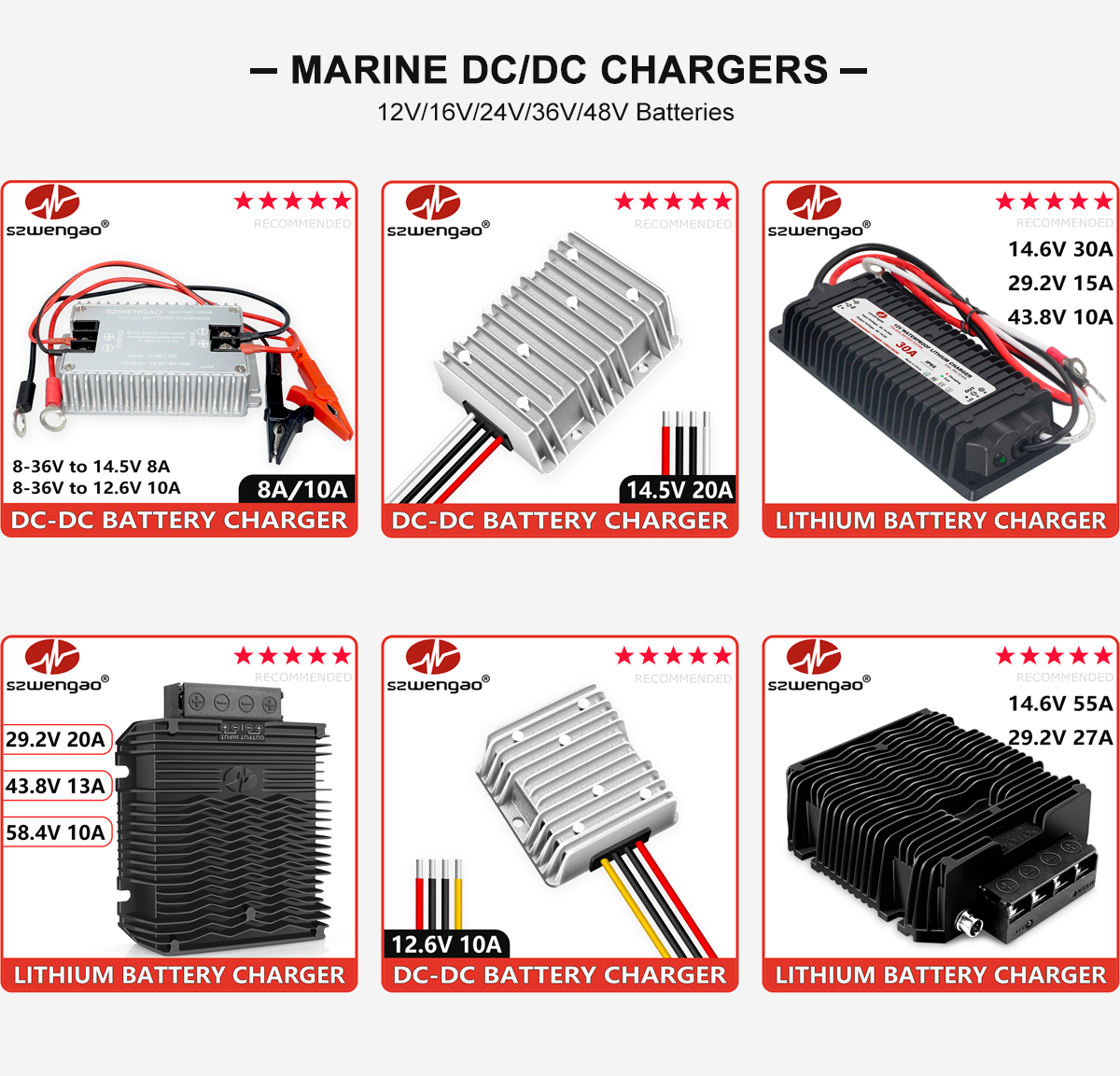
The table below provides direct engineering comparison metrics for industrial system integrators, electrical contractors, and OEM specifiers in the Kuala Lumpur region searching for matched conversion components:
| Series Architecture | Topology Class | Input / Output Range | Peak Current | Isolation / Ingress | Primary Application |
|---|---|---|---|---|---|
| WG-12C800M Smart Series | Bidirectional Buck-Boost | 10V – 60V DC Dual-Way | 50A Max Continuous | Non-Isolated / IP67 Potted | Commercial Fleet Dual-Battery & Microgrids |
| ELT-ISO-1890 Series | Transformer Isolated | 18V – 90V to 12V/24V | 10A – 20A Regulated | 1500V DC Galvanic / IP65 | 48V Telecom Base Stations & AGV Avionics |
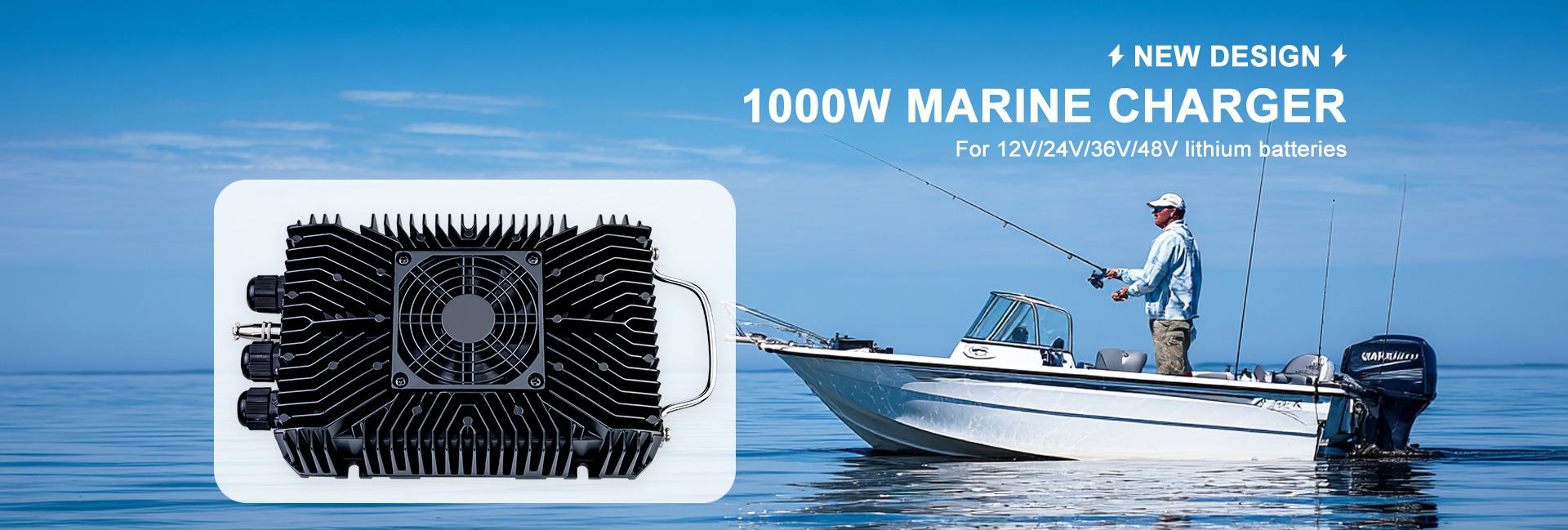
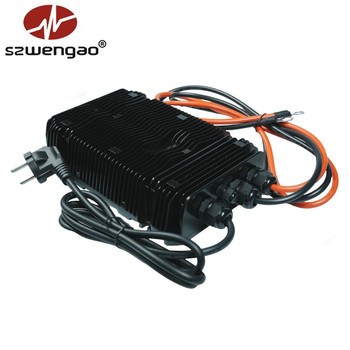
| WG-AC-1000W Marine | Universal AC-DC CC/CV | 90V – 265V AC / 14.6–58.4V | Up to 40A DC Output | 3000V AC Input / IP65 Sealed | Port Klang Marine, Yachts, Golf Cart Fleets |
| ELT-BB-1500W High-Rail | Sync Buck-Boost Stabilizer | 10V – 44V to Fixed 12V/24V | 60A – 100A High Load | Solid-State Shared / Heavy Fin | Transit Bus Systems, Mining Trucks, Solar Storage |
| ELT-BOOST-48V Industrial | Step-Up DC-DC Boost | 9V – 28V to 48V Regulated | 20A Peak Output | Non-Isolated / IP68 Cast | 12V Camper Alternator to 48V Home BESS |
Tailored power hardware directly meeting the performance, regulatory, and infrastructural demands of commercial enterprise operators in the Klang Valley and West Malaysia.
Last-mile logistics operators operating delivery fleets across Shah Alam, Petaling Jaya, and central KL deploy our bidirectional chargers. During high afternoon peak grid tariff windows, fleet delivery vans discharge surplus kWh back to internal distribution hub microgrids to reduce Maximum Demand (MD) charges from Tenaga Nasional Berhad (TNB).
Factories throughout Selangor utilizing Malaysia's NEM 3.0 (Net Energy Metering) Nova program integrate our high-power DC-DC buck-boost converters and bidirectional chargers. Our units stabilize fluctuating solar panel array voltages (which sag during sudden tropical rainstorms) while maintaining constant CC/CV charging curves for 48V and 72V LiFePO4 battery banks.
Cyberjaya data corridors and remote 5G cellular transceiver towers require zero-fault galvanic isolation. Our 18–90V isolated DC-DC modules break ground loops and eliminate hazardous transient surges between backup 48V battery banks and sensitive optical switching equipment, delivering pristine 12V and 24V bus voltages.
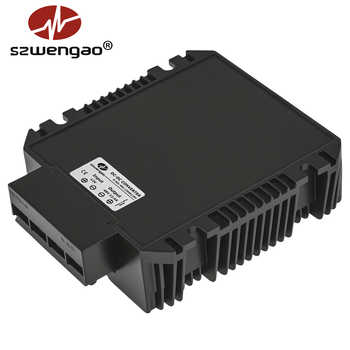
Automated distribution centers in Port Klang and Subang utilize autonomous electric tuggers and AGVs. Our shock-proof, potted DC-DC buck modules step down high-capacity 48V/72V lithium traction power to regulated 12V/24V outputs, powering navigation LIDAR, safety sensors, and wireless PLC communications uninterrupted.
Commercial marine tenders, tugboats, and service barges operating off the Straits of Malacca require IP67/IP68 hermetically sealed battery chargers. Resistant to coastal saline air corrosion, our AC-DC LiFePO4 chargers provide reliable shore-to-ship recharging without risk of casing oxidation or water ingress.
Off-grid tourism facilities and private island microgrids across West Malaysia rely on our wide-input voltage stabilizers and dual-battery chargers to bridge diesel generator backup, rooftop solar, and deep-cycle lithium storage without voltage spikes that damage residential luxury amenities.
How progressive governmental mandates, Tenaga Nasional Berhad (TNB) rate structuring, and EV infrastructure policies are accelerating demand for advanced power conversion factories.
Under Malaysia's National Energy Transition Roadmap (NETR), the government has set an ambitious target of achieving 70% renewable energy capacity within the national power mix by 2050. A major catalyst for this transition is the rapid adoption of decentralized battery energy storage systems (BESS). As substantial intermittent solar PV capacity connects to the Peninsular Malaysia grid, the Energy Commission (Suruhanjaya Tenaga - ST) is incentivizing commercial facilities to incorporate local storage to mitigate localized frequency sags.
Simultaneously, the widespread introduction of electric transport under the Low Carbon Mobility Blueprint (LCMB) has positioned Kuala Lumpur as an emerging hub for EV charging network expansion. However, high-density fast charging creates heavy local grid strain. Bidirectional chargers serving both as vehicle supply equipment (EVSE) and energy-recovery nodes are vital to smooth utility peak curves. By selecting Shenzhen Eltrum Electronic as your OEM/ODM partner, Malaysian system builders gain access to factory-direct power engineering that conforms to these regulatory directions.
Allows facilities to export battery power during 08:00–22:00 peak commercial tariff windows, lowering monthly Maximum Demand bills.
Sub-millisecond switching between charging and discharge states ensures seamless frequency buffering during sudden cloud cover over solar farms.
Functions as an uninterruptible bidirectional bridge, automatically powering emergency loads from vehicle batteries during grid dropouts.
Facilitates full self-consumption setups without dumping surplus clean solar generation to ground when local feed-in quotas are saturated.
Combining over a decade of dedicated isolated power development with high-volume SMT production lines, rigorous QA burn-in chambers, and complete buyer-label customization flexibility.
Over a decade of focused manufacturing in Shenzhen's Bao'an industrial district. Verified onsite by third-party international inspection agencies with complete business registration transparency.
Every production batch is assembled in accordance with ISO 9001 quality management procedures. Components meet strict RoHS material purity and carry CE conformity for immediate international use.
Need custom input/output voltages, bespoke charging curves, private buyer labels, custom IP68 enclosure molds, or specific RS485 communication protocols? Our in-house R&D engineering team designs and delivers prototypes rapidly.
Zero unverified products leave our dock. Each power module undergoes automated ICT testing, vibration simulation, and extended high-temperature full-load burn-in screening to prevent on-site infant mortality.
We minimize design risk for engineers. Evaluate bench performance with low standard-model minimum order quantities starting at just 5 units prior to scheduling volume container shipments.
Seamless export customs handling with flexible FOB Shenzhen or direct DDP sea/air forwarding directly into Port Klang, Subang Air Freight Terminal, or KLIA logistics zones with short transit times.
Direct answers to the most common engineering, regulatory, customs, and logistics questions asked by system integrators in Kuala Lumpur.
Direct factory engineering support, sample validation from 5 units, and tailored volume OEM pricing. Speak directly with our Shenzhen power supply development team today.