
500+
Standard Power Formats
130+
Export Destinations
IP67/IP68
Sealed Marine Ingress
<72h
Transit to Hai Phong Port
Mission-Critical Hardware
Featured Industrial & Maritime Battery Chargers for Hai Phong
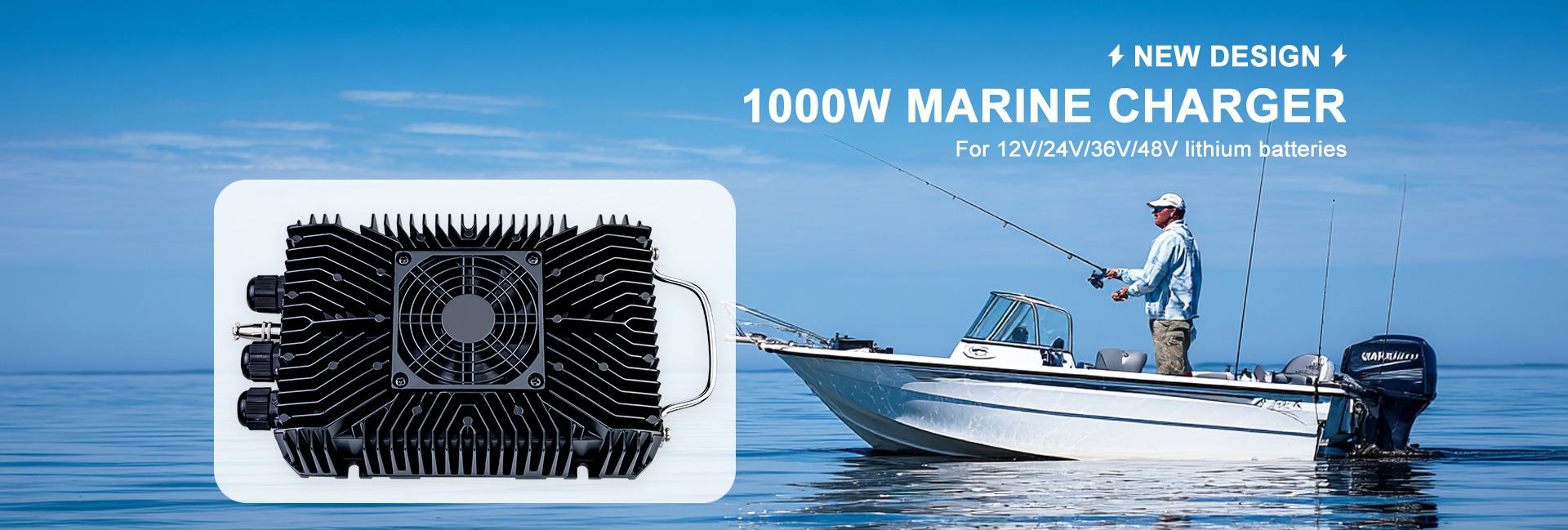
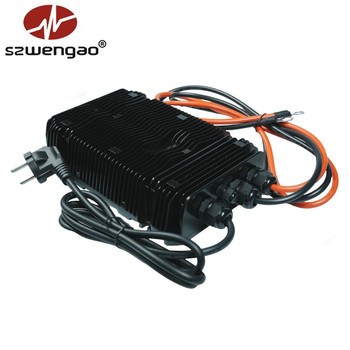
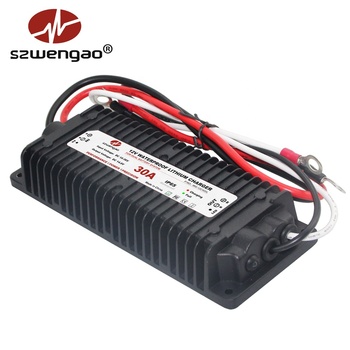
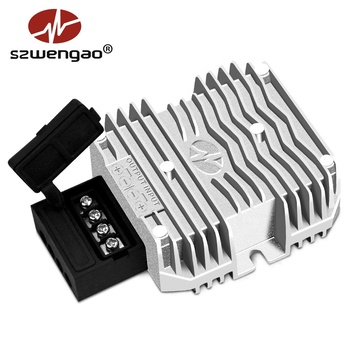
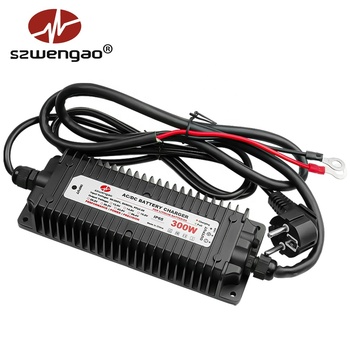
High-efficiency, thermally stable AC-DC and DC-DC power units engineered with heavy-duty potted silicone, active CAN/RS485 communications, and dynamic charging algorithms for commercial fleet operations.


Macro Economic Analysis
Industrial Electrification Trends in Hai Phong: Seaport Automation & Green Fleet Logistics
Hai Phong has decisively established itself as the northern maritime epicenter and premier manufacturing gateway of Vietnam. Anchored by the Lach Huyen Deep-Water Port complex, the DEEP C Industrial Zones (Dinh Vu & Tien Sa), and VSIP Hai Phong, the municipality handles over 40% of Northern Vietnam’s container throughput. In parallel, the rapid rise of national EV manufacturing initiatives (led by VinFast at Cat Hai Island) has triggered a cascading structural transformation across regional supply chains. Maritime operators, material handling contractors, and third-party logistics (3PL) warehouses are under immediate legislative and commercial imperatives to decommission diesel-driven prime movers and auxiliary engines in favor of high-capacity Lithium Iron Phosphate (LiFePO4) energy storage architectures.
However, industrial electrification in Hai Phong faces environmental and technical constraints that render off-the-shelf consumer charging hardware obsolete within months of deployment. Hai Phong’s climate represents an aggressive combination of high tropical ambient temperatures (frequently exceeding 38°C in summer peak), relative humidity averaging 85% to 92%, and an airborne saline aerosol saturation originating from the Gulf of Tonkin. When commercial lithium battery packs operate in this hyper-corrosive microclimate, power electronics without hermetic potting suffer galvanic trace degradation, catastrophic PCB surface dendrite migration, and severe thermal throttling.
The Structural Shift toward High-Performance LiFePO4 in Lach Huyen & Dinh Vu
As Lach Huyen expands berths 3, 4, 5, and 6 to receive vessels up to 160,000 DWT, terminal operations are automating container transport lanes through automated guided vehicles (AGVs), electric terminal tractors (eTTs), and battery-electric reach stackers. Traditional lead-acid motive power cannot sustain the continuous 24/7 duty cycles required by deep-water maritime logistics; high internal impedance results in voltage sag, long replenishment cycles (8 to 10 hours), and high thermal generation. Transitioning to LiFePO4 chemistry allows terminal operators to leverage 1C–2C opportunity fast-charging during 15-minute driver shift changes and container staging intervals.
Consequently, the demand for high-reliability, custom-engineered charging topologies has experienced exponential growth across northern Vietnam. Hai Phong procurement managers no longer source standard desktop battery chargers; their technical spec sheets demand rigorous compliance with IEC 60335-2-29, sealed IP67/IP68 ingress integrity, broad operational temperature spans (−30°C to +85°C baseplate), intelligent communication handshake (CAN bus 2.0B / isolated RS485 Modbus), and dynamic multi-phase Constant Current / Constant Voltage (CC/CV) precision algorithms that safeguard high-density battery management systems (BMS).
Supply Chain Insight: Shenzhen to Hai Phong Port Maritime Transit
Shenzhen Eltrum Electronic Co., Ltd. operates state-of-the-art SMT and potting manufacturing facilities located within 25 kilometers of Shenzhen Port (Shekou / Yantian). Sea freight shipments to Tan Vu, Dinh Vu, and Lach Huyen terminals arrive within an average transit time of 48 to 72 hours, drastically undercutting European or North American lead times while providing complete Form E preferential tariff certification (0% import duty under ACFTA).
Field Application Engineering
Localized Charging Scenarios Across Hai Phong's Marine & Industrial Ecosystems
Industrial power systems operating in Hai Phong must be configured according to the exact operational stress profiles of local working yards, inland waterways, and assembly lines. Our factory engineering team designs and manufactures bespoke battery charging solutions customized for three primary local sectors:
1. Port Logistics AGVs & Terminal Tractors
High-vibration terminal transport operating non-stop at Dinh Vu Port and Tan Vu Terminal. Our 1000W-1500W IP65/IP67 chargers feature silicone encapsulation that dampens road shock up to 5G while repelling salty damp air and black carbon brake dust.
2. Maritime Auxiliaries & Cat Ba Ferries
Cat Ba eco-tourism mandates electric and hybrid passenger ferries and workboats. Our DC-DC battery chargers (12V to 43.8V/58.4V) charge LiFePO4 house banks directly from main diesel generator DC buses or variable-speed engine alternators without harmonic feedback.
3. DEEP C & VSIP Cold-Chain Warehouses
Material handling electric forklifts operating inside −25°C seafood cold-storage rooms transitioning out to +35°C humid loading docks. Thermal shock-tested charger enclosures eliminate internal condensation bridging and component short-circuiting.
Sub-system Integration: Alternator Protection in Port Service Vessels
A widespread technical failure mode observed in northern Vietnam maritime vessels involves the direct bridging of standard boat alternators to high-capacity LiFePO4 auxiliary battery banks. Because a discharged LiFePO4 pack demonstrates ultra-low internal resistance, it pulls full nameplate current from the alternator indefinitely, often exceeding the alternator's continuous thermal limits at idle RPM. This inevitably leads to stator insulation burnout and stator phase short circuits.
Shenzhen Eltrum Electronic’s DC-DC Smart Alternator Battery Chargers isolate the primary starter battery from the LiFePO4 auxiliary bank. Using advanced micro-step software profiling, our chargers regulate the extraction current according to alternator thermal profiles, automatically stepping down charging amperage when engine bay temperatures climb above threshold or when engine RPM drops below operating minimums. This closed-loop topology protects the primary engine electrical plant while guaranteeing that the secondary house battery reaches 100% State of Charge (SOC) through a precise multi-stage CC/CV profile.
Engineering Deep Dive
Charging Topologies, Ingress Protection & Salt-Spray Thermal Dissipation
Selecting the optimal power supply topology dictates the mean time between failures (MTBF), energy conversion losses, and overall lifecycle operating cost (TCO) of motive power installations across Hai Phong. The technical table below outlines the core architectural variations manufactured by our factory, mapping electrical specifications against real-world industrial environments:
| Circuit Topology | Input Voltage Span | Output Range | Conversion Efficiency | Ingress Rating | Best Hai Phong Use Case |
|---|---|---|---|---|---|
| Isolated DC-DC Charger | 18V – 90V DC Universal | 12.6V, 14.6V, 29.2V, 43.8V | 91% – 93% | IP67 Sealed Solid Silicone | High Ground-Loop Noise (Ports) |
| Non-Isolated Buck-Boost | 10V – 60V Wide Span | 12V, 24V, 28V, 48V Regulated | 94% – 96.5% | IP68 Submersible Optional | Smart Alternator RV/Truck Fleets |
| High-Current Step-Down Buck | 30V – 90V High Bus In | 12V / 24V @ Up to 100A | 95% – 97% | IP65 Fin-Cooled Heavy Case | 48V-72V Forklifts / Electric Shunters |
| AC-DC Universal Fast Charger | 90V – 264V AC Single-Phase | 14.6V – 58.4V Configurable | 93% – 95% | IP65 / IP67 Fully Potted | Dockside 220V Overnight Fleet Terminals |
| High-Voltage Boost Charger | 10V – 16V Low Voltage In | 36V / 48V (Max 58.4V) | 92% – 94% | IP67 Integrated Mounting | 12V Lead-Acid to 36V/48V LiFePO4 Step |
Thermal Management: Potting Compounds vs. Forced-Air Cooling in Saline Climates
In standard mainland industrial sites, forced-air active fan cooling is commonly selected for power electronics due to its lower manufacturing bill-of-materials (BOM). In Hai Phong's coastal port zones, however, fan cooling represents an engineering vulnerability. High-velocity cooling fans draw in marine humidity, particulate salt cristals, chemical emissions from heavy fuel oil (HFO) marine exhaust, and fine industrial dust. Within six months, cooling fans suffer bearing seizure, and cooling fins become coated in conductive, hygroscopic crusts that cause thermal shutdown and dielectric breakdown.
Shenzhen Eltrum Electronic eliminates fan vulnerability by utilizing an aluminum die-cast monolithic extrusion chassis filled with thermally conductive organic silicone resin. Our potting process executes under vacuum chambers, eliminating internal air micro-voids and achieving three decisive advantages:
- Direct Conductive Heat Sinking: Thermal conductivity exceeding 1.8 W/m·K channels internal junction heat directly from power MOSFETs and planar transformers to the outer finned casing, allowing fanless continuous full-load output up to 55°C ambient.
- Total Atmospheric Hermetic Sealing: Full IP67/IP68 classification guarantees zero contact between sensitive internal PCB surface-mount devices (SMD) and exterior salt aerosols, eliminating electrolytic and galvanic corrosion.
- Mechanical Shock Cushioning: Solid potting encapsulates all magnetic components, eliminating winding vibration, audible coil whine, and soldering fatigue caused by heavy harbor container handling or rough coastal waters.
Factory Profile & Quality Systems
Shenzhen Eltrum Electronic: Direct Manufacturing Strengths for Vietnamese Importers
Founded in 2015 in Shenzhen's high-tech manufacturing belt, Shenzhen Eltrum Electronic Co., Ltd. has grown into an international leader in DC-DC power conversion, battery chargers, and specialized power modules. With an ISO 9001 certified plant spanning up to 3,000 square meters, our facility integrates high-speed Yamaha SMT placement lines, automated optical inspection (AOI), automated potting dispensers, and 100% full-load thermal burn-in chambers. We provide direct OEM, ODM, and buyer-label solutions for industrial, automotive, marine, and green energy applications worldwide.
ISO 9001, CE & RoHS
Strict quality control protocols governing component sourcing, in-process automated optical inspection (AOI), and full regulatory compliance for export into ASEAN and global markets.
Form E Origin Certs
Full support for China-ASEAN Free Trade Agreement (ACFTA) Form E documentation, enabling Vietnamese B2B buyers to clear customs in Hai Phong at 0% preferential tariff rates.
Flexible MOQ (from 5 pcs)
Rapid prototyping and engineering validation support with sample MOQs starting from just 5 units, facilitating local testing before scaling into high-volume containerized procurement.
Custom Hardware & Curves
Full engineering customizability: input voltages, output CC/CV cutoff thresholds, CAN bus/RS485 profiles, bespoke aluminum enclosures, and heavy-duty IP-rated marine interconnects.
Our dedicated R&D engineering department handles full-cycle product design, PCB layout optimization, planar transformer winding, and firmware programming. Whether you require a specialized 14.6V 50A marine alternator charger with integrated temperature sensing or a 48V to 12V 100A buck regulator for harbor shunting tractors, our Shenzhen manufacturing facility delivers rapid turnkey design-to-delivery cycles.
Procurement & Technical FAQ
Frequently Asked Questions: Sourcing Battery Chargers for Northern Vietnam
How do Hai Phong importers obtain 0% tariff rates on Eltrum battery chargers?
Under the ASEAN-China Free Trade Area (ACFTA) framework, industrial power supplies and static battery chargers (HS Codes 8504.40.19, 8504.40.90) qualify for complete tariff exemption (0% import duty, plus standard Vietnam VAT) when accompanied by a valid Certificate of Origin Form E. Shenzhen Eltrum Electronic routinely issues verified Form E documentation directly with commercial shipping invoices and packing lists, ensuring rapid green-channel customs clearance at Hai Phong customs sub-departments (Tan Vu, Dinh Vu, and Lach Huyen).
Why are standard desktop or fan-cooled chargers unsuitable for Lach Huyen port equipment?
Standard desktop or fan-ventilated battery chargers draw ambient saline mist, fine moisture, and carbon particulates directly across uninsulated PCB traces. Within Hai Phong's coastal humidity (85-95% RH), salt residue acts as an electrolyte, creating parasitic leakage paths, causing electrolytic corrosion of copper traces, and triggering catastrophic dielectric flashover. Eltrum chargers utilize solid vacuum-potted silicone encapsulation inside an IP67/IP68 aluminum casing, creating an impenetrable physical barrier against saline mist, dust, and corrosive sulfur emissions.
Can Eltrum chargers be customized for non-standard LiFePO4 / NMC pack voltages?
Yes. While we maintain a catalog of over 500 standard models (including 12.6V, 14.6V, 29.2V, 43.8V, and 58.4V), our engineering team frequently develops customized CC/CV charging curves. We can program exact bulk absorption voltage, float cutoff thresholds, pre-charge trickle thresholds for low-voltage recovered cells, and customize CAN bus (2.0B) or isolated RS485 communication protocols to integrate directly with your proprietary Battery Management System (BMS).
What is the standard lead time and sea freight schedule from Shenzhen to Hai Phong?
Because our facility is located in Shenzhen with immediate access to Shekou, Chiwan, and Yantian container ports, direct ocean freight to Hai Phong Port takes merely 2 to 3 days (48 to 72 hours) vessel transit time. For urgent samples or pilot evaluation batches, cross-border express air or overland trucking via the Pingxiang/Lang Son border gate delivers parts to Hai Phong manufacturing zones within 24 to 48 hours. Standard production lead times for container volumes range from 15 to 25 business days.
How does a DC-DC battery charger differ from a standard DC-DC step-down buck converter?
A standard DC-DC converter acts as a constant-voltage (CV) power source; if connected directly to a deeply depleted battery pack, it attempts to supply infinite current, triggering internal overload shutdown or thermal destruction. A true DC-DC battery charger contains intelligent multi-stage charging logic: Constant Current (CC) phase where maximum safe amperage is delivered, transitioning automatically to Constant Voltage (CV) phase as the cell bank approaches capacity, and finishing with automated cutoff or float maintenance. It also features reverse-polarity protection, engine-run detection, and back-feed isolation.
What payment and commercial terms are supported for Vietnamese engineering enterprises?
We support standard international commercial payment methods including Telegraphic Transfer (T/T), confirmed irrevocable Letters of Credit (L/C at sight) for high-volume corporate contracts, and PayPal / Escrow for sample orders. Deliveries are routinely executed under FOB Shenzhen, CIF Hai Phong Port, or EXW factory terms depending on your logistics forwarding setup.
Equip Your Hai Phong Industrial Fleet with Custom Power Solutions
Partner directly with Shenzhen Eltrum Electronic Co., Ltd. Send us your target voltage, current limits, battery chemistry profiles, and mechanical ingress requirements. Our senior power systems engineers provide comprehensive technical datasheets, 3D CAD step files, and custom quotations within 24 hours.