Featured DC-DC Converters & LiFePO4 Chargers for Basel OEM Integrators
Direct from Shenzhen Eltrum Electronic Co., Ltd.—delivering wide-input flexibility (8V–90V), IP65/IP68 aluminum alloy encapsulation, synchronous rectification up to 96% efficiency, and certified CE/RoHS reliability for Swiss transport standards.

Smart 36V Lithium Battery Charger DC 12V to 43.8V 13A
- TopologyBoost Charger (CC/CV)
- Input Range9V – 16V DC (Nom. 12V)
- Target ChemistryLiFePO4 (12S Pack)
- ProtectionIP67 / Over-Temp / Polarity
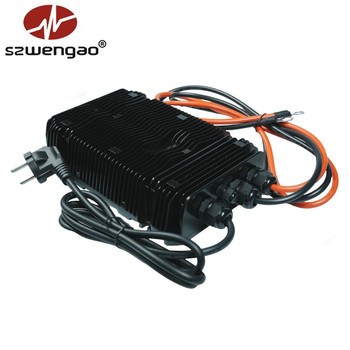
600W Waterproof AC-DC Multi-Voltage LiFePO4 Charger
- Mains Input90V – 264V AC Universal
- DC Output Profile14.6V / 29.2V / 58.4V
- CoolingPotted Thermal Conduction
- Efficiency>93.5% at Full Load
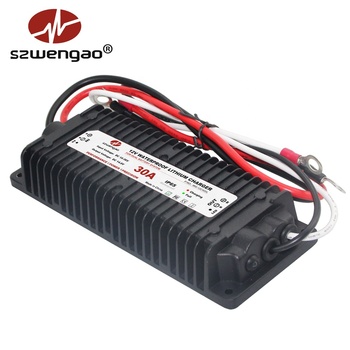
400W Battery-to-Battery Smart DC-DC Charger
- Input Voltage10V – 36V DC Alternator
- Output Rails14.6V / 29.2V / 43.8V
- LogicSmart Alternator Euro 6/7
- EnclosureIP68 Die-cast Aluminum

1500W Buck-Boost Converter with RS485 Telemetry
- Input Window10V – 60V Continuous DC
- Regulated Output12V / 24V / 28V / 48V
- TelemetryRS485 Modbus RTU / CAN
- Max OutputUp to 60A Dynamic Current
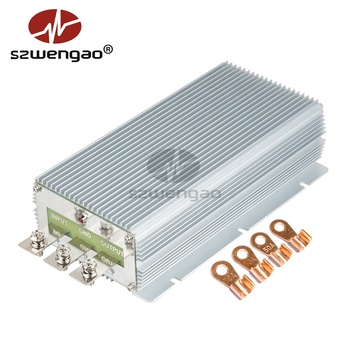
24V to 12V 85A/100A High-Current Buck Regulator
- TopologySynchronous Buck (Step-Down)
- Input Nominal24V DC (18V – 35V Window)
- Continuous Amps85A – 100A (1200W Peak)
- Vehicle StandardISO 7637-2 Spike Suppression
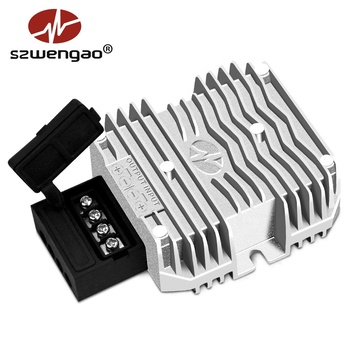
18V–90V Wide-Range Isolated 12V 10A Module
- Isolation Barrier1500V DC Galvanic Isolation
- Ultra-Wide Input18V – 90V DC Continuous
- ApplicationForklifts, AGVs, Port Cranes
- Ground LoopsComplete Circuit Decoupling
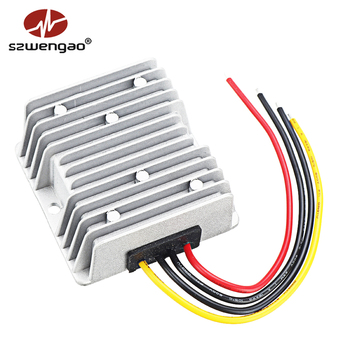
30V–90V to 24V 20A Step-Down Traction Regulator
- High Voltage Bus48V / 60V / 72V / 80V Traction
- Aux Output24V DC Fixed (480W Cont.)
- Thermal Envelope-40°C to +85°C Operating
- ProtectionCurrent Foldback / Short Ckt
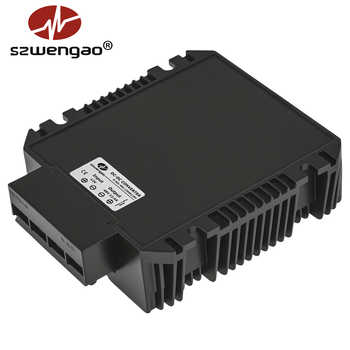
12V to 48V 15A/20A Heavy-Duty Boost Converter
- Input Voltage10V – 16V Low Voltage Rail
- Stepped Output48V DC Regulated (Up to 960W)
- Application48V Mild Hybrid & LiFePO4 E-Drives
- Ingress RatingIP68 Hermetically Sealed
Why Basel Demands Mission-Critical Automotive Power Conversion
Positioned at the trinational crossroads (Dreiländereck) connecting Switzerland, Germany, and France, Canton Basel-Stadt and Basel-Landschaft lead Central Europe’s transition toward zero-emission logistics, demanding rugged power electronics compliant with rigorous Swiss safety and electromagnetic compatibility (EMC) mandates.
Rhine Ports & Cross-Border E-Trucks
The Port of Switzerland (Rheinhäfen Basel-Kleinhüningen and Birsfelden) handles over 10% of Swiss foreign trade imports. Shifting cargo from river barges onto electric heavy-duty vehicles requires robust 24V/12V step-down converters for auxiliary chassis electronics, telematics, and ADR hazard transport signaling capable of surviving severe inductive surges.
Pharma Cold-Chain Electric Vans
As the capital of European life sciences housing Novartis, Roche, and Lonza, Basel’s refrigerated delivery vans require precision DC-DC battery chargers and buck-boost stabilizers. These modules ensure non-fluctuating ±1% DC voltage supply to ultra-sensitive cryo-refrigeration compressors and temperature loggers regardless of battery pack voltage swings.
BVB Municipal Fleet Decarbonization
Basler Verkehrs-Betriebe (BVB) is transitioning its bus fleet to 100% battery-electric traction ahead of 2027. High-power DC-DC converters step down 600V–750V DC catenary/traction link voltages to stable 24V DC bus rails for doors, HVAC controllers, security ticketing terminals, and passenger Wi-Fi systems without electromagnetic interference.
Technical Architecture: Designing Resilient DC-DC Conversion Systems for Automotive & Specialized E-Mobility
In high-reliability automotive environments across Northwestern Switzerland, power conversion is never a mere "voltage divider" exercise. Modern commercial electric vehicles, ground support equipment at EuroAirport Basel-Mulhouse-Freiburg, and Rhine inland tugs operate in harsh thermal and electrical envelopes. Selecting between synchronous buck, step-up boost, four-switch buck-boost, or galvanically isolated topologies determines system longevity, functional safety (ISO 26262), and electromagnetic compliance.
Basel Engineer’s Rule of Thumb: When integrating secondary battery packs (e.g., LiFePO4 auxiliary banks) behind Euro 6/Euro 7 smart alternators or high-voltage DC traction links, never connect systems directly in parallel. Dynamic internal resistance disparities create destructive cross-charging spikes. A dedicated DC-DC battery charger is mandatory to synthesize precise Constant Current / Constant Voltage (CC/CV) multi-stage charging algorithms.
1. Synchronous Buck Topology for 24V Commercial Heavy Trucks
Commercial vehicles operating across the Basel border corridor standardly utilize 24V electrical architectures. However, auxiliary sensors, digital tachographs, radar ADAS controllers, and cab communications run exclusively on 12V rails. Eltrum's synchronous step-down architecture replaces conventional flywheel diodes with low RDS(on) MOSFETs, driving peak conversion efficiency to 96.5% and curtailing parasitic heat dissipation within sealed engine bays.
Equipped with ceramic multi-layer input filtering (MLCC) and fast transient response circuitry (<200 µs for 50% load steps), these modules effortlessly clamp load-dump transients conforming to ISO 7637-2 Test Pulse 5a/5b, ensuring zero downstream breakdown during abrupt battery disconnections.
2. Four-Switch Buck-Boost Regulators for Unregulated DC Batteries
A typical 12V automotive battery experiences severe voltage sag during winter cold-cranking down to 7.5V–9V in Alpine and Upper Rhine valley climates, yet surges up to 14.8V during rapid regenerative braking. Similarly, 24V traction banks vary widely between 18V and 30V. Standard linear or buck regulators lose regulation under sag conditions, crashing mission-critical onboard diagnostics.
Our four-switch non-inverting buck-boost modules dynamically transition between buck, buck-boost, and boost switching modes using high-frequency pulse-width modulation (PWM). The output rail (e.g., precise 12.0V or 24.0V) remains locked with a voltage tolerance below ±1.5%, guaranteeing continuous operation of pharmaceutical refrigeration compressors, navigation telematics, and high-frequency wireless nodes.
3. Galvanic Isolation for High-Voltage Traction Decoupling
In heavy industrial e-forklifts (operating in Basel chemical warehouses) and high-voltage light electric vehicles (LEVs), the traction pack operates from 48V up to 90V or higher. Non-isolated converters share a common negative chassis ground. Under motor stator transient faults or heavy ground currents, noise injection into sensitive CAN-bus lines and microcontrollers can trigger catastrophic communication dropouts.
Eltrum’s isolated series features high-frequency planar transformer isolation rated up to 1500V DC breakdown barrier. By physically decoupling the primary traction ground from the secondary low-voltage chassis ground, common-mode ground loop noises are eliminated, safeguarding sensitive PLC controllers, medical electronics in ambulances, and CANopen/J1939 telemetry lines.
Engineering Comparison: DC-DC Topologies for Automotive Integration
| Topology Series | Typical Input (Vin) | Standard Output (Vout) | Peak Efficiency | Thermal Encapsulation | Recommended Basel Application |
|---|---|---|---|---|---|
| Synchronous Buck | 18V – 35V DC | 12V / 13.8V (Up to 100A) | 96% | IP68 Potted Aluminum | Cross-border 24V E-truck 12V auxiliary cab systems |
| Step-Up Boost | 10V – 16V DC | 24V / 48V (Up to 50A) | 94% | IP67 Extruded Heatsink | Stepping 12V alternator to 48V mild-hybrid / Li-ion banks |
| Four-Switch Buck-Boost | 9V – 40V / 10V – 60V DC | 12V / 24V / 48V Stabilized | 93% | IP68 Hermetic Sealed | Pharma cold-chain temperature stabilization; Marine 12V/24V |
| Galvanic Isolated (1.5kV) | 18V – 90V DC (Ultra-Wide) | 5V / 12V / 24V (Regulated) | 91% | Vacuum Epoxy Potting | Industrial AGVs, chemical warehouse e-forklifts, telecom nodes |
| Smart DC-DC Charger | 8V – 36V / 10V – 44V DC | 14.6V / 29.2V / 43.8V CC/CV | 95% | IP68 Smart Microcontroller | Euro 6/7 dual-battery charging, emergency vehicles & RVs |
4. Hermetic Potting & Thermal Dissipation in Harsh Environments
Electronics deployed along the Rhine waterway and Basel’s industrial zones face chemical vapors, fine road salt mists during Swiss winter de-icing, and persistent mechanical vibrations. Eltrum applies a specialized high-thermal-conductivity organic silicone vacuum potting compound (UL 94V-0 flame retardant certified). This design delivers three paramount physical defenses:
- Complete Moisture Exclusion (IP68): Immune to pressure-washing and continuous high-humidity environments typical of Rhine watercraft and winter roadway spray.
- Mechanical Resonance Damping: Dampens heavy mechanical shocks up to 20G across 10–500Hz frequencies, preventing micro-fractures in solder joints and surface-mount magnetic cores.
- Direct Conduction Heat Dissipation: The internal potting bridges thermal energy directly from high-power MOSFETs and toroidal inductors to the flanged aluminum alloy outer case, eliminating vulnerable failure-prone mechanical cooling fans.
Emerging Regulatory & Electrification Trends in the Basel Region
Strategic alignment with Swiss federal directives, Canton Basel-Stadt's Net-Zero 2037 legislation, and cross-border transport policies shaping OEM component procurement.
Canton Basel-Stadt Climate Emergency 2037
Basel-Stadt voters approved an aggressive climate initiative targeting net-zero greenhouse gas emissions by 2037—13 years ahead of the Swiss federal 2050 timeline. This drives immediate public utility and commercial vehicle retrofits, replacing idling hydraulic drives with 48V/24V electric auxiliary power units (e-APUs) powered by high-capacity DC-DC buck modules.
Strict Swiss Electrosuisse & CE Harmonization
Switzerland maintains rigorous electromagnetic compatibility enforcement via Electrosuisse and the Federal Inspectorate for Heavy Current Installations (ESTI). Eltrum converters meet full CE compliance (EN 61000-6-2 immunity, EN 61000-6-3 emission) and RoHS restrictions, guaranteeing straightforward integration into Swiss-approved commercial machinery.
CANopen & RS485 Telemetry Integration
Predictive maintenance is becoming standard across modern Swiss fleet operations. Next-generation converter procurement requires digital telemetry interfaces (RS485 Modbus RTU or isolated CANbus) to report real-time operating parameters—including internal core temperature, load current, input rail sag, and fault codes—directly to centralized vehicle telematics units.
Why Engineering Teams Partner with Eltrum Power
Shenzhen Eltrum Electronic Co., Ltd. combines specialized design agility, ISO 9001 quality management, and high-volume SMT manufacturing to deliver high-performance power electronics to Tier-1 automotive and industrial OEMs across 130+ nations.
Onsite-Verified Factory & End-to-End Engineering Agility
Founded in 2015 and headquartered in Shenzhen’s Hangcheng manufacturing district, Eltrum has grown to operate over 3,000 m² of modern production facilities featuring automated SMT lines, high-precision magnetic winding machinery, computerized AOI (Automated Optical Inspection), and automated vacuum potting chambers.
Unlike trading intermediaries, our in-house engineering team controls every layer of design and fabrication: firmware programming for micro-controlled CC/CV profiles, planar magnetic design, and mechanical thermal modeling. This vertical integration allows us to serve Swiss engineering firms with flexible OEM and ODM customization:
Custom Input / Output Windows
Tailored non-standard transformation ratios (e.g., 36V to 15V, 80V to 13.8V, custom 58.4V LiFePO4 curves) tailored within 2 weeks of prototyping.
Automotive Connectors & Wiring
Factory termination with Deutsch DT/DTM connectors, Anderson power poles, or Amphenol seals matched to your vehicle harness drawing.
Buyer Label & Enclosures
Laser-etched Swiss corporate branding, custom anodized aluminum housings, and individual packaging for direct OEM line assembly.
Frequently Asked Questions for Basel Buyers
Clear, direct technical answers regarding MOQ, Swiss customs import, testing, certification, and customization.
What is your Minimum Order Quantity (MOQ) for prototypes and volume orders for Swiss buyers?
For standard catalog DC-DC converters and battery chargers, our typical evaluation MOQ starts from just 5 units. This enables automotive engineering departments, municipal fleet workshops, and research labs in the Basel-Stadt / Basel-Landschaft canton to rigorously benchmark and validate real-world performance before committing to mass production. For high-power industrial models (>1000W) or RS485/CANbus units, evaluation samples can be ordered starting from 1–2 pieces. Standard mass volume production pricing unlocks starting at 50–100 unit tiers.
How do you handle shipping, DAP terms, and Swiss customs clearance into Basel?
We regularly dispatch high-reliability electronic consignments to Switzerland via established express couriers (DHL Express, FedEx, UPS) with transit times typically between 3 to 5 business days from our Shenzhen factory directly to your door in Basel, Pratteln, Allschwil, or Reinach. For mid-to-large production volumes, we arrange air freight to EuroAirport Basel-Mulhouse-Freiburg (BSL/MLH) or Zurich Airport (ZRH), operating under Incoterms EXW, FOB Shenzhen, or DAP Basel. Full commercial invoices, HS commodity code classifications (8504.40), and certificates of origin are provided to guarantee seamless Swiss Federal Customs Administration (EZV / BAZG) clearance.
Do Eltrum automotive DC-DC converters comply with Swiss ESTI and European CE directives?
Yes. All Eltrum DC-DC converters and battery chargers are engineered and certified to meet the European Low Voltage Directive (LVD 2014/35/EU) and Electromagnetic Compatibility Directive (EMC 2014/30/EU), fully accepted by the Swiss Federal Inspectorate for Heavy Current Installations (ESTI / Electrosuisse). Comprehensive test reports verifying immunity against conducted and radiated disturbances (EN 61000-6-2 / EN 55032) and compliance with RoHS environmental restrictions are accessible on demand for specific part numbers.
Can Eltrum customize charging curves for proprietary lithium or sodium-ion chemistries?
Absolutely. Because our smart chargers and buck-boost modules utilize microcontroller-driven CC/CV feedback loops, our R&D engineering team can tailor custom firmware profiles within days. Whether your battery system requires an exact 14.6V absorption voltage for LiFePO4, a 43.8V cut-off for 12S lithium iron phosphate, a tailored 58.8V NMC curve, or proprietary multi-stage timing with automated temperature compensation via NTC thermistors, we deliver exact software and hardware calibration.
How do these converters withstand severe winter conditions and road salt in the Swiss Alps and Rhine basin?
Our converters feature IP67 or hermetic IP68 die-cast aluminum enclosures injected with thermally conductive, flame-retardant silicone potting under negative vacuum pressure. This solid encapsulation guarantees zero air pockets, preventing internal condensation during dramatic temperature swings (-40°C cold storage to +85°C engine compartment heat). The exterior aluminum is anodized and salt-spray tested to resist continuous exposure to magnesium chloride and sodium de-icing salts used on Swiss motorways.
What quality assurance and burn-in testing does each unit undergo prior to dispatch?
Under our ISO 9001:2015 certified quality management system, every single converter undergoes a 4-tier testing regimen: 1) Incoming SMT component inspection (IQC), 2) Automated In-Circuit and Optical Testing (AOI), 3) 100% full-load thermal burn-in under dynamic cycling for 2 to 4 hours in elevated temperature chambers, and 4) Final electrical parameter verification (OQC) inspecting line regulation, load regulation, ripple voltage (<100mVp-p), high-voltage isolation leakage, and short-circuit auto-recovery.
Ready to Engineer Reliable Power Electronics for Your Basel Project?
Consult directly with Shenzhen Eltrum’s senior application engineering team. Share your target input range, required output current, ingress rating, and interface specifications—we will respond within 24 hours with matching standard datasheets or an OEM prototype proposal.