
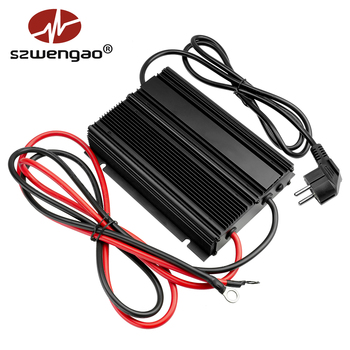
Smart 36V Lithium Battery Charger DC 12V to 43.8V 13A
- Input VoltageDC 12V Nominal
- Regulated Output43.8V Constant 13A
- Ingress RatingIP68 Fully Potted
Explore our engineering-grade switching power solutions tailored for fluctuating direct current sources, rugged mobile equipment, and complex battery architectures.

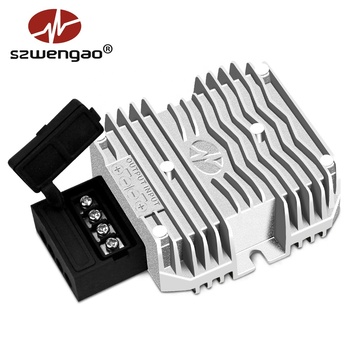

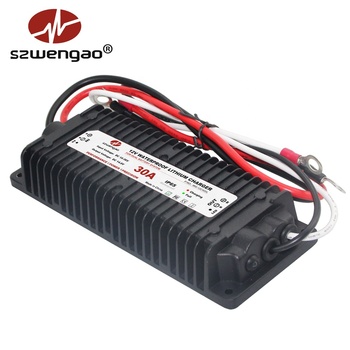
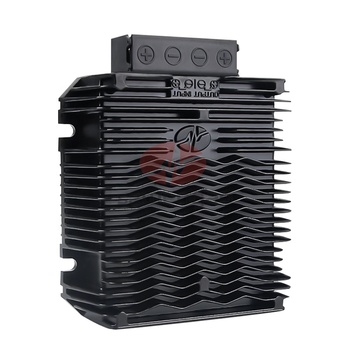
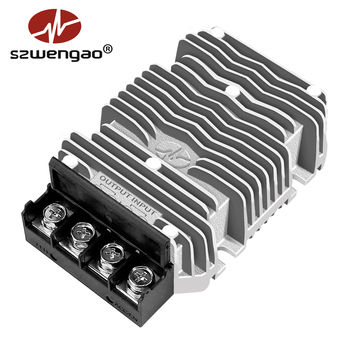
Modern electrical distribution architectures demand dynamic, highly robust voltage regulation capable of handling severe transients, battery terminal decay, and shifting operational loads. A switching voltage regulator functions by temporarily storing energy inside high-frequency reactive components—such as specialized ferrite chokes, planar inductors, and specialized low-ESR ceramic capacitor banks—and switching output transistors via pulse-width modulation (PWM) or pulse-frequency modulation (PFM). Unlike lossy linear power modules which dissipate excess differential voltage directly as thermal waste (P_loss = (V_in - V_out) × I_load), switching topologies engineered by Eltrum consistently achieve thermal conversion efficiencies upwards of 92% to 96.5%.
For systems engineers and technical procurement managers specifying equipment for mobile utility fleets, maritime energy banks, or remote off-grid telecom arrays, choosing the exact conversion architecture dictates lifetime reliability. When source voltages remain persistently above the targeted rail—such as converting auxiliary 48V or 72V traction battery packs down to 12V accessory lines—our Synchronous Buck Regulators offer maximum current density with reduced silicon footprint. When input ranges fluctuate above and below the regulation line (for example, during engine cranking where a 12V battery drops to 8.5V, or alternator absorption charging where the bus elevates to 14.6V), choosing a Four-Switch Non-Inverting Buck-Boost Converter is mandatory to eliminate brownouts without system restart cycles.
By replacing passive Schottky flywheel diodes with low Rds(on) power MOSFETs driven by precise gate drivers, conduction losses fall dramatically, mitigating thermal throttling in enclosed spaces.
Incorporating custom high-frequency planar transformers eliminates ground loops, breaks heavy industrial common-mode noise, and shields sensitive control computers from traction battery spikes.
Algorithmic current throttling tailored for lithium iron phosphate (LiFePO4) prevents premature cell degradation, alternator diode burnout, and thermal runaway under extended operating cycles.
As original equipment manufacturers transition toward electrification across industrial tooling, autonomous mobile robots (AMRs), recreational transport, and off-grid telecommunication networks, procurement strategies for switching voltage regulators have permanently evolved beyond catalog component sourcing. Modern supply chain leaders evaluate manufacturers through dynamic production flexibilities, direct engineering collaboration, component-level traceability, and broad input-voltage tolerance.
Over the 2025–2030 horizon, the global power management supply chain shows distinct trajectories that engineering directors and purchasing officers must incorporate into their multi-year supply roadmaps:
Gallium Nitride (GaN) and Silicon Carbide (SiC) switching elements replace legacy silicon, elevating switching frequencies past 500kHz. This shrinks magnetic inductor volume by 40% while preserving thermal stability.
Digital power buses via RS485 Modbus and CAN bus enable live current monitoring, dynamic voltage target adjustments, and over-the-air firmware updates for fleet-level battery health monitoring.
Open-frame boards are increasingly displaced by thermally conductive polyurethane and epoxy vacuum-potted metal enclosures, delivering vibration, moisture, and saltwater corrosion endurance.
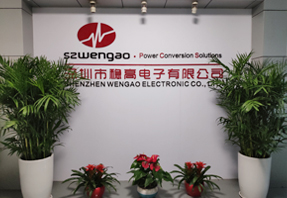
Operating out of Shenzhen's advanced technology manufacturing hub since 2015, Shenzhen Eltrum Electronic Co., Ltd. has established an integrated production and quality control ecosystem dedicated to switching voltage regulators, isolated DC-DC modules, and intelligent battery charging hardware. Our facility has passed comprehensive onsite verification by independent third-party inspectors, establishing absolute accountability for international industrial buyers.
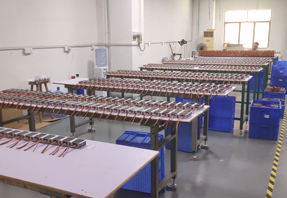
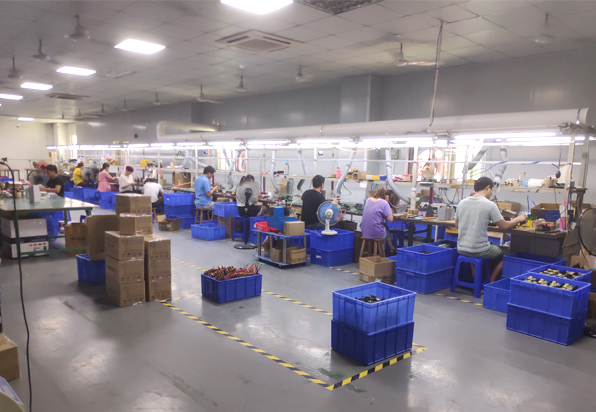
We combine end-to-end design, surface-mount technology (SMT), automated winding, potting, and computerized burn-in testing under strict ISO 9001 governance.
Clear, direct answers to the most frequent technical, compliance, and logistical inquiries processed by our application engineering desk.
For standard catalog switching regulators and chargers, our minimum order quantity starts from just 5 units to facilitate mechanical and electrical validation. High-power units (over 1000W) can be sampled at 1–2 pieces. High-volume container or pallet orders enjoy scaled tier pricing with customized private-label packaging.
Galvanic isolation is strictly necessary whenever the output reference ground must remain independent from input power ground. Typical applications include positive-ground telecom installations, battery traction systems (forklifts, AGVs) where chassis grounding faults could damage logic boards, and sensitive marine electronics susceptible to RF ground noise.
A standard voltage regulator maintains a constant output voltage regardless of current until it reaches trip protection. A DC-DC battery charger integrates multi-stage CC/CV microcode: it limits current during initial discharge phases, maintains precision absorption voltage, and monitors time or current decay before transitioning to float mode, preventing battery destruction.
In enclosed or unventilated environments operating at ambient temperatures above 45°C, we recommend derating continuous operating currents by 20% to 30%. While our potting compound efficiently conducts heat directly into the finned aluminum enclosure, maintaining junction temperatures below 105°C is crucial for reaching rated MTBF lifetimes exceeding 100,000 hours.
Yes. Shenzhen Eltrum Electronic Co., Ltd. provides full ODM/OEM customization. Our engineers frequently modify feedback networks, primary/secondary turns ratios, current-limiting circuits, RS485 control commands, and harness terminations according to customer specifications, typically providing functional prototypes within 10 to 18 business days.
Connect directly with our Shenzhen power engineering team to discuss electrical tolerances, custom enclosure designs, thermal modeling, or request unit pricing for your upcoming production cycle.