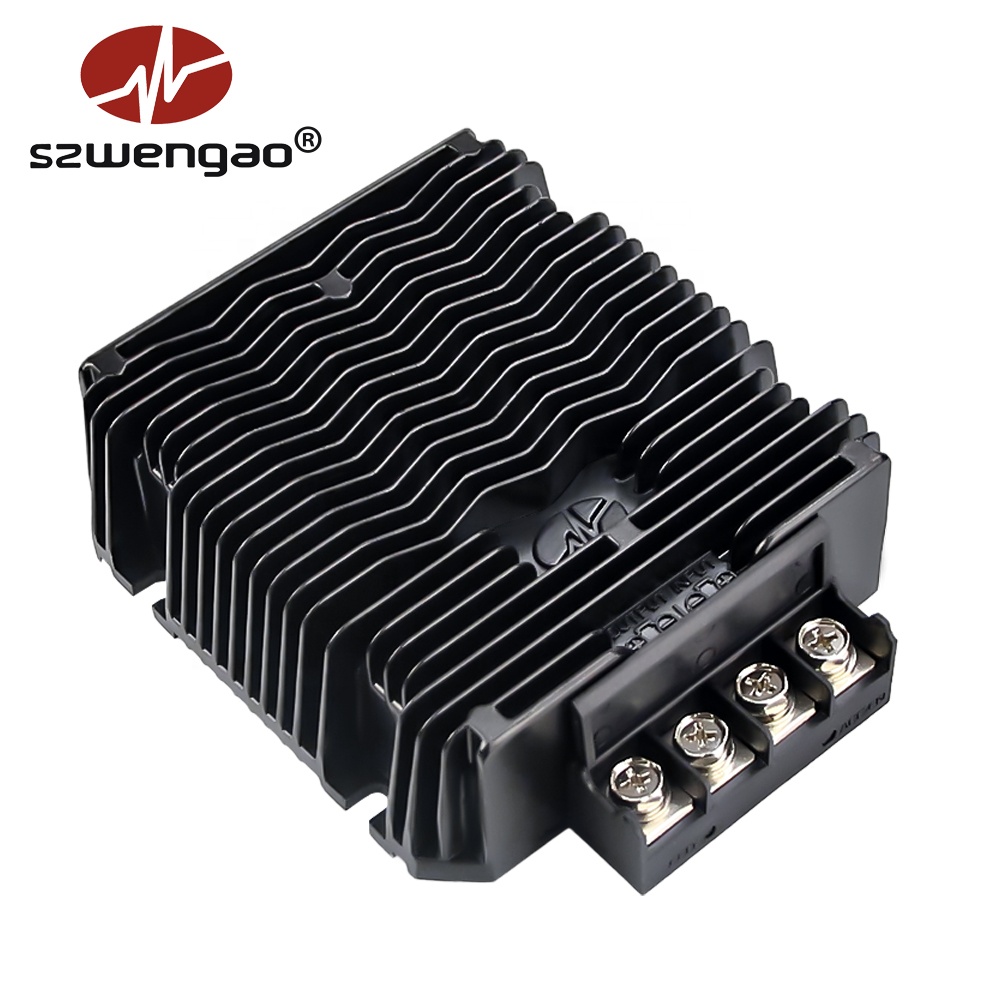
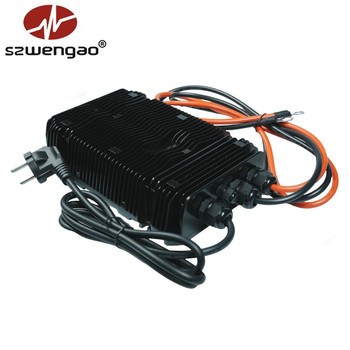
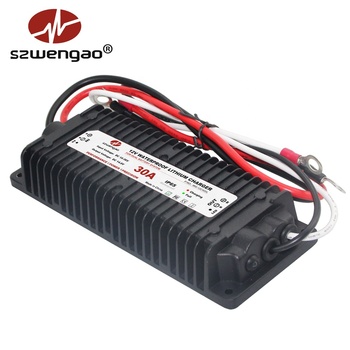
Smart 36V Lithium Battery Charger DC 12V to 43.8V 13A Waterproof
- Topology: Step-Up Boost CC/CV
- Input / Output: 12V DC / 43.8V 13A
- Protection: IP67 Fully Potted
- Target: EV, Camper Vans, E-Bikes
Engineered to mitigate electrical sag, ground-loop transients, and severe thermal stresses across industrial and harsh vehicular environments.
The global architecture of power conversion is encountering radical disruption driven by the rapid transition to distributed energy resources (DER), high-voltage traction batteries, and high-density industrial internet-of-things (IIoT) edge nodes. Modern switching power supplies (SMPS) are no longer isolated commodities; they function as precision energy management systems responsible for minimizing thermal loss, eliminating circulating ground currents, and preserving battery lifecycle economics.
As engineering specifications migrate from standard silicon planar power MOSFETs to wide bandgap (WBG) semiconductors like Gallium Nitride (GaN) and Silicon Carbide (SiC), thermal boundaries are expanding. This technical evolution allows Shenzhen Eltrum Electronic Co., Ltd. to compress magnetics volume by over 40% while unlocking operational efficiencies approaching 97%.
By switching frequencies above 250kHz without excessive junction switching losses, modern topologies dramatically reduce inductive element weight and achieve higher power densities. This transition is essential for autonomous mobile robots (AMRs) and compact electric utility vehicles.
With battery banks continuously fluctuating between discharge thresholds and rapid charge absorption stages, static buck regulators fail. Dynamic buck-boost circuits maintain tight voltage envelopes across fluctuating busbars without triggering UVLO/OVP shutdowns.
Legacy analog-only power supplies lack operational visibility. Enterprise systems now demand real-time telemetry over RS485 Modbus or CAN networks to monitor ambient operating temperatures, instantaneous ripple voltages, and dynamic output currents.
Ground loops cause erratic sensor behavior and communication faults in large 48V–72V mobile platforms. High-potential galvanic barriers isolate harsh engine transients, motor PWM noise, and traction surges from sensitive digital control electronics.
Outdoor renewable setups, marine crafts, and open agricultural vehicles demand vacuum-injected polyurethane potting rated to IP67/IP68. Fully sealed assemblies safeguard sensitive magnetics and SMT pads from salt spray, condensing humidity, and vibration fatigue.
Procurement teams are moving away from multi-tiered supply chains toward integrated design manufacturers capable of modifying core topologies at the board layout level. Direct factory calibration reduces procurement cycles, simplifies compliance validation, and lowers total cost of ownership (TCO).
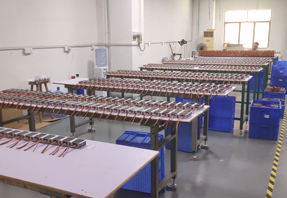
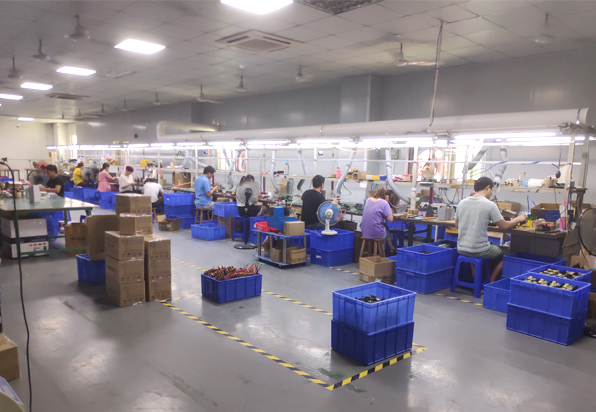
Founded in 2015, Shenzhen Eltrum Electronic Co., Ltd. specializes in custom power module design, step-down converters, and battery charging solutions. Our onsite-verified factory hosts comprehensive SMT, precision transformer winding, epoxy resin encapsulation, and high-temp burn-in testing bays.
Practical guidance regarding thermal derating, isolation requirements, and dual-battery integrations.
Standard production catalog items, including buck, boost, and isolated modules, feature a low sample evaluation MOQ of just 5 units. This allows engineering teams to validate circuit parameters and perform field testing before placing volume orders.
Select a buck-boost configuration whenever the dynamic source voltage crosses your desired operating voltage. For example, a nominal 12V LiFePO4 bank will drop to ~10V under high discharge and rise to 14.6V during charging. A buck converter fails when the input drops near or below the output, whereas a buck-boost module maintains steady regulation across the entire curve.
Isolated converters use internal magnetic coupling transformers to physically separate input and output ground paths. This breaks destructive ground loops, eliminates common-mode electrical noise, and prevents traction motor spikes from entering sensitive PLCs, microcontrollers, and communication hubs.
Yes. Lithium Iron Phosphate batteries have extremely low internal impedance and will pull maximum current from an alternator, often leading to stator overheating at idle. Our DC-DC battery chargers actively limit input draw while delivering an exact multi-stage CC/CV charging curve tailored to your secondary bank.
In unventilated enclosures or ambient environments exceeding 50°C, we recommend derating continuous power draw by 20% to 30% below nameplate limits. For inductive loads with high initial inrush currents (such as motors and compressors), size the peak rating at 3× to 5× steady-state requirements.
We offer end-to-end OEM/ODM support, including custom enclosure designs, tailored input/output voltage and current ratings, integrated RS485 communication protocols, specialized IP68 connectors, and private labeling with your custom packaging.
Need custom voltage rails, specialized potting for marine equipment, or a reliable production partner for high-volume orders? Contact our Shenzhen engineering team today for quick datasheets and project quotes.