Field-Tested DC DC Converter Modules & Intelligent Battery Systems
Precision-engineered DC DC converters configured with military-grade potted waterproofing, synchronous rectification, dynamic load-step response, and comprehensive short-circuit protection.

Smart 36V 13A Waterproof LiFePO4 DC Charger
- Input Window10V – 36V DC
- Regulated Output43.8V CC/CV (13A)
- ApplicationEV, Marine, E-Bike

24V to 12V 85A/100A Industrial Buck Converter
- Input Window18V – 35V DC
- Regulated Output12V DC (Up to 100A)
- ApplicationHeavy Truck, Bus Systems

18–90V Ultra-Wide Input to 12V Isolated Module
- Input Window18V – 90V DC Continuous
- Regulated Output12V DC (10A 120W)
- ApplicationForklifts, Telecom Grid

1500W Buck-Boost Converter with RS485 Bus
- Input Window10V – 60V DC Wide
- Regulated Output12V / 24V / 48V Programmable
- ApplicationEnergy Storage & Robotics
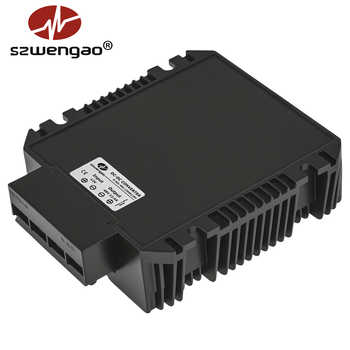
12V to 48V Heavy-Duty Step-Up Boost Module
- Input Window9V – 20V DC
- Regulated Output48V DC (15A – 20A)
- ApplicationMarine Thruster, Solar Pumps
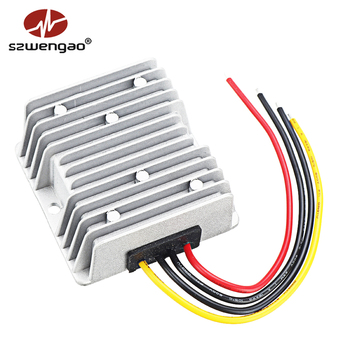
30–90V (48V/60V/72V) to 24V Step-Down Unit
- Input Window30V – 90V DC Traction
- Regulated Output24V DC (20A 480W)
- ApplicationGolf Carts, Light AGVs
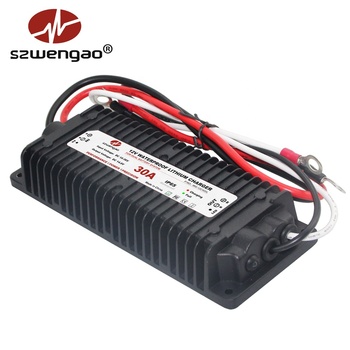
400W Multi-Stage Battery-to-Battery Charger
- Input Window10V – 36V DC Dynamic
- Charge Modes14.6V / 29.2V LiFePO4 Profile
- ApplicationDual Battery Camper & RV
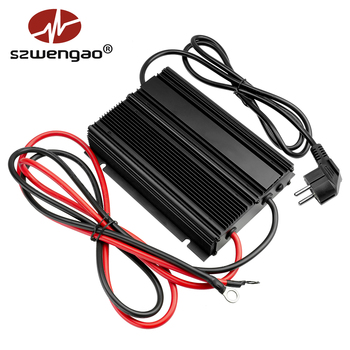
600W IP65 Multi-Voltage Lithium Battery Charger
- Input Voltage90V – 265V Universal AC
- Output Options14.6V to 58.4V Regulated
- ApplicationMarine Vessels, Industrial Fleet
The Strategic Architecture of Switched-Mode Power Conversion
Navigating systemic design hurdles, thermal derating dynamics, and switching topologies for original equipment manufacturers and system integrators.
In modern industrial automation, electrified mobility, and renewable micro-grids, the DC-DC converter module serves as the foundation of operational reliability. Contemporary electrical subsystems are no longer satisfied by basic analog regulation. As automotive architectures migrate from legacy 12V lead-acid regimes to distributed 48V mild-hybrid, 72V light traction, and high-capacity lithium iron phosphate (LiFePO4) storage banks, the power module must actively manage profound dynamic fluctuations. These range from engine cranking drops below 9V to severe regenerative braking overshoots exceeding 58V, all while delivering continuous current to sensitive microcontrollers, radar assemblies, and telematics systems.
Topological Differentiation: Engineering Trade-offs
Engineers face a continuous balancing act between power density, galvanic isolation, electromagnetic emission (EMI) compliance, and thermal conductivity. Selecting between non-isolated buck, boost, synchronous buck-boost, and transformer-isolated topologies dictates mean-time-between-failures (MTBF) and thermal dissipation overhead.
| Circuit Topology | Voltage Operational Bounds | Typical Conversion Efficiency | Galvanic Barrier | Target Engineering Application |
|---|---|---|---|---|
| Synchronous Buck | VIN strictly greater than VOUT (+2V Headroom) | 94% – 97.5% | Non-Isolated | Commercial vehicle auxiliary power, Step-down from 24V/48V rail to 12V/5V |
| Boost Regulator | VIN strictly lower than VOUT | 92% – 95% | Non-Isolated | 12V vehicle battery stepping up to 24V or 48V for linear actuators & audio amps |
| Four-Switch Buck-Boost | VIN continuously crosses VOUT (8V to 60V) | 91% – 94.5% | Common Ground | Off-grid solar storage, marine electronics subjected to heavy battery sagging |
| Flyback / Forward Isolated | Wide input ratios (2:1, 4:1, up to 18V–90V) | 86% – 90% | 1.5kV – 3kV Isolation | Telecom infrastructure (-48V), electric utility switchgear, noise-isolated sensing |
As demonstrated by the empirical data above, non-isolated synchronous buck converters provide the pinnacle of power conversion efficiency by eliminating magnetic core hysteretic losses associated with isolation transformers. However, when connecting peripheral instruments across divergent potential grounds—such as high-voltage traction battery arrays in industrial forklifts—galvanic isolation becomes critical. Without a transformer barrier, ground loop current surges can bypass protective fuses and instantly destroy supervisory logic boards.
Emerging Procurement Trends in Global Power Electronics
Key supply chain indicators, semiconductor material advancements, and systemic regulatory transitions dictating the next generation of DC DC converter sourcing.
Wide Bandgap Semiconductors (GaN & SiC)
Global engineering procurement is transitioning heavily toward Gallium Nitride (GaN) and Silicon Carbide (SiC) switching stages. These materials facilitate switching frequencies exceeding 500 kHz, shrinking magnetic chokes and capacitors by 40% while slashing gate drive losses.
Digital Telemetry & Dynamic Control (RS485 / CAN)
Passive standalone regulators are increasingly supplanted by digitally addressable modules. Procurement contracts now frequently mandate integrated RS485 or CAN-bus protocols that allow central vehicle controllers to alter CC/CV curves, inspect junction temperatures, and extract current output logs.
Hermetic Potting & Extreme Environmental Resilience
Harsh field deployments across maritime automation and agricultural robotics demand IP67/IP68 potted thermally-conductive silica enclosures. Buyers are shifting away from ventilated perforated boxes to eliminate failures driven by salt mist, condensation, thermal shock, and harmonic structural vibration.
Evolutionary Trajectories of DC DC Converter Architecture
How cutting-edge thermal management, algorithmic switching, and electrochemical matching are redefining reliability expectations.
Adaptive Chemistry Multi-Stage Charging Profiles
DC-DC chargers are moving beyond basic constant voltage float limits. Modern modules integrate algorithmic 3-stage CC/CV and pulse-wake logic capable of restarting deeply depleted LiFePO4 cells without triggering battery management system (BMS) latch-up states or over-stressing vehicle alternators.
Planar Magnetics and Thermal Substrate Fusion
Traditional wire-wound toroids are being replaced with multi-layer printed planar transformers integrated directly into insulated metal substrates (IMS). This reduces electrical skin effect losses at high frequencies, resulting in profiles under 25mm thickness with uncompromised thermal dissipation.
Ultra-Low Quiescent Standby Current & Sleep Modes
With smart IoT and automotive parasitic loads multiplying, next-generation DC-DC modules incorporate ultra-low quiescent sleep stages drawing less than 2mA during quiescent states. This preserves long-term battery health during seasonal storage of RVs, yachts, and emergency response vehicles.
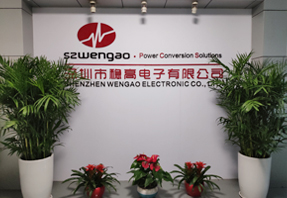
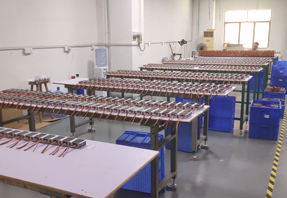
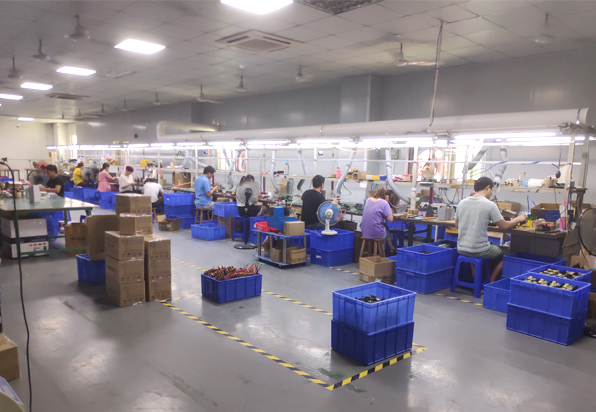
Shenzhen Eltrum Electronic: Direct Source Factory Authority
Founded in 2015 and headquartered in the Hangcheng industrial corridor of Shenzhen, Shenzhen Eltrum Electronic Co., Ltd. has grown to become a benchmark manufacturer and international exporter of isolated and non-isolated DC-DC converters, dynamic buck-boost regulators, and ruggedized LiFePO4 battery charging modules.
Our operation spans over 3,000 square meters of specialized production space, backed by 51 to 100 skilled engineers and assembly technicians. Unlike trading brokers, Eltrum operates complete in-house surface-mount technology (SMT) lines, precision automated potting workshops, and computerized dynamic burn-in testing bays.
Every converter topology is subjected to rigid high-temperature load stress analysis, short-circuit recovery benchmarking, and dielectric isolation tests before export, ensuring compliance with global CE, RoHS, and ISO 9001 frameworks.
With an expansive catalog exceeding 500 validated baseline platforms, our specialized engineering taskforce provides rapid OEM and ODM customization—accommodating custom input voltage ranges, specific output step values, private buyer labeling, custom harness terminating connectors, and personalized charging parameters starting from low prototype run quantities.
Frequently Asked Questions on DC DC Converter Sourcing
Direct technical and commercial answers compiled by Eltrum's senior applications and logistics engineering team.
What is the standard Minimum Order Quantity (MOQ) for prototypes and volume production?
When is an isolated DC-DC converter required instead of a non-isolated buck or boost model?
How does a dedicated DC-DC charger protect vehicle alternators compared to continuous direct relays?
What custom OEM/ODM parameters can Shenzhen Eltrum adapt for industrial clients?
What international certifications, quality benchmarks, and warranties accompany your exports?
What export freight incoterms and international payment frameworks are supported?
Accelerate Your Power Engineering Sourcing Today
Whether you require standard 100A buck step-down units, isolated telecom modules, or custom multi-stage LiFePO4 battery chargers, our Shenzhen engineering application specialists are available to review your electrical schematic and deliver production quotes.