Engineered Isolated Power Converters & Advanced Power Modules
Explore our top-performing isolated DC-DC topologies and intelligent charging modules. Verified across high common-mode voltage barriers, extreme temperature fluctuations, and severe EMI constraints.
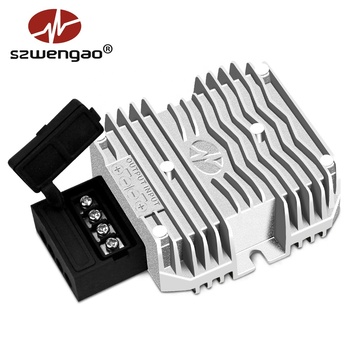
18–75V to 24V 5A Isolated DC Converter (120W)
- Input Range: 18–36V / 36–75V DC
- Output: 24V DC @ 5A (120W)
- Isolation Hi-Pot: 1500V DC Galvanic
- Protection: OVP, OCP, SCP, OTP
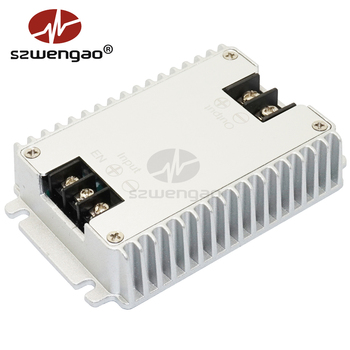
36–75V to 24V 5A Industrial Buck Isolated Module
- Input Range: 36–75V DC (Telecom)
- Output: 24V DC @ 5A (Stabilized)
- Efficiency: Up to 92.5%
- Enclosure: Die-cast Aluminum Shell
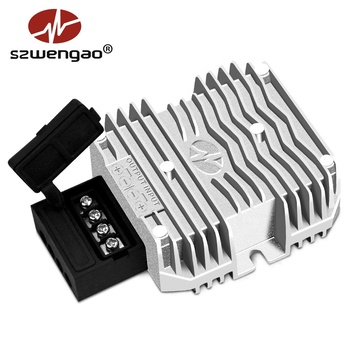
18–90V Ultra-Wide Input to 12V 10A Isolated Supply
- Input Range: 18–90V DC Continuous
- Output: 12V DC @ 10A (120W)
- Sealing: 100% Silicone Potted IP68
- Application: Forklifts, AGVs, Mining
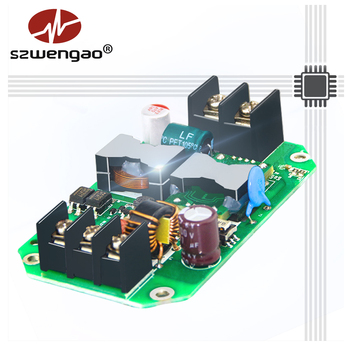
36–75V to 12V 10A Isolated Telecom Converter
- Input Range: 36V / 48V / 60V / 72V
- Output: 12V DC @ 10A Constant
- Noise/Ripple: < 50mVp-p Low Noise
- Operating Temp: -40°C to +85°C
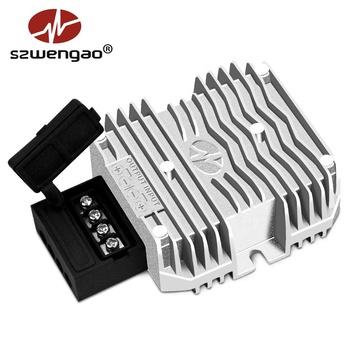
18–75V to 5V 20A Isolated Step-Down Converter
- Input Range: 18–75V (24V/48V Bus)
- Output: 5V DC @ 20A (100W)
- Grounding: Total Ground Separation
- Certifications: CE, RoHS, ISO 9001
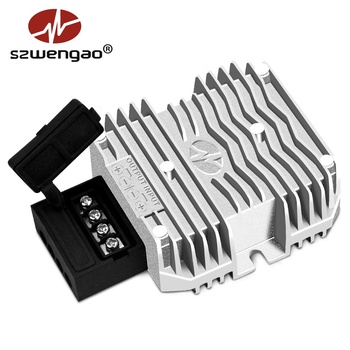
18–36V to 5V 20A High-Amperage Isolated Regulator
- Input Range: 18–36V DC (24V Standard)
- Output: 5V DC @ 20A Heavy Duty
- Transient Guard: Integrated TVS Clamp
- Cooling: Convection Thermal Dissipation

Smart 36V LiFePO4 DC-DC Charger (12V to 43.8V 13A)
- Input Voltage: 12V DC Vehicle Bus
- Charging Output: 43.8V DC @ 13A CC/CV
- Battery Match: 36V LiFePO4 / Li-Ion Packs
- Durability: Waterproof IP67 Enclosure

1500W High-Power Wide-Range System with RS485
- Input Range: 10–60V DC Industrial Bus
- Output: 12V / 24V / 28V / 48V (1500W)
- Telemetry: MODBUS RS485 Interface
- Efficiency: Peak 96.2% Synchronous
The Criticality of Galvanic Isolation in Modern Power Architectures
Understanding transformer coupling, electrical barrier design, parasitic capacitance minimization, and ground-loop elimination across harsh industrial applications.
In low-voltage DC power distribution networks, engineers frequently confront the decision between non-isolated buck/boost regulators and galvanic isolated DC-DC converters. While non-isolated converters offer higher theoretical power density and marginal cost advantages due to the absence of magnetic isolation barriers, their shared ground topology makes them inherently susceptible to severe failure modes in mission-critical applications. In harsh environments such as heavy electrical vehicle (EV) powertrains, marine electronic systems, telecom base transceiver stations (BTS), and industrial distributed control networks, galvanic isolation is not merely an engineering preference—it is a non-negotiable safety and reliability requirement.
Galvanic isolation physically decouples the primary input circuit from the secondary output circuit using an electromagnetic transformer barrier. This prevents direct electrical conduction between the two sides while enabling efficient magnetic energy transfer. By breaking the direct galvanic path, an isolated converter eliminates common-mode ground loops, absorbs severe ground-potential differences between geographically displaced sub-systems, and prevents disastrous secondary-side over-voltage scenarios should a switching semiconductor suffer punch-through or catastrophic avalanche breakdown.
1500V–3000V Dielectric Hi-Pot
Industrial-grade primary-to-secondary isolation barriers capable of withstanding continuous common-mode voltage stress and high-voltage dielectric withstand tests up to 3000V DC without insulation degradation.
Differential Ground Potential Mitigation
In high-power installations like automated guided vehicles (AGVs) and solar battery containers, high motor return currents cause localized ground shifting. Isolated topologies protect sensitive logic lines from lethal reference offsets.
Total Ground Loop Suppression
Prevents circulating ground currents that introduce 50/60Hz hum, high-frequency ringing, and spurious sensor readings across analog acquisition cards, audio communications, and precision instrumentation.
| Evaluation Parameter | Galvanically Isolated Converter | Standard Non-Isolated Converter | Engineering Impact |
|---|---|---|---|
| Ground Architecture | Dual Independent (Primary / Secondary separated) | Common Ground (Negative return tied together) | Eliminates ground loops; allows floating or inverted rails |
| Breakdown Protection | 1500VDC to 3000VDC Dielectric Barrier | None (Direct coupling through inductor & FET) | Prevents high input bus from torching lower-voltage loads |
| Common-Mode Noise Rejection | Superior (CM choke + inter-winding shielding) | Poor (High CM noise passes directly via ground) | Ensures clean signal-to-noise ratio for CAN/RS485/Sensors |
| Polarity Flexibility | Versatile: Can generate +Vout, -Vout, or floating | Fixed: Single-ended ground referenced | Essential for telecom -48V rails and bipolar sensor rails |
| Typical Failure Mode | Transformer open/saturation; secondary intact | MOSFET drain-source short passing full Vin | Isolated modules drastically lower warranty & field RMA rates |
Next-Generation Power Density: GaN, SiC, and Planar Magnetics
How China's leading power electronics manufacturing cluster is transitioning from legacy silicon to wide bandgap semiconductors and automated magnetic integration.
The global demand for higher power density, reduced thermal dissipation footprints, and lightweight enclosures has driven extensive engineering revolutions across Chinese power converter production floors. At Shenzhen Eltrum Electronic Co., Ltd., our R&D team continuously evaluates the cutting edge of power conversion physics. The historical trade-off between switching frequency and efficiency has been decisively altered by the maturation of Wide Bandgap (WBG) semiconductors, notably Gallium Nitride (GaN) High-Electron-Mobility Transistors (HEMTs) and Silicon Carbide (SiC) MOSFETs.
Traditional silicon-based isolated power supplies operated at switching frequencies constrained between 60 kHz and 150 kHz due to excessive switching losses ($E_{on}$ and $E_{off}$) and reverse recovery charge ($Q_{rr}$). In modern topologies, GaN devices practically eliminate reverse recovery, enabling operating frequencies exceeding 300 kHz to 1 MHz. Higher operating frequencies inversely scale the required physical inductance ($L$) and capacitance ($C$), dramatically shrinking the magnetic core cross-section and bulk filter capacitors. This enables our engineering team to pack 120W–1500W of isolated conversion into ultra-compact, hermetically sealed aluminum chassis with volumetric power densities up to 300% greater than past generational benchmarks.
Planar Matrix Transformers
Replacing conventional multi-strand wire-wound bobbins with multi-layer printed circuit board (PCB) windings. Planar magnetics yield near-perfect inter-winding interleaving, ultra-low leakage inductance (< 0.5%), and exceptional thermal conductivity directly to the baseplate.
Synchronous Rectification (SR)
Eliminating traditional Schottky diodes on the secondary side in favor of ultra-low $R_{DS(on)}$ MOSFETs dynamically driven by specialized synchronous ICs. This reduces output conduction drops from 0.5V down to millivolts, boosting overall efficiency past 94%.
Vacuum Potting & Thermodynamics
Every isolated module is encased in vacuum-injected thermally conductive organosilicone or polyurethane compound. This guarantees IP68 environmental sealing, total vibration immunity (MIL-STD-810G compliant), and isotropic heat conduction across the outer finned heatsink.
Future Procurement Trends for Industrial Power Converters (2025–2030)
Actionable insights for supply chain managers, B2B procurement heads, and chief technology officers navigating the evolving global power electronics ecosystem.
Global supply chain disruptions, rapid electrification of mobile industrial assets, and stringent eco-design regulations have fundamentally transformed how international OEMs procure power supplies from Chinese manufacturing hubs. The historical practice of choosing the lowest unit bid on unbranded commodity modules has rapidly been replaced by a rigorous Total Cost of Ownership (TCO) methodology. International engineering and procurement executives are actively restructuring their vendor matrices around five primary criteria:
1. Standardization on Ultra-Wide Input Windows
Rather than ordering distinct SKUs for 24V, 36V, 48V, and 72V platforms, enterprise fleets are converging on ultra-wide inputs (e.g., 18–90V or 10–60V). This drastically simplifies inventory management, lowers warehousing overhead, and shields downstream assemblies from battery state-of-charge surges.
2. Digital Telemetry & Field Diagnostics
The rise of automated factories and connected machinery demands real-time edge monitoring. Procurement specifications increasingly require isolated DC-DC modules to feature integrated RS485 (MODBUS RTU) or CAN bus interfaces, streaming live thermal logs, current draw, and ripple diagnostics to central controllers.
3. Traceability & Component Origin Auditing
Tier-1 Western and East Asian buyers require transparent component traceability. Suppliers must verify the integrity of critical switching FETs, capacitors (electrolytic vs. solid tantalum/ceramic), and magnetics to prevent counterfeit components and guarantee 50,000+ hour MTBF metrics.
4. Flexible Low-MOQ Sample-to-Volume Paths
R&D engineering divisions cannot afford 500-unit minimum order barriers for preliminary bench prototypes. Sourcing directors favor agile Chinese manufacturers offering low pilot-run thresholds (MOQ from 5 units) with scalable high-speed SMT volume backbones.
5. Stringent CE & RoHS 3 Global Compliance
With escalating environmental standards in Europe and the Americas, buyers require fully compliant manufacturing free of hazardous materials, backed by verifiable third-party testing reports under ISO 9001 quality management systems.
6. OEM Customization Velocity
Off-the-shelf catalog models often fall short in connector pinouts, specific cut-off voltages, or proprietary charging curves. Strategic buyers partner with manufacturers capable of delivering custom PCB spins and thermal housings within 2 to 3 weeks.
Shenzhen Eltrum Electronic: Your Trusted Power Partner Since 2015
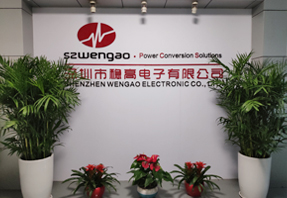
Shenzhen Eltrum Electronic Co., Ltd. stands at the forefront of China's professional power conversion industry. Specializing in high-performance DC-DC converters (buck, boost, buck-boost, and isolated), AC-DC battery chargers, and specialized power modules, our product catalog spans over 500 validated standard models.
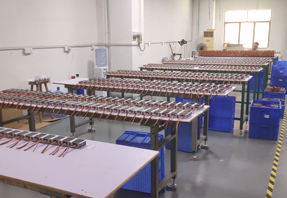
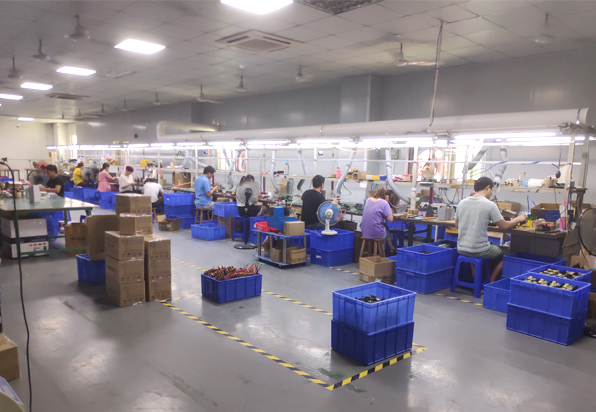
Located in the Anle Industrial Zone, Hangcheng Avenue, Shenzhen, our facility encompasses modern automated SMT production, specialized magnetic winding stations, automated vacuum potting chambers, and computerized burn-in testing arrays. Every power supply is built under the rigorous framework of an ISO 9001 certified quality management system, maintaining strict CE and RoHS compliance across all product families.
Isolated power conversion is the core engineering foundation upon which Eltrum was founded. Our products operate with exceptional reliability across alternative energy vehicles, RV camper electrical retrofits, marine yachts, telecommunications racks, golf carts, AGV robotics, and high-precision medical machinery across more than 130 countries worldwide.
Frequently Asked Questions by Power Engineers & Sourcing Teams
Clear, authoritative technical answers addressing common topology selection, thermal management, certification standards, and OEM customization procedures.
What specific parameters dictate choosing an isolated converter over a non-isolated buck or boost?
How does Shenzhen Eltrum guarantee isolation barrier integrity and test dielectric withstand voltage?
What is the practical thermal derating rule for potted converters operating in sealed enclosures?
Can multiple isolated DC-DC converters be connected in parallel for higher output current?
What is the Minimum Order Quantity (MOQ) and production turnaround for custom voltages?
How does a DC-DC battery charger differ from a standard constant-voltage DC-DC converter?
What payment terms and international freight methods are supported for export orders?
Require Custom Voltage Ratios, Isolation Barriers, or Volume Pricing?
Speak directly with our Shenzhen power engineering team. Submit your target input voltage window, required load output, environmental constraints, and compliance requirements for an expedited technical review and quotation.