Featured Industrial DC Boost & Step-Up Power Modules
Direct from Shenzhen production lines: heavy-duty step-up regulators, battery-to-battery charging modules, and wide-input intelligent stabilizers built for marine, automotive, renewable energy, and robotics integration.

Smart 36V Lithium Battery Charger DC 12V to 43.8V 13A
- TopologyBoost CC/CV Step-Up
- Input Voltage12V DC Nominal
- Output Power43.8V @ 13A (570W)
- ProtectionIP67 Fully Waterproof
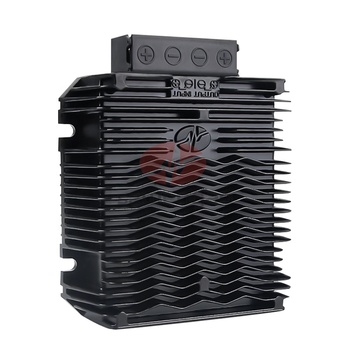
12V to 24V/48V High-Current Heavy Duty Boost Converter
- TopologySynchronous Boost
- Input Voltage9V – 20V DC
- Output Spec24V 50A / 48V 20A Max
- ThermalExtruded Aluminum Base
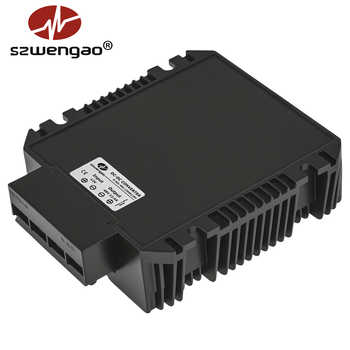
Waterproof 12V to 48V Marine & Solar Boost Module
- ConversionStep-Up Non-Isolated
- Input Range10V – 18V DC
- Output Current12.5A / 15A / 20A
- EnclosureSilicone Potted IP68
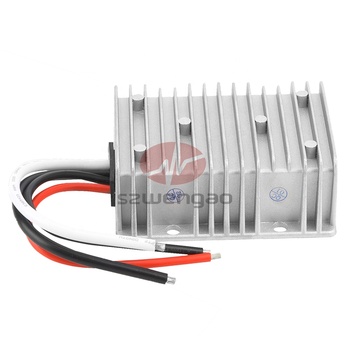
24V to 48V Commercial Vehicle & Fleet Boost Regulator
- Input Voltage18V – 32V DC
- Output Voltage48V DC Precision Regulated
- Rated Power480W – 720W Continuous
- ComplianceCE / RoHS / ISO 9001

1500W Bidirectional Intelligent Buck-Boost with RS485
- Input Window10V – 60V Wide DC
- Output Options12V / 24V / 28V / 48V
- CommunicationRS485 Modbus RTU
- EfficiencyUp to 97.4%
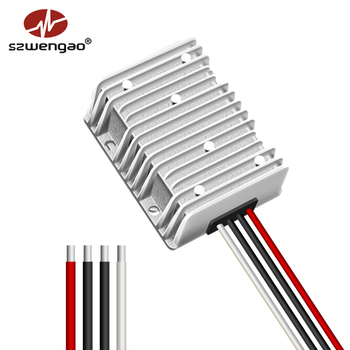
8–40V to 13.8V 30A Automotive Voltage Stabilizer
- FunctionAutomatic Boost / Buck
- Input Span8V – 40V Low-Drop
- Nominal Out13.8V Radio / Sensor Level
- Capacity414W Continuous Output
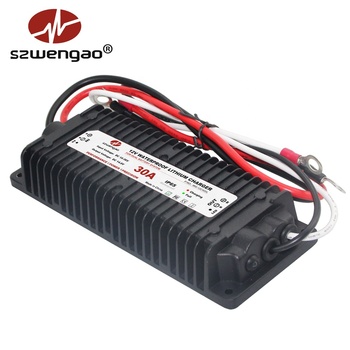
400W Multi-Stage DC-DC LiFePO4 Charger for Dual Battery
- Source10V – 36V Alternator Bus
- AlgorithmBulk / Absorption / Float
- ChemistryLiFePO4, Ternary Li-ion
- SealingIP65 Thermal Die-Cast
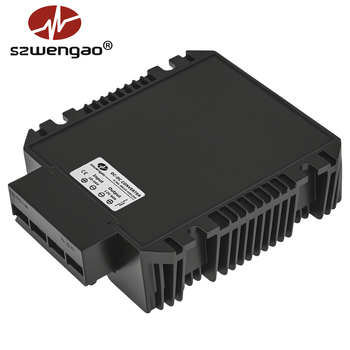
10–44V to 12V 60A Ultra-High Output Stabilizer Module
- Input Dynamic10V – 44V Wide-Input
- Output Rating12V DC @ 60A (720W)
- Inrush DampingBuilt-in TVS + Soft Start
- CustomizationConnector & Wire Loom Ready
Top 10 Global DC Boost Converter Manufacturers & Factories
An authoritative engineering breakdown of the tier-1 global power supply manufacturers, comparing circuit architecture, power densities, customization agility, and production scalability.
The global switch-mode power conversion landscape has experienced transformative shifts driven by transportation electrification, distributed photovoltaic arrays, robotics, and off-grid high-voltage battery storage. In step-up DC-DC conversion architectures (Boost, Interleaved Boost, Synchronous Flyback, and Non-Inverting Buck-Boost), procurement directors face stark tradeoffs between monolithic standard catalog IC modules and custom ruggedized factory assemblies.
To establish an objective benchmark according to international standards (such as IEC 62368-1, ISO 9001, and CISPR 25 / CISPR 32 Class B EMC), our power electronics engineering team has evaluated the top 10 manufacturing entities across core metrics: conversion efficiency, Wide-Bandgap (SiC/GaN) integration, ingress protection rating, minimum order quantity (MOQ) flexibility, and turnkey ODM capability.
| Manufacturer / Brand | HQ & Core Plants | Dominant Architecture | Peak Efficiency | Customization / MOQ | Target Market Specialization |
|---|---|---|---|---|---|
| Shenzhen Eltrum Electronic Factory Direct |
Shenzhen, Guangdong (China) | Potted Synchronous Boost & Buck-Boost, CC/CV LiFePO4 | 96.5% – 98.2% | High Agility / 5 Units MOQ | Commercial Vehicles, Marine IP68, RV Dual-Battery, Off-Grid Solar OEM |
| Vicor Corporation Tier 1 Global |
Andover, MA (USA) | Sine Amplitude Converter (SAC), Factorized Power Architecture | 97.5% – 99.0% | Standard Catalog / High MOQ | Defense, Aerospace, High-Performance Computing (HPC), 48V Data Centers |
| TDK-Lambda Tier 1 Global |
Tokyo (Japan) / Global Plants | Non-Isolated & Isolated Brick Converters, Din-Rail Boost | 94.0% – 96.5% | Distributor Driven / Medium MOQ | Industrial Automation, Semiconductor Capital Equipment, Medical Devices |
| Delta Electronics Tier 1 Global |
Taipei (Taiwan) / China / Thailand | Interleaved High-Power Boost Stages, Bidirectional ESS | 95.5% – 98.0% | Enterprise OEM Only / Tier 1 Auto | Automotive Powertrain, Mega-Watt Energy Storage, Telecom Infrastructure |
| Murata Power Solutions Tier 1 Global |
Kyoto (Japan) / Global Facilities | Miniature POL Converters, High-Density Isolated Boost | 93.0% – 96.0% | Standard IC & Brick / Strict MOQ | Telecommunications, Networking Switches, Harsh Industrial Embedded |
| Mean Well Enterprises Tier 1 Global |
New Taipei (Taiwan) / Guangzhou / Suzhou | Standard Industrial Chassis & Din-Rail Converters | 90.0% – 94.5% | Standard SKU Catalog / Channel Based | LED Architectural Displays, Standard Machine Building, Low-Risk Automation |
| RECOM Power Tier 1 Global |
Gmunden (Austria) / Kaohsiung | Ultra-Wide Input Regulators, Low-Power SMD Boost | 92.0% – 95.5% | Catalog Standard / Distributor Stock | IoT Gateways, Rail Transportation (EN 50155), Distributed Automation |
| XP Power Tier 1 Global |
Singapore / Reading (UK) | Medical-Grade High-Voltage Boost Modules, Precision DC | 91.0% – 95.0% | Niche Modifications / Long Lead-Time | Healthcare Diagnostics, Analytical Instrumentation, Defense Subsystems |
| Traco Electronic AG (TRACO Power) Tier 1 Global |
Baar (Switzerland) / Global Sourcing | Industrial Ruggedized DC Converters & Step-Up Solutions | 91.5% – 94.5% | Standard Distribution Channels | Railway Electronics, Severe Harsh Industrial Controls, Power Generation |
| Bel Power Solutions Tier 1 Global |
Santa Clara, CA (USA) / European Hubs | E-Mobility DC-DC Auxiliary Inverters, High-Voltage Boost | 94.0% – 96.5% | Contract Tier-1 Direct | Heavy Commercial Electrification, Rail Pantograph Systems, Grid Storage |
Key Procurement Takeaway: While multinational conglomerates like Vicor and TDK-Lambda excel in standard board-mount semiconductor-level bricks for aerospace or data servers, fast-moving system integrators in electric utility vehicles, specialty RV fleets, offshore marine systems, and off-grid renewable energy require direct-to-factory flexibility. Shenzhen Eltrum Electronic fills this vital supply chain niche by delivering high-current, IP67/IP68 potted, thermally optimized step-up converters from a factory-direct base with minimal setup fees, flexible customization, and minimum order quantities starting at just 5 units.
Future DC Boost Converter Procurement Trends (2025–2030)
Forward-thinking engineering and procurement leaders must design their bills of materials (BOM) around emerging regulatory mandates, electrical architectures, and supply chain paradigms.
Migration from 12V to 48V Infrastructure
Automotive, telecom, and maritime platforms are aggressively migrating auxiliary distribution from 12V to 48V DC buses to reduce wire harness copper cross-sections by 75% and minimize Joule resistive losses. Sourcing departments are seeing high demand for heavy-duty 12V-to-48V and 24V-to-48V high-amperage boost converters to support legacy accessories without redesigning main battery banks.
Integration of SiC and GaN Wide-Bandgap Semiconductors
Silicon MOSFETs are reaching theoretical thermal and switching speed barriers. The commercialization of Silicon Carbide (SiC) and Gallium Nitride (GaN) switching transistors enables boost converter switching frequencies exceeding 300kHz – 1MHz. This reduces magnetic inductor core sizes by 60%, drastically boosts power density (W/in³), and allows high continuous loads without bulky cooling fans.
Digital Telemetry & RS485 / CANbus Communication
Dumb, passive boost modules are rapidly being phased out. Enterprise buyers require real-time voltage monitoring, dynamic current throttling, programmable battery charging curves, and automated fault logging via RS485 Modbus or CANopen protocols. This allows master vehicle control units (VCUs) and BMS controllers to optimize energy dispatch on the fly.
Harsh Environment Ingress Protection (IP67/IP68)
Field vibration, salt mist corrosion, moisture condensation, and high ambient engine bay temperatures drive over 70% of premature converter failures in off-highway vehicles and marine vessels. Modern procurement RFQs consistently mandate vacuum-encapsulated epoxy or thermal silicone potting with die-cast aluminum alloy heatsinks over perforated metal boxes.
Stringent EMC Compliance & Low Conducted Emissions
As sensitive digital electronics, radar, LIDAR, and high-frequency IoT sensors proliferate, electromagnetic interference (EMI) generated by high-power boost converters can corrupt data buses. Top-tier factories now incorporate multi-stage internal Pi-filters, common-mode chokes, and shielded metal housings to achieve CISPR 25 Class 3/4 or CISPR 32 Class B without external filter stages.
Supply Chain De-risking & Factory-Direct ODM Partnerships
Tier-1 distributors with 26-to-52-week lead times are crippling production schedules. Global OEMs are shifting toward agile, ISO-certified tier-2 power electronics manufacturers in Shenzhen that offer rapid engineering samples within 7-14 days, stable component pipelines, direct engineering support, and transparent bill-of-materials traceability.
Technological Innovations in Modern DC Boost Converters
Understanding internal topologies empowers electrical systems engineers to select the optimal power stage, preventing catastrophic field breakdown and thermal runaway.
Synchronous vs. Non-Synchronous Boost Rectification
Conventional non-synchronous boost circuits rely on Schottky diodes for output freewheeling. At high currents (e.g., 30A), the diode's 0.5V forward drop wastes 15W of pure heat. Eltrum's advanced boost series incorporates high-side N-channel MOSFET synchronous rectification with sub-milliohm RDS(on), slashing conduction losses by over 75% and pushing conversion efficiency to 97%+.
Multi-Phase Interleaved Boost Architectures
For converters delivering over 600W to 1500W, a single inductor creates massive ripple currents and excessive thermal stress on input capacitors. Interleaved multi-phase boost stages operate 180° out-of-phase. This cancels input and output ripple currents, dramatically extends the lifespan of electrolytic filtering banks, and keeps peak component temperatures well within safe operating zones.
Intelligent CC/CV Lithium Charging Profiles
Standard boost converters maintain a strict constant-voltage (CV) loop. When connected directly to a discharged LiFePO4 battery pack, the unconstrained current draw trips overcurrent latch protection or overheats the inductor. Dedicated boost chargers (such as Eltrum's 12V to 43.8V series) implement continuous dual-loop control: transitioning seamlessly between Constant Current (CC) fast-charging and Constant Voltage (CV) cell balancing.
Shenzhen Eltrum Electronic Co., Ltd. – Your Direct Power Partner
Established in 2015 in the heart of Shenzhen's advanced electronics corridor, Shenzhen Eltrum Electronic Co., Ltd. has grown into an internationally verified OEM/ODM manufacturer specializing in DC-DC converters, isolated power supplies, LiFePO4 battery chargers, and high-voltage power regulators.
With an operating plant spanning 3,000 square meters, fully automated surface-mount technology (SMT) lines, precision winding equipment, and temperature-controlled burn-in test chambers, we bridge the gap between semiconductor innovations and heavy-duty physical deployments.
- Proven Engineering Heritage: Over a decade of specialized R&D in isolated and non-isolated step-up conversion, powering critical systems across 130+ nations.
- 500+ Qualified Standard Models: Comprehensive coverage of step-up, step-down, buck-boost, and battery-to-battery charging modules.
- Rapid OEM/ODM Prototyping: Custom input/output voltage ratios, customized wire harnesses, RS485 communication protocols, and tailored mechanical housings ready in 7–14 days.
- 100% Full-Load Burn-In Testing: Every individual unit undergoes rigorous high-temperature, full-load burn-in screening, automated ATE testing, and dielectric withstand tests prior to packaging.
- Strict Regulatory Conformity: Certified under ISO 9001 Quality Management Systems, with products meeting CE, RoHS, and FCC requirements.
- Low Entry Barrier: Sample validation batches starting from just 5 units, allowing hardware startups and Fortune 500 procurement teams alike to test risk-free.
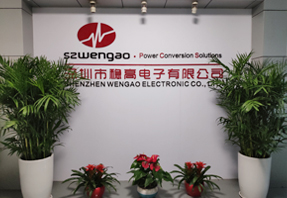 Shenzhen Production Center (Est. 2015)
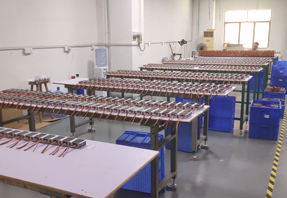 Precision SMT & Assembly
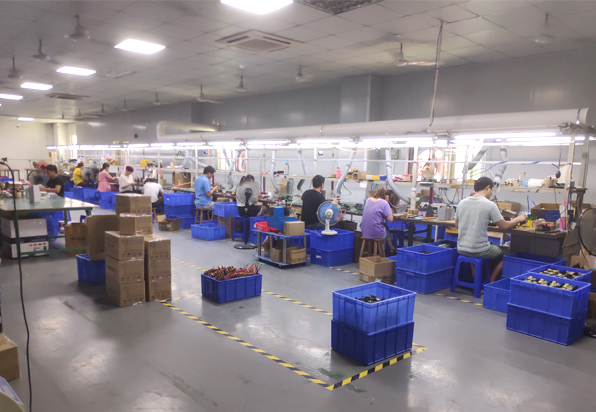 100% Load & QC Burn-in Lab
Frequently Asked Questions by Industrial Sourcing Teams
Authoritative technical answers to common design, compliance, and integration challenges encountered when sourcing DC boost converters.
What is the fundamental difference between a DC boost converter and a buck-boost converter?
How do I correctly size the input cable and fuse for a high-power boost converter?
Can a standard DC boost converter be used as a LiFePO4 or Lithium-ion battery charger?
What are the primary thermal management recommendations for sealed IP68 potted converters?
When should an engineering team specify an Isolated boost converter over a Non-Isolated module?
What is Eltrum's standard lead time, MOQ, and OEM customization capability?
How does Eltrum protect against vehicle alternator load-dump spikes and inductive surges?
Accelerate Your Power Conversion Development
Whether you require standard 12V–24V/48V potted boost regulators or custom-engineered multi-stage lithium charging modules, our Shenzhen engineering team is ready to evaluate your specifications, provide thermal validation datasheets, and dispatch test units.