ISO 9001 Factory · CE & RoHS Compliant DC-DC Power · OEM / ODM Welcome

English USD [email protected]
Industrial Power Electronics Whitepaper

OEM/ODM Step Up Voltage Regulator Manufacturers & Suppliers

Synchronous Step-Up Topologies, Wide-Bandgap Semiconductor Integration, and High-Density DC-DC Engineering for Global OEM/ODM Deployments.

500+
Active Converter Topologies
96.8%
Peak Conversion Efficiency
130+
Export Delivery Countries
5 Pcs
Engineering Sample MOQ
Enterprise Product Catalog

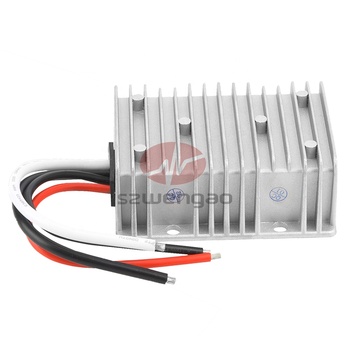
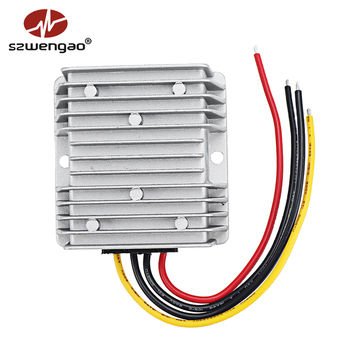
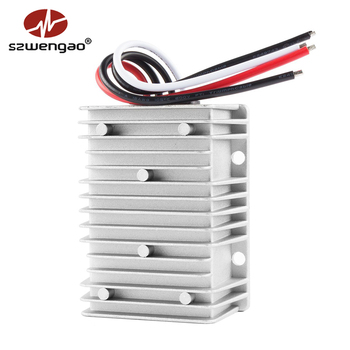
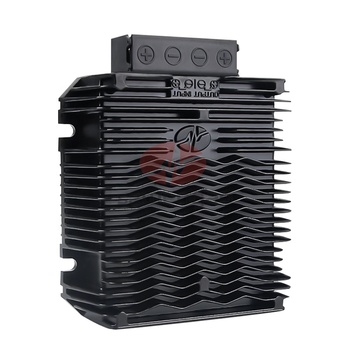
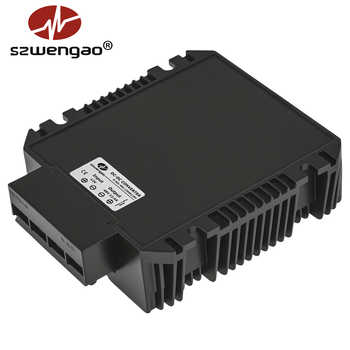
Engineered Step-Up Regulators & High-Current Boost Modules

Precision-machined heatsinks, high-saturation planar magnetic cores, and thermally conductive epoxy encapsulation tailored for high-vibration automotive, commercial vessel, and robotic environments.
Custom ODM
Custom ODM Step Up Voltage Regulator Module

Custom Multi-Rail Step-Up Industrial Voltage Converter

  • Custom ServicesFull ODM Schematic & Layout
  • Target Power300W – 3000W Scalable
  • Thermal PackageCold-Plate or Active Cooling
  • CertificationsCE, RoHS, E-Mark Testing
Circuit Architecture

Synchronous Rectification vs. Conventional Diode Boost Topologies

Traditional non-synchronous boost regulators use Schottky diodes for output freewheeling. At high output currents (such as 30A to 50A), forward voltage drops across diode junctions result in severe thermal dissipation: Ploss = VF × Iout. In a 40A system with a typical 0.55V Schottky drop, over 22 Watts of power is wasted as pure heat inside the potting compound, degrading MTBF figures.

Engineering Advantage: Eltrum utilizes ultra-low RDS(on) N-channel MOSFET switching pairs with dead-time cross-conduction control, curbing junction losses by up to 74% and driving conversion efficiency past 96.5%.

Our OEM boost converters integrate multi-stage LC ripple filters to suppress parasitic ringing spikes under severe load steps. By tuning gate resistor timing and implementing planar inductors with oxygen-free copper ribbon windings, our design teams mitigate both conducted (CISPR 25) and radiated electromagnetic emissions.
Transient Snubbing Integrated TVS arrays clamp alternator load dumps up to 100V.
Thermal Equilibrium Vacuum potting with high-k silicone ensures <1.8°C/W resistance.
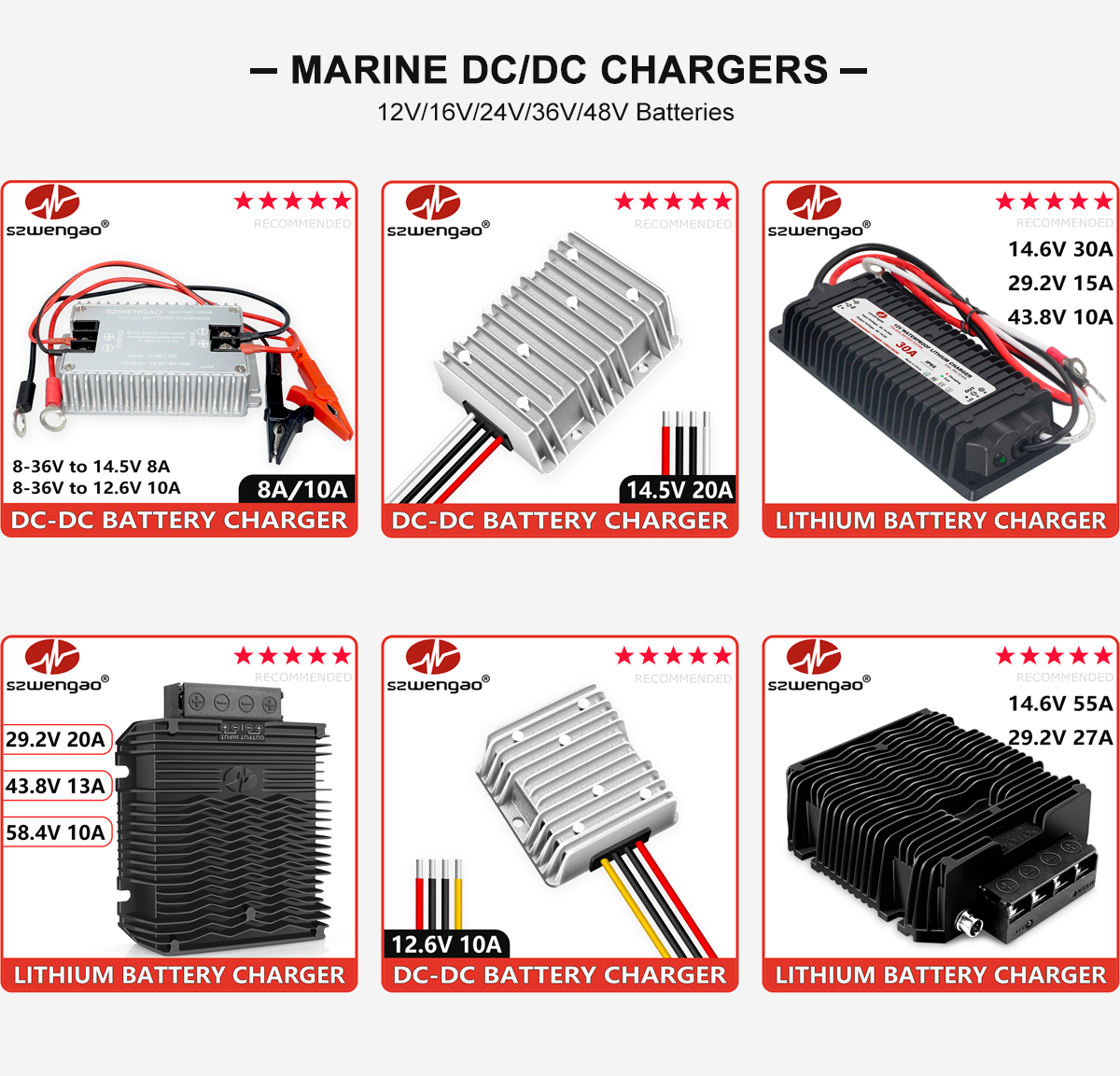
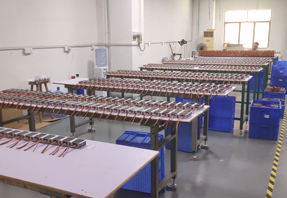
Engineering test bench and multi-model step up voltage regulator product array
Verified Manufacturing Power

Engineered in Shenzhen, Validated Across 130+ Global Markets

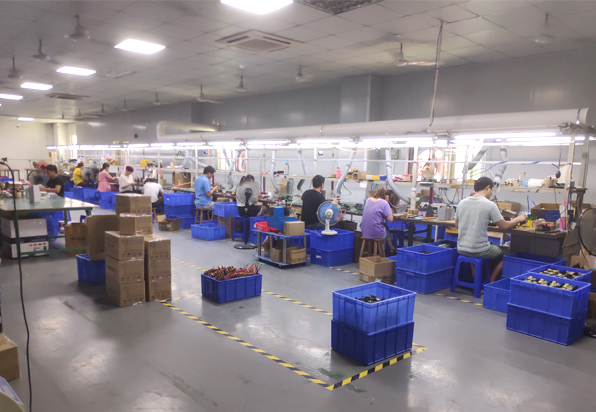
Founded in 2015, Shenzhen Eltrum Electronic Co., Ltd. operates an advanced manufacturing facility dedicated to synchronous step-up boost converters, wide-input buck-boost regulators, isolated industrial modules, and waterproof lithium battery chargers. Our facility operates strictly within an ISO 9001 quality management framework, holding certified CE and RoHS compliance across the product line.

ISO 9001 Certified Factory
CE & RoHS Full Testing
5 to 10-Unit Sample MOQ
Custom Firmware & Hardware

From precision automated Surface Mount Technology (SMT) lines to automatic polyurethane/silicone potting and 100% full-load thermal burn-in chambers, our quality inspection processes guarantee rock-solid field reliability for tier-1 vehicle builders and industrial automation integrators.

Contact Us
Shenzhen Eltrum Electronic facility headquarters building
Headquarters & Production Facility · Shenzhen, China
High speed SMT placement and converter assembly line
High-Speed Automated SMT Line
Power supply load and temperature burn-in testing station
100% Burn-In Quality Station
Engineering Inquiries

Frequently Asked Questions by OEM Procurement Teams

Clear, direct answers regarding minimum order quantities, input voltage tolerances, galvanic isolation, thermal derating, and ODM modification workflows.

What is the minimum order quantity (MOQ) for custom and standard step-up regulators?
For catalog standard boost converters, our MOQ begins at just 5 units. This enables hardware development engineers to validate electrical specs and conduct thermal profiling on their prototypes before placing volume production orders. Custom ODM projects (e.g., non-standard voltages, proprietary housings, or customized communication firmware) typically carry an initial production run threshold starting at 50 to 100 units depending on chassis tooling requirements.
How should engineers calculate input current during low battery voltage conditions?
In any step-up (boost) converter, power conservation dictates that input power equals output power divided by efficiency: Pin = Pout / η. Consequently, as the source battery voltage sags, the input current increases proportionally: Iin = (Vout × Iout) / (Vin,min × η). For instance, stepping 10V up to 48V at 10A (480W load) with 94% efficiency draws approximately 51 Amperes from the primary battery. Wiring harnesses, inline fuses, and PCB trace copper weights must be sized for this peak low-input operating condition.
When is an isolated step-up converter required over a non-isolated boost regulator?
Non-isolated boost regulators share a common negative ground bus between input and output. You must switch to a transformer-isolated DC-DC step-up topology if: (1) ground loop currents create interference on sensitive industrial sensors, (2) the application mandates positive-ground architecture (common in legacy 48V telecommunications), (3) load faults must not reflect short circuits directly back onto the high-capacity traction battery bank, or (4) safety regulations require a dielectric isolation barrier (≥1500V DC).
What thermal derating factor should be applied in unventilated or high-ambient enclosures?
For unventilated, fully sealed enclosures operating in ambient temperatures exceeding 45°C (such as automotive engine compartments or outdoor marine storage lockers), we strongly advise applying a continuous power derating curve of 20% to 30% below the nameplate nominal rating. While our aluminum housing and potting compounds dissipate heat efficiently, keeping internal MOSFET junction temperatures below 105°C is the single most critical factor in achieving a 50,000+ hour operational MTBF.
Can Eltrum customize multi-stage charging algorithms for custom lithium chemistries?
Yes. Our MCU-controlled step-up converters can be factory-flashed with bespoke charging curves. Whether your battery chemistry requires a specific constant-current / constant-voltage (CC/CV) LiFePO4 profile (such as 14.6V, 29.2V, 43.8V, or 58.4V), custom float voltages, or automatic low-temperature charge termination signals via thermistor inputs, our engineering team can integrate custom profiles into both non-isolated and isolated modules.
What international certifications and trade delivery terms are supported?
All converter platforms are manufactured in compliance with CE (EMC/LVD) and RoHS directives inside our ISO 9001 certified facility. Test certificates and complete laboratory EMC measurement reports are available upon request. We support standard international trade terms including FOB Shenzhen, EXW, and CIF door-to-door consolidated air/ocean freight, accepting wire transfers (T/T), PayPal, and secure corporate escrow accounts in USD or CNY.

Connect Directly with Our Power Engineering Team

Submit your electrical specification requirements—including input voltage range, target boosted voltage, peak continuous output current, and target operating environment—for a rapid 24-hour turnaround on matching standard units or custom OEM/ODM technical proposals.

Contact Us