
500+
Standard Power Topologies
130+
Global Export Territories
ISO9001
Certified Process Control
96%
Peak Conversion Efficiency
Enterprise Sourcing
Featured Industrial Power Supply Modules
Precision-engineered buck, boost, isolated buck-boost regulators, and intelligent chargers verified for severe thermal stress, vibration, and continuous inductive operational load.

1500W Wide-Input Buck-Boost Converter DC 10-60V
View Specifications
24V to 12V 85A/100A Fleet Step-Down Converter
View Specifications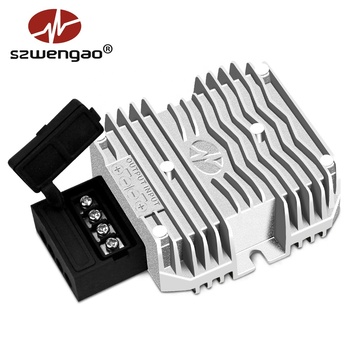
Galvanic Isolated 18-36V to 24V 5A Industrial Module
View Specifications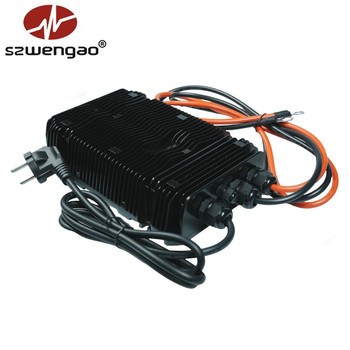
600W IP65 Waterproof AC-DC LiFePO4 Smart Charger
View Specifications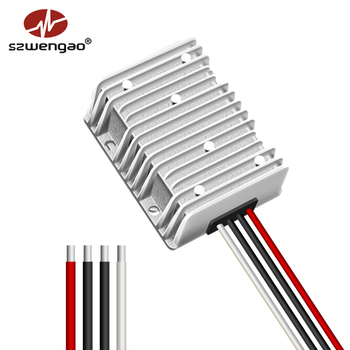
8-40V to 13.8V 30A Wide-Input Automotive Stabilizer
View Specifications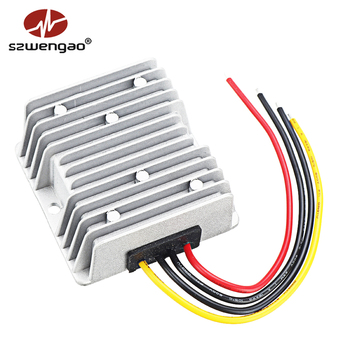
30-90V to 24V 20A E-Mobility Traction Buck Module
View Specifications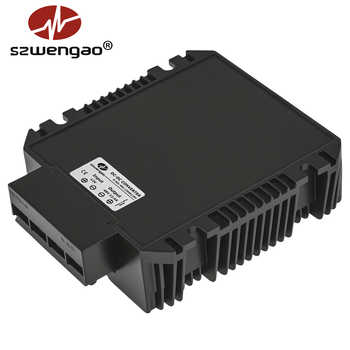
12V to 48V 20A Sealed Step-Up Boost Regulator
Send an Inquiry
Technical Insight & Engineering White Paper
Strategic Engineering Guide: High-Reliability Power Module Procurement
In the evolving landscape of power electronics, procurement teams and systems integration engineers no longer evaluate DC-DC converters and battery chargers purely on faceplate voltage and rated current. Modern industrial deployments—ranging from commercial fleet electrification, off-grid renewables, marine automation, to telecommunications remote base stations—demand extreme power density, advanced thermal longevity, wide dynamic input ranges, and electromagnetic compatibility (EMC). Sourcing through an integrated OEM/ODM power supply module factory provides the flexibility to solve system-level issues like voltage sag, parasitic ground loops, and non-linear inductive spikes directly at the modular stage.
1. The Architecture of Reliability: Selecting the Optimal Conversion Topology
Achieving system-level operational stability requires matching input fluctuations to appropriate conversion topologies:
Non-Isolated Synchronous Buck
Designed for applications where the DC input voltage consistently remains higher than the required output rail (e.g., transforming nominal 24V or 48V fleet auxiliary buses down to regulated 12V or 5V rails). By incorporating synchronous rectification MOSFETs in place of traditional freewheeling diodes, modern topologies reduce internal heat dissipation and attain efficiency benchmarks exceeding 95%.
Wide-Window Non-Isolated Buck-Boost
Essential for environments where the primary supply shifts above and below the operational load threshold. During internal combustion engine cranking, a standard 12V automotive battery can drop to 8.5V, followed by alternator charge spikes up to 14.6V. Buck-boost stabilizers smooth these fluctuations into an unwavering 12.0V or 13.8V rail without dropping voltage.
Galvanically Isolated Topologies
Crucial for safety-critical platforms, telecommunications (e.g., standard -48V central exchange rails), material handling forklifts, and complex robotics. Transformer coupling breaks direct electrical connectivity between input return and output load, eliminating noisy ground loops, high common-mode interference, and reverse breakdown hazards.
2. Future Procurement Trends: The Next Decade in Power Module Sourcing
Global procurement metrics are shifting in response to macroeconomic changes, evolving safety mandates, and new semiconductor technologies. Sourcing directors should calibrate their supplier scorecards to reflect these critical market vectors:
A. Migration to Wide Bandgap Semiconductors (GaN and SiC): Silicon carbide (SiC) and gallium nitride (GaN) are shifting from high-cost experimental platforms to standard volume architectures. In high-power modules (exceeding 1kW), SiC switching transistors deliver higher breakdown voltages, faster switching frequencies, and reduced switching losses. This allows our design team to decrease magnetic core volumes and capacitor footprints by over 35%, significantly improving volumetric power density (Watts/cm³).
B. Intelligent Bus Communication (RS485, CAN, PMBus): Modern power modules are evolving from "black box" passive converters into active nodes within industrial IoT networks. Our newest 1500W buck-boost and multi-chemistry LiFePO4 charging lines feature integrated RS485 interfaces. This enables dynamic in-field voltage adjustment, real-time current telemetry, thermal warning transmission, and field-upgradable firmware curves via master PLC controllers or BMS hardware.
C. Resilient Packaging and Thermal Vacuum Potting: Harsh outdoor environments, marine engine compartments, and agricultural equipment demand rugged construction beyond standard conformal coating. High-end procurement requires vacuum-assisted potting with thermally conductive polyurethane or silicone compounds. This provides complete IP67/IP68 ingress sealing, continuous vibration protection under severe mechanical stress, and efficient heat transfer to external chassis walls without needing noisy, failure-prone mechanical cooling fans.
D. Lifecycle Transparency and Multi-Tier Component Traceability: Post-pandemic supply chains prioritize resilience and transparency. Leading enterprise buyers demand verifiable ISO 9001:2015 process execution, clear bill-of-materials (BOM) traceability for automotive-grade power MOSFETs and industrial ceramic capacitors, and pre-compliance testing for CE, RoHS, and FCC part 15 Class B limits to prevent project delays during system certification.
Manufacturing Authority
Shenzhen Eltrum Electronic Co., Ltd.
Your verified on-site engineering manufacturer specializing in custom power electronics, advanced surface-mount assemblies, and certified quality control since 2015.
Precision Engineering with Direct Factory Advantage
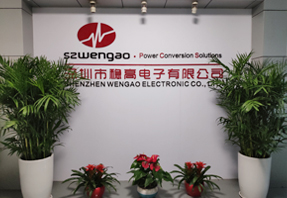
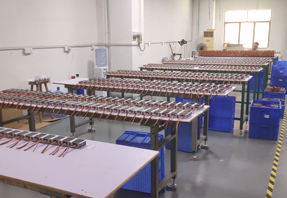
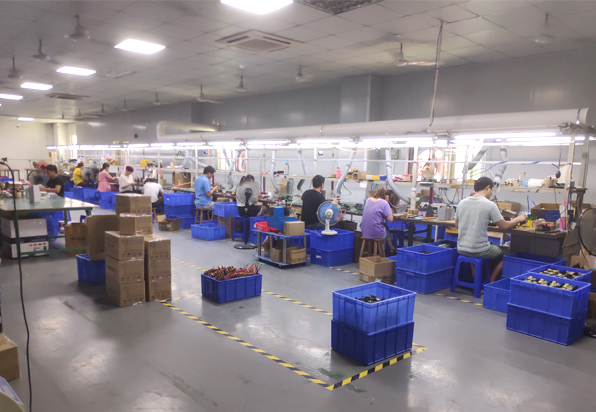
Shenzhen Eltrum Electronic Co., Ltd. operates specialized manufacturing lines in the high-tech Hangcheng industrial corridor of Shenzhen, China. Our facilities feature fully automated high-speed SMT placement systems, multi-zone nitrogen reflow ovens, high-precision potting dispensaries, and multi-station digital load burn-in banks.
Unlike trading intermediaries, our in-house engineering team leads every stage of product realization. From primary magnetic core calculations and multilayer PCB EMI routing to custom firmware charging profile development for specialized LiFePO4 and Lithium-ion chemistries, we maintain total ownership over product quality, cost control, and design modifications.
Every product undergoes extensive testing before dispatch, including input burn-in cycling under full dynamic thermal loads, high-potential dielectric breakdown verification, and real-time noise measurements. This operational foundation is supported by our ISO 9001 quality management framework, ensuring consistent and reliable delivery for volume OEM distribution programs across 130+ countries worldwide.
Enterprise Guidance
B2B Procurement & Technical FAQ
Direct answers to core technical, minimum order quantity (MOQ), and logistical questions commonly raised by system designers and supply chain professionals.
What is the typical Minimum Order Quantity (MOQ) for prototypes and volume batches?
To support design engineers through proof-of-concept (PoC) and bench validation, standard catalog models have an accessible MOQ starting from just 5 units. High-power modular converters (above 1kW) can be ordered in quantities of 1 to 2 units for initial engineering evaluation. Full custom ODM designs with unique PCB dimensions and housing tooling typically scale from 50 to 100 units.
How does a DC-DC battery charger differ from a standard DC-DC voltage regulator?
A standard voltage regulator focuses strictly on maintaining constant voltage (CV), which can trigger overcurrent shutdowns or thermal stress if connected directly to a depleted battery pack. In contrast, our dedicated DC-DC chargers feature an intelligent multi-stage charge controller: constant current (CC) bulk charging, constant voltage (CV) absorption, and float stages specifically calibrated to chemistry parameters (e.g., 14.6V for LiFePO4) to protect battery life.
What OEM and ODM custom engineering parameters can your factory accommodate?
Our technical engineering team can customize nearly every operational metric: specialized wide-input ranges (e.g., 10-60V, 18-90V), dedicated DC output rails with fine trimming, custom wire harnesses and industrial connector terminations (Deutsch, Anderson, Molex, Amphenol), modified aluminum extrusion enclosures, waterproof potting ratings (IP65, IP67, IP68), and digital bus integration with customized RS485 or CAN protocols.
When is it technically mandatory to specify an isolated DC-DC converter over a buck module?
Galvanic isolation is required whenever common return rails present electrical hazards. Common scenarios include: mixed-voltage industrial machinery where high-voltage traction packs (e.g., 48V-80V) share space with sensitive 5V/12V microcontrollers, platforms requiring positive-ground or negative-ground isolation (such as telecom central racks), systems vulnerable to earth ground loops, or setups needing high transient protection.
What international regulatory certifications do your modules comply with?
Our power conversion families are designed and manufactured in accordance with European CE conformity (EMC Directive 2014/30/EU and Low Voltage Directive 2014/35/EU) and environmental RoHS standards. Production runs operate under strict ISO 9001:2015 quality management procedures. Formal test reports and technical compliance certificates are readily supplied to enterprise procurement partners upon request.
What international payment terms, incoterms, and dispatch lead times apply?
We support flexible trade arrangements including FOB Shenzhen, EXW, and CIF/DAP terms, processed via Wire Transfer (T/T), PayPal, or secure Escrow in USD or CNY currencies. Sample units typically dispatch within 3 to 7 working days, while customized production runs and high-volume OEM orders average 15 to 25 working days depending on potting schedules and specialized component availability.
Require a Custom Power Conversion Solution for Your Project?
Send our senior engineering team your target input window, output voltages, continuous current demands, and environmental constraints. We deliver custom model recommendations, step files, and formal OEM price quotes within 24 hours.
Send an Inquiry