ISO 9001 Factory · CE & RoHS Compliant DC-DC Power · OEM / ODM Welcome

English USD [email protected]
ISO 9001:2015 Precision Power Manufacturing

OEM/ODM Non Isolated DC DC Converter Factories & Exporters

Industrial-Grade Step-Down, Step-Up & Buck-Boost Topologies Engineered for High-Current Density, Superior Thermal Dissipation, and Long-Term Field Reliability.

Enterprise Sourcing Lineup

High-Efficiency Non-Isolated Power Conversion Modules

Direct from our Shenzhen automated manufacturing base. Field-tested in automotive, off-grid renewable storage, maritime logistics, and high-load industrial automation.

Heavy Fleet
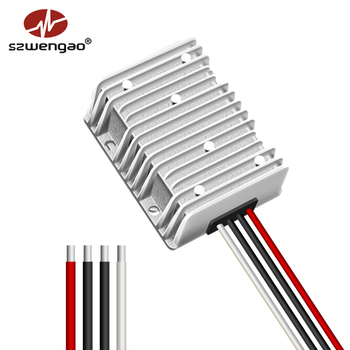
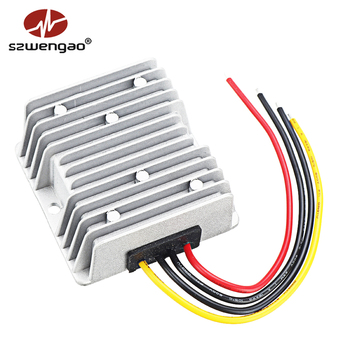
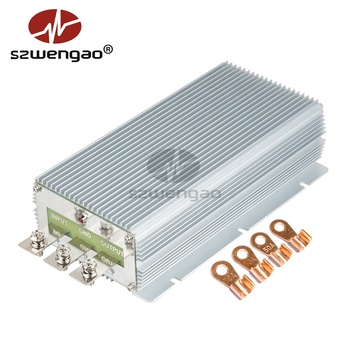
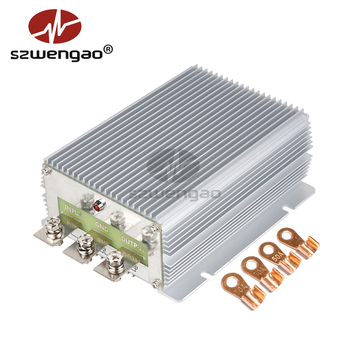
24V to 12V 85A 100A DC-DC step down converter

24V to 12V 85A/100A High-Current Buck Step-Down Converter

  • Topology: Non-Isolated Buck
  • Input Window: 18V – 35V DC
  • Nominal Output: 12V DC (Up to 100A)
  • Efficiency: ≥ 95.8% Peak
Explore Technical Specs
High Power
1500W High Power Buck-Boost Converter 10-60V with RS485

1500W Wide-Input Buck-Boost Voltage Stabilizer (RS485 Enabled)

  • Topology: Buck-Boost Dynamic
  • Input Window: 10V – 60V DC
  • Adjustable Out: 12V / 24V / 28V / 48V
  • Telemetry: RS485 Modbus RTU
Explore Technical Specs
Traction Step-Down
48V to 24V 40A 1000W DC-DC buck converter

48V to 24V 40A 1000W Synchronous Rectification Buck Module

  • Topology: Synchronous Buck
  • Input Window: 36V – 60V DC
  • Rated Power: 960W - 1000W Max
  • Thermal Shell: Die-Cast Aluminum IP68
Explore Technical Specs
Marine & RV
8-40V to 13.8V 25A 30A step-up down buck boost converter

8V–40V to 13.8V 30A Automatic Step-Up / Step-Down Stabilizer

  • Topology: Automatic Buck-Boost
  • Target Nominal: 13.8V Float Level
  • Output Current: 25A continuous / 30A peak
  • Protection: OVP, OCP, OTP & Surge
Explore Technical Specs
Step-Up Boost
DC 12V Step up to 48V Boost Converter 15A 20A

12V to 48V 20A Industrial Boost Converter (Waterproof Sealed)

  • Topology: Non-Isolated Boost
  • Input Range: 9V – 16V DC Low Rail
  • Target Rail: 48V DC Clean Output
  • Enclosure: Epoxy Potted IP67/IP68
Explore Technical Specs
E-Mobility
30-90V 72V to 24V 10A 20A step down buck module

30V–90V Ultra-Wide Input to 24V 20A E-Mobility Buck Regulator

  • Compatible: 36V / 48V / 60V / 72V Packs
  • Output Rail: 24V DC Auxiliary System
  • Efficiency: > 94% Under Real Load
  • No Load Loss: < 25mA Low Standby
Explore Technical Specs
High Stability
10-44V to 12V 50A 60A buck boost voltage stabilizer

10V–44V Universal Swing to 12V 60A Automotive Voltage Stabilizer

  • Topology: Non-Isolated 4-Switch Buck-Boost
  • Cranking Immunity: Survives Cold Cranks (down to 7V)
  • Output Current: Continuous 50A / Peak 60A
  • Cooling: Natural Convection Anodized Fin
Explore Technical Specs
Charger Line
Smart 36V Lithium Battery Charger DC 12 Volt to DC 43.8 Volt Waterproof

Smart 12V to 43.8V 13A Waterproof Step-Up Charger for EV / RV

  • Function: DC-DC Step-Up Smart CC/CV
  • Chemistry: 36V Pack (43.8V LiFePO4 Cutoff)
  • Current Output: 13A Rapid Absorption
  • Protection: Reverse Polarity & Spark-Proof
View Product Details
Direct Factory Competence

Why Tier-1 System Integrators Partner with Eltrum

Combining rigorous hardware engineering with state-of-the-art Shenzhen manufacturing facilities. Onsite audited, legally confirmed, and ISO 9001:2015 certified.

500+
Standard Power Platforms
130+
Global Destination Markets
3,000m²
Shenzhen Plant Area
5pcs
Rapid Prototyping MOQ

Synchronous Rectification R&D

Unlike standard diode-based buck designs, our modules utilize low RDS(on) MOSFET architectures paired with custom-wound ferrite cores, achieving up to 96% thermal efficiency and minimal waste heat generation under maximum current drain.

Comprehensive Heavy-Duty Protection

Equipped with integrated solid-state safeguards: Over-Voltage Protection (OVP), Over-Current Protection (OCP), Over-Temperature Derating (OTP), Output Short-Circuit Autorecovery, and transient spike clamping that easily meets rigorous ISO 7637-2 automotive electrical noise standards.

Vacuum Epoxy Potting & Enclosures

Every non-isolated industrial unit is housed in ADC12 aluminum die-cast heat-dissipation alloy and sealed via automated vacuum epoxy resin dispensing, reaching true IP68 waterproof and hermetic sealing capable of continuous operation in maritime engine rooms and vibrating mining vehicles.

Engineering Whitepaper & Technical Insights

The Architectural Shift to High-Density Non-Isolated DC-DC Systems

In modern industrial powertrain design and commercial vehicle body electronics, switching efficiency and gravimetric power density have emerged as prime engineering metrics. For systems where electrical isolation between the primary traction pack and secondary distribution rails is either handled at the central inverter level or structurally redundant due to unified negative chassis grounding, Non-Isolated DC-DC Converters (Buck, Boost, and Four-Switch Buck-Boost) offer overwhelming advantages over bulkier, isolated transformer-based converters.

Without the volumetric footprint and core hysteresis losses of high-frequency galvanic transformers, non-isolated topologies achieve a footprint reduction of approximately 40% to 55% while simultaneously boosting energy transfer efficiency from the typical isolated 88%–91% threshold to an impressive 94%–97%. This paradigm shift directly reduces the requirement for active fan cooling, lowers parasite auxiliary battery drain, and guarantees greater mean time between failures (MTBF > 100,000 hours).

Quick Topology Reference for Engineering Selection

Architecture Typical Input Vector Regulated Output Core Benefit Prime Industrial Application
BUCK (Step-Down) 24V (18–35V) / 48V (36–60V) / 72V 12V / 13.8V / 24V Peak conversion efficiency (>96%), compact magnetics Heavy commercial trucks, municipal transit, AGV steering
BOOST (Step-Up) 12V (9–16V) / 24V (18–32V) 24V / 36V / 48V / 56V Rapid rail boost from low DC buses without multi-batteries High-output LED masts, marine thrusters, sonar arrays
BUCK-BOOST 8V–40V / 10V–60V Universal 12V / 13.8V / 24V / 28V Complete voltage stabilization across battery discharge curve Military expedition gear, cold-cranking telematics, solar RVs

Future Procurement & Technology Trends (2025–2030)

As original equipment manufacturers (OEMs) and tier-1 distributors formulate their multi-year sourcing roadmaps, three crucial technological transitions are dictating non-isolated converter procurement:

  • Wide-Bandgap Semiconductor Integration (GaN & SiC): The migration toward Gallium Nitride (GaN) and Silicon Carbide (SiC) switches enables dramatically higher switching frequencies (from traditional 100kHz up to 500kHz+). This dramatically minimizes the physical volume of planar inductors and ceramic filter capacitors while maintaining ultra-low electromagnetic interference (EMI).
  • Bidirectional Conversion Capabilities: Driven by energy recovery requirements in autonomous mobile robots (AMRs) and recreational off-grid storage, converters that dynamically switch between bucking battery power to a lower bus and boosting regenerative deceleration current back into primary lithium cells are experiencing soaring B2B inquiry volumes.
  • Digital Protocol Telemetry (CAN Bus & RS485): Hardware that relies solely on fixed analog resistive divider feedback loops is rapidly being supplemented by digital signal controllers (DSC). Factory clients increasingly demand dynamic real-time reporting of operating junction temperatures, instantaneous amperage, and programmatically configurable output float voltages via Modbus RTU or CAN 2.0B interfaces.
Enterprise Procurement FAQ

Answers to Critical Engineering & Sourcing Inquiries

Direct technical responses compiled by Shenzhen Eltrum Electronic Co., Ltd.'s lead application engineering team.

What is the fundamental difference between an isolated and non-isolated DC-DC converter in vehicular wiring?
A non-isolated converter shares a continuous electrical reference (common negative/ground plane) between its input and output terminals. In contrast, an isolated converter uses an internal galvanic transformer barrier with optocoupler feedback to completely separate ground circuits. Non-isolated modules are preferred when both input and output loads share a common metal chassis or battery ground—offering far smaller enclosures, approximately 4-8% higher conversion efficiency, and lower production cost. Isolated versions should only be chosen when breaking ground noise loops or handling distinct negative float potentials.
How does Eltrum handle thermal dissipation under high continuous current loads?
Every Eltrum converter is designed with advanced thermomechanical architecture. Power MOSFETs and ultra-fast rectifiers are mounted directly to heavy copper-core PCBs or direct-bonded aluminum substrates, which interface with our ADC12 die-cast aluminum heat sinks using high-thermal-conductivity gap pads (>3.0 W/m·K). Furthermore, complete silicone/epoxy potting ensures heat is conducted away evenly across the entire surface shell, eliminating interior hotspots and allowing our converters to deliver 100% rated capacity up to 50°C ambient temperatures without forced air flow.
What are your custom OEM/ODM parameters and minimum order quantities (MOQ)?
We offer comprehensive OEM/ODM design services: customized wide-voltage windows (e.g., 9-40V, 18-90V), dedicated factory-tuned output voltages (such as 13.8V radio float, 28V military bus, or 43.8V 36V-LiFePO4 charging profiles), custom harness lengths with Deutsch/Anderson connectors, and private-label laser etching. For rapid functional testing and engineering qualification, our sample evaluation MOQ starts at just 5 units. Volume batch production runs generally commence at 50 to 100 units depending on the custom tooling needed.
Can non-isolated converters be safely used to charge secondary lithium batteries directly?
Standard non-isolated step-down voltage regulators operate with Constant Voltage (CV) output and may trigger overcurrent shutdown or overheat if connected to a deeply depleted lithium pack with low internal resistance. However, Eltrum manufactures specialized DC-DC Chargers (such as our 400W and smart 12V-to-43.8V series) that feature integrated microcontrollers programmed with true 2-stage or 3-stage Constant Current / Constant Voltage (CC/CV) charging curves, ensuring current limiting at low voltages and safe automatic voltage cutoff at absorption levels.
Which regulatory certifications and quality testing accompany export shipments?
Shenzhen Eltrum Electronic Co., Ltd. operates in full compliance with ISO 9001:2015 quality management procedures. Our production batches carry CE (EMC/LVD) and RoHS certifications. Every single converter unit undergoes 100% full-load burn-in testing, high-voltage insulation tests, input transient stress screening, and automated ATE parameter validation prior to vacuum-sealed packaging. Complete compliance certificates and material composition declarations are available upon inquiry.
What are your standard export payment conditions and logistical incoterms?
We operate flexibly with international clients through wire transfer (T/T), PayPal, and secure Escrow transactions in USD or EUR. Shipments are normally dispatched under EXW Shenzhen or FOB Shenzhen/Hong Kong terms. Through our established global shipping network, we can arrange express air freight (DHL, FedEx, UPS) for critical engineering prototypes and cost-optimized consolidated sea/air freight for mass distribution orders.

Accelerate Your Power Conversion Development Today

Consult with our seasoned Shenzhen applications team. Send us your target input envelope, required output amperage, thermal boundaries, and pinout expectations to receive a matched datasheet or bespoke ODM proposal within 24 hours.

Shenzhen Eltrum Electronic Co., Ltd. · Onsite Audited Manufacturer · ISO 9001 Quality System