Featured Isolated DC Supplies & High-Efficiency Conversion Modules
Precision-engineered, galvanically isolated, and ruggedized DC-DC units tested to withstand demanding vehicular, telecom, renewable, and industrial automation environments.

Smart 36V Lithium Battery Charger DC 12V to 43.8V 13A
- Input Window: DC 10–16V
- Output Voltage: DC 43.8V (36V LiFePO4)
- Rated Current: 13A (CC/CV Profile)
- Ingress Rating: IP67 Waterproof Sealed
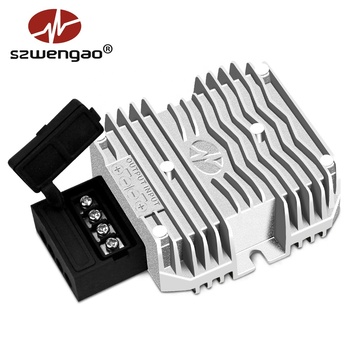
Industrial Isolated DC Converter 18–36V / 36–75V to 24V 5A
- Isolation Barrier: 1500V DC Galvanic
- Output Spec: 24V DC / 5A (120W)
- Conversion Eff.: ≥ 92.5%
- Topology: Active Flyback Transformer
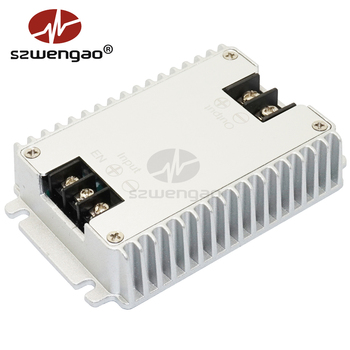
36–75V to 24V 5A Industrial Isolated Power Supply
- Input Bus: 36–75V DC Telecom
- Regulated Output: 24V ±1.5% Stability
- Ripple & Noise: < 50mVp-p
- Protection: OVP, OCP, OTP, Short Circuit
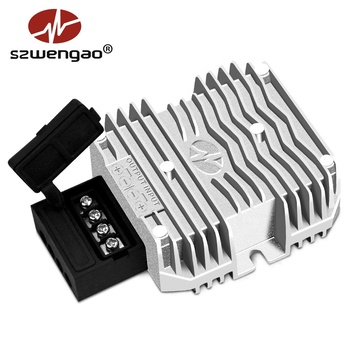
18–90V Ultra-Wide Input to 12V 10A Isolated Converter
- Dynamic Range: 18–90V DC (5:1 Ratio)
- Output Power: 12V DC / 10A (120W)
- Potting: Thermally Conductive Epoxy
- Compliance: CE, RoHS, EN 62368-1
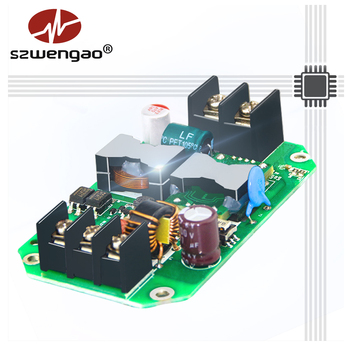
48V / 60V to 12V 10A Isolated Traction Pack Auxiliary
- Input Rail: 36–75V Battery Banks
- Output Auxiliary: 12V DC @ 10A Continuous
- Ground Isolation: Fully Floating Output
- Casing: Die-Cast Aluminum Heat Sink
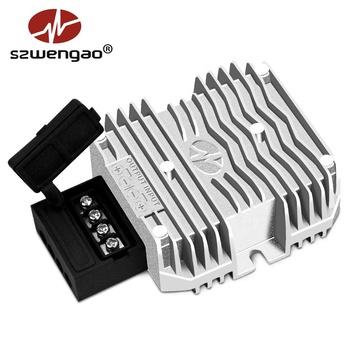
18–75V to 5V 20A (100W) Isolated Logic Bus Regulator
- High Step-Down: 18–75V down to 5V DC
- Current Delivery: 20A Low-Ripple Current
- Transient Response: < 200μs recovery
- Operating Temp: -40°C to +85°C
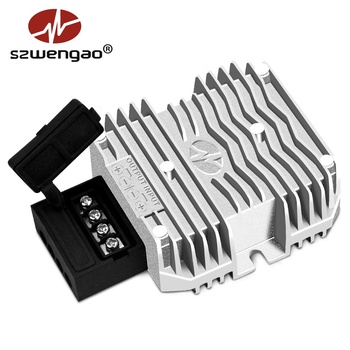
24V (18–36V) to 5V 20A Fully Isolated Step-Down
- Input Nominal: 24V Industrial Bus
- Output Regulation: 5V ±1% Load/Line
- Safety Isolation: Reinforced Barrier 2.0kV
- Environmental: Salt-Spray Resistant Anodizing

1500W High-Power Programmable Converter 10–60V
- Input Boundary: 10–60V DC Wide-Window
- Output Modes: 12V / 24V / 28V / 48V Config
- Digital Telemetry: RS-485 Modbus RTU
- Peak Conversion: 96.8% High Efficiency
Galvanic Isolation Engineering: Topologies, Creepage, and Common-Mode Rejection
In high-reliability industrial automation, commercial e-mobility, telecom base stations, and marine marine auxiliary electronics, power distribution systems encounter severe operational stresses. Ground loops, large transient voltage spikes, severe noise coupling from switching inductive loads, and varying earth potentials create significant design challenges. Non-isolated DC-DC converters share a continuous, unbroken negative return plane between primary input and secondary output. When applied across differing ground references—such as between a 48V traction pack and a 12V safety controller—a single fault condition can bridge high battery potentials into sensitive microelectronics, destroying control ICs and presenting severe electric shock hazards.
A dedicated custom OEM isolated DC power supply resolves this by interposing a robust physical galvanic barrier via high-frequency magnetics and optoelectronic or digital isolators. At Shenzhen Eltrum Electronic Co., Ltd., our engineering department designs topologies tailored to power levels, transient profiles, and thermal envelopes. For sub-100W modules, our advanced discontinuous and continuous conduction flyback converters utilize custom-wound transformers with multi-layer primary-secondary shielding, delivering dielectric withstand ratings ranging from 1,500V DC to 3,000V AC. In medium-to-high power domains (120W to 1,500W+), we deploy forward converters, push-pull topologies, and LLC resonant half-bridge architectures with synchronous rectification, achieving peak conversion efficiencies exceeding 94% while maintaining low electromagnetic radiation.
A crucial engineering parameter separating consumer-grade power products from industrial-grade OEM supplies is adherence to physical clearance and creepage distance standards outlined in IEC/EN/UL 62368-1. As an experienced direct manufacturer, Eltrum integrates precision internal mechanical barriers, high-CТI (Comparative Tracking Index) PCB laminates, and dedicated routing isolation slots beneath planar transformers and high-voltage bridge rectifiers. This eliminates the risk of dielectric arc breakdown caused by dust accumulation, surface condensation, or prolonged altitude-induced partial discharge.
Shenzhen Eltrum Electronic Co., Ltd. Factory Infrastructure & Quality Systems
Established in 2015 within the Bao'an advanced manufacturing corridor of Shenzhen, Shenzhen Eltrum Electronic Co., Ltd. has developed into an onsite-verified, engineering-driven power supply factory. Operating across modern facilities up to 3,000 m² with a dedicated workforce of 51 to 100 specialized technicians and R&D engineers, our organization has earned comprehensive ISO 9001:2015 quality management accreditation alongside CE, RoHS, and FCC product compliances.
End-to-End Vertical Manufacturing Control
Unlike assembly-only vendors or trading intermediaries, Eltrum executes total vertical quality assurance across every manufacturing step—from surface-mount assembly (SMT) to vacuum-potted environmental sealing.
- High-speed automated SMT lines with 3D automated optical inspection (AOI)
- Proprietary CNC planar transformer winding and high-precision magnetic core pairing
- Two-part thermal polyurethane and epoxy vacuum potting for IP65/IP67/IP68 ingress ratings
- 100% automated full-load thermal burn-in under dynamic cycling (0%–100% load steps)
- In-house electromagnetic interference (EMI) and transient surge pre-compliance screening
- Flexible custom OEM/ODM modifications: low MOQ starting from just 5 units

Our customer-first engineering protocol empowers OEM and ODM clients worldwide—spanning North America, Western Europe, Japan, Australia, and Southeast Asia—to specify unique electrical input envelopes, output trims, connector harness pinouts, custom extruded enclosures, and bespoke communication protocols like RS-485 Modbus or CANbus telemetry. By maintaining engineering authority over our magnetic component design, transformer core air gaps, and firmware loop feedback control, Eltrum maintains a field-failure rate under 0.15% across hundreds of thousands of active field installations.
Engineering Topology Matrix: Selecting the Optimum DC-DC Power Conversion Architecture
System engineers frequently grapple with balancing conversion efficiency, dimensional density, thermal dissipation, and isolation safety requirements. Below is an engineering comparison of the primary topologies produced within our manufacturing lines to guide OEM procurement decisions:
| Conversion Topology | Typical Input / Output Dynamics | Isolation Level | Peak Efficiency | Common Failure Modes if Mismatched |
|---|---|---|---|---|
| Galvanic Isolated DC-DC | Wide: 18–36V, 36–75V, 18–90V to 5V/12V/24V | 1.5kV – 3kV DC | 89% – 94.5% | Noise-coupled ground loops, controller latch-up during high chassis potential shifts |
| Synchronous Buck (Step-Down) | Vin,min > Vout (e.g., 24V/48V to 12V) | Non-Isolated (Common GND) | 94% – 97.5% | MOSFET shoot-through shorting raw input bus directly across low-voltage payload |
| High-Current Boost (Step-Up) | Vin,max < Vout (e.g., 12V to 24V/48V) | Non-Isolated (Common GND) | 92% – 96% | Input current saturation at minimum voltage causing thermal runaway |
| Buck-Boost (Stabilizer) | Vin swings above & below Vout (10–44V) | Non-Isolated (Common GND) | 91% – 95% | Dynamic phase oscillation during seamless four-switch buck-to-boost transition |
Future Procurement Trends: What Global Supply Chain Leaders Demand for 2025–2030
The global procurement environment for industrial and automotive electronics is undergoing significant structural shifts. Procurement directors and technical sourcing managers are reassessing sourcing strategies to satisfy the following requirements:
Total Cost of Ownership (TCO) & MTBF
Procurement criteria have shifted from purely unit-level purchase cost to life-cycle maintenance cost. OEM buyers demand certified Mean Time Between Failures (MTBF) exceeding 300,000 hours under Telcordia SR-332, reducing field service warranty claims.
Wide-Bandgap (GaN / SiC) Integration
The transition toward Gallium Nitride (GaN) and Silicon Carbide (SiC) switches enables switching frequencies upward of 300 kHz–1 MHz. This allows magnetics volume to shrink by over 40%, increasing gravimetric power density for automated guided vehicles (AGVs) and airborne systems.
Digital Loop Control & RS-485 Telemetry
Analog PWM controllers are increasingly superseded by ARM Cortex-M based digital control loops. Modern systems demand real-time voltage/current monitoring, dynamic temperature sensing, and remote shut-off via RS-485 Modbus or CAN networks.
Extreme Environmental Hardening (IP67/IP68)
Mobile off-highway equipment, heavy-duty mining machinery, and marine vessels require full encapsulation against condensation, aggressive salt-fog corrosion, mechanical shock (MIL-STD-202G), and vibration up to 10G.
Multi-Chemistry Charging Agility
With widespread LiFePO4, NMC, and LTO adoption, DC power supplies must double as intelligent multi-stage battery chargers featuring selectable CC/CV curve profiles and low-temperature charge termination protections.
Supply Chain Agility & Rapid DFM Prototyping
OEMs can no longer tolerate 16-to-24-week engineering lead times. Sourcing decisions favor agile factories like Eltrum that deliver turnkey samples within 7–14 days and scale smoothly from 5-piece pilot runs to 50,000-piece production lines.
Procurement & Engineering FAQ: Isolated DC Power Supplies
Clear answers to common questions raised by electrical engineering leads, quality compliance directors, and global sourcing specialists:
What level of galvanic isolation is standard, and can Eltrum build custom dielectric ratings?
How does Eltrum guarantee thermal stability in potting-sealed power units?
What is the Minimum Order Quantity (MOQ) for custom OEM output voltages or wire harnesses?
How do your isolated converters maintain low EMI/EMC compliance in sensitive radio/telecom environments?
Can your isolated DC power converters be operated continuously in parallel or series configurations?
What payment terms, trade verification, and international shipment methods are supported?
Turnkey OEM / ODM Engineering Workflow: From Specification to Volume Production
To ensure consistent product delivery and minimize engineering revision loops, Shenzhen Eltrum Electronic Co., Ltd. executes a transparent 5-stage Advanced Product Quality Planning (APQP) design-to-production workflow:
Requirements Review & Sizing
Our power systems application engineers analyze your input voltage boundaries, minimum cranking voltages, peak inrush characteristics, galvanic safety requirements, and thermal ambient restrictions to select or specify the optimal topology.
DFM Design & Rapid Sampling
Mechanical enclosure sizing, PCB 4-layer routing, magnetic component design, and thermal simulations are completed. Prototyping samples are assembled and verified across dynamic electronic load banks within 7 to 12 working days.
Validation & Environmental Stress
Prototypes undergo high/low temperature testing (-40°C to +85°C), vibration tests (10–500Hz), dielectric hip-pot tests (1.5kV–3.0kV), and continuous burn-in verification to evaluate operating margins.
SMT Assembly & Automated Potting
Production releases utilize high-precision Yamaha automated surface-mount placement, nitrogen reflow ovens, and computer-controlled dual-component resin vacuum injection for air-bubble-free moisture encapsulation.
100% Final Burn-In & Traceability
Every single power unit passing through our Shenzhen facility is subjected to a minimum 4-hour dynamic full-load burn-in cycle. Units are serial-coded, providing lot-traceability for components and test records prior to global dispatch.
Ready to Partner with a Direct Custom Isolated Power Supply Factory?
Whether you require standard 18–36V, 36–75V, or 18–90V isolated DC-DC modules, high-current buck converters, or a custom-engineered power unit with specialized communication and charging curves, our Shenzhen technical team is prepared to assist.