Engineered OEM Power Modules & Intelligent Chargers
Explore 8 representative high-demand DC-DC power conversion topologies and smart lithium chargers ready for custom chassis, input-voltage customization, and volume production.

Smart 36V Lithium Battery Charger DC 12V to 43.8V 13A
- TopologyBoost CC/CV Charging
- Input / Output10-16V DC / 43.8V DC
- Efficiency / Rating>94% · IP67 Waterproof
- ApplicationEVs, E-Bikes, Marine RVs

1500W High-Power Digital Buck-Boost Regulator
- TopologySynchronous 4-Switch Buck-Boost
- Input / Output10-60V DC / 12-48V Dynamic
- Control BusRS485 Modbus Telemetry
- ProtectionOCP, OVP, OTP, Reverse Polarity

24V to 12V 85A/100A Heavy-Duty Buck Step-Down
- TopologySynchronous Step-Down
- Input / Output18-36V DC / 12V or 13.8V DC
- Continuous Power1200W Maximum Surge
- DeploymentCommercial Fleet & Heavy Transit
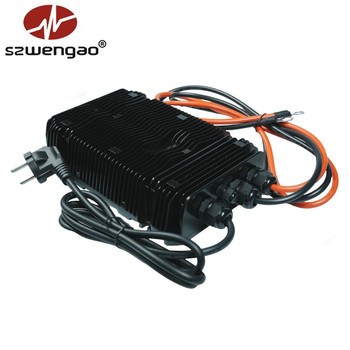
600W IP67 Waterproof LiFePO4 Fast Charger
- Input Voltage90-264V Universal AC Mains
- Output Voltage14.6V / 29.2V / 58.4V LiFePO4
- Thermal DesignFanless Die-Cast Aluminum Body
- ApprovalsCE, RoHS, ISO 9001 Compliant
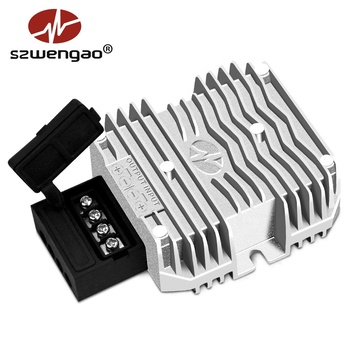
Ultra-Wide 18-90V to 12V 10A Galvanic Isolated Module
- Isolation Rating1500V DC Galvanic Barrier
- Input Voltage18-90V Continuous Wide Input
- Output Current10A Regulated @ 12V DC
- Target SystemsAGVs, Forklifts, Telecom Racks
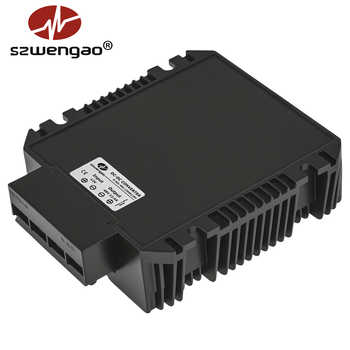
12V to 48V 20A Industrial Step-Up Boost Converter
- TopologyInterleaved Non-Isolated Boost
- Rated Output48V DC @ 20A (960W Continual)
- Potting MatrixFull Epoxy Waterproof Shock-Proof
- Target LoadsHigh-Voltage Pumps, Solar Arrays, RV
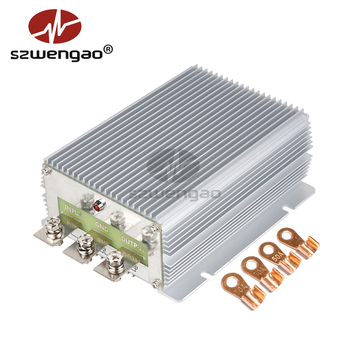
48V to 24V 40A 1000W Synchronous Buck Converter
- Efficiency96.5% Synchronous Rectification
- Input Voltage30-60V DC Automotive Pack
- EnclosureIP68 Hermetic Sealed Alloy
- ApplicationMining, Golf Carts, Heavy Machinery
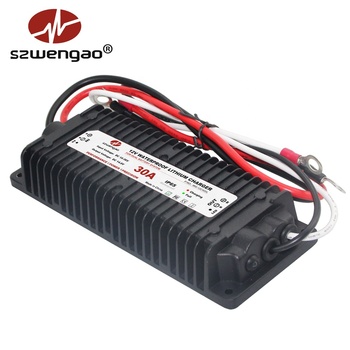
400W Battery-to-Battery Smart Multi-Stage Charger
- Charging LogicAdaptive 3-Stage CC/CV Profiling
- Alternator CompatibilitySmart Euro 6 & Standard Alternators
- Lithium Wake-Up0V BMS Reactivation Function
- ApplicationCampervans, Overlanding, Marine Yachts
Shenzhen Eltrum Electronic: Precision Engineering & Custom OEM/ODM Capabilities
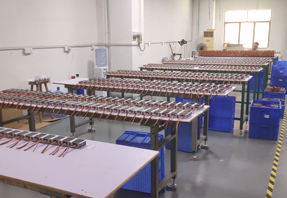
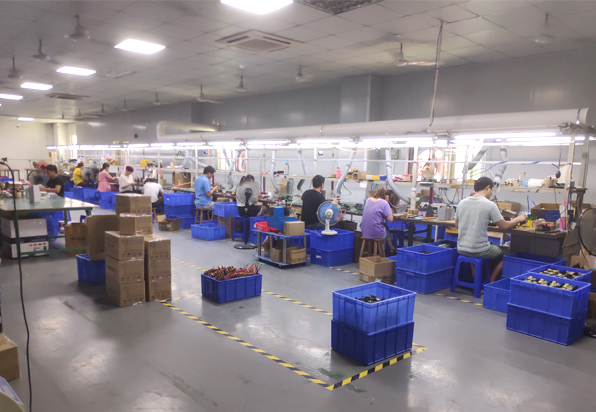
Founded in 2015, Shenzhen Eltrum Electronic Co., Ltd. has established itself as an authoritative global manufacturer of high-reliability switched-mode power supplies (SMPS), specialized DC-DC converters, and multi-stage lithium battery charging platforms. Our dedicated 3,000 m² Shenzhen manufacturing plant houses complete surface-mount technology (SMT) lines, automated magnetics winding stations, dual-compound vacuum encapsulation equipment, and computerized burn-in testing chambers.
Robust Electrical Integrity & Strict Quality Assurance
Unlike commercial consumer-grade power supplies, our industrial converters are engineered to survive severe electrical abuse: load-dump surges, severe mechanical shock, and extreme thermal cycling. Operating under an ISO 9001-certified quality control umbrella, our units utilize automotive-qualified silicon carbide (SiC) and planar magnetic elements. Every production batch undergoes rigorous outgoing inspections including 100% full-load burn-in at 50°C, dielectric hipot breakdown validation up to 1500V DC, and automated ripple/noise frequency spectrum scans.
From custom input wide-range windows (such as 18–90V continuous) to customized constant-current / constant-voltage (CC/CV) curves for distinct battery chemistries (LiFePO4, NMC, LTO), our in-house engineering team bridges the gap between clean-sheet CAD design and high-volume maritime, telecom, or automotive deployment.

The OEM Customization Engineering Lifecycle
1. Parameter & Profile Specification
Definition of absolute minimum/maximum input swing (e.g. cold-crank 8V up to dynamic load-dump 60V), output voltage accuracy (±1%), continuous vs. peak current surge, and thermal dissipation envelope.
2. Rapid Prototyping & Simulation
SPICE thermal and electromagnetic modeling followed by 5–10 unit engineering validation test (EVT) samples delivered in 7–14 business days, facilitating bench and vehicle testing.
3. DVT, Tooling & Enclosure Tooling
Design Validation Testing for EMC (CISPR 25 Class 3/4 or EN 55032), shock/vibration per MIL-STD-810G, custom extrusion aluminum tooling, and potting formulation optimization.
Comparative Power Topologies: Technical Trade-Offs
Selecting the appropriate conversion topology requires balancing conversion efficiency, ground isolation constraints, electromagnetic interference (EMI), and component count. Below is the definitive engineering selection matrix utilized by Eltrum power system architects.
| Topology | Voltage Behavior | Galvanic Isolation | Efficiency | Switching Noise | Ideal Application Scenario |
|---|---|---|---|---|---|
| Synchronous Buck | Vin > Vout exclusively | No (Common Ground) | 94% – 97.5% | Low - Continuous Output | Stepping down 24V/48V vehicle buses to 12V/5V onboard logic, sensors, and cab appliances. |
| Non-Isolated Boost | Vin < Vout exclusively | No (Common Ground) | 92% – 95% | Medium - Discontinuous Output | Elevating 12V starter battery rails to 24V/48V for hydraulic winches, audio amplifiers, marine thrusters. |
| 4-Switch Buck-Boost | Vin traverses above/below Vout | No (Common Ground) | 90% – 94% | Medium-High | Stabilizing 12V/24V equipment against wide battery swings (9V cranking through 14.6V alternator charge). |
| Flyback / Push-Pull | Wide Vin, any Vout | Yes (1.5kV - 3kV) | 85% – 89% | Moderate (Snubber dependent) | Sub-150W low power auxiliary rails in noisy industrial PLCs, telecom -48V rails, and medical carts. |
| LLC Resonant / Full-Bridge | Wide Vin, step up/down | Yes (1.5kV - 3kV) | 93% – 96% | Ultra-Low (Zero Voltage Switching) | High-power industrial chargers (600W-3000W), AGV fast battery docks, and data center distribution. |
Technological Development Trends in Industrial DC Power Conversion
The commercial power conversion sector is experiencing a paradigm shift driven by high-voltage vehicle architectures, decentralized renewable storage, and demanding environmental ratings. Systems engineers must anticipate the following four core technological trends when qualifying power suppliers:
1. Wide-Bandgap (GaN & SiC) Adoption
Gallium Nitride (GaN) and Silicon Carbide (SiC) switching devices permit switching frequencies exceeding 300kHz–1MHz with negligible switching losses. This allows a 40% reduction in inductive core sizes, driving higher power density (W/cm³) and drastically lower heat rejection.
2. Bidirectional Power Topologies
Next-generation commercial fleet systems require symmetrical power flow between a primary 48V or 72V traction pack and an auxiliary 12V safety rail. Bidirectional dual active bridge (DAB) converters allow regenerative energy capture and V2L (Vehicle-to-Load) utility.
3. Digital Telemetry & Fieldbus Integration
Analog closed loops are being superseded by DSP-managed architectures featuring CAN 2.0B, SAE J1939, and RS485 Modbus protocols. OEMs gain continuous telemetry on internal MOSFET junction temperatures, cumulative amp-hour throughput, and early degradation alarms.
4. Hermetic Polyurethane Encapsulation
As electrification penetrates extreme marine environments, open-frame and perforated chassis designs are being replaced by solid silicone/polyurethane vacuum potting. This delivers IP68 submersible seals, eliminates corrosion, and improves thermal conduction to the chassis.
Future Procurement Strategies: Total Cost of Ownership (TCO) vs. Initial Price
Global procurement teams across North America, Europe, and Australasia are transitioning from short-term unit bill-of-materials (BOM) cost evaluation to a holistic Total Cost of Ownership (TCO) framework. In mission-critical DC power conversion, field failure expenses consistently dwarf converter acquisition costs.
Mean Time Between Failures (MTBF)
A converter boasting a 96% efficiency profile dissipates half the heat of a 92% unit. Every 10°C reduction in operating junction temperature doubles electrolytic capacitor lifespan (Arrhenius' Rule), directly preventing costly warranty recalls and unscheduled vehicle downtime.
Compliance & Regional Import Clearances
Converters must carry auditable compliance files (CE RED, RoHS, REACH, E-Mark/ECE R10 for vehicle electronics). Non-compliant supplies risk immediate customs impoundment and safety liabilities. Eltrum maintains verified third-party laboratory test reports for immediate review.
Dual-Sourcing of Critical Silicon
Geopolitical supply chain disruptions require converters engineered with pin-compatible multi-vendor silicon footprints. Our R&D engineering teams qualify secondary sources across MOSFETs, magnetics, and PWM controllers to prevent order bottlenecks.
Frequently Asked Questions by OEM Procurement & Systems Engineers
Direct technical clarifications addressing the most common issues raised during vendor audit and production qualification:
What is the standard Minimum Order Quantity (MOQ) for custom voltages?
While high-volume production typically operates at 100–500 unit lots, Shenzhen Eltrum Electronic supports OEM engineering teams with pilot evaluation batches starting at just 5 units. This allows full bench validation, in-vehicle environmental testing, and agency certifications prior to full ramp-up.
When is galvanic isolation strictly mandatory over a non-isolated buck or boost?
Galvanic isolation (transformer separation) is mandatory whenever input and output systems operate on different ground references (e.g. positive ground telecom vs. negative ground auxiliary systems), where high-voltage traction battery spikes must never touch low-voltage sensor circuits, or in long marine cabling runs prone to ground loops and electrolytic galvanic hull corrosion.
Can your DC-DC battery chargers support custom LiFePO4 / NMC charging curves?
Yes. Through firmware customization on our digital microcontroller series, we factory-configure precise bulk charging voltages, absorption hold times, float voltage levels, and restart thresholds. We also implement 0V low-voltage wakeup sequences to reactivate locked Battery Management Systems (BMS).
How does thermal potting influence continuous power ratings?
Open air converter topologies rely on convection, requiring up to 50% derating when installed in enclosed engine bays or sealed chassis boxes. Our thermally conductive silicone potting conducts heat directly from internal magnetics and power switches to the outer finned aluminum housing, allowing full continuous rated output up to 50°C–60°C ambient without auxiliary fan failure points.
What protection mechanisms are standard across your converter designs?
All Eltrum industrial converters feature integrated multi-layer active protection: over-voltage protection (OVP), cycle-by-cycle over-current protection (OCP), continuous short-circuit protection with auto-recovery (hiccup mode), over-temperature thermal shutdown (OTP), and input transient clamping via high-joule TVS diodes.
What international trade, payment, and Incoterms are offered?
We regularly ship FOB Shenzhen, CIF, or EXW via DHL, FedEx, air freight, and full container ocean freight. We support international wire transfers (T/T), PayPal, and Escrow in USD or EUR currencies, accommodating private buyer labeling, custom harness terminators, and consolidated shipments.
Request Full Engineering Schematics & OEM Price Matrix
Consult directly with Shenzhen Eltrum Electronic's application engineering team. Provide your input voltage range, target nominal output, current load, and environmental constraints for immediate custom review.