High-Efficiency Conversion & Charging Modules
Engineered by Shenzhen Eltrum Electronic Co., Ltd., these standard platforms provide synchronous rectification, galvanic noise shielding, and precision multi-stage lithium charge algorithms.

Smart 36V Lithium Battery Charger DC 12V to 43.8V 13A
- Topology:Synchronous Boost CC/CV
- Input / Output:DC 12V → DC 43.8V
- Protection Rating:IP67 Full Resin Potting
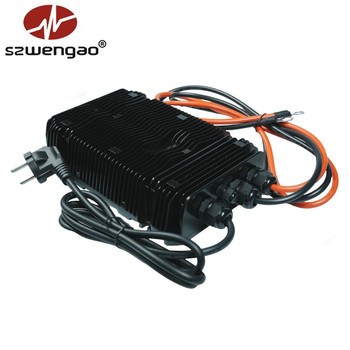
600W AC-DC 14.6V–58.4V Waterproof LiFePO4 Charger
- Input Range:90–265V AC Universal
- Power Capability:600W Continuous PFC
- Cooling:Fanless Heat-Sink Fin
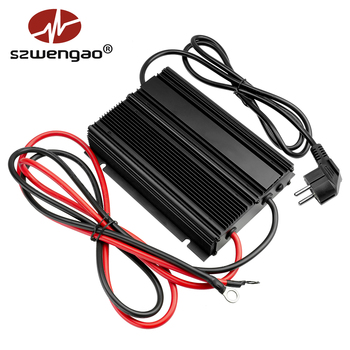
12V/24V/36V/48V 600W Marine & EV Charger
- Profile Selection:14.6V / 29.2V / 58.4V
- Peak Efficiency:≥ 94.5% Active PFC
- Enclosure:Die-Cast Aluminum IP65
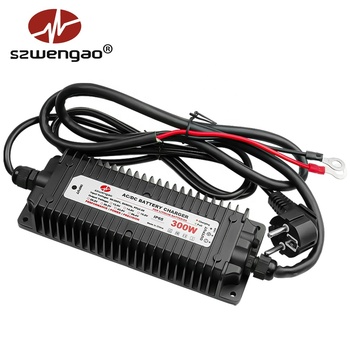
Marine 300W AC-DC LiFePO4 Multi-Plug Unit
- Charge Voltage:14.6V / 29.2V / 43.8V
- Mains Interface:US / EU / UK / AU Plugs
- Safety Standard:EN 60335-2-29, CE, RoHS
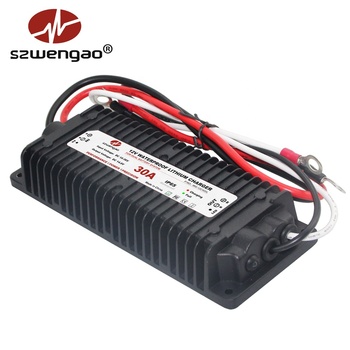
400W DC-DC Dual RV & Overland Battery Charger
- Input Swing:10–36V Alternator Safe
- Nominal Power:400W Buck-Boost Output
- Alternator Protection:Ignition Sense & Low Cut

1500W Buck-Boost Converter with RS485 Bus
- Input Range:10–60V Ultra-Wide
- Output Rail:12V / 24V / 28V / 48V Reg.
- Telemetry:RS485 Modbus RTU Comm
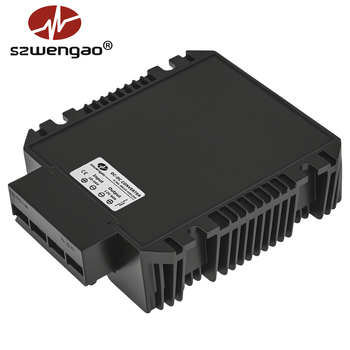
10–44V to 12V 50A/60A High-Amperage Stabilizer
- Rated Current:50A Continuous / 60A Max
- Total Output:Up to 720W Regulated
- Efficiency:96% Synchronous Switch
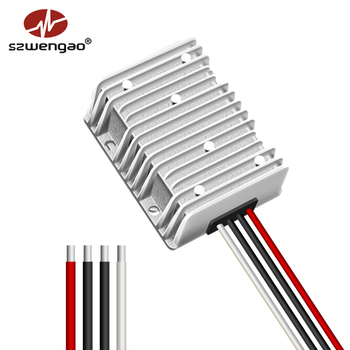
8–40V to 13.8V 25A/30A Lead-Acid Float Stabilizer
- Voltage Setpoint:13.8V Precision Radio Bus
- Current Capacity:25A Nominal (30A Peak)
- EMI Compliance:CISPR 25 Class 3 Filtering
The Evolution of China's Switch Mode Power Supply Manufacturing Ecosystem
From low-cost consumer adapters to high-density, mission-critical power conversion for global original equipment manufacturers.
The global market for Switch Mode Power Supplies (SMPS) and advanced DC-DC conversion architectures has undergone an aggressive structural realignment. Historically viewed through the narrow lens of cost-optimized, high-volume consumer commodity production, top-tier Chinese manufacturers have methodically transitioned into sophisticated tier-1 power engineering hubs. Driven by rapid technological maturation in industrial automation, renewable photovoltaic storage, electric vehicle (EV) powertrains, and telecommunications infrastructure, Chinese power electronics suppliers now dominate high-efficiency topologies, modular design flexibility, and bespoke thermal packaging.
At the epicenter of this transformation sits Shenzhen, Guangdong—an electronics design and manufacturing metropolis where comprehensive component supply chains, specialized planar transformer fabricators, automated Surface Mount Technology (SMT) operations, and rigorous compliance laboratories operate within a 30-kilometer radius. For international procurement managers and electrical engineering directors, sourcing SMPS systems from China is no longer merely a unit-cost arbitrage play; it is a strategic maneuver to accelerate new product introduction (NPI) cycles, leverage advanced Wide Bandgap (WBG) semiconductors such as Gallium Nitride (GaN) and Silicon Carbide (SiC), and achieve custom form-factor integration at manageable Minimum Order Quantities (MOQs).
Synchronous Buck & Boost
By replacing standard passive freewheeling Schottky diodes with actively synchronized Low-RDS(on) MOSFETs, synchronous rectification eliminates major junction heat dissipation barriers. This yields continuous efficiency figures between 94% and 97%, even when stepping down 48V telecom rails or 72V traction packs down to 12V or 24V auxiliary power busses.
Four-Switch Buck-Boost
Mobile, marine, and vehicular DC rails experience continuous supply fluctuation: an engine cranking transient can drop a 12V battery to 8.5V, while alternator charging can surge to 14.6V. Four-switch buck-boost topology dynamically commutes between step-up, step-down, and 1:1 pass-through regimes without output ripple disturbance or thermal spikes.
Galvanic Isolation Architectures
Deploying high-frequency planar transformers with inter-winding Faraday shielding guarantees total electrical break between primary and secondary grounding planes. Isolated DC-DC modules suppress common-mode loop ground currents, protect delicate PLC microprocessors from high-voltage motor spikes, and sustain dielectric withstand ratings from 1500V DC to 3000V DC.
Emerging SMPS Sourcing Trends Shaping 2025–2030
Key technical shifts and supply-chain criteria global sourcing professionals must factor into multi-year power supply procurement contracts.
1. GaN & SiC WBG Adoption
Wide Bandgap semiconductors permit switching frequencies to scale beyond 250kHz up to 1MHz without excessive switching loss. Sourcing directors will witness dramatic downsizing of magnetic cores and filter capacitors, yielding volumetric power densities surpassing 30W/in³.
2. Digital Control & Telemetry
Standard analog feedback loops are yielding to Digital Signal Processors (DSP). Modern procurement requests increasingly mandate bi-directional communication over RS485 Modbus, CANbus, or PMBus to track real-time current draw, thermal junction margins, and cumulative run-time logs.
3. Dedicated LiFePO4 Curves
With Lithium Iron Phosphate dominating motive fleets and microgrids, power suppliers must provide multi-stage constant current/constant voltage (CC/CV) profiles engineered to avoid overvoltage cell degradation, complete with zero-volt wake-up features for BMS restart.
4. Full Structural Ingress Protection
Vibration-prone industrial vehicles and salt-mist marine environments are rendering ventilated perforated power boxes obsolete. The trend demands thermally-conductive silicone resin potted modules encased in die-cast aluminum heat sinks rated to IP65, IP67, or IP68.
Topological Evaluation Matrix for B2B System Designers
Selecting the optimal power conversion topology involves trade-offs between conversion efficiency, cost, EMI signature, and thermal constraints.
| Conversion Topology | Typical Input Range | Nominal Efficiency | Galvanic Isolation | EMI Profile | Ideal B2B Industrial Application |
|---|---|---|---|---|---|
| Non-Isolated Buck | 18–90V DC | 94% – 97% | No (Common Ground) | Low conducted noise | Heavy truck accessory stepping (24V→12V), AGV motor logic rails |
| Non-Isolated Boost | 10–30V DC | 92% – 95% | No (Common Ground) | Moderate (Pulsed output) | Battery voltage elevation for high-power LED matrices, 12V→24V/48V actuators |
| Synchronous Buck-Boost | 8–40V / 10–60V | 93% – 96% | No (Common Ground) | Requires input & output π-filter | Automotive engine cranking stabilization, marine navigation electronics |
| Isolated Forward / Flyback | 18–36V / 36–75V | 87% – 91% | Yes (1500V–3000V DC) | Very low ground interference | Telecom rack power (-48V), noise-sensitive biomedical sensing, heavy PLC nodes |
| Resonant LLC Converter | 90–265V AC Mains | 93% – 95.5% | Yes (3750V AC) | Ultra-low (Zero Voltage Switching) | High-wattage (300W–1000W) waterproof AC-DC LiFePO4 battery chargers |
Shenzhen Eltrum Electronic: Direct Factory Capabilities
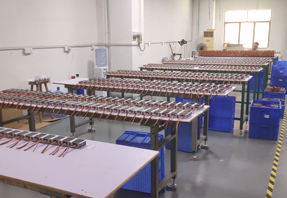
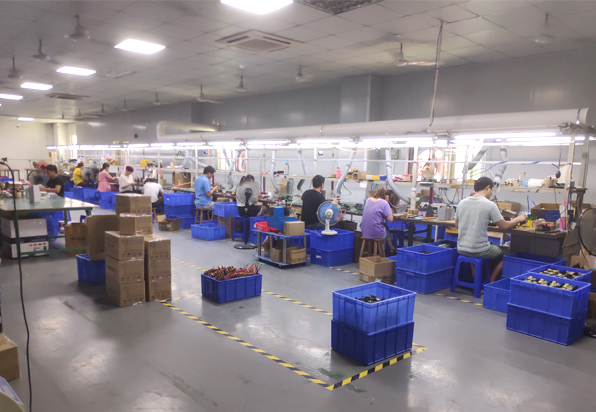
Established in 2015 in Shenzhen, China, Shenzhen Eltrum Electronic Co., Ltd. operates as a dedicated original design and high-precision switch mode power supply manufacturer. Specializing from inception in isolated DC-DC converters, Eltrum has progressively expanded its manufacturing repertoire to encompass over 500 cataloged product models, serving advanced OEMs across more than 130 countries worldwide.
-
ISO 9001 Certified Quality Ecosystem
Every assembly line operates under documented ISO 9001 quality management procedures. Products conform rigorously to CE and RoHS regulatory benchmarks with comprehensive third-party lab verification.
-
Full Turnkey OEM / ODM & Buyer-Label Customization
We configure custom input thresholds (such as 18–90V ultra-wide input windows), targeted output currents, dedicated RS485 Modbus registers, specific connector pigtails, and tailored multi-stage LiFePO4 charging profiles.
-
Rapid Engineering Prototyping (Low MOQ from 5 Units)
To eliminate procurement friction during engineering proof-of-concept stages, standard converter and battery charger models are supported with low MOQs starting from 5 units for sample bench validation.

Frequently Asked Questions on SMPS Procurement & Integration
Addressing core technical dilemmas encountered by system integrators, component engineers, and purchasing teams.
How does a dedicated DC-DC battery charger protect vehicle alternators when charging LiFePO4 batteries?
When must an engineer mandate Galvanic Isolation over Non-Isolated DC-DC Converters?
What thermal derating rules should be factored into enclosed industrial power installations?
How does Eltrum manage inrush current and inductive kickback from high-power loads?
What are the standard lead times, MOQs, and delivery terms for OEM/ODM switch mode supplies?
Connect Directly with Eltrum Power Electronics Engineers
Need custom input voltage ranges, specialized waterproof housings, custom RS485 communication protocols, or volume OEM pricing? Our Shenzhen engineering desk provides detailed design feasibility and formal quotations within 24 hours.