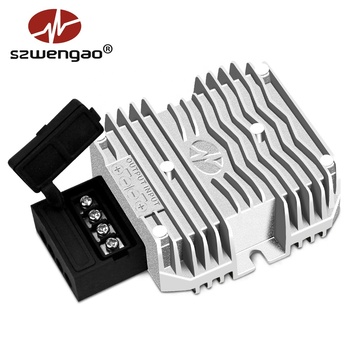
18–75V to 24V 5A 120W Industrial Isolated Converter
- TopologyGalvanic Isolation
- Input Range18–36V / 36–75V DC
- Nominal Output24V @ 5A (120W)
- ProtectionOCP, OVP, OTP, SCP
Select from our field-proven converter lines engineered for electrical vehicle auxiliary rails, marine house banks, commercial transport, and rugged telecom nodes.
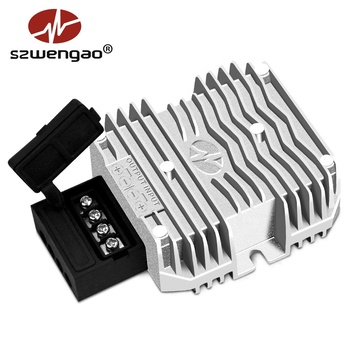
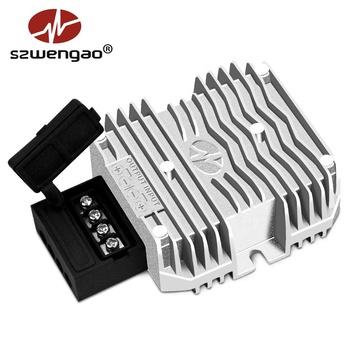


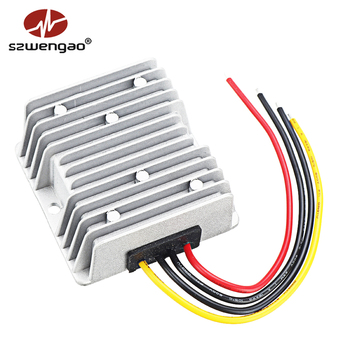

An exhaustive engineering review on ground potential shifts, transient suppression, and selecting non-isolated vs. isolated DC-DC topologies.
In high-power direct-current deployments—including telecommunications shelters, electrified industrial material handlers (forklifts, AGVs), and maritime vessels—the electrical reference ground is neither homogeneous nor perfectly neutral. Non-isolated converters share a common negative rail between the source (e.g., a 48V or 72V traction battery) and the secondary payload (e.g., 12V flight computers, navigational sensors, or microcontrollers). When significant switching surges occur, ground bounce (ΔV = L × di/dt) creates instantaneous potential differentials across the shared return path. Without galvanic isolation, high ground return currents find unintended paths through delicate signal shields, CAN bus transceivers, and analog sensors, causing intermittent system resets, erratic sensor readings, or silicon burnout.
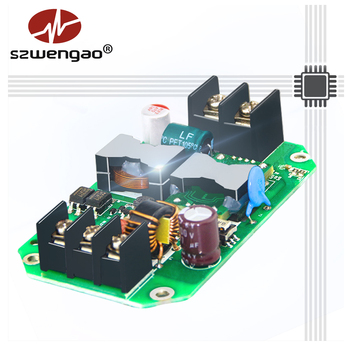
Our isolated converter topology integrates high-permeability toroidal transformers paired with high-speed optocouplers, establishing up to 1,500V DC galvanic clearance between primary windings and secondary stages.
Featuring two-stage LC filter networks and high-voltage TVS arrays at the front end, absorbing alternator load dump surges, inductive flyback pulses, and meeting demanding CISPR 25 Class 3 emissions targets.
Completely severed ground connections allow system engineers to configure isolated DC outputs as positive ground, negative ground, or fully floating references without altering upstream battery topology.
Review the operational envelope below to verify the exact topology required for your mission-critical system design:
| Conversion Topology | Voltage Relation | Ground Isolation | Typical Conversion η | Primary Industry Applications |
|---|---|---|---|---|
| Isolated Flyback / Forward | Wide (18–36V, 36–75V, 18–90V) | Yes (1.5kV–3kV DC) | 88% – 93% | Telecom DC plants, material handling, marine instruments, medical carts |
| Non-Isolated Synchronous Buck | Vin > Vout (e.g. 24V/48V → 12V) | No (Common Ground) | 94% – 97% | Commercial vehicle lighting, cabin audio, fleet dashcams, e-scooter auxiliaries |
| Synchronous Boost | Vin < Vout (e.g. 12V → 24V/48V) | No (Common Ground) | 92% – 95% | Solar pumping, high-power LED drivers, 48V winch rails from 12V vehicle banks |
| 4-Switch Buck-Boost | Vin crosses Vout (e.g. 9–40V → 12V) | No (Common Ground) | 91% – 94% | Cranking voltage stabilizers, LiFePO4 battery-to-battery charging modules |
Strategic supply chain managers and lead hardware architects must evaluate five macro transitions driving power conversion specifications over the coming decade.
Silicon carbide (SiC) MOSFETs and Gallium Nitride (GaN) switches are replacing silicon. By shrinking switching losses at frequencies above 300kHz, planar magnetics size drops by 45%, unlocking power densities exceeding 45W/in³ while operating cooler in tightly packed enclosures.
Procurement teams are shifting away from fragmented 24V-only or 48V-only SKUs toward standardized wide-input platforms. A singular 18–90V isolated platform satisfies 24V commercial fleets, 48V material transport, and 72V utility e-mobility, slashing inventory overhead and qualification times.
Dumb black-box converters are being phased out in smart fleet architectures. Modern procurement specifications demand bidirectional Modbus RS485 or SAE J1939 CAN interfaces for real-time voltage monitoring, dynamic thermal derating, and predictive lifecycle alerts prior to field downtime.
Fan-cooled power modules suffer catastrophic failure in saline marine, dusty mining, and vibrating agricultural machinery. Vacuum-degassed, two-component thermally conductive resin potting eliminates condensation, withstands 10G mechanical vibration, and improves heat dispersion across the aluminum shell.
Global original equipment manufacturers (OEMs) are auditing sub-tier suppliers for component traceability, localized Shenzhen engineering redundancy, ISO 9001 compliance, and conflict-free mineral sourcing to guarantee multi-year product lifecycle continuity without unplanned redesigns.

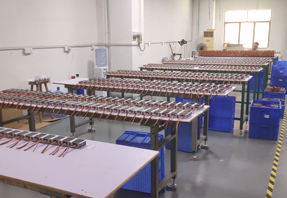
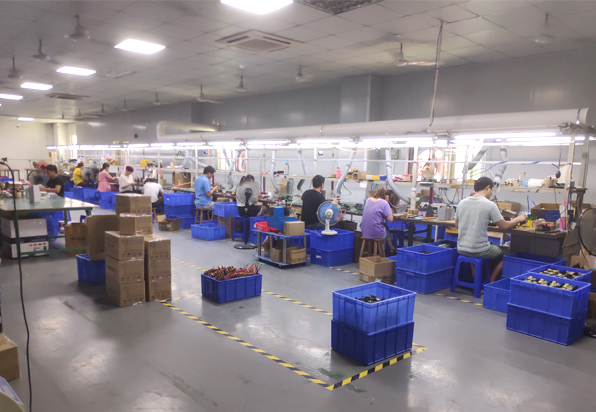
Founded in 2015, Shenzhen Eltrum Electronic Co., Ltd. has grown into China’s foremost developer and manufacturer of high-reliability DC-DC power conversion hardware, intelligent battery charging modules, and customized AC-DC platforms. Operating from our onsite-verified 3,000 m² Shenzhen facility, we blend proprietary magnetics design with high-speed automated SMT lines.
We engineer high-stress isolated converters capable of operating unassisted across harsh climates from Northern European cold storage to Middle Eastern solar installations. Our factory is fully certified to ISO 9001 quality management protocols, and every mass-produced unit complies with CE and RoHS directives.
Authoritative answers concerning minimum orders, thermal derating, bespoke customizations, and electrical certification.
Connect immediately with our Shenzhen application engineering department. We evaluate your voltage ranges, thermal dissipation constraints, and system ground topologies to provide fully validated samples within days.