
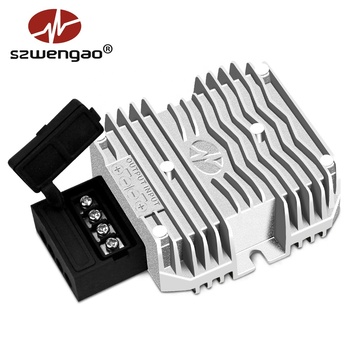
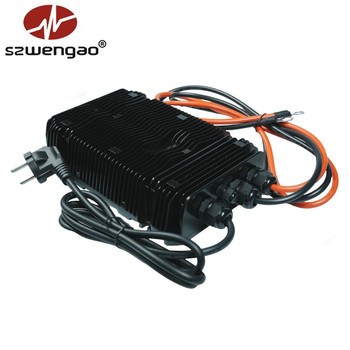
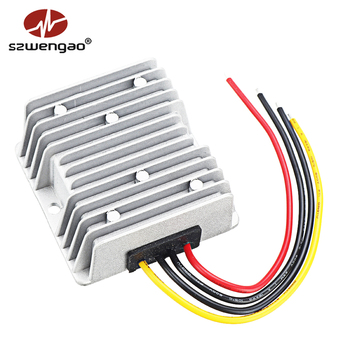
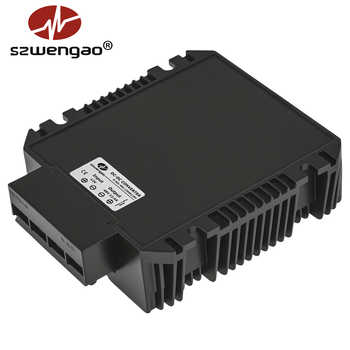
Smart 36V Lithium Charger 12V to 43.8V 13A
- Topology: Step-Up CC/CV Booster
- Input Voltage: 12V DC (10.5–16V)
- Charge Potential: 43.8V DC @ 13A
- Environmental: IP65 Full Resin Potting
Engineered for mission-critical e-mobility, telecom arrays, marine battery isolation, and renewable step-down conversion. Every unit passes thermal burn-in under active electrical stress before shipment.



A comprehensive examination of high-efficiency solid-state power architectures, comparing magnetic isolation topologies with non-isolated synchronous switching regulators.
Selecting an optimal power supply from a qualified China Top High Voltage Power Supply Exporter demands an uncompromising mathematical assessment of switching losses and insulation safety. In lower-voltage steps (such as 24V to 12V fleet power conversion), non-isolated buck topologies utilizing synchronous rectification offer unparalleled electrical efficiency, consistently outperforming 95.5% efficiency barriers due to ultra-low drain-to-source on-resistance (RDS(on)) in modern gallium nitride (GaN) and silicon carbide (SiC) semiconductors.
However, in commercial e-mobility systems operating at nominal potentials of 48V, 72V, 96V, or higher industrial bus voltages, common-mode voltage spikes and transient ground currents create catastrophic risk for sensitive microcontrollers and telemetry nodes. Here, our isolated DC-DC topologies employ precision planar transformers and optoisolated feedback loops that provide high galvanic isolation ratings (exceeding 1500V DC to 3000V AC testing limits). This ensures complete isolation between input battery lines and output user instrumentation, extinguishing inductive alternator spikes and negative grounding shifts common in marine and heavy-machinery chassis.
Enclosed power supplies face internal thermal resistance bottlenecks. Shenzhen Eltrum resolves thermal saturation using two-component thermally conductive epoxy potting compound (>1.5 W/m·K). This eliminates air micro-voids, safeguards against condensation, and passes ISO mechanical vibration specifications.
Fast switching transients (di/dt and dv/dt) generate conducted harmonics. Our engineering teams integrate balanced common-mode chokes, multi-layer symmetrical PCB layout structures, and shielded aluminum enclosures, fully meeting CE EMC Class B and industrial EN 55032 compliance.
Lithium iron phosphate (LiFePO4) chemistry requires exact constant-current to constant-voltage transition boundaries. Our smart charging systems monitor individual pack thresholds, preventing cell overvoltage shutdowns while avoiding prolonged float stages that degrade lithium cathode structures.
How B2B procurement managers and OEM design directors navigate international supply chain resilience, safety certifications, and architectural shifts toward wide bandgap semiconductors.
Procurement teams are shifting away from traditional silicon MOSFETs toward Gallium Nitride (GaN) and Silicon Carbide (SiC) switches. The higher frequency capability reduces the physical volume of magnetics and filter capacitors by over 40%, delivering the power density demanded by commercial fleets and aerospace instrumentation.
Benefit: 35% Lower Weight, Lower Freight CostsStandalone analog power supplies are giving way to digital SMPS equipped with CAN bus, MODBUS RS485, and SMBus protocols. Industrial users demand continuous monitoring of input rail stability, internal core temperature, delivered wattage, and fault prediction logs directly to the master vehicle control unit (VCU).
Standard on Eltrum 1500W SeriesWestern enterprise buyers increasingly focus on ISO 9001 certified manufacturing partners that provide automated SMT, rigorous traceability down to batch capacitor suppliers, and flexible OEM label branding with sample validation available under 5-unit minimum quantities.
Full On-Site Third Party VerificationOperating from the global core of power electronics innovation in Shenzhen, China, Shenzhen Eltrum Electronic Co., Ltd. has established an international reputation for high voltage conversion and precision LiFePO4 battery charging hardware. Our factory facility maintains high-speed automated Surface Mount Technology (SMT) production lines, rigorous high-potential dielectric breakdown test bays, and continuous thermal burn-in chambers.
From 5W micro-converters to 1500W industrial power supplies, our platforms dramatically lower OEM development cycles and non-recurring engineering (NRE) costs.
Fully compliant with CE, RoHS, and ISO 9001 quality management guidelines. Our manufacturing plant holds verified legal on-site inspection credentials.
Support for custom voltage thresholds, specialized dynamic load steps, OEM housing designs, custom wiring harnesses, and application-specific battery charging profiles.
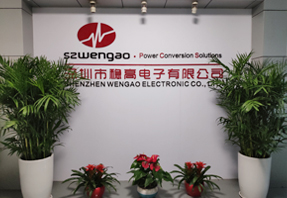 Shenzhen Headquarters & R&D Facility
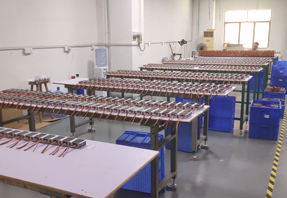 SMT Surface Mount Line
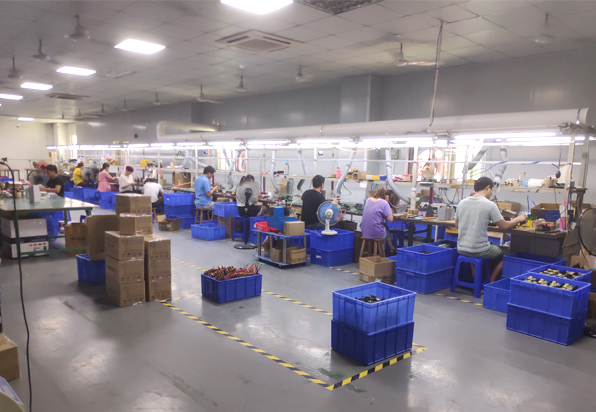 Dynamic Burn-in & Quality Assurance
Direct answers for electronic procurement managers, systems design engineers, and commercial importers evaluating Chinese power supply suppliers.
Consult with our Shenzhen design team to receive comprehensive component datasheets, 3D CAD step files, and formal volume quotations tailored to your exact voltage specifications.
Get a Quote