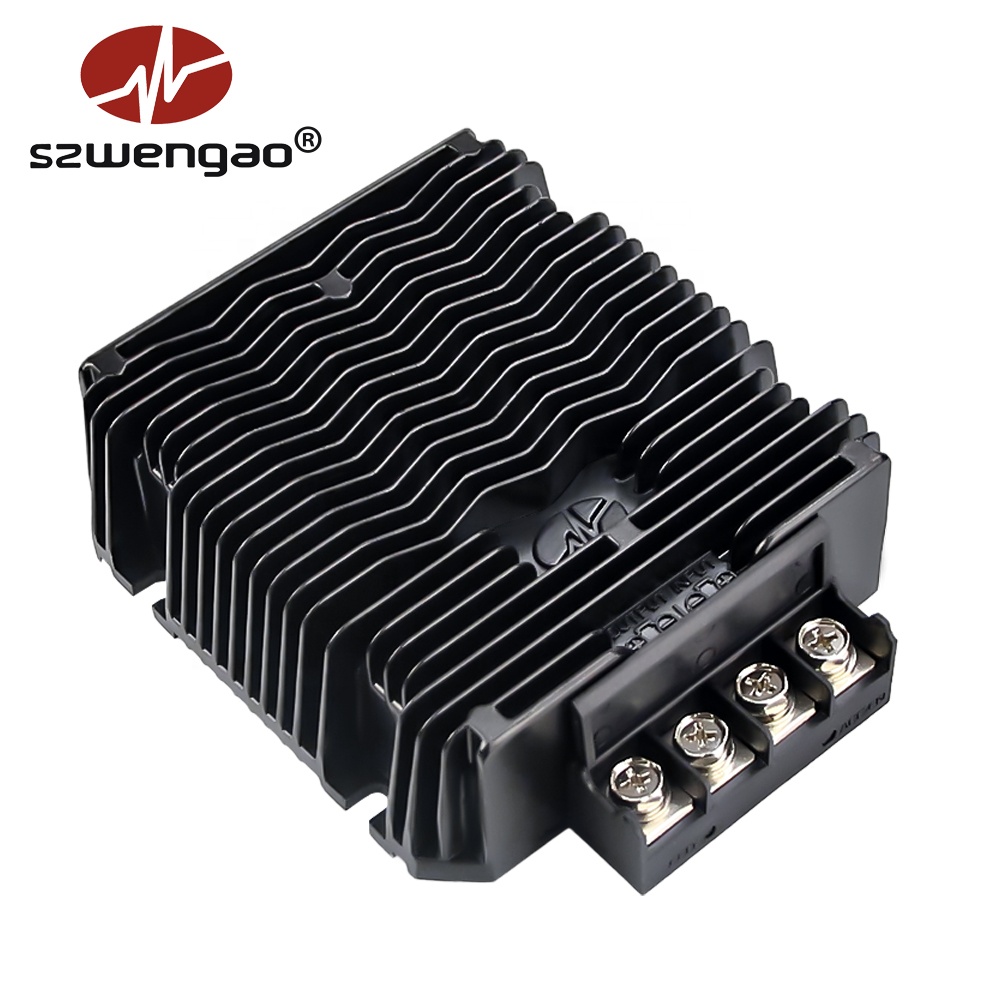
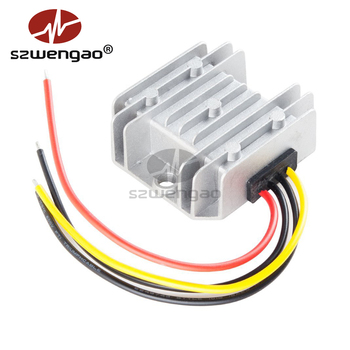
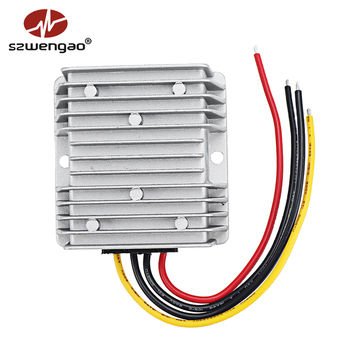
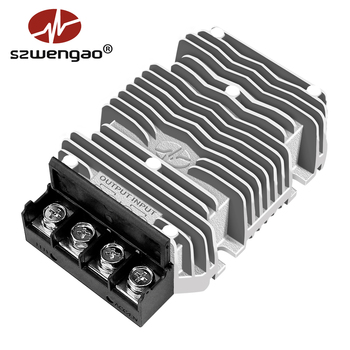
Smart 36V Lithium Charger DC 12V to 43.8V 13A Waterproof
- Input Voltage10–16V DC
- Regulated Output43.8V DC (13A)
- Max Output Power570W Peak
- Protection RatingIP68 Waterproof
A technical examination of buck-boost synchronous topologies, transient suppression, and thermal management in mission-critical applications.
In modern electrical architectures—spanning dual-battery commercial vehicles, recreational utility vehicles (RVs), marine navigation, off-grid telecom arrays, and light electric mobility—voltage instability presents severe challenges. Standard single-ended topologies (such as standalone buck or step-up boost converters) fundamentally assume that the supply source voltage maintains a static boundary either continuously higher or permanently lower than the target regulated output rail. However, operational battery banks undergo profound voltage excursions. A nominal 12V LiFePO4 or lead-acid starter battery experiences severe cold-cranking voltage sag collapsing to as low as 8.0V DC, while alternator overcharging or regenerative braking surges peak dynamically at 14.8V to 16.0V DC.
When an electronic load (such as high-precision maritime radar, vehicle telemetry, industrial PLC systems, or mobile refrigeration) demands an unwavering 12.0V or 24.0V DC bus, conventional converters enter dropout or fail to regulate. Shenzhen Eltrum Electronic Co., Ltd. resolves this design hurdle through our advanced 4-switch synchronous buck-boost architecture. Operating seamlessly across continuous conduction mode (CCM), our intelligent controllers dynamically switch between step-down, four-switch buck-boost, and step-up modes with near-zero ripple injection. By utilizing military-grade planar inductors, low-RDS(on) MOSFETs, and high-frequency soft-switching techniques, our buck-boost converter modules achieve peak efficiency ratings exceeding 96%, dramatically reducing parasitic dissipation and eliminating thermal runaway hazards in sealed enclosure deployments.
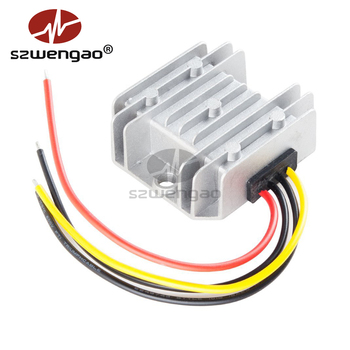
Ruggedized, fully-potted aluminum designs engineered for harsh electrical and thermal installations.
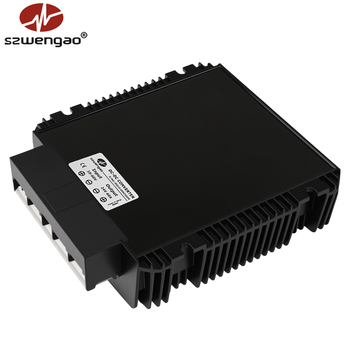
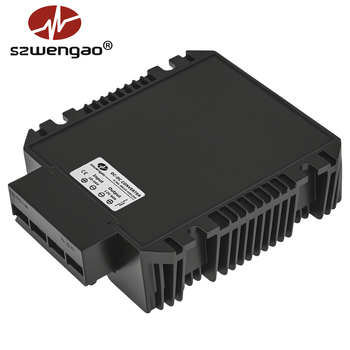
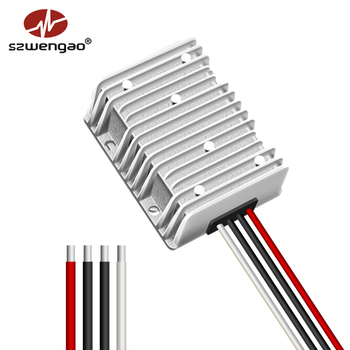
Key technological, regulatory, and supply chain indicators shaping global DC-DC power procurement over the next 5 years.
Procurement teams are aggressively shifting from legacy silicon MOSFET switches to Gallium Nitride (GaN) and Silicon Carbide (SiC) semiconductors. These wide-bandgap switches reduce switching losses by over 60%, allowing switching frequencies to exceed 500 kHz. For system integrators, this enables a 40% reduction in inductive coil volume, facilitating ultra-slim module profiles for space-constrained vehicle dashboards and robotics chassis.
Analog "black box" converters are being rapidly replaced by digitally controlled architectures. Industrial OEMs now specify intelligent modules equipped with RS485 (Modbus RTU) or CAN 2.0B interfaces. Modern procurement requires real-time telemetry streaming: input/output current monitoring, operating temperature, fault state logging, and software-programmable output thresholds to coordinate with smart lithium battery management systems (BMS).
Unprotected ventilated power supplies suffer elevated failure rates in mobile, marine, and agriculture applications due to humidity ingress, salt spray, and vibration fatigue. International buyers now mandate fully vacuum-epoxy potted modules enclosed in die-cast aluminum alloys, demanding vibration resistance exceeding IEC 60068-2-6 and operational survivability across extreme ambient ranges from -40°C to +85°C.
How cutting-edge research in Shenzhen's hardware ecosystem is transforming converter design, dynamic response, and power density.
Traditional hard-switched converters incur heavy capacitive turn-on losses when scaling above 48V. Eltrum's development roadmap focuses on zero-voltage switching (ZVS) buck-boost topologies. By utilizing auxiliary resonant tanks, power switches commutate under zero voltage, virtually eliminating electromagnetic interference (EMI) spikes and maintaining peak operational efficiency even at light load conditions.
With the rapid proliferation of decentralized microgrids and localized battery energy storage systems (BESS), converters must handle bidirectional energy arbitration. Future buck-boost modules dynamically shift from bucking down starter battery energy to charge secondary lithium auxiliary banks, to boosting auxiliary reserves back into the primary bus during cold engine start or power outage scenarios.
System designers are phasing out narrow input window converters in favor of universal DC bus architectures. Eltrum's advanced topologies achieve 8:1 and 10:1 input ranges (e.g., 9V–90V DC continuous input). This allows fleet operators and industrial builders to deploy a single converter SKU across diverse battery chemistries, including 12V, 24V, 36V, 48V, and 72V commercial architectures without inventory fragmentation.
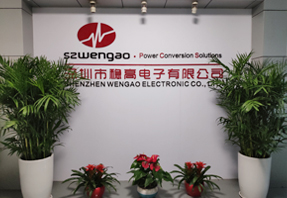
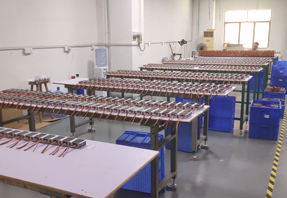

Established in 2015, Shenzhen Eltrum Electronic Co., Ltd. is a verified, premier manufacturer specializing in the engineering, custom design, and volume production of DC-DC converters, isolated power supplies, and waterproof LiFePO4 battery chargers. Operating from our modern Shenzhen production hub, we maintain end-to-end control over hardware topology design, high-speed SMT placement, automated magnetics winding, vacuum epoxy potting, and rigorous burn-in quality verification.
With an extensive product portfolio spanning over 500 standard production models, our conversion solutions power mobile, marine, off-grid telecom, and industrial automation equipment across more than 130 countries, including North America, Europe, Australia, Japan, and Southeast Asia. We provide agile OEM and ODM engineering support—accommodating custom input ranges, tailored multi-stage CC/CV charging algorithms, proprietary housing extrusions, and specialized cable assemblies with ultra-low MOQ requirements starting from just 5 units for sample validation.
Essential technical and logistical answers to support engineering procurement and supplier evaluation.
Whether you require standard off-the-shelf buck-boost modules or fully custom OEM firmware, topology, and connector designs, our senior power electronics engineers are available to review your specifications within 24 hours.