High-Efficiency DC-DC Converters & Smart Chargers
Engineered for high thermal tolerance, low quiescent draw, and continuous full-load output under demanding field environments.

Smart 36V Lithium Battery Charger DC 12V to 43.8V 13A
- TopologyDC-DC Boost Charger
- Input Voltage10V – 36V DC
- Output Profile43.8V @ 13A (LiFePO4)
- Ingress RatingIP67 Fully Potted

1500W Digital Buck-Boost Converter 10-60V with RS485
- TopologySynchronous Buck-Boost
- Input Voltage10V – 60V DC
- Output Rail12V / 24V / 28V / 48V
- Control BusRS485 Modbus RTU
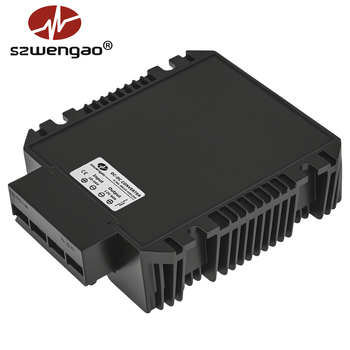
10-44V to 12V 50A/60A Buck-Boost Stabilizer
- TopologyNon-Isolated Buck-Boost
- Input Voltage10V – 44V DC
- Continuous AmpsUp to 60A Continuous
- Efficiency96.2% Peak
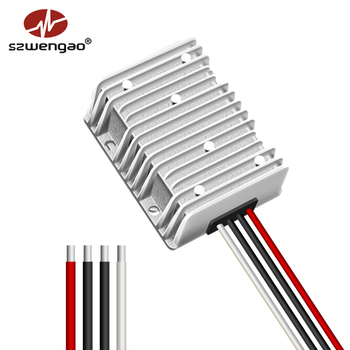
8-40V to 13.8V 30A Marine / Solar Regulator
- TopologyAutomatic Step-Up / Down
- Nominal Vout13.8V (Lead & Lithium Float)
- Power Rating414W Continuous
- ProtectionOVP, UVLO, OTP, Short
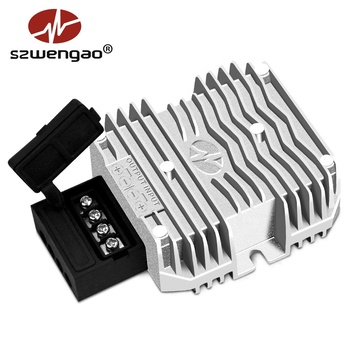
18-90V Ultra-Wide Input Isolated 12V 10A Module
- Isolation Barrier1500V DC Galvanic
- Input Voltage18V – 90V DC (5:1 Ratio)
- Output Rail12V @ 10A (120W)
- SuitabilityTelecom, Electric Forklifts
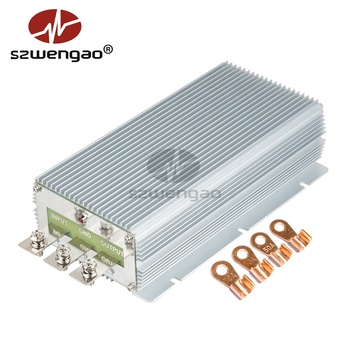
24V to 12V 85A/100A High-Current Buck Regulator
- TopologySynchronous Buck Step-Down
- Input Voltage18V – 35V DC
- Output Current100A Surge / 85A Rated
- ApplicationCommercial Trucks, Buses
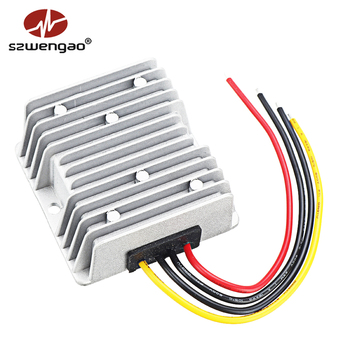
30-90V High-Voltage to 24V 20A Buck Module
- Traction Pack In36V, 48V, 60V, 72V Nominal
- Regulated Out24V @ 20A (480W)
- EnclosureDie-cast Aluminum Fin Shell
- StandardsCE, RoHS Certified
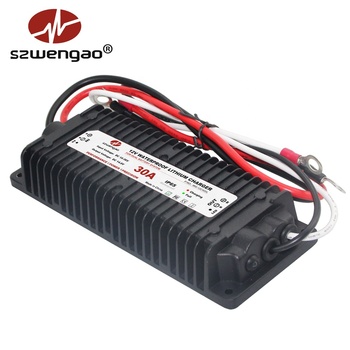
400W Multi-Stage DC-DC Dual Battery Charger
- Battery Input10V – 36V (Alternator / Solar)
- Charge ProfilesLiFePO4, Gel, AGM, Flooded
- Smart SensingIgnition & D+ Alternator Pin
- ProtectionBi-directional Reverse Guard
Why Tier-1 Integrators Choose Shenzhen Eltrum Electronic
Since 2015, Shenzhen Eltrum Electronic Co., Ltd. has bridged the gap between cutting-edge power topologies and cost-competitive China precision manufacturing.
ISO 9001:2015 Scaled Manufacturing
Our Shenzhen production hub spans over 3,000 m² equipped with automated surface-mount (SMT) pick-and-place lines, planar transformer winding cells, and nitrogen-purged reflow ovens to guarantee zero cold-solder joint defects.
- 100% automated optical inspection (AOI)
- Full load burn-in at 50°C elevated temperature
- Stringent CE, RoHS, and FCC compliance verification
Direct OEM / ODM Customization Engineering
Need customized wide-voltage profiles, CAN-bus integration, specialized waterproof aviation plugs, or tailored lithium iron phosphate (LiFePO4) three-stage charging algorithms? Our on-site R&D team produces custom validation prototypes within 7 to 10 working days.
- Tailored voltage spans (e.g., 9-40V, 18-90V, 30-100V)
- Customized extruded heatsinks & IP68 enclosures
- Buyer-labeling, laser etching, and tailored packaging
Rugged Environmental Packaging (IP65–IP68)
Every industrial module features high-thermal-conductivity organic silicone vacuum encapsulation. This ensures impervious protection against internal condensation, corrosive salt-spray, intense road vibration, and abrasive industrial particulate ingress.
- Shock & vibration resistant to automotive standards
- Anodized corrosion-resistant die-cast housings
- Operating temperature range from -40°C to +85°C
Navigating Voltage Instability: The Engineering Behind Modern Buck-Boost Architectures
In contemporary vehicular, marine, and industrial applications, direct-current power stability is continually compromised by volatile bus conditions. A traditional 12V automotive battery can drop to 7.2V during cold-crank engine turnover and surge to 14.8V during high-output alternator charging. Similarly, a 48V or 72V motive battery pack on electric material handling equipment swings broadly between its maximum charging cut-off voltage and empty discharge threshold.
The Core Challenge: Pure buck (step-down) or boost (step-up) topologies fail whenever the unregulated input voltage crosses the desired output voltage threshold. Without four-switch synchronous non-inverting buck-boost topology, auxiliary control boards experience brownouts, telematics reset unexpectedly, and sensor calibration drifts.
1. Four-Switch Synchronous Rectification vs. Conventional Inverting Topologies
Historic buck-boost power supplies relied on single-switch inverting SEPIC, Ćuk, or classical inverting designs, which inverted ground references and suffered from high passive losses and extreme voltage stresses on switching MOSFETs. Shenzhen Eltrum Electronic implements state-of-the-art four-switch bidirectional synchronous buck-boost stages managed by dedicated high-speed digital controllers.
When input voltage significantly exceeds the output set-point, the control loop smoothly operates in high-efficiency synchronous buck mode. As the input voltage approaches output equality, the system dynamically transitions into interleaved buck-boost mode with zero glitching or step-discontinuity. When the input sags below the regulated threshold, the converter seamlessly operates in synchronous boost mode. By replacing output catch diodes with low-RDS(on) synchronous power MOSFETs, conduction heat dissipation decreases by over 65%, reaching peak thermal conversion efficiencies of up to 96.8%.
2. Solving Electrical Noise and Ground Loop Challenges in Industrial Systems
In off-grid renewable installations and telecommunication network towers, non-isolated conversion can inadvertently establish hazardous ground loops. Unequal ground potential causes heavy circulating currents through shield grounds, injecting high-frequency electromagnetic interference (EMI) into sensitive communications hardware.
For applications where battery supplies are exposed to high transient noise or positive-ground configurations, our transformer-isolated DC-DC converter series provides complete 1500V DC dielectric isolation between source and load. Featuring integrated EMI input filter stages compliant with CISPR 25 and EN 55032 Class B standards, these units eliminate acoustic radio interference, ground bounce, and harmonic voltage ripple.
| Conversion Topology | Typical Input Span | Standard Regulated Outputs | Core Operational Mechanism | Target Systems |
|---|---|---|---|---|
| Synchronous Buck-Boost | 8V – 40V / 10V – 60V | 12V, 13.8V, 24V, 28V, 48V | Continuous regulation through dynamic 4-switch bridge transitions | Vehicular electronics, emergency medical carts, boat house-bus |
| Synchronous Buck | 18V – 35V / 30V – 90V | 5V, 12V, 13.8V, 24V | Efficient high-ratio step-down with lowest thermal overhead | 24V Commercial trucks, 48V/72V E-Golf carts, AGVs |
| High-Power Boost | 10V – 30V | 24V, 36V, 48V | High-current step-up conversion using low-loss ferrite chokes | Solar pumping, 48V auxiliary pumps on 12V marine craft |
| Galvanically Isolated | 18V – 36V / 36V – 75V / 18V – 90V | 5V, 12V, 24V | High-frequency magnetic planar transformer barrier (1.5kV) | 48V Telecom cabinets, railway signaling, heavy mining gear |
Future Sourcing Trends: DC-DC Conversion & Power Regulation (2025–2030)
Global supply chain executives and system architects must anticipate rapid shifts across energy density requirements, semiconductor materials, and digital communication protocols.
Widespread Adoption of Wide-Bandgap GaN & SiC
Over the next five years, gallium nitride (GaN) and silicon carbide (SiC) switching transistors will supplant legacy silicon MOSFETs in premium converter classes. By switching at frequencies above 300kHz with virtually zero reverse recovery losses, magnetic transformer volumes shrink by over 40%, yielding volumetric power densities exceeding 35W per cubic inch.
Telemetry-Driven Edge Power with CAN & RS485
Dumb power modules are being rapidly phased out by OEMs. Industrial procurement contracts now mandate real-time state-of-health diagnostics. Modern buck-boost converters must report real-time input voltage, instantaneous amperage draw, internal junction temperatures, and fault codes over RS485 (Modbus) or CAN2.0B networks directly into the central vehicle controller.
Unified Multichemistry CC/CV Battery Algorithms
With commercial fleets migrating aggressively to Lithium Iron Phosphate (LiFePO4) and Lithium Nickel Manganese Cobalt (NMC), converters must function as smart battery-to-battery chargers. Modern buyers favor modules featuring dynamic DIP switches or firmware profiles that adapt absorption, bulk, and float voltages to diverse chemistry envelopes without physical hardware swaps.
Bidirectional Power Flow Capabilities
Next-generation vehicle-to-load (V2L) and microgrid energy storage architectures require power supplies capable of bidirectional energy routing. Sourcing teams are prioritizing dual-quadrant buck-boost topologies that can draw power from an auxiliary traction battery to support low-voltage 12V systems while reserving the ability to back-feed high-voltage busses during regenerative braking events.
Modular Hot-Swappable High-Current Redundancy
Industrial server hubs, off-grid telecom cell sites, and autonomous agricultural machinery increasingly favor N+1 parallel active current sharing. Procurement engineers seek converters supporting active droop share or active bus balancing to gang multiple 1000W or 1500W modules into parallel arrays without requiring complex external load distribution nodes.
Engineering Roadmap: What Sets Eltrum Technologies Apart
Continuous investment in power topology innovation allows us to deliver smaller footprints, cooler operating profiles, and unmatched power fidelity.
Ultra-Low Standby Quiescent Current
Standby parasitic drain is the primary cause of battery failure in long-term stored RVs, utility boats, and seasonal equipment. Eltrum's advanced standby shutdown sleep-circuits restrict no-load current consumption to under 5mA, ensuring host battery packs remain viable for months without auxiliary solar trickle chargers.
Advanced Direct-Bonded Copper (DBC) Thermal Design
Rather than relying on generic FR4 laminate for high-power conversion modules, our latest 1000W+ models employ insulated metal substrates (IMS) and precision die-cast aluminum heat sinks with computationally modeled airflow fins. This reduces junction-to-ambient thermal resistance by 48%, preventing premature thermal throttling.
Autonomous Multi-Stage Safety Envelope
System security is embedded into hardware logic: microsecond-level hardware cycle-by-cycle overcurrent limitation, programmable undervoltage lock-out (UVLO) to protect starting batteries, self-healing output reverse-polarity protection, and over-temperature foldback rather than abrupt system shutdown.
Frequently Asked Questions in Buck-Boost Converter Procurement
Clear, unhedged engineering answers to help purchasing managers, systems integrators, and design engineers finalize their project specifications.
What is the difference between a Buck-Boost converter and a conventional Buck regulator?
What is the minimum order quantity (MOQ) for prototypes and volume production?
How do I determine whether my application needs an isolated or non-isolated DC-DC converter?
- Break dangerous ground loops or isolate high-frequency electromagnetic noise;
- Interface with equipment having positive ground configurations (common in legacy 48V telecommunications);
- Comply with strict galvanic safety barrier regulations in medical equipment or high-voltage electric vehicle auxiliary networks.
Can Eltrum DC-DC converters function directly as LiFePO4 battery chargers?
What thermal derating factor should engineers plan for in enclosed enclosures?
What third-party certifications and international compliance documentation are provided?
Connect Directly with Our Power Engineering Team
Accelerate your project development lifecycle. Submit your specific input voltage swing, target output current, environmental constraints, and delivery deadlines for an authoritative engineering response within 24 hours.
Get a Quote