Engineered High-Reliability Isolated Converters & Chargers
Designed to resolve severe ground potential differentials, eliminate ground loops, and protect microelectronics from heavy electrical noise. Explore our 8 benchmark production platforms.
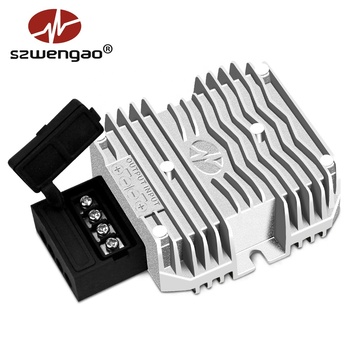
18–75V to 24V 5A Isolated Power Supply Module (120W)
- Input Range:18–36V / 36–75V DC
- Output Rating:24V @ 5A (120W)
- Dielectric Barrier:1500V DC Galvanic
- Efficiency:Up to 92.5%
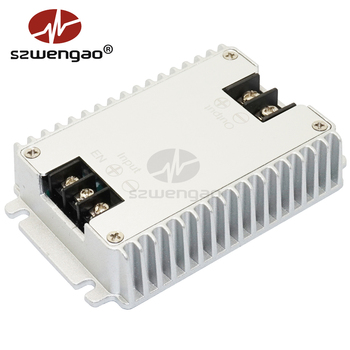
Industrial 36–75V to 24V 5A Regulated Isolation Converter
- Input Range:36–75V DC Wide
- Output Rating:24V @ 5A Stable
- Protection:OCP, OVP, OTP, SCP
- Application:Forklifts & AGVs
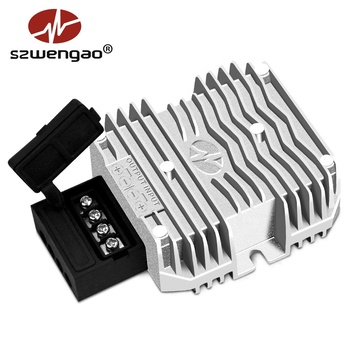
Ultra-Wide 18–90V to 12V 10A Sealed Isolated Power Supply
- Ultra-Wide Input:18–90V Continuous
- Output Rating:12V @ 10A (120W)
- Enclosure:Vacuum Potted IP68
- Compliance:CE / RoHS Certified
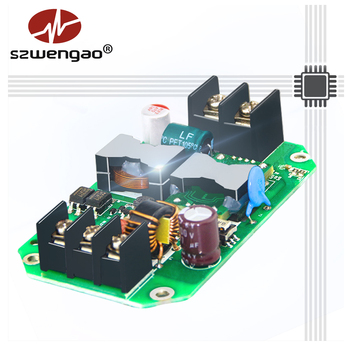
48V / 60V Telecom Grade to 12V 10A Isolated DC Regulator
- Nominal In:36V / 48V / 60V DC
- Output Rating:12V @ 10A Low Noise
- Ripple & Noise:< 50mVp-p
- Isolation:2000V DC High Pot
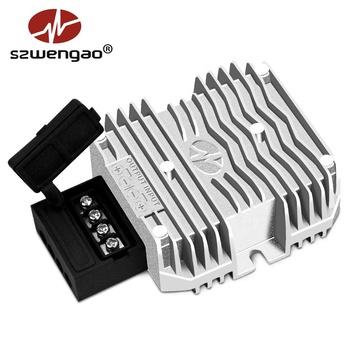
Wide-Bus 18–75V to 5V 20A Isolated Step-Down Converter
- Bus Input:18–75V (24V/48V Base)
- Output Rating:5V @ 20A (100W)
- Housing:Aluminum Die-Cast
- Target:MCU & Industrial Logic
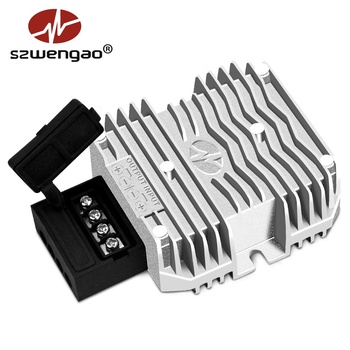
Vehicle & Marine 18–36V to 5V 20A Isolated Regulator
- Battery Input:18–36V (24V Bus)
- Output Rating:5V @ 20A Synchronous
- EMC Standard:EN 55032 Class B
- Thermal Spec:-40°C to +85°C Full
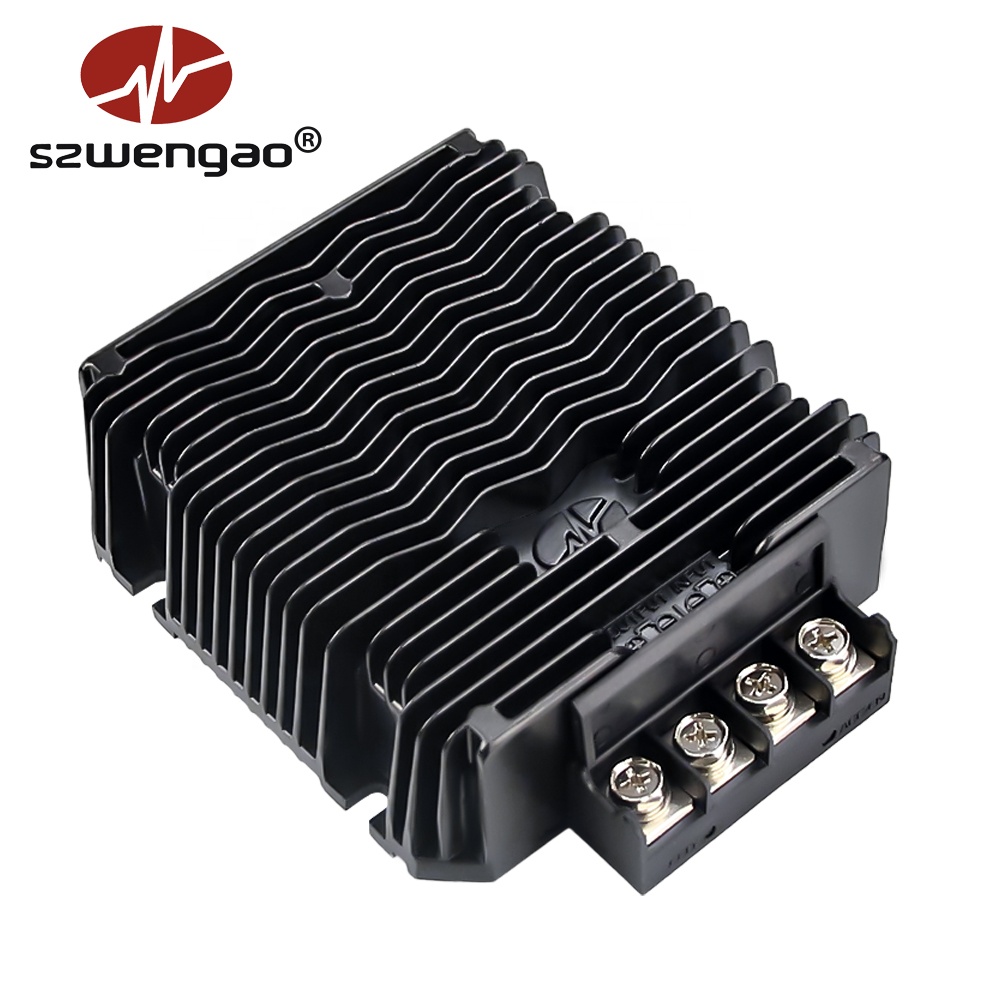
Smart 36V LiFePO4 DC-DC Charger (12V to 43.8V 13A Waterproof)
- Source In:DC 12V Nominal Alternator
- Charge Profile:43.8V CC/CV 13A
- Efficiency:> 94% Peak
- Protection:IP67 Sealed Housing
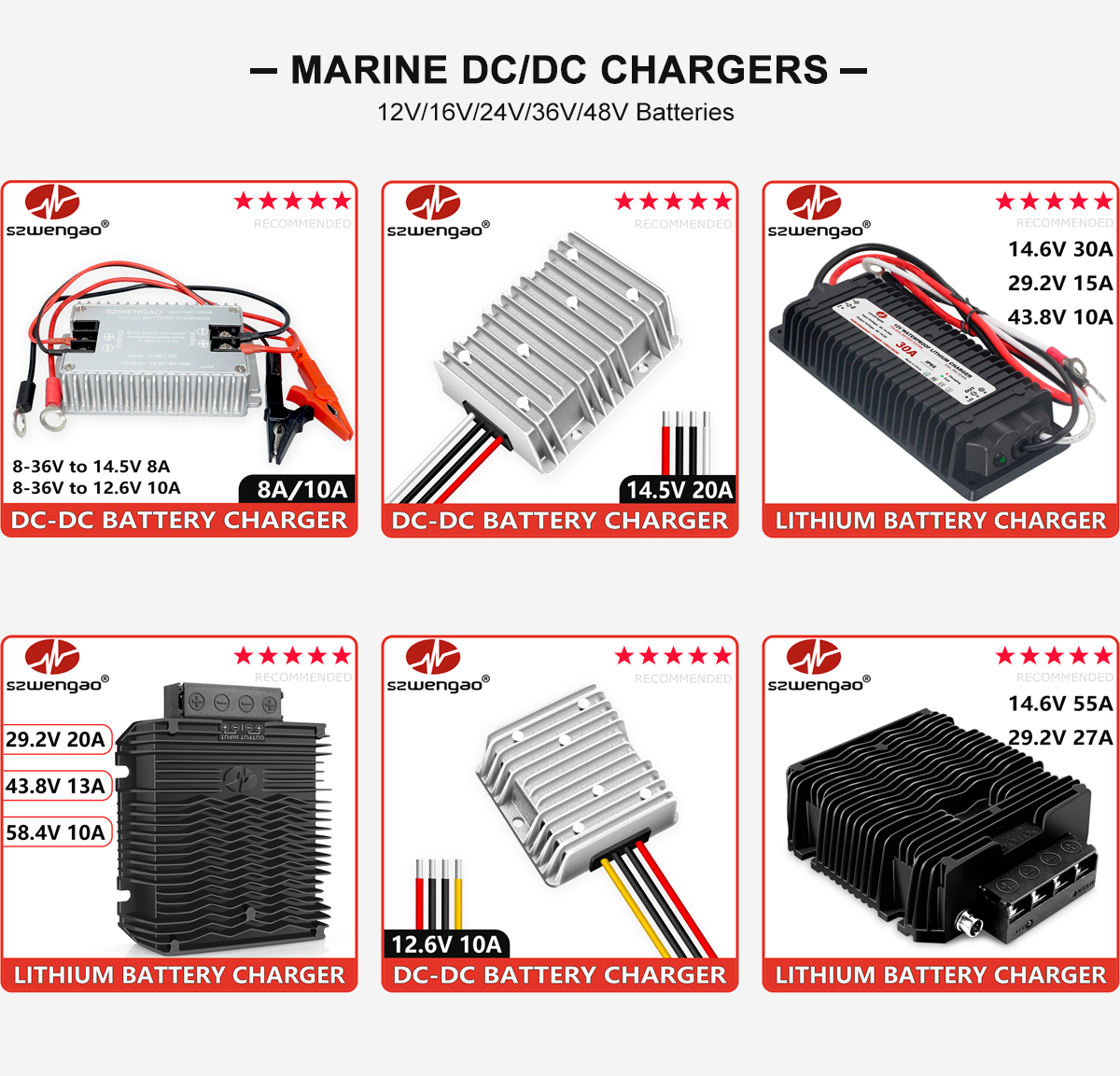
Custom Multi-Rail OEM Isolated Switching Power Module
- Custom Voltage:10V – 300V Tailored
- Power Class:50W to 2000W Scalable
- Interface:RS485 / CAN Bus / PMBus
- Sample MOQ:Starting from 5 units
The Mechanics of High-Reliability Galvanic Isolation
In mission-critical electronics across automated production floors, subsea instrumentation, commercial vehicles, and offshore telecommunications, electrical isolation is not merely a design convenience—it is the foundational boundary that shields micro-controllers, analog sensors, and human operators from catastrophic catastrophic voltage transients and persistent ground loops.
Unlike standard buck or boost switching topologies where the primary input and secondary output share a common resistive return plane (common ground), an isolated power supply incorporates an impermeable magnetic or capacitive barrier. Energy is transferred across the isolation gap using magnetic flux inside planar or toroid high-frequency transformers. This completely disconnects the DC electrical continuity between input and output, yielding three primary technical benefits:
Absolute Ground Loop Elimination
When interconnected instruments operate at distinct reference points across a vast manufacturing plant or marine vessel, subtle potential differences create parasitic circulating ground currents. These currents induce signal clipping, erratic sensor drift, and phantom communication bus resets. Galvanic isolation breaks the physical conductive loop, ensuring zero parasitic return path.
High-Voltage Surge Containment
Industrial DC buses (such as 48V telecom battery banks or 72V traction systems) regularly endure massive inductive flyback spikes exceeding 500V during motor braking or heavy inductive load disconnects. Isolated modules safely absorb or reflect this surge across galvanic barriers rated up to 3000V DC, safeguarding downstream sensitive logic chips.
Independent Polarity & Level Shifting
Isolation allows systems architects complete flexibility in rail assignment. System integrators can seamlessly establish positive-ground or negative-ground topologies, or generate dual split supply rails (±12V, ±15V) referenced cleanly to arbitrary chassis points without risking internal direct short-circuits.
Procurement & Technology Trends Shaping the Industry
For global procurement managers and hardware design engineers, navigating the shifting landscape of power module sourcing requires an understanding of emerging wide-bandgap semiconductors, miniaturized planar packaging, and strict international compliance standards.
1. Wide-Bandgap GaN & SiC Topologies
Silicon MOSFETs are rapidly giving way to Gallium Nitride (GaN) and Silicon Carbide (SiC) switching elements. These components enable switching frequencies above 500kHz to 1.2MHz while cutting switching losses by more than 40%. The result for buyers is a substantial reduction in power brick volume, 95%+ efficiency ratings, and significantly lower enclosure temperatures.
2. Planar Magnetics & Automated Assembly
Hand-wound wire transformers are being aggressively phased out in favor of planar transformers etched directly into multi-layer PCB substrates. Planar magnetics yield exceptional thermal dissipation, razor-thin form factors (quarter-brick and eighth-brick footprints), and near-zero parasitic leakage inductance, ensuring batch-to-batch repeatability and prolonged field longevity.
3. Ultra-Wide 4:1 to 10:1 Input Ranges
Procurement teams are seeking to minimize SKU proliferation by standardizing on ultra-wide input modules. Rather than stocking dedicated 24V, 36V, 48V, and 72V converters, a single modern 18–90V wide-input isolated module satisfies dozens of platform requirements, radically reducing supply chain carrying costs and buffer inventory friction.
4. Digital Power Management & Telemetry
Future-facing industrial power units now embed integrated digital micro-controllers supporting RS485 Modbus, PMBus, or CAN Bus. This empowers end-users to remotely monitor real-time junction temperatures, dynamically adjust output voltages on the fly, and establish predictive health diagnostics before field power disruptions ever occur.
5. Stringent CMTI & Harsh EMC Requirements
As switching speeds accelerate, Common-Mode Transient Immunity (CMTI) has become a primary procurement specification. Industrial OEMs require isolated power modules capable of withstanding >100kV/μs slew rates without state degradation, alongside built-in multi-stage pi-filtering that passes EN 55032 / CISPR 32 Class B without costly external chokes.
6. Eco-Design & Circular Sourcing Transparency
Driven by European RoHS 3, REACH, and emerging circular economy directives, global Tier-1 equipment manufacturers demand full material declarations (IMDS), halogen-free encapsulation resins, and lead-free automated selective soldering, reinforcing the imperative of working with transparent ISO-certified factories.
Comparing Non-Isolated vs. Optocoupler vs. High-Frequency Magnetics
Selecting the appropriate power architecture demands balancing bill-of-materials costs against critical electrical isolation, transient safety, and thermal longevity.
| Architecture Class | Isolation Level | Typical Efficiency | Common-Mode Rejection | Ground Loop Immunity | Optimal Industry Application |
|---|---|---|---|---|---|
| Non-Isolated Buck / Boost | 0V DC (Direct Path) | 94% – 97% | Poor (< 20 dB) | None (Shared Common) | Auxiliary automotive lighting, non-critical local sub-regulators |
| Optocoupler Isolated Flyback | 1000V – 2500V DC | 86% – 90% | Moderate (35–50 dB) | High (Complete DC Break) | Low-power industrial instrumentation, auxiliary logic, sensors |
| High-Frequency Planar LLC Resonant | 2000V – 4000V DC | 92% – 95.5% | Superior (> 80 dB) | Absolute (Isolated Reference) | Telecom infrastructure, AGVs, medical equipment, marine radar |
| Push-Pull / Forward Transformer | 1500V – 3000V DC | 89% – 93% | High (60–75 dB) | Absolute (Isolated Reference) | Heavy commercial transport, forklift traction rails, smart grids |
Thermal Management & Vacuum Potting Chemistry
High-performance isolated converters pack immense magnetic and switching energy into compact aluminum envelopes. At Eltrum, thermal stability is maintained via state-of-the-art automated vacuum potting utilizing high-conductivity silicone and polyurethane polymers (ranging from 1.2 to 2.5 W/m·K). This process evacuates micro-air voids around high-voltage windings, completely mitigating partial discharge phenomena while ensuring IP67/IP68 ingress protection, outstanding vibration damping (MIL-STD-810H compliant), and continuous thermal heat transfer to external chassis fins.
Why Shenzhen Eltrum Electronic is China's Premier Power Supply Partner
Established in 2015 in the global electronics capital of Shenzhen, Shenzhen Eltrum Electronic Co., Ltd. has grown from a specialized power conversion lab into a globally recognized manufacturing powerhouse producing over 500 standard models.
Isolated DC-DC conversion represents the historical engineering cornerstone upon which our company was founded. While competitors offer outsourced re-labeled products, Eltrum operates complete in-house SMT surface-mount lines, proprietary precision magnetics winding stations, automated robotic potting lines, and comprehensive 100% full-load burn-in aging chambers. Our legal manufacturing facilities have been inspected, accredited, and verified on-site by international third-party certification bodies.
With an engineering-first culture, we maintain a flexible prototyping MOQ starting from just 5 units, enabling R&D teams in North America, Europe, Australia, and Asia to validate functional prototypes without prohibitive capital commitments before committing to volume manufacturing runs.
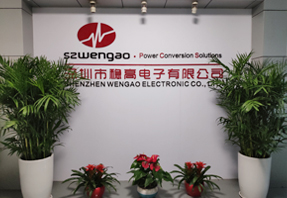 3,000m² Shenzhen Production Base
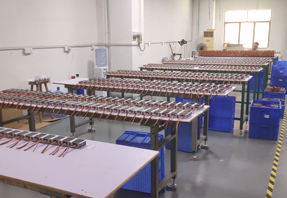 Automated SMT Surface Mount
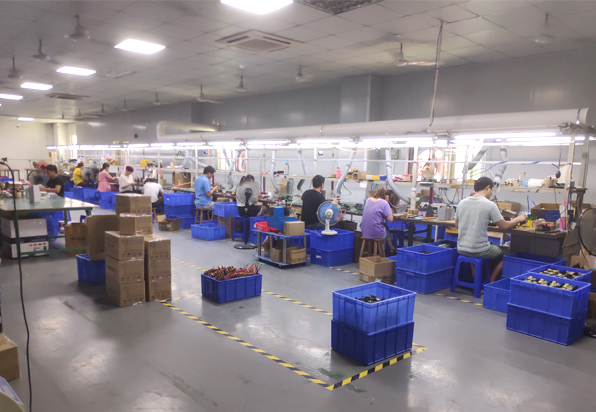 100% Full Load Testing & QC
Frequently Asked Questions by Sourcing Directors & Hardware Engineers
Critical technical inquiries addressed directly by Eltrum's senior applications engineering team.