Precision DC-DC Converters & Intelligent Regulators
High-efficiency conversion platforms engineered by Shenzhen Eltrum Electronic Co., Ltd. for fleet electrification, off-grid storage, industrial telecommunications, and marine dual-battery microgrids.

Smart 36V Lithium Charger 12V to 43.8V 13A
- TopologySynchronous Step-Up
- Input / OutputDC 12V → DC 43.8V (13A)
- ProtectionIP68 Potted, OVP/OCP/OTP
- TargetEV, RVs, Electric Mobility

1500W High-Power Buck-Boost with RS485
- TopologyBi-Directional Buck-Boost
- Input WindowDC 10V – 60V Wide Range
- Output Channels12V / 24V / 28V / 48V Regulated
- InterfaceRS485 Modbus Telemetry

24V to 12V 85A/100A Fleet Buck Converter
- TopologySynchronous Step-Down
- Continuous Load12VDC @ 100A (1200W Peak)
- Efficiency>96% at Rated Amperage
- ApplicationCommercial Trucks, Buses, Marine
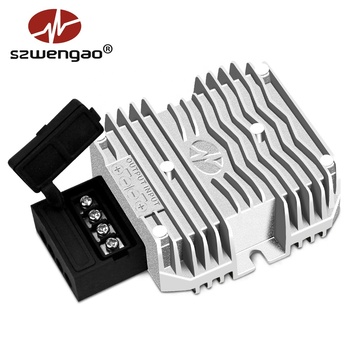
Industrial Isolated 18-75V to 24V 5A Module
- Isolation1500VDC Galvanic Barrier
- Input Rails18-36V / 36-75V Telecom Bus
- Regulated Output24V @ 5A (120W Pure DC)
- Noise / Ripple<50mVp-p High Immunity
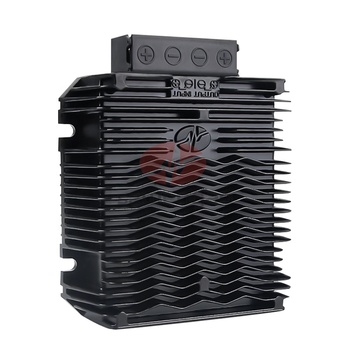
12V to 24V/48V High-Current Boost Unit
- TopologyInterleaved Multi-Phase Boost
- Output Current24V @ 50A / 48V @ 20A
- Thermal DesignDirect Aluminum Heat Dissipation
- ComplianceCE Marked, RoHS Certified
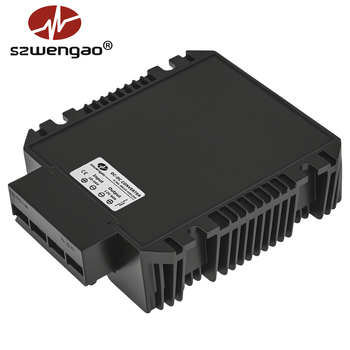
10-44V to 12V 50A/60A Dynamic Stabilizer
- Input Flexibility10V – 44V Cranking Tolerant
- Stabilized Output12VDC Regulated (50A / 60A)
- Peak OutputUp to 720W Continuous
- EnclosureIP68 Hermetic Waterproof Seal

Isolated 18-90V to 12V 10A Waterproof Module
- Input Span18V – 90V (Supports 72V/80V DC)
- Secondary Rail12VDC @ 10A Isolated
- Ground IsolationDual Floating Galvanic Ground
- UsageForklifts, AGVs, Mining Vehicles
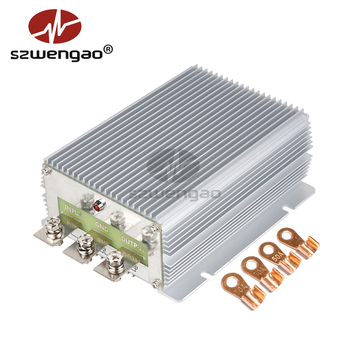
48V to 24V 40A 1000W Step-Down Regulator
- Input Rail30V – 60V (Nominal 48V Storage)
- Output Rating24V @ 40A Continuous (1000W)
- Switching Frequency120kHz Low-Ripple Design
- Field ProtectionShort Circuit Auto-Recovery
Engineering Topologies: Synchronous Rectification & Galvanic Isolation
As China's leading DC voltage regulator manufacturer and worldwide exporter, Shenzhen Eltrum Electronic Co., Ltd. builds switching topologies tailored to the operational realities of dynamic vehicle grids and high-voltage DC distribution systems. While standard low-cost linear regulators dissipate surplus energy directly as thermal waste ($P_{loss} = (V_{in} - V_{out}) \times I_{load}$), our solid-state switching converters leverage precision high-frequency pulse-width modulation (PWM) combined with low-resistance MOSFET synchronous rectification, achieving continuous operational efficiency ratings up to 96.5%.
| Topological Family | Input / Output Relationship | Conversion Efficiency | Isolation Barrier | Primary Industrial Use-Case |
|---|---|---|---|---|
| Buck (Step-Down) | $V_{in} > V_{out} + V_{drop}$ (e.g., 24V/48V → 12V) | 94% – 97% | Non-Isolated (Common Ground) | Commercial vehicle avionics, heavy transport 24V-to-12V cab power, bus LED systems. |
| Boost (Step-Up) | $V_{in} < V_{out}$ (e.g., 12V → 24V/48V) | 92% – 95% | Non-Isolated (Common Ground) | High-voltage auxiliary drives, laptop/telecom power on mobile 12V platforms, solar pumping. |
| Buck-Boost (Stabilizer) | $V_{in}$ fluctuates above and below target $V_{out}$ | 90% – 94% | Non-Isolated (Common Ground) | Cranking battery bus stabilization (9V-16V swing stabilized to flat 12.0V or 13.8V rail). |
| Galvanic Isolated | $V_{in}$ fully decoupled via high-frequency transformer | 88% – 92% | 1500V – 3000V DC Barrier | Industrial automation, telecom positive-ground grids, high-voltage battery ground fault mitigation. |
In automotive and industrial environments, voltage spikes originating from alternator load dump, inductive motor switching, or battery disconnect events can easily drive a 12V or 24V line beyond 60V for hundreds of milliseconds. Eltrum's advanced converter designs incorporate input TVS (Transient Voltage Suppressor) arrays, multistage LC π-filters, and smart PWM driver chips with cycle-by-cycle over-current protection. This protects delicate microcontrollers, GPS modules, radar units, and communication transceivers from devastating brownout and overvoltage stress.
Global Sourcing & Procurement Trends in Industrial DC Voltage Regulation
1. Transition to 48V/800V Architectures
Global OEMs in commercial trucking, marine, and robotics are transitioning auxiliary architectures from legacy 12V to 48V or 72V buses to cut wire harness weight and I²R resistive distribution losses. Sourcing directors are prioritizing wide-input buck regulators capable of safely stepping down 36V-90VDC traction voltages directly into low-noise 12V or 24V control rails.
2. Wide-Bandgap GaN & SiC Adoption
The transition from silicon SJ-MOSFETs to Gallium Nitride (GaN) and Silicon Carbide (SiC) semiconductors allows higher switching frequencies (200kHz to 1MHz+). This slashes magnetic core footprint by 40%, boosting power density without elevating thermal dissipation, enabling kilowatt-tier regulators to fit in compact sealed housings.
3. Smart Telemetry via RS485 & CAN Bus
Analog voltage regulators are increasingly being replaced by smart power units equipped with RS485 (Modbus RTU) or CAN bus interfaces. Procurement managers in autonomous mobile robots (AMRs) and remote telecom sites demand real-time telemetry: dynamic voltage trimming, load current telemetry, and active temperature monitoring.
Beyond component performance, international procurement officers in North America, Western Europe, and Australasia are emphasizing Total Cost of Ownership (TCO) over initial unit BOM cost. Low-grade DC-DC converters prone to thermal breakdown or capacitor dry-out result in disastrous warranty claims, vehicle downtime, and field service callouts. By selecting high-thermal-conductivity organic silicone potted converters manufactured under ISO 9001 certified environments, enterprise engineering programs mitigate field mortality risks to near zero.
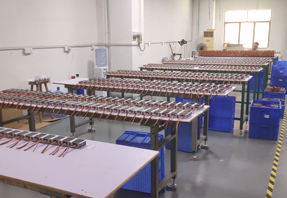
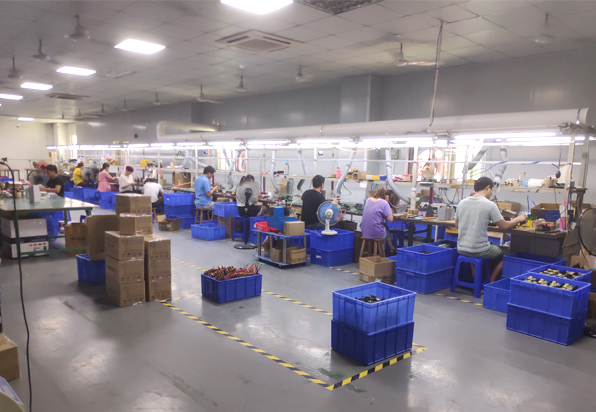
Shenzhen Eltrum Electronic Co., Ltd.
Established in 2015 in the high-tech industrial hub of Shenzhen, China, Shenzhen Eltrum Electronic Co., Ltd. has grown to become an authoritative engineering powerhouse and high-volume manufacturer of DC-DC converters, isolated power modules, and specialized LiFePO4 battery chargers.
Our state-of-the-art facility features automated SMT placement lines, high-precision automated magnetic winding machines, automated vacuum potting lines, and dynamic full-load burn-in aging rooms. Every single converter unit undergoes strict Automated Optical Inspection (AOI), insulation dielectric testing, and 100% full-load high-temperature burn-in prior to dispatch.
- Facility Scale3,000 m² Modern Production Floor
- Quality FrameworkISO 9001 Certified System Management
- International ApprovalsCE (LVD/EMC), RoHS Directive Compliance
- Engineering FlexibilityCustom Rails, Connector Pinouts & RS485 Protocol
Next-Gen Technological Evolutionary Trends in DC Power Conversion
Planar Magnetics Integration
Replacing conventional wire-wound copper inductors with multi-layer printed circuit board (PCB) planar transformers drastically reduces leakage inductance, eliminates mechanical vibration noise, and ensures unprecedented consistency in thermal impedance and parasitic capacitance across mass production runs.
Multi-Phase Interleaved Topologies
In high-power step-down and step-up modules (exceeding 50A to 100A), single-inductor designs face extreme current stress. Eltrum implements dual- and quad-phase interleaved stages operating 180° out of phase, which cancels input and output ripple currents and cuts capacitor ESR heating by up to 60%.
Vacuum Silicone Encapsulation
Under marine vibration or off-road washdowns, air-cooled vented converters quickly succumb to salt-fog corrosion and condensation. Eltrum seals all industrial converter modules with UL 94V-0 flame-retardant thermally conductive organic silicone, delivering true IP68 waterproof protection, shock immunity, and passive conduction cooling.
Frequently Asked Questions: DC-DC Procurement & Integration
Comprehensive engineering clarity to assist electrical system architects, sourcing specialists, and technical procurement teams.
How does a buck-boost voltage stabilizer handle engine cranking and battery voltage sag?
When is galvanic isolation required versus non-isolated DC-DC converters?
1) Dealing with positive-ground systems common in telecom (-48VDC infrastructure).
2) Eliminating ground loops that induce 50/60Hz hum, sensory noise, or CAN bus data packet corruption in marine navigation and industrial robotics.
3) Floating the secondary rail for safety where chassis ground isolation is mandated by industrial safety norms.
Can Eltrum customize charge algorithms for mixed LiFePO4, NMC, and LTO chemistries?
How do you manage thermal derating in fully sealed (IP68 potted) converter housings?
What are the MOQ terms, sample turnaround, and mass production lead times?
What payment terms, trade incoterms, and certifications apply to overseas shipments?
Ready to Accelerate Your Power Electronics Sourcing?
Consult with our Shenzhen engineering specialists today for custom voltage ratios, RS485 communication protocols, private-label branding, and competitive tier-one volume export quotes.