Engineered Buck Converters & Step-Down Power Solutions
High-efficiency DC-DC buck regulators designed for rugged commercial fleet integration, industrial robotics, off-grid telemetry, and e-mobility traction platforms.

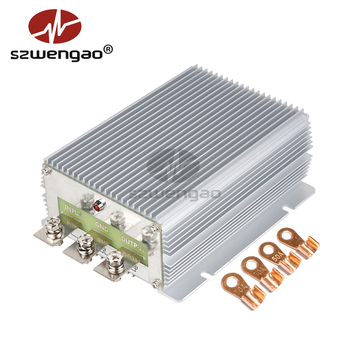
24V to 12V 85A/100A Heavy-Duty Buck Converter
- Nominal Input: 24V DC (18–35V range)
- Regulated Output: 12V DC ±1%
- Continuous Output: 85A – 100A (1200W)
- Housing Rating: IP68 Die-Cast Aluminum
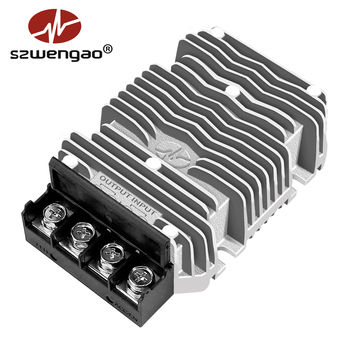
48V to 24V 40A 1000W Synchronous Buck Regulator
- Input Window: 38–60V DC
- Output Current: 40A Max continuous
- Full-Load Efficiency: >95.8%
- Protections: OCP, OVP, OTP, Short-circuit
30–60V (48V) to 12V 50A/60A 720W Voltage Stabilizer
- Input Operating Span: 30V–60V DC
- Output Voltage: 12V DC (60A continuous)
- Thermal Control: Passive Heat-Sink Fin Cooling
- MTBF: >100,000 Hours (MIL-HDBK)
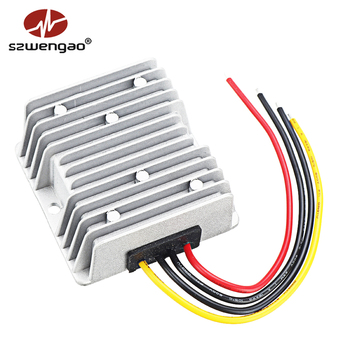
30–90V to 24V 10A/20A Wide-Span Traction Buck Module
- Battery Range: 36V, 48V, 60V, 72V, 84V packs
- Output Spec: 24V DC @ 20A (480W)
- Potting Compound: Flame-retardant epoxy resin
- Application: Forklifts, AGVs, Golf Carts
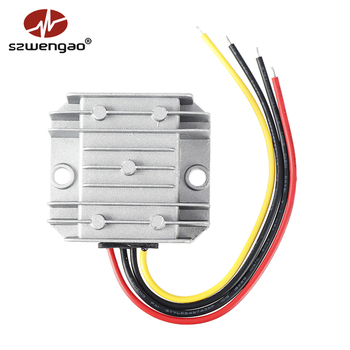
18–90V Universal to 12V 5A/10A Compact Buck Unit
- Input Window: 18–90V DC (5:1 wide span)
- Output Regulation: 12V DC ±1.5%
- No-load Draw: <15mA quiescent
- Form Factor: Sealed compact brick

Smart 36V (43.8V 13A) Lithium Battery Charger DC 12V In
- Charging Type: DC-to-DC Multi-Stage CC/CV
- Input Source: 12V Alternator or Starter Bank
- Charge Output: 43.8V @ 13A for LiFePO4
- Sealing Standard: IP65 Waterproof Marine/EV

Isolated 18–90V to 12V 10A 120W Industrial Module
- Isolation Rating: 1500V DC Galvanic Barrier
- Input Dynamic: 18V to 90V DC continuous
- Noise/Ripple: <50mVp-p low jitter
- Standards: Telecom Ground-Loop Proof

1500W Heavy-Duty Synchronous Stabilizer (RS485)
- Operating Spectrum: 10–60V DC Ultra-Wide
- Stabilized Output: 12V / 24V / 28V / 48V
- Communication: RS485 Modbus Telemetry
- Capacity: 1500W Peak Industrial Load
Engineering Fundamentals: Buck Conversion Architecture & Topologies
When engineering high-reliability direct-current distribution architectures, power design engineers are continuously challenged by thermal dissipation, space constraints, electromagnetic interference (EMI), and transient voltage fluctuations. As a premier China buck converter factory and supplier, Shenzhen Eltrum Electronic Co., Ltd. fabricates step-down modules that convert higher direct-current bus voltages down to stable auxiliary operational voltages (typically 5V, 12V, 13.8V, or 24V) with minimal energy conversion losses.
Synchronous Rectification
Replacing standard Schottky freewheeling diodes with ultra-low $R_{DS(on)}$ N-channel power MOSFETs dramatically curtails conduction losses ($I^2 \cdot R_{DS(on)}$ vs. $V_f \cdot I$). Converted efficiency increases from 82%–88% up to 96.5%, drastically cutting internal heat dissipation in enclosed modules.
Continuous Conduction Mode (CCM)
By engineering high-saturation flux density ferrite-core toroids and planar magnetic inductors, our buck converters maintain CCM across full dynamic load spectra. This dampens peak ripple currents, reduces output capacitor ESR stress, and achieves ultra-low output ripple (<30mV RMS).
Integrated Snubber & EMI Filtration
Switching node ringing induces high-frequency radiation. Our modules feature internal multi-stage LC pi-filters, common-mode chokes, and optimized RC snubber topologies that comply with automotive CISPR 25 Class 3/4 standards and EN 55032 electromagnetic compliance without external chokes.
Engineering Selection Matrix: Standard Buck vs. Isolated vs. Buck-Boost
A frequent root-cause of field failures in mobile and industrial power systems stems from misaligning operational duty cycle with topology capabilities. The matrix below outlines how procurement specialists and electrical systems architects evaluate input swing, common grounding, and isolation demands when specifying products from Shenzhen Eltrum Electronic Co., Ltd.
| Conversion Topology | Typical Input Span | Nominal Output Rails | Grounding Architecture | Best Fit Applications | Thermal & Space Footprint |
|---|---|---|---|---|---|
| Non-Isolated Synchronous Buck | 24V (18–35V) / 48V (30–60V) | 12V, 13.8V, 24V @ 10A–100A | Common Ground (Negative) | Commercial trucks, transit buses, LED driver arrays, auxiliary cabins | Ultra-Compact / High Power Density |
| Wide-Input Traction Buck | 30V–90V / 18V–90V | 12V, 24V @ 5A–30A | Common Ground | AGVs, electric forklifts, golf carts, 72V/84V e-motorcycles | IP68 Potted / High Vibration Spec |
| Galvanically Isolated Buck Module | 18–36V / 36–75V / 18–90V | 5V, 12V, 24V @ 50W–240W | Fully Isolated (Input/Output Decoupled) | Telecom -48V base stations, marine vessels with cathodic corrosion risk, sensitive PLCs | Medium Footprint / Ground-Loop Immune |
| Synchronous Buck-Boost Stabilizer | 8V–40V / 10V–60V | 12V, 13.8V, 19V, 24V, 48V | Common Ground / Telemetry option | Solar PV storage fluctuations, alternator cold-cranking systems, dual-battery camper setups | Robust Housing / RS485 Enabled |
All units engineered in our Shenzhen factory incorporate die-cast aluminum heat sinks filled with thermally conductive potting silicon. This packaging achieves dual objectives: delivering heat conductivity exceeding 2.0 W/m·K directly to the exterior cooling fins, while providing complete IP68 environmental hermeticity against corrosive sea spray, oil vapor, and mechanical impact.
Future Sourcing & Procurement Trends: The Next Horizon in Power Electronics (2025–2030)
As international supply chains evolve toward carbon-neutral goals, electrification of off-highway machinery, and intelligent autonomous devices, the procurement criteria for DC-DC buck converters are advancing beyond basic voltage/current specifications. Global B2B purchasers must monitor four decisive industry shifts:
1. Wide-Bandgap (GaN & SiC) Integration
Gallium Nitride (GaN) and Silicon Carbide (SiC) switches are shifting from high-end aerospace to industrial volume applications. Operating at switching frequencies exceeding 500 kHz with virtually negligible reverse recovery charge ($Q_{rr}$), next-generation buck converters yield volumetric size reductions of over 40% while sustaining 97%+ efficiency.
2. Digital Telemetry & Software-Configurable Power
Analog-only converters are yielding to micro-controller supervised architectures equipped with PMBus, CAN 2.0B, or RS485 Modbus protocols. Modern fleet operators now demand dynamic output voltage trimming, active temperature monitoring, real-time current telemetry, and remotely trip-able digital circuit breakers.
3. High-Voltage Traction Decoupling (800V Systems)
With electric passenger and utility vehicles shifting rapidly from 400V to 800V battery architectures, auxiliary buck converters must withstand extreme transients ($>1000\text{V}$) while stepping power down to standard 12V/24V chassis nodes. Robust primary-to-secondary dielectric strength and multi-layer planar transformers are critical requirements.
4. Sustainable Lifecycle & Total Cost of Ownership (TCO)
Leading tier-1 purchasers look beyond upfront purchase price ($/watt) to calculate thermal dissipation penalties, field failure replacement costs, and MTBF metrics. Our silicone-filled, fan-free solid-state architectures eliminate bearing failure points, offering 5-to-10-year maintenance-free operational life.
Mitigating Supply Chain Volatility Through China Factory Alliances
Procuring directly from an established Shenzhen manufacturer like Eltrum protects global OEMs from spot-market semiconductor shortages. Our long-term tier-1 relationships with passive component foundries, automotive-grade MOSFET manufacturers, and raw aluminum extrusion suppliers ensure scheduled inventory pipelines and price stability. Our engineering team routinely delivers turn-key footprint-compatible drop-in replacements for discontinued legacy power modules.
Shenzhen Eltrum Electronic Co., Ltd. – Factory Capabilities & OEM/ODM Prowess
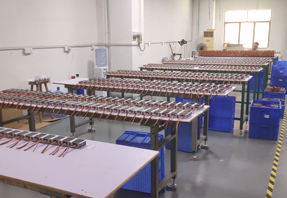
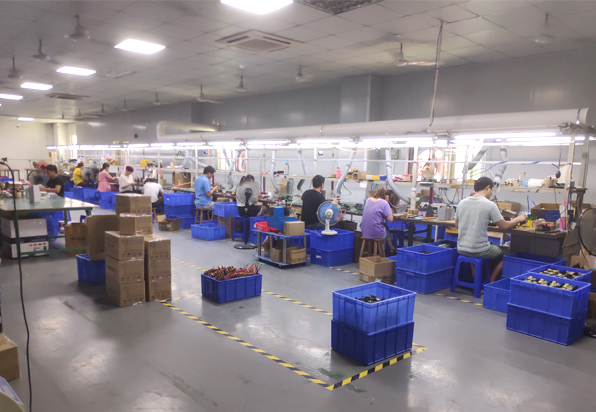
Founded in 2015 and headquartered in Shenzhen's Hangcheng industrial corridor, Shenzhen Eltrum Electronic Co., Ltd. operates a high-precision, onsite-verified production facility dedicated to non-isolated buck converters, isolated converters, buck-boost voltage regulators, and intelligent lithium battery charging systems.
Why Global B2B Engineers Select Eltrum:
Strict Quality Assurance Pipeline: Certified under ISO 9001 quality management, all converter designs undergo exhaustive design verification, including 100% full-load burn-in testing under elevated temperatures (50°C), thermal shock cycling (-40°C to +85°C), dielectric hi-pot insulation validation, and salt-mist anti-corrosion tests.
True OEM & ODM Customization Agility: Unlike brokers or trading houses, our in-house R&D engineering lab modifies hardware layouts swiftly. From customizing non-standard output voltages (such as 7.5V, 13.8V, 28V, or 58.4V), adding dedicated remote on/off control leads, integrating custom harness pinouts (Deutsch, Amphenol, Anderson Powerpole), to private buyer-label silk-screening—we accommodate custom prototypes with turnaround times as rapid as 7 to 14 days.
Low Evaluation Barriers: We maintain a sample evaluation MOQ starting from just 5 units on standard catalog models, enabling engineering teams to validate field prototypes thoroughly prior to mass-production procurement.
Industrial Sourcing Workflow: From Concept to Scheduled Delivery
Procuring custom or high-volume buck converters requires transparency at every production stage. Our streamlined 5-step industrial deployment protocol guarantees reliable delivery and verifiable product consistency:
Step 1: Engineering Specification & Environmental Audit
Our application engineers review your operational parameters: nominal input range, minimum cold-crank voltage, maximum transient over-voltage, target load amperage (continuous vs peak), capacitive/inductive inrush profile, ambient operating temperatures, and enclosure IP sealing requirements.
Step 2: Rapid Prototyping & Lab Bench Characterization
We supply functional samples for customer bench testing within 7–10 days. Validation covers line regulation, load regulation, step-response slew rate, switching ripple, conducted emissions, and thermal heat map imaging under worst-case ambient conditions.
Step 3: High-Speed Automated SMT & Planar Assembly
Automated Yamaha surface mount technology (SMT) pick-and-place lines position ultra-low ESR multi-layer ceramic capacitors (MLCC), planar magnetics, and automotive-grade MOSFETs onto high-density thermal FR-4 or aluminum-backed PCBs with 100% automated optical inspection (AOI).
Step 4: Vacuum Chamber Potting & Full-Load Burn-In
Modules are potted with flame-retardant silicone or epoxy resin in automated vacuum chambers to eradicate micro air-voids and prevent moisture ingress. Every single batch unit subsequently undergoes a minimum of 4 to 8 hours of dynamic 100% full-load thermal burn-in stress testing.
Step 5: International Logistics, Certification, & Warranty Support
Custom packaging, laser buyer-label branding, CE/RoHS conformity documentation, and FOB/EXW dispatch via air or sea freight to North America, Europe, Australia, and Asia. All industrial units are backed by comprehensive factory replacement warranties.
Comprehensive Procurement & Technical FAQ
Critical inquiries frequently presented by chief electrical engineers, procurement directors, and system integrators when evaluating China buck converter manufacturing partners:
What is the minimum order quantity (MOQ) for custom and standard buck converters?
How do Eltrum buck converters handle high inrush currents from inductive loads?
When is a galvanically isolated buck converter required versus a non-isolated converter?
What thermal derating rules should engineering teams apply in sealed enclosures?
Can multiple DC-DC buck converters be connected in parallel for higher output current?
What third-party certifications and compliance reports are available?
What payment terms, export trade incoterms, and lead times apply?
Can Eltrum manufacture custom voltage calibration points not listed in the catalog?
Ready to Optimize Your Power Conversion Systems?
Connect with Shenzhen Eltrum Electronic Co., Ltd.'s power supply engineers today. Receive comprehensive technical datasheets, CAD dimensional step-files, wholesale pricing structures, and rapid prototype samples for validation.