ISO 9001 Factory · CE & RoHS Compliant DC-DC Power · OEM / ODM Welcome

English USD [email protected]
Industrial Whitepaper & OEM Sourcing Guide

China Best AC DC Converter Manufacturers & Manufacturer

Engineering High-Density, Galvanically Isolated AC-DC Power Supplies, Wide-Range Regulators, and Smart Industrial Charging Architectures for Global Tier-1 OEMs.

500+
Standard Power Platforms
130+
Global Export Destinations
96.8%
Peak Topo Efficiency
5 Pcs
Rapid Prototyping MOQ
Technical Insight & Semantic Context

Navigating High-Efficiency AC-DC & Multi-Stage DC Conversion in China

As electrification permeates maritime transit, heavy logistics, telecom infrastructures, and utility-scale energy storage systems (BESS), specifying the appropriate power conversion interface is no longer a matter of nominal wattage calculation. Industrial engineering teams sourcing from China must evaluate comprehensive metrics: thermal dissipation gradients under continuous loads, total harmonic distortion (THD), electromagnetic compatibility (EMC class A/B suppression), and galvanic boundary isolation. Shenzhen Eltrum Electronic Co., Ltd. provides precision-engineered switch-mode architectures that bridge the divide between high-voltage grid/alternator power and sensitive onboard electronics.

Precision Engineering Portfolio

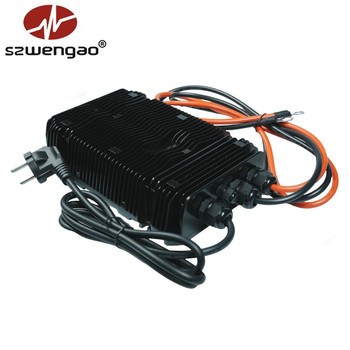
Featured Industrial AC-DC & Battery Charger Modules

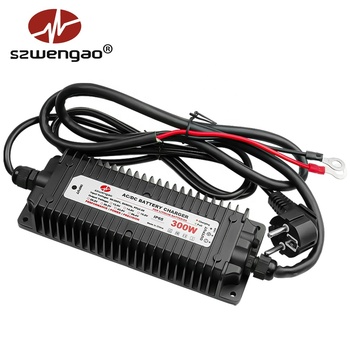
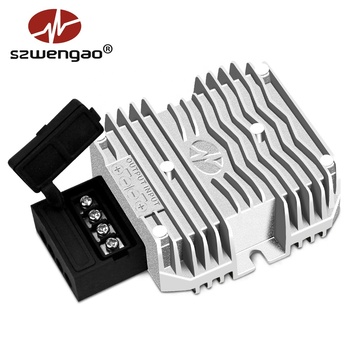
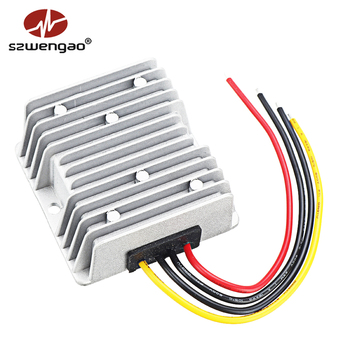
Explore our field-tested switch-mode power converters and sealed charging systems, engineered in Shenzhen and compliant with rigorous CE, RoHS, and ISO 9001 standards.

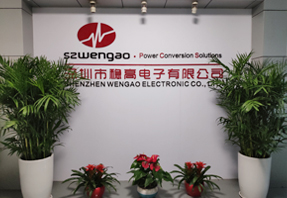
Shenzhen Eltrum Electronic Factory Building Shenzhen HQ · Established 2015
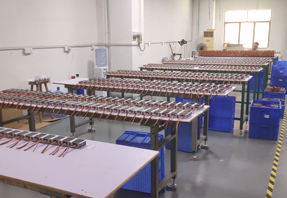
High-Speed SMT Manufacturing Line High-Speed SMT Line
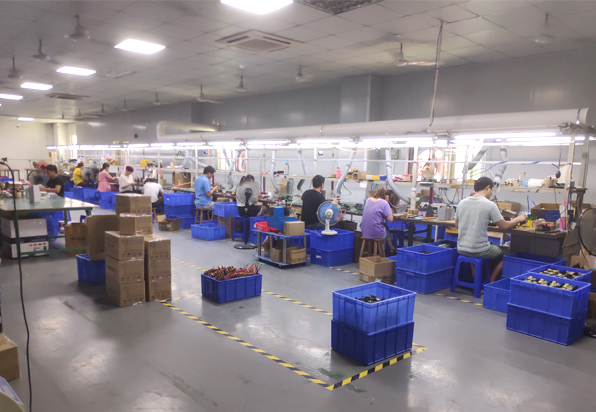
100% Full-Load Burn-in Chamber & QC 100% Burn-in & QC Chamber
Verified Factory Integrity

Shenzhen Eltrum Electronic Co., Ltd.

Established in 2015 in the tech manufacturing capital of Shenzhen, Eltrum operates an onsite-verified production footprint encompassing modern surface-mount lines (SMT), precision automated coil-winding workbenches, vacuum potting enclosures, and temperature-controlled burn-in test chambers.

Our core engineering strength stems from over a decade of research into high-frequency transformer isolation, planar magnetics design, and synchronous rectification. With legal verification certified by third-party global assessment authorities, our engineering staff serves tier-1 distributors, system integrators, and equipment manufacturers in North America, Western Europe, Japan, and Australia.

ISO 9001:2015 Certified CE / EN 61000 Compliant RoHS Environmental Directive OEM/ODM Buyer-Label Ready
Procurement Trends Analysis

Future Sourcing Dynamics: Power Density, Ruggedization & Protocol Integration

Global component shortages and aggressive carbon targets are redefining supply chain criteria. Global procurement executives should focus on three foundational shifts over the next 3 to 5 years.

1. Wide Bandgap (GaN/SiC) Transition

Silicon carbide (SiC) and gallium nitride (GaN) power semiconductors are rapidly superseding standard silicon MOSFETs. Their ability to switch efficiently at 150kHz+ drastically shrinks magnetic inductor cores and filter capacitors, yielding up to 40% volume reduction.

For fleet buyers, this translates to compact onboard AC-DC chargers (300W–1500W) that mount cleanly inside restricted engine bays without sacrificing continuous thermal thresholds.

2. Ingress Ruggedization (IP67/IP68 Potting)

Industrial power supplies are moving away from ventilated, fan-cooled perforated boxes toward hermetically potted modules using thermally conductive polyurethane or silicone compounds.

Potted enclosures eliminate failure modes caused by salt spray corrosion, condensation, dust accumulation, and extreme mechanical vibration in mining machinery, marine yachts, and utility utility golf carts.

3. Bidirectional Digital Telemetry

Static, unmonitored converters are increasingly unviable in automated systems. Modern industrial platforms demand RS485 (Modbus RTU) or CAN-bus communication layers to transmit operating data in real time.

This enables central controllers to track real-time current, temperature logs, input undervoltage events, and execute programmatic dynamic voltage trimming according to battery state of health (SoH).

Engineering Due Diligence

B2B Sourcing Checklist for Chinese Power Electronics

Prevent field failures and warranty claims by confirming these six critical engineering parameters prior to placing high-volume production orders.

1. Maximum Input Inrush & Headroom

Ensure transient input surge ratings handle load dumps up to 100V. Systems subject to automotive ISO 7637-2 test pulses require active TVS clipping.

2. True Continuous vs. Peak Rating

Verify whether the manufacturer quotes continuous or 30-second peak power. Eltrum rates all standard units for 100% continuous duty at 40°C ambient.

3. Galvanic vs. Non-Isolated Common Ground

Determine ground loop risk. In positive-ground telecommunication or marine aluminum hulls, transformer-isolated topologies are mandatory to halt galvanic corrosion.

4. Multi-Stage CC/CV Charging Algorithms

LiFePO4 cells require strict constant current (CC) followed by an accurate constant voltage (CV) transition at 3.65V/cell (14.6V for 4S, 29.2V for 8S, 58.4V for 16S).

5. Thermal Derating Curves

Inspect output capability when operating past 50°C. Aluminum heat-sink finning and thermal potting are vital for sustained reliability in unventilated compartments.

6. Third-Party Lab Verification

Request accredited test reports for CE (LVD/EMC), FCC Class B, and RoHS compliance to streamline customs clearance across EU and North American ports.

Direct Engineering Answers

Frequently Asked Sourcing & Technical Questions

Critical considerations for component sourcing, warranty standards, lead times, and engineering customizations.

What is the minimum order quantity (MOQ) and lead time for standard and customized converters?
For standard catalog converters and waterproof battery chargers, our standard sample evaluation MOQ starts from just 5 units, allowing engineering teams to perform bench testing and field validation. Volume production lead times range between 15 to 25 business days. Bespoke OEM/ODM customizations (modified voltage thresholds, tailored connectors, custom potting, or custom charging profiles) carry an initial engineering prototyping cycle of approximately 10 to 14 days.
Why is an isolated DC-DC or AC-DC converter essential in commercial vehicle and marine dual-battery setups?
Non-isolated converters share a common negative ground rail between input and output. In high-current applications such as industrial marine vessels, communication base stations, or dual-battery vehicle systems, noise currents from alternators or inductive loads (winches, pumps) create common-impedance ground loops. Galvanic isolation (utilizing high-frequency toroidal or planar transformers) severs the galvanic path, eliminating circulating eddy ground currents, suppressing RF interference, and shielding sensitive microcontrollers from severe primary-side voltage spikes.
How does Eltrum ensure thermal reliability in fanless, fully sealed waterproof units?
Our sealed models (IP65/IP67/IP68) use die-cast ADC12 aluminum alloy enclosures with integrated external convection fins. Internally, all heat-generating components (MOSFETs, output Schottky diodes, transformers, and chokes) are thermally coupled to the chassis using multi-watt thermal pads, then vacuum-encapsulated with high-conductivity epoxy or polyurethane potting compound. This eliminates air voids, provides continuous shock and vibration resistance, and conducts heat away from internal junctions to maintain operating temps well within safe junction thresholds (Tj < 110°C).
Can your battery chargers be tuned for specific lithium chemistries (LiFePO4, Ternary NCM, LTO)?
Yes. While LiFePO4 (14.6V for 4S, 29.2V for 8S) is the dominant standard in RV and marine energy storage, our microcontroller-based charging circuits can be factory-programmed for Ternary Lithium-Ion (NCM/NCA at 4.2V/cell nominal), Lithium Titanate (LTO), and lead-acid AGM/Gel absorption profiles. Furthermore, RS485-enabled models (such as our WG-12C800M series) support external dynamic profile commanding through customer-supplied Battery Management Systems (BMS).
What quality assurance processes are implemented prior to export shipping?
Quality control is integrated across every stage: SMT solder paste automated optical inspection (AOI), post-assembly in-circuit testing, dielectric withstand voltage tests (hipot testing for isolated lines), and 100% full-load elevated temperature burn-in testing (4 to 8 hours under maximum rated amperage). Final inspection verifies electrical ripple voltage, load regulation percentage, thermal dissipation signatures, and waterproof seal integrity.

Ready to Discuss Your Custom Power Conversion Requirements?

Whether you require custom input voltage windows (e.g., 18–90V wide range), tailored LiFePO4 multi-stage profiles, IP67 ruggedized marine enclosures, or buyer-label volume production, our Shenzhen engineering team delivers prototypes rapidly with complete documentation.

Contact Us