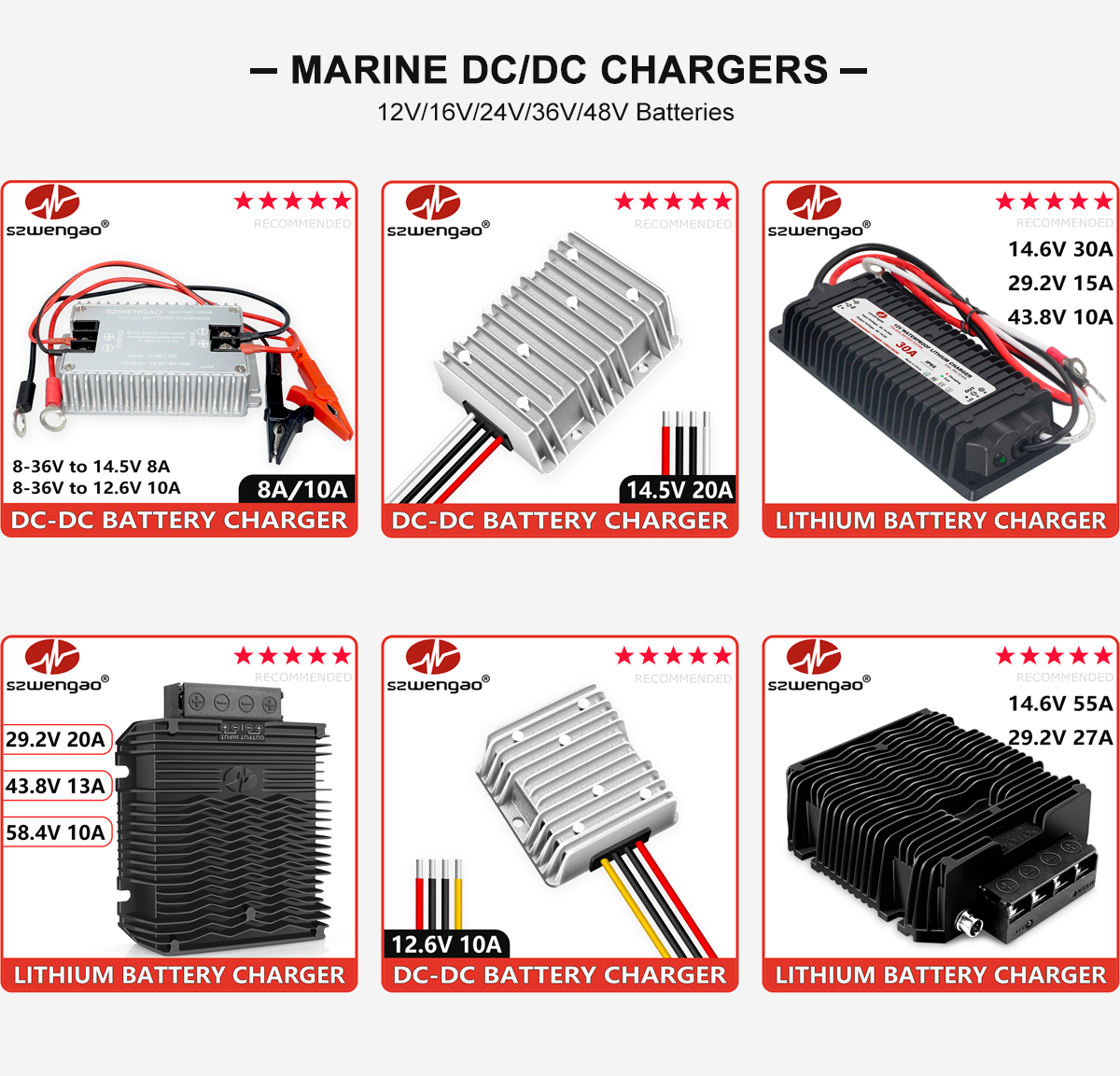
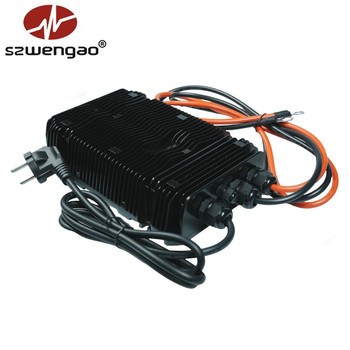
Smart 36V LiFePO4 DC-DC Charger
- Input Window: 12V DC Nominal
- Output Voltage: 43.8V CC/CV
- Current Output: 13A Max
- Enclosure: Waterproof IP67
Ruggedized aluminum enclosures with full polyurethane potting, exceeding IP65/IP67 mechanical ratings. Tested under real thermal loads for commercial EVs, marine systems, and off-grid power banks.

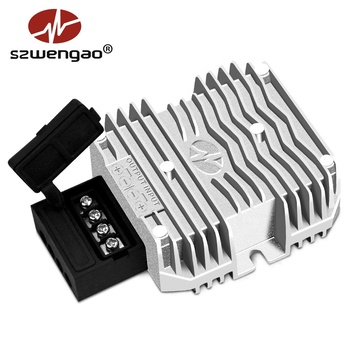
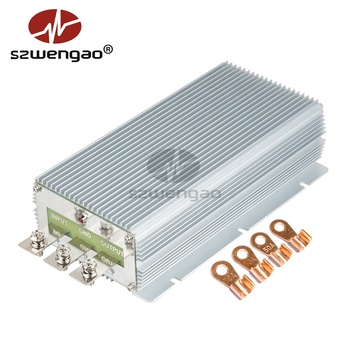
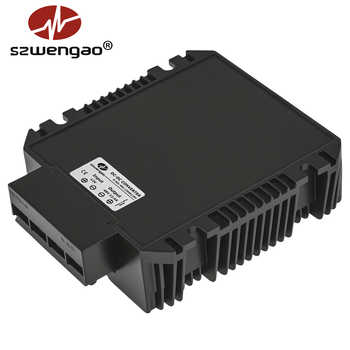
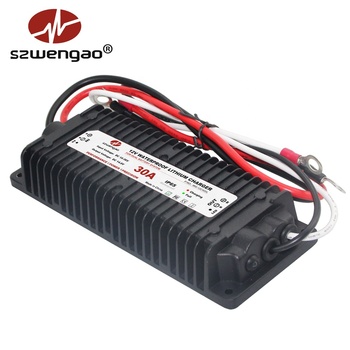
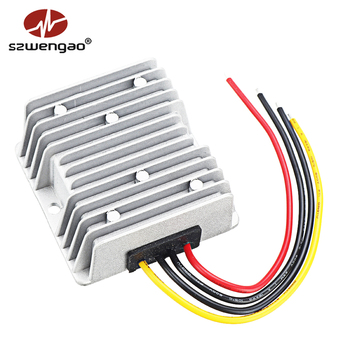
In OEM power distribution design, choosing between buck, boost, non-isolated buck-boost, and galvanic isolation dictates system longevity, electromagnetic compatibility (EMC), and total conversion efficiency.
Operates strictly where continuous maximum supply voltage remains higher than the required output load plus minimal drop-out margin (Vin,min > Vout + ΔV). Delivering synchronous rectification efficiencies up to 97%, our buck modules are primary choices for stepping down commercial truck 24V systems and EV battery banks (48V–72V) to 12V automotive body electronics.
Applied when load voltage requirements exceed source bus voltage (Vin,max < Vout). Since input current scales exponentially as input voltage drops to satisfy constant power demand (Iin = Pout / (Vin × η)), our boost stages use heavy-gauge copper winding and oversized MOSFET switches to manage the highest thermal stress safely.
Crucial for battery systems where state-of-charge swings dynamic rail voltages below and above nominal targets. A nominal 12V LiFePO4 bank swings between 10.0V (depleted under cold cranking) up to 14.6V (absorption charging). Non-inverting four-switch buck-boost topology guarantees precise 12.0V or 24.0V regulation throughout extreme dynamic input fluctuations.
| Converter Class | Typical Input Range | Nominal Output Rails | Isolation Level | Standard Eff. | Key Industrial Deployment |
|---|---|---|---|---|---|
| Synchronous Buck | 20V–36V / 30V–90V | 12V, 13.8V, 24V | Common Ground | 94% – 97% | Fleet Truck auxiliary, Agricultural GPS, Mining Lighting |
| High-Current Boost | 10V–15V / 18V–30V | 24V, 36V, 48V | Common Ground | 91% – 94% | Marine high-draw trolling motors, Audio Amplifiers, 48V Actuators |
| Dynamic Buck-Boost | 9V–40V / 10V–60V | 12V, 19V, 24V, 28V | Common Ground | 92% – 95% | Off-road RV auxiliary house banks, Solar PV variable feeds |
| Galvanic Isolated | 18V–36V / 36V–75V / 18V–90V | 5V, 12V, 24V | >1500V DC Isolation | 88% – 92% | Telecom -48V rails, Electric Forklift controllers, Sensitive Nav Systems |
Strategic insights for OEM procurement managers, component engineers, and supply chain directors sourcing CE-certified power conversion systems for 2025–2030 programs.
Global OEMs are moving away from traditional trading intermediaries to partner directly with manufacturing facilities holding proprietary Surface Mount Technology (SMT) and tooling capabilities. Bypassing broker tiers reduces defect turnaround cycles and lowers costs. Direct engineering collaboration enables rapid prototype adjustments to PCB traces, heat sink dimensions, and custom lead terminations within 10 to 14 days.
Supply chain leaders are cutting inventory SKUs by replacing narrow-voltage converters with ultra-wide input platforms (such as 18V–90V continuous). A single verified wide-input converter can service 24V material handling equipment, 48V electric golf carts, and 72V urban e-mobility fleets without redesigning wiring harnesses or changing bill of materials (BOM) logistics.
With tightening international trade standards and compliance regulations, procurement teams require complete traceability for automotive-grade power MOSFETs, ceramic capacitors, and magnetic cores. Leading factory audits now focus on automated optical inspection (AOI), computerized full-load burn-in records, and verified RoHS substance declarations for European and North American customs clearance.
The transition toward electrification demands smaller, higher-density power converters that perform dependably in harsh environments without active cooling fans.
Gallium Nitride (GaN) and Silicon Carbide (SiC) switches are transforming modern power supply design. By operating at significantly higher switching frequencies (over 250kHz–500kHz), they reduce the required size of magnetic transformers and inductors. This increases continuous volumetric power density beyond 30W/in³ while cutting switching losses by more than 40%.
Standard room-temperature vulcanizing (RTV) silicones are giving way to high-conductivity polyurethane and ceramic-infused epoxy compounds. These materials achieve thermal conductivities above 1.5 W/m·K, filling microscopic voids around magnetic windings. This eliminates hot spots, improves thermal transfer directly to the extruded aluminum casing, and protects against shock, vibration, and moisture ingress.
Modern power converters are evolving from isolated passive bricks into intelligent, communicative subsystems. By incorporating standardized isolated RS485 (Modbus RTU) or CAN bus interfaces, our converters allow host vehicle engine control units (ECUs) and marine multi-function displays to track real-time rail voltages, draw currents, internal temperature thresholds, and cumulative operational run hours.
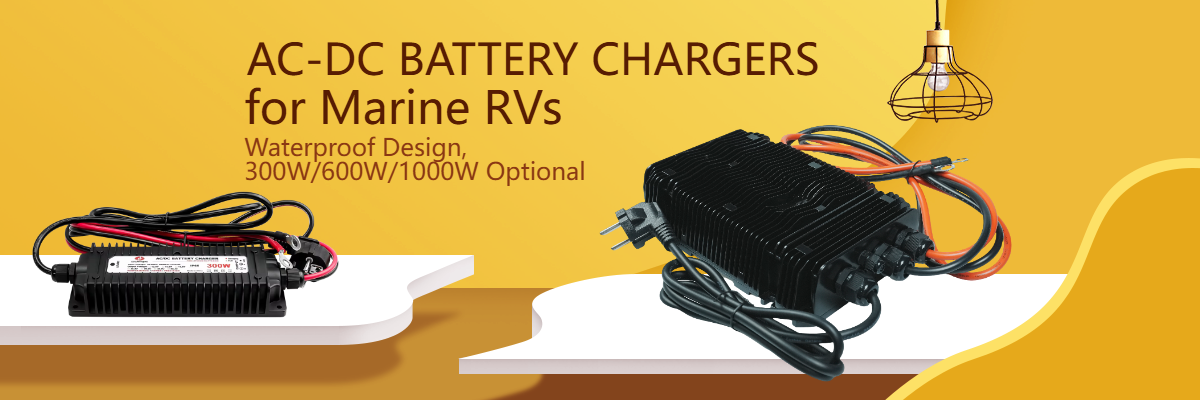
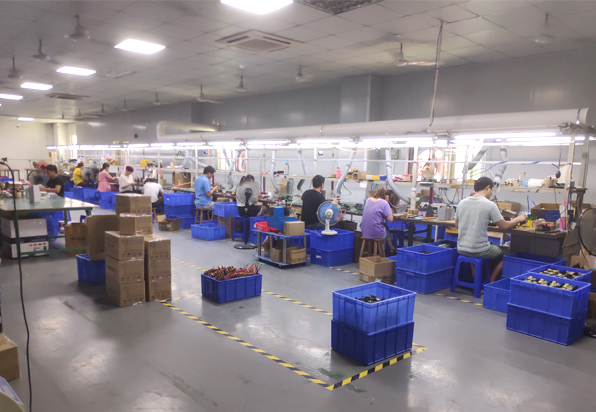
Established in 2015, Shenzhen Eltrum Electronic Co., Ltd. operates a vertically integrated production plant dedicated to engineering stable, industrial-grade power solutions for global Tier-1 applications.
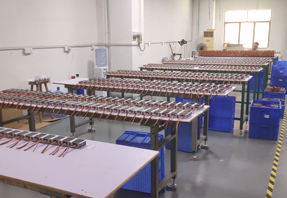
Every DC-DC converter and battery charger undergoes comprehensive testing before packaging. Operating under an accredited ISO 9001 quality management framework, our manufacturing workflow integrates real-time automated optical inspection (AOI), in-circuit electronic analysis, automated multi-stage potting lines, and dynamic burn-in testing under full load conditions.
Our units comply with the latest European Union CE Directives (Electromagnetic Compatibility Directive 2014/30/EU and Low Voltage Directive 2014/35/EU) and meet environmental hazardous substance limits under RoHS 2011/65/EU.
Conveniently located in the Anle Industrial Zone, Shenzhen, supporting efficient global air and ocean freight dispatch.
Multi-channel load racks test transient responses, ripple factors, and thermal behavior across all operating cycles.
Every unit is checked for potting density, enclosure seal integrity, and high-voltage dielectric isolation before dispatch.
Clear, definitive technical and commercial answers to simplify OEM qualification, sample prototyping, and volume production.
Non-isolated DC-DC converters share a common electrical ground plane between their input and output channels. They deliver high conversion efficiency (up to 96%–97%), smaller physical enclosures, and lower production costs, making them the standard choice for automotive, truck, and leisure vehicle power delivery.
Isolated DC-DC converters incorporate a high-frequency isolation transformer that completely breaks conductive loop connections between input and output return paths. This is essential for protecting delicate low-voltage controllers against ground loops, high common-mode noise, negative-ground telecommunications systems (-48V), and high-voltage traction batteries (where safety rules demand absolute battery isolation from vehicle chassis grounds).
Our waterproof conversion units use extruded or die-cast aluminum enclosures filled with vacuum-degassed, two-component thermally conductive polyurethane resin. This potting process eliminates internal air bubbles and micro-voids around critical electronic components.
Production samples undergo immersion water ingress tests under specified depth pressures alongside thermal shock cycles (-40°C to +85°C). This ensures that enclosure expansion and contraction will not crack the potting barrier or compromise the internal electronics, keeping moisture, salt spray, and vibration securely at bay.
To support early-stage product engineering and laboratory verification, standard catalog items carry a low minimum order threshold of 5 units. High-power units (over 1000W) can be sampled starting at 1–2 units.
For custom ODM projects (such as modified voltage thresholds, specific CC/CV charging algorithms, custom cable harnesses, or private-label metal housings), initial prototypes are typically completed and dispatched for bench evaluation within 10 to 14 business days following final engineering drawing sign-off.
While unpotted open-frame power units rely on moving air from cooling fans—which draw in dust, moisture, and road contaminants—fully potted converters transfer heat out conductively through the entire thermal encapsulation medium directly into the finned exterior aluminum chassis.
For sustained operation in unventilated or high-temperature ambient environments (such as engine bays or sealed equipment enclosures above +50°C), we recommend engineers derate the nominal continuous load by 20% to 30%. This prevents over-temperature thermal protection circuits from activating and ensures long-term component reliability.
We work with international OEM buyers under standard commercial payment terms including Telegraphic Transfer (T/T), PayPal for rapid sampling, and Escrow accounts in USD or EUR. Production orders typically follow a standard 30% deposit with 70% balance paid prior to dispatch.
Standard export terms include FOB Shenzhen, EXW factory, or full DAP/DDP air and ocean container logistics coordinated directly with your chosen freight forwarding partners.