Featured Isolated Modules & Precision Regulators
Engineered for high conversion efficiency, compliant with CE/RoHS safety standards, and customizable from 5-unit sample validation batches to high-volume multi-thousand production runs.
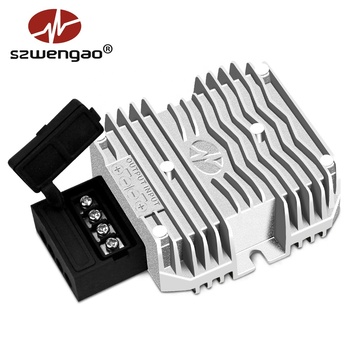
18–36V / 36–75V to 24V 5A Isolated Module
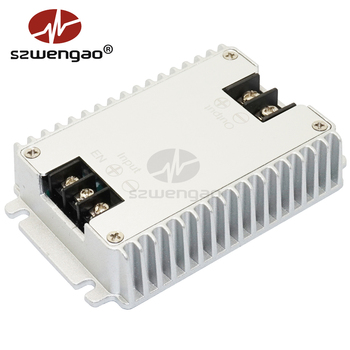
36–75V to 24V 5A Industrial Telecom Converter
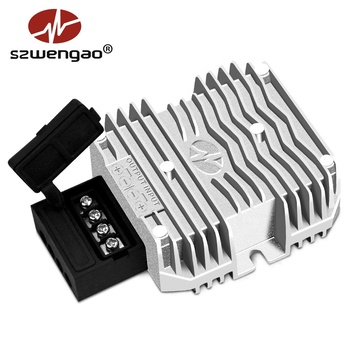
18–90V to 12V 10A Waterproof Isolated Module
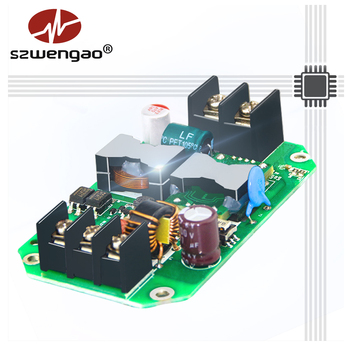
48V/60V to 12V 10A Forklift & Telecom Supply
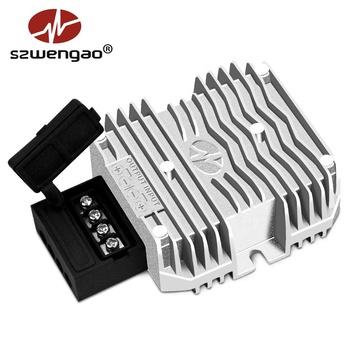
18–75V to 5V 20A High-Current Isolated Rail
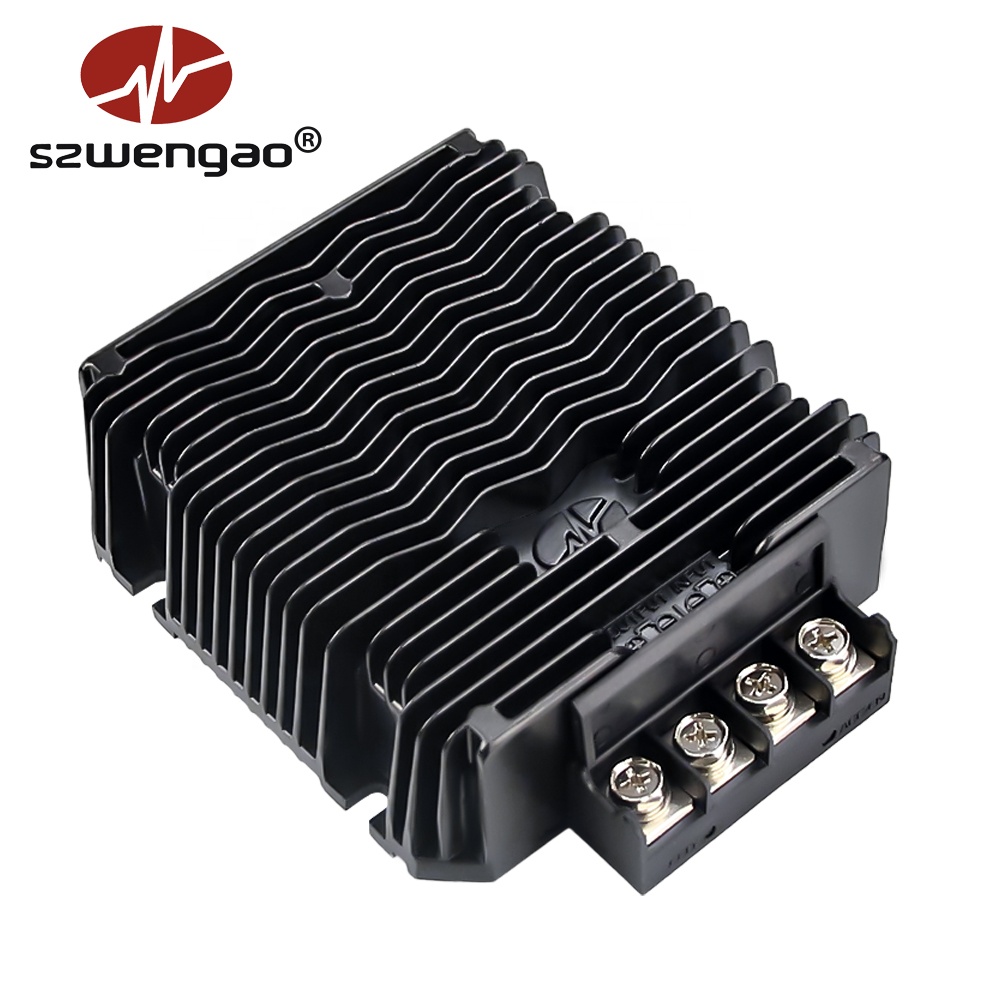
Smart 12V to 43.8V 13A LiFePO4 DC-DC Charger
1500W Wide-Input Buck-Boost with RS485
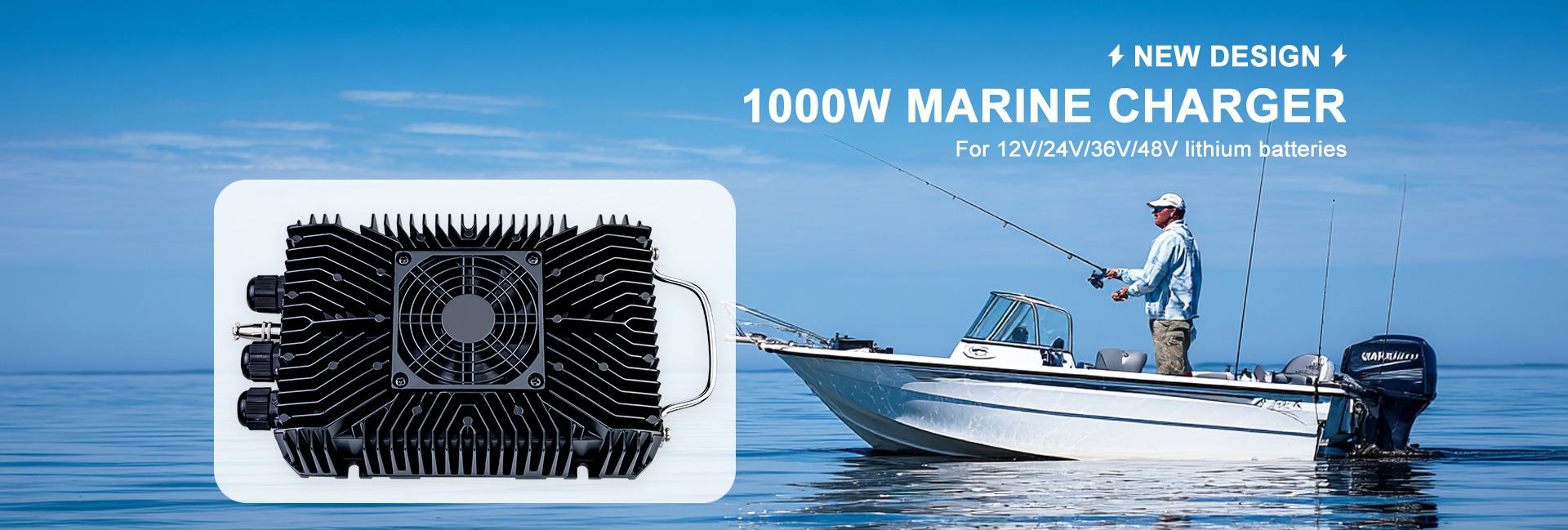
1000W Waterproof IP65 Fleet LiFePO4 Charger
Engineering Architecture: Why Galvanic Isolation Matters in Modern DC Distribution
In high-availability power topologies spanning industrial automation, mobile electric machinery, naval systems, and mission-critical telecommunications, DC-to-DC conversion is far more than simple step-down or step-up voltage matching. As common DC bus architectures scale from conventional 12V and 24V systems to 48V, 72V, 96V, and high-voltage traction packs (up to 400V–800V in heavy commercial electrification), the parasitic return currents, common-mode ground noise, and high-voltage transients create immense operational challenges.
A non-isolated DC-DC converter (such as a standard synchronous buck or boost topology) maintains a continuous electrical connection across the negative rail. While non-isolated converters achieve exceptional efficiency in simple single-ground systems, they provide zero barrier against severe differential potentials between chassis ground and signal ground. In contrast, CE Certified Isolated DC-DC Modules utilize precision planar high-frequency transformers and optocoupler feedback loops to introduce a physical galvanic break between primary input and secondary output windings. This separation eliminates ground loops, stops high-voltage transient blowbacks from destroying downstream logic electronics, and enables flexible system polarity (such as powering negative-referenced telecom rails from positive-ground vehicle architectures).
Core Topology Breakdown: Forward, Push-Pull, and Half-Bridge Isolated Structures
Shenzhen Eltrum Electronic Co., Ltd. incorporates distinct power conversion architectures calibrated to power density, conversion efficiency, and electromagnetic compatibility requirements:
- Push-Pull Isolated Topologies (50W – 150W): Highly favored for compact 18–36V and 36–75V input converters. Push-pull utilizes a center-tapped transformer driven alternately by low-RDS(on) MOSFETs, providing exceptional copper utilization and minimal magnetic core volume while delivering superior transient response times.
- Active-Clamp Forward Converters (100W – 300W): Designed for wide input ranges (e.g., 18–90V continuous). By recycling transformer leakage inductance energy back into the input stage through an active-clamp auxiliary switch, switching stresses are minimized and overall power conversion efficiencies consistently surpass 91% to 94%.
- Phase-Shifted Full Bridge & LLC Resonant Converters (500W – 1500W+): Integrated in our high-power converters and intelligent battery chargers. Zero-voltage switching (ZVS) and zero-current switching (ZCS) dramatically slash switching losses at elevated frequencies, suppressing EMI signatures and shrinking electromagnetic filter footprint to easily clear EN 55032 Class B emission requirements.
CE & RoHS Compliance: Deep Dive into Electromagnetic and Dielectric Testing
Procuring power supplies for global export demands rigid alignment with European Directives, specifically the Low Voltage Directive (LVD 2014/35/EU) and Electromagnetic Compatibility Directive (EMC 2014/30/EU). Every isolated module manufactured by Eltrum undergoes rigorous testing:
- Dielectric Withstand Voltage (Hi-Pot): Modules are stressed under 1500VDC to 3000VDC breakdown barriers for 60 seconds between primary input pins and secondary output terminals to ensure dielectric integrity under extreme surge spikes.
- Conducted and Radiated Emissions (EN 55032 / CISPR 32): Transformer shielding shields capacitive coupling currents, suppressing common-mode switching noise before it injects back into the main DC feeder.
- Immunity to Electrostatic Discharge & Fast Transients (EN 61000-4-2, EN 61000-4-4): Industrial environments present fast transient bursts (EFT) caused by inductive motor disconnections. Our multi-stage LC filters and TVS networks absorb spikes exceeding 2kV without logic locking or module resets.
- RoHS & REACH Compliance: 100% lead-free SMT reflow soldering utilizing advanced SAC305 alloy, complete avoidance of restricted flame retardants, and comprehensive materials auditing verified by third-party testing organizations.
Future Procurement Trends in Industrial DC-DC Modules
Strategic hardware considerations shaping supply chain pipelines and OEM engineering requirements through 2026–2030.
Wide-Bandgap GaN & SiC Integration
Procurement teams are shifting heavily toward Gallium Nitride (GaN) and Silicon Carbide (SiC) switches. These wide-bandgap semiconductors allow switching frequencies to exceed 500kHz, reducing passive magnetic volume by 40% while maintaining thermal operating envelopes up to 85°C without forced airflow.
Digital Telemetry & Field Programmability
Standard fixed-voltage bricks are being superseded by software-defined converters. Tier-1 buyers demand integrated RS485, CAN bus, or PMBus interfaces that permit continuous remote monitoring of input voltage, current draw, core temperature, and programmable charging profile adjustments.
Consolidated Wide-Input Standardization
Rather than managing discrete SKUs for 24V, 36V, 48V, and 72V platforms, engineering procurement is standardizing on ultra-wide 4:1 and 5:1 input architectures (e.g., continuous 18–90V DC). This collapses inventory management overhead while safeguarding equipment against severe battery voltage drops during cold cranking.
Emerging Technology Trends in Power Module Design
How next-generation component materials and thermodynamic design deliver superior reliability in mission-critical applications.
Planar Magnetics
Replacing traditional wire-wound bobbins with multi-layer printed circuit board planar transformers reduces leakage inductance by 70%, standardizes inter-winding capacitance, and ensures flawless batch consistency.
Advanced Potting Chemistry
Vacuum-degassed thermally conductive epoxy and silicone potting provide IP68 water sealing while simultaneously serving as an internal thermal conduit, eliminating internal hotspots and mechanical vibration damage.
Multi-Stage CC/CV Algorithms
Dedicated dynamic microcontrollers implement chemistry-specific charging stages (Bulk, Absorption, Float, Equalization) for LiFePO4, NMC, and Lead-Acid chemistries with precise cell-temperature compensation.
Self-Healing Protection Circuits
Next-generation electronic fusing networks automatically recover following dead-short circuit events or high-voltage inductive load dumps, cutting down servicing expenses and zero-defective field RMA returns.
Why Partner with Shenzhen Eltrum Electronic Co., Ltd.
Established in 2015 in the heart of Shenzhen’s advanced electronics manufacturing cluster, Shenzhen Eltrum Electronic Co., Ltd. has grown from a specialized isolated power engineering laboratory into a world-class manufacturing exporter with products deployed across more than 130 countries and regions. Our 3,000 m² state-of-the-art facility pairs fully automated SMT mounting lines with rigorous automated optical inspection (AOI) and 100% full-load burn-in testing chambers.
Unlike simple trading entities or unverified assemblers, Eltrum is an onsite-verified manufacturer operating under an audited ISO 9001 Quality Management System. We maintain a catalog of more than 500 standard conversion and charging models while supporting agile OEM/ODM customization. Whether your application requires custom input/output voltages, non-standard connectors, application-specific charging curves, RS485 communication firmware, or custom-machined IP68 enclosures, our experienced power engineering team provides rapid prototyping and rapid mass production turnaround.
Our global footprint spans major industrial hubs in North America, Western Europe, Japan, Australia, and Southeast Asia. We maintain long-term supply contracts with automated guided vehicle (AGV) builders, marine electronics integrators, telecommunication network operators, and off-grid solar equipment distributors who rely on our consistent MTBF metrics (>100,000 hours calculated per MIL-HDBK-217F).
Accelerate Your Custom Power Engineering Project
Speak directly with our senior application engineers regarding your voltage ratio, thermal requirements, isolation barriers, or volume production pricing.
Contact UsFrequently Asked Questions by Industrial Sourcing Teams
Essential technical and commercial insights for qualified buyers and hardware engineers.