A DC Power Supply converts incoming electrical energy into direct current with a controlled voltage, current, or both. That sounds simple. In practice, the right supply depends on the load, operating range, ripple tolerance, and protection needs. A benchtop unit may show stable readings while a fast-changing load reveals brief voltage dips. Those details matter in laboratories, repair benches, production lines, and embedded-system testing.
Electrical engineer Tony Kuphaldt’s instructional work explains power-supply operation through practical circuit behavior. In paraphrase: a supply must provide the voltage and current a circuit requires, while keeping its output within intended limits. That principle is useful, but not the whole story. Cables, connectors, heat, and load changes can all affect performance. A display alone cannot prove that a supply is suitable.
This guide outlines how a DC Power Supply works, what its key specifications mean, and how common types differ. It also examines current limiting, regulation, ripple, and safety features, with practical selection points for real setups. A useful supply is not always the most powerful one. Sometimes the smaller, quieter model is the better fit. Readers should still check the manufacturer’s datasheet and verify measurements under their actual operating conditions. That extra check can feel tedious, but skipping it can leave important assumptions untested.
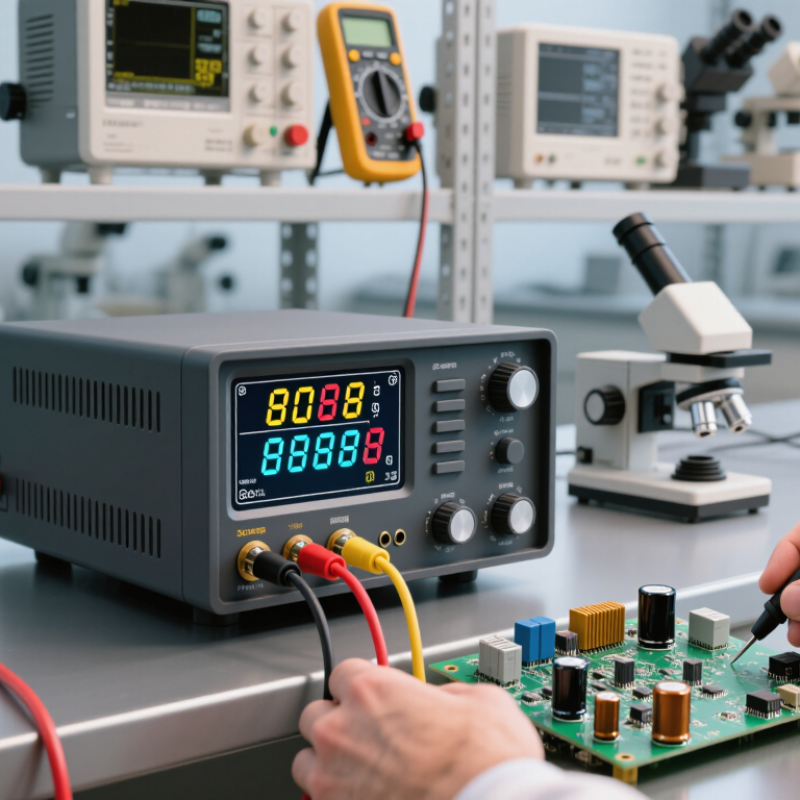
Definition and Role of a DC Power Supply in Electrical Systems
A DC power supply converts incoming electrical energy into direct current for equipment that needs a steady, controlled voltage. It may convert alternating current from a wall outlet, or regulate power from a battery or another DC source. Inside, circuits adjust the output and help limit unwanted changes. The supply’s role is practical: it gives a device an electrical input suited to its operating requirements.
In an electrical system, this source can power sensors, control boards, test instruments, and communication equipment. Its output voltage and current capacity must match the load. For example, a control circuit designed for 12 volts may behave unpredictably if supplied with the wrong voltage. Many supplies also provide current limiting, overload protection, or noise reduction. These features help protect connected equipment, though they do not make every setup immune to wiring errors. A tidy specification sheet cannot show every real-world condition.
Tips: Check the device’s voltage and current requirements before connecting it. Confirm polarity, too; a reversed connection can damage sensitive electronics. Leave room for ventilation, especially when the supply runs for long periods. If readings fluctuate, inspect the cables and load before assuming the supply has failed. Small details matter.
| Dimension | Explanation | Typical Examples or Role |
|---|---|---|
| Definition | A DC power supply provides electrical energy with voltage of a fixed polarity, so current flows in one direction through a circuit. | It powers electronic circuits, instruments, control equipment, and other DC loads. |
| Input and conversion | Many supplies accept AC mains input and convert it to DC using rectification, filtering, and regulation. Other supplies receive DC input and convert it to a different DC voltage. | A regulated adapter may convert AC input to a lower DC output; a DC-to-DC converter may step a DC voltage up or down. |
| Output voltage | Voltage is the electrical potential difference supplied to a load. A fixed-output supply provides a set voltage, while an adjustable supply allows the user to select an output within its rated range. | Common DC output levels include 5 V, 12 V, and 24 V, depending on the equipment and application. |
| Output current | Current is drawn by the connected load. A supply's current rating is its maximum supported output under specified operating conditions; the load does not automatically receive the full rated current. | A 12 V supply rated for 3 A can provide up to 3 A within its specifications, while a compatible load draws the current it requires. |
| Voltage regulation | Regulation helps keep the output voltage near its set value as input voltage or load demand changes, within the supply's specified limits. | Stable voltage is important for sensitive electronics and measurement equipment. |
| Constant-voltage operation | In constant-voltage mode, the supply maintains its set voltage while the load current remains within the allowed limit. | Commonly used for powering electronic devices designed for a specified DC voltage. |
| Constant-current operation | In constant-current mode, the supply limits or maintains current at a set value; the output voltage changes as needed, within the supply's limits. | Useful in applications such as LED testing, battery charging processes, and component testing when the application calls for controlled current. |
| Protection features | Depending on the design, a supply may include protection against overcurrent, overvoltage, overheating, or short circuits. | Protection can help reduce the risk of damage to the supply and connected equipment; it does not replace correct wiring and load selection. |
| Common types | Linear supplies use regulating components to control output. Switched-mode supplies use high-frequency switching and are commonly designed for compact size and efficient power conversion. | The appropriate type depends on factors such as output requirements, noise sensitivity, size, efficiency, and operating environment. |
| Role in electrical systems | A DC power supply provides a suitable source of electrical power between the incoming energy source and a DC-powered load. | It supports reliable operation in control panels, laboratory setups, communications equipment, industrial electronics, and embedded systems. |
| Key selection checks | Check output voltage, current and power ratings, polarity, regulation, ripple and noise requirements, input range, protection features, and environmental conditions. | Confirm that the supply's specifications match the load and the system's safety requirements before installation. |
FAQS
It converts electrical energy into direct current with a controlled voltage. Sensors, control boards, and test instruments may use it. A practical job.
Diodes steer current in one direction. A full-wave bridge uses both halves of the AC waveform, creating pulsating DC. It still fluctuates.
A capacitor stores energy near voltage peaks and releases it between them. This reduces ripple, but cannot always eliminate it. Measure under load.
It helps maintain the output when input voltage or load changes. Some designs produce more heat; others may introduce electrical noise. Trade-offs remain.
Linear supplies regulate power in a familiar, often quiet way, but can become warm. Switching supplies are often smaller and more efficient. Not automatically better.
Match the supply to the device’s stated voltage and current needs. A 12-volt circuit may behave unpredictably with the wrong voltage. Check the label.
Confirm voltage, current capacity, and polarity. A reversed connection can damage sensitive electronics. Small details matter.
An unloaded reading can look steady, then sag under load. Inspect the cables and connected equipment before blaming the supply. I might miss something.
Yes, especially during long operation. Leave space around it, and check for warmth after demanding use. Heat is visible.
Conclusion
A DC Power Supply converts electrical energy into a steady direct-current output for devices and circuits that require controlled voltage. It typically changes incoming alternating current through rectification, which makes the current flow in one direction, then filtering, which smooths fluctuations, and regulation, which helps maintain a stable output as load or input conditions change.
Linear supplies use a transformer operating at the mains frequency of 50 or 60 Hz and regulate voltage through a comparatively simple approach; switching supplies convert power at much higher frequencies, often allowing a smaller, lighter design. When choosing a supply, consider its output voltage, maximum current, and power rating, ensuring they suit the connected equipment. USB Power Delivery 3.1 can provide up to 240 W under supported configurations. Safe, reliable designs also account for applicable requirements, including IEC 62368-1 for equipment safety and IEC 61000-3-2 for limits on harmonic current emissions.